
Cuttack’s silver filigree crisis is not only a local craft problem. It is a warning for handmade sellers everywhere who build their products around volatile raw materials. As Durga Puja approaches, Cuttack’s Tarakasi artisans are preparing chandi medhas, the ornate silver backdrops used in the city’s celebrated puja mandaps, while silver prices make production harder, riskier, and less predictable. The pressure is especially visible for artisans such as Bijay Dey, who continue working on festival orders even as the cost of silver changes the business math behind one of Odisha’s most recognizable crafts.
For Shimply readers, the story matters because handmade commerce often talks about beauty, heritage, and buyer trust, but material risk sits underneath all of it. A silver filigree seller cannot price like a ceramic seller. A brass artisan cannot plan like a cotton textile seller. A craft built around precious metal needs sharper cost tracking, clearer buyer education, better advance-order policies, and stronger product documentation. Cuttack’s crisis shows why material risk is now part of handmade seller strategy.
Why Cuttack’s Tarakasi Crisis Matters Now
Cuttack has long been known as Odisha’s Silver City, and Tarakasi is central to that identity. The craft turns silver into fine wires and delicate ornamental forms, producing jewellery, decorative pieces, ritual objects, tableware accents, and large ceremonial works. Odisha’s Directorate of Handicrafts describes silver filigree, locally known as tarakasi, as work made from silver drawn into threads as fine as a spider’s web, admired for its delicate artistry, fine texture, and finish.
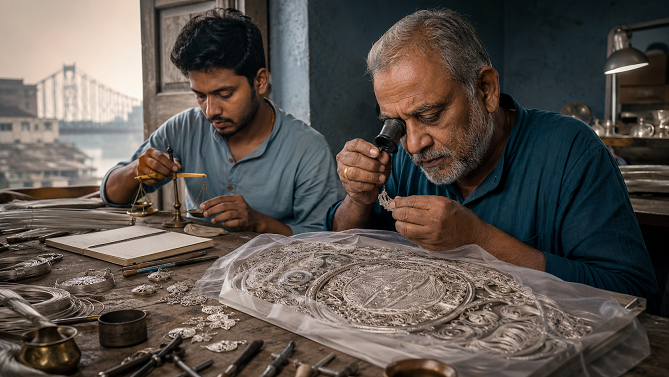
That technical description is important because it shows why rising silver prices hurt more than a normal supply cost increase. Tarakasi is material-intensive and labor-intensive. The raw silver has value before the artisan touches it. Then the artisan adds time, skill, design, soldering, shaping, and finishing. When silver prices rise, both the working capital requirement and the buyer’s final price can shift quickly.
The July 2026 reporting from Cuttack frames the pressure around Durga Puja, when artisans prepare chandi medhas for city puja committees. These silver tableaux are not small souvenir items. They are major devotional and artistic installations that require planning, metal input, collective labor, and trust between artisans and committees.
For handmade sellers, the lesson is clear: some craft categories carry material risk that has to be explained before buyers question the price. If the seller waits until checkout to justify a higher number, the buyer may see only cost. If the seller explains silver, labor, process, and festival timing clearly, the buyer sees value.
What Rising Silver Prices Do To Handmade Pricing
Rising silver prices change the seller’s business in several ways. The first is cash flow. A seller may need to buy silver before receiving full payment from the customer. If prices move sharply, the artisan may hesitate to accept orders without an advance.
The second is quote accuracy. A handmade seller cannot always promise the same price for a silver item weeks after the first inquiry. A buyer may ask for a custom pendant, puja object, decorative box, or chandi medha component, but the final price depends on metal cost, weight, design complexity, and delivery timing.
The third is inventory risk. Ready-made silver products lock money into stock. If buyers slow down because prices feel high, the seller may be left holding expensive inventory. If the seller avoids stock entirely, customers may move to faster alternatives.
The fourth is design pressure. Sellers may reduce silver weight, simplify designs, or offer smaller pieces to keep products affordable. That can help, but it must be done carefully. A craft tradition can lose value if cost-saving turns into lower quality without explanation.
| Material Risk Area | What It Means For Sellers | How Buyers Should See It |
|---|---|---|
| Silver Price Volatility | Quotes may need short validity windows | Price changes are tied to metal markets, not random markups |
| Working Capital | Artisans need money before production | Advance payments may be reasonable for custom work |
| Design Adjustments | Smaller or lighter products may become necessary | Good design can preserve craft value at different budgets |
| Inventory Pressure | Expensive stock is risky to hold | Made-to-order models may protect artisans |
| Festival Deadlines | Durga Puja orders need early planning | Late orders may cost more or become impossible |
This table should feel familiar to sellers in other categories too. Textile sellers face yarn and dye fluctuations. Woodworkers face timber availability. Potters face fuel and clay costs. Metal artisans face copper, brass, silver, and gold movement. Handmade pricing is never only about labor.
Why Durga Puja Makes The Pressure More Visible
Durga Puja brings Tarakasi into public view in a way ordinary jewellery sales do not. Cuttack’s chandi medhas are part of the city’s festival identity, where silver backdrops and decorative metalwork are seen by thousands of devotees and visitors. During this season, artisans are not making only private objects. They are contributing to shared civic and devotional spectacle.
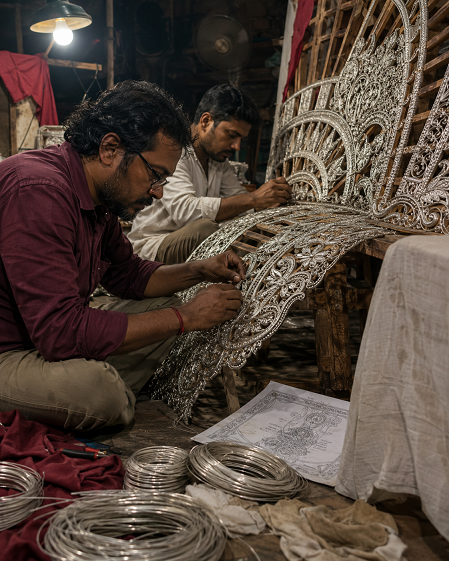
That visibility brings prestige, but it also brings pressure. Puja committees have budgets. Artisans have material costs. Devotees expect grandeur. The craft’s reputation depends on finish and detail. Rising silver prices make that triangle harder to manage.
A handmade seller can learn from this seasonal pressure. When a product is tied to a festival, wedding, corporate gifting season, or religious calendar, the seller needs earlier ordering rules. Late orders are not only inconvenient; they can become financially risky.
For silver filigree sellers, a strong seasonal policy might include advance booking, metal-rate-linked quotes, staged payments, design approval dates, and clear delivery limits. For buyers, this creates transparency. It tells them that handmade production is not instant and that material-heavy work must be planned.
The same logic applies to Diwali brass decor, wedding textiles, Christmas ornaments, Rakhi gifts, Eid accessories, Bonalu ritual items, or Durga Puja idols. Handmade sellers should not be afraid to set order deadlines when the craft requires time and materials.
How GI Recognition Helps, But Does Not Solve Cost Risk
Cuttack’s Chandi Tarakasi received Geographical Indication recognition in 2024, with the Odisha State Cooperative Handicrafts Corporation Limited, Utkalika, having filed the application in 2021. GI recognition helps protect the craft’s place-based identity and gives sellers a stronger authenticity signal.
That matters because buyers can distinguish Cuttack silver filigree from generic silver-tone decor or machine-made metal accessories. A GI-linked craft name can support buyer trust, tourism, gifting, and premium positioning. Shimply’s guide to GI-tagged Indian crafts by state explains why regional names are useful when buyers want origin clarity.
Yet GI recognition does not remove material risk. A tag can protect the name, but it cannot freeze silver prices. It can help sellers explain why authentic Tarakasi deserves respect, but it does not automatically make raw material affordable. This is where handmade sellers need a realistic view of authenticity.
Authenticity helps with trust. It does not eliminate business pressure. A seller still needs pricing systems, cost updates, customer education, product range planning, and working-capital discipline.
For buyers, GI recognition should be a reason to ask better questions. Is the product actually from Cuttack? Is it handmade Tarakasi or a mass-made silver-colored item? What silver content is used? What is the weight? Is the item decorative, wearable, devotional, or collectible? How should it be stored and cleaned?
What Material Risk Teaches Handmade Sellers About Product Range
A seller dealing with rising material costs should not depend on only one product tier. Cuttack’s Tarakasi artisans can learn from a wider handmade-commerce principle: product range protects both the buyer and the maker.
High-value silver work may remain necessary for puja committees, collectors, and premium buyers. Yet smaller products can keep the craft accessible. Earrings, pendants, brooches, miniature decor pieces, bookmarks, framed motifs, small boxes, and gift-ready ornaments can let buyers support the craft without committing to large silver-heavy purchases.
The key is not to cheapen the craft. The key is to create honest tiers. A premium chandi medha panel, a mid-range decorative object, and a small wearable gift can all represent Tarakasi if the workmanship and naming are accurate.
Sellers should avoid hiding reductions in material. If a piece is lighter, smaller, silver-plated, mixed metal, or inspired by filigree rather than made in full silver Tarakasi, the listing should say so. Buyer trust depends on that clarity.
A strong product range might include:
- Custom silver work with metal-rate-linked quotes and advance payments
- Giftable small Tarakasi jewellery or decor pieces with fixed prices for limited batches
- Educational or display products that explain the craft without pretending to be large ceremonial work
This is one of the safest ways to handle volatility. It gives buyers choices and keeps artisans from relying only on high-cost orders.
Why Buyer Education Is Now A Pricing Tool
Many handmade sellers feel uncomfortable explaining price. They worry that buyers will think they are making excuses. Cuttack’s silver crisis shows why explanation is necessary.
A buyer looking at silver filigree should understand that the price reflects raw silver, design complexity, handwork, finishing, wastage, risk, and time. A seller can explain this without sounding defensive. The product page can include a short pricing note: “Prices for custom silver work may vary with prevailing silver rates and final approved weight.”
This kind of transparency helps serious buyers. It also filters unrealistic inquiries. If a customer wants handworked silver but expects costume-jewellery pricing, the seller can redirect them toward smaller pieces instead of entering a difficult negotiation.
Product descriptions should show the labor behind the work. Close-up photos of wire detail, solder points, patterns, edges, and finishing help buyers understand why Tarakasi is not the same as cast metal decor. Care instructions also support value: silver needs protection from moisture, tarnish, rough handling, and improper storage.
For online sellers, buyer education should appear in several places: product page, FAQ, custom-order policy, packaging insert, and social content. A short post explaining why silver-price movement affects handmade work can build trust before buyers even ask.
What The Silver Filigree Hub Could Change
The second part of Cuttack’s current craft story is infrastructure. Reports say the long-delayed silver filigree hub in Cuttack is nearing completion after years of waiting. If implemented well, such a hub could give Tarakasi artisans better workspace, visibility, buyer access, training opportunities, and tourism-linked discovery.
A hub cannot fix silver prices by itself. It can still reduce other forms of risk. Shared infrastructure can help artisans access tools, finishing support, display areas, packaging resources, training, and buyer-facing events. It can also help turn scattered workshops into a more recognizable craft destination.
For handmade sellers, this is another lesson: material risk becomes harder when the rest of the business system is weak. If artisans lack proper workspaces, buyer channels, packaging, digital catalogues, and institutional support, a raw-material spike can threaten the entire livelihood. Better infrastructure gives sellers more ways to respond.
A silver filigree hub could also help with product education. Tourists and buyers may understand price better if they see the process. A buyer who watches fine silver wire being shaped into intricate patterns is less likely to compare the final piece to generic metal decor.
The strongest hubs do not turn craft into factory production. They give artisans the tools to preserve the craft while selling more confidently.
What Online Handmade Sellers Can Apply From Cuttack
Cuttack’s crisis may be specific to silver, but the seller lessons are broad. Every handmade seller should audit material risk before it becomes a crisis.
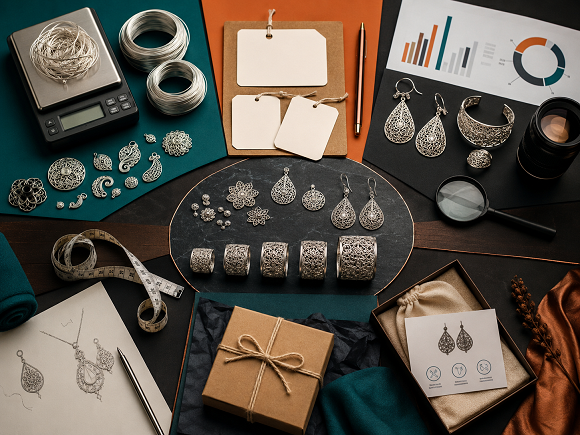
Start with cost tracking. Sellers should know how much of each product’s price comes from raw material, labor, packaging, overhead, platform fees, shipping, and margin. Without this, price changes become guesswork.
Next, create quote rules. Custom products should have quote validity windows. Material-heavy products should include advance payments. Seasonal products should have order deadlines.
Then review product tiers. Sellers should offer smaller, mid-range, and premium options when possible. This helps buyers stay connected to the craft even when large pieces become expensive.
Update product pages. Add material notes, care instructions, dimensions, weight, and pricing explanations where needed. Show photos that justify value.
Plan communication. Buyers are more likely to accept price changes when the seller explains them early and calmly.
These habits help more than silver artisans. They help woodworkers, potters, metalworkers, textile sellers, jewellery makers, basket makers, and handmade gift brands that depend on materials whose prices or availability can shift.
What Buyers Should Understand Before Buying Silver Filigree
Buyers interested in Cuttack silver filigree should approach the purchase with curiosity and patience. Ask whether the piece is handmade Tarakasi from Cuttack, what silver content is used, whether it is solid silver or another construction, what the approximate weight is, and how it should be stored.
For custom work, ask how long the quote remains valid. Ask whether the final price depends on silver rate or final weight. Ask about advance payment and delivery timeline, especially before Durga Puja or wedding seasons.
For gift purchases, choose pieces with clear packaging and care instructions. Silver filigree can make a meaningful gift, but it should be given with enough context for the recipient to care for it properly.
Buyers should also understand that fair pricing protects the craft. Bargaining too aggressively may push artisans toward shortcuts, lighter materials, or leaving the craft altogether. If the buyer values authentic handmade work, the price has to respect both metal and labor.
Why Material Risk Is A Handmade Trust Issue
Cuttack’s silver filigree crisis shows that handmade trust is built not only on authenticity but also on transparency. Buyers trust sellers who explain why prices change, why production takes time, and why material quality matters. Sellers trust buyers who understand that handmade work cannot always absorb raw-material shocks silently.
Tarakasi’s challenge is serious because it sits at the crossroads of precious metal pricing, festival demand, young artisan retention, and craft protection. The GI tag gives the craft recognition. The coming silver filigree hub may give artisans better infrastructure. Yet the immediate question remains: can sellers survive material volatility without losing buyer trust?
The answer depends on communication as much as craftsmanship. Cuttack’s artisans show that a handmade product is never only a finished object. It carries material risk, working capital, tradition, labor, and market timing. Online sellers who learn that lesson can build stronger businesses before their own material crisis arrives.