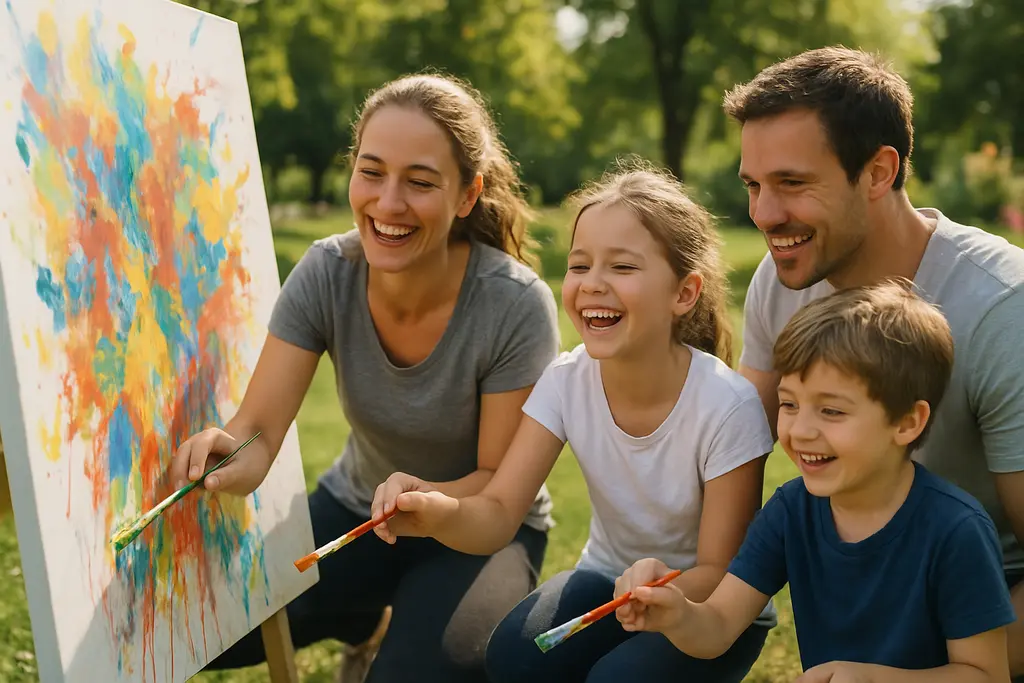
Family art events can give children and adults a shared way to make, observe, move, and talk about craft without treating art as a quick activity to consume. The strongest programs tend to balance hands-on making with context: who made the related work, what materials mean, why techniques should be respected, and how families can participate without flattening cultural traditions into generic projects.
For family fitness, this subject is best approached with care. A local craft workshop is not a substitute for formal exercise, and it should not be framed as a health intervention without evidence. Still, families often walk through galleries, stand at worktables, carry materials, shape paper or clay, and shift between stations. That light movement can sit naturally beside attention, conversation, and shared making.
Why Family Craft Participation Has Evidence Behind It
What The Participation Data Shows
Recent arts-engagement data supports the idea that family craft is not a fringe activity. A 2024 National Endowment for the Arts research brief reported that between April and July 2024, 25.0% of U.S. adults attended at least one live, in-person performance or art exhibit in the previous month, while 16.3% created or practiced art during the same period NEA research brief. The same brief reported that 62.2% of adults agreed or strongly agreed that there were plenty of opportunities to take part in arts and cultural activities in their neighborhood or community.
Those numbers do not prove that every neighborhood has equal access to arts programs. The NEA brief also reported variation by age and race or ethnicity in whether adults perceived local opportunities. That point matters for families, because a workshop only becomes a meaningful local resource if it is reachable, clearly described, culturally respectful, and welcoming to different household structures.
What Family Art Events Ask Of Organizers
Family art events work best when organizers avoid treating children as passive visitors. The family setting asks museums, libraries, craft fairs, schools, and community centers to make room for observation, questions, and imperfect making. A child may focus on texture, color, repetition, or the physical feeling of cutting and joining materials. An adult may be thinking about cost, time, cultural context, or whether a project can be continued at home. Good programming respects both forms of attention.
Family participation also benefits from clear boundaries. If a workshop is inspired by a regional textile, ceramic method, mask tradition, beadwork form, or ritual object, the activity should explain what is being referenced and what is not being copied. Respectful adaptation can introduce material ideas, pattern logic, or studio habits without suggesting that a short family session equals mastery of a tradition.
How Family Art Events Support Shared Movement
Small Motions, Real Engagement
The fitness value of craft programming is modest but worth naming carefully. Families may walk between exhibition spaces, sit and stand repeatedly, reach across tables, sort materials, press shapes, fold paper, or clean a shared workspace. These actions are not athletic training. They are practical movements embedded in making. For children who resist formal activity, a craft station can sometimes make movement feel purposeful rather than imposed.
That is why local event design should include pacing. A family workshop that begins with a short gallery look, shifts to a table activity, and ends with a group reflection gives bodies and attention spans room to reset. Long lectures, crowded worktables, and unclear instructions can reduce both movement and learning. Simple physical design matters: open walkways, reachable materials, stools at different heights, and quiet corners can make the same event more usable for more families.
Home Links Without Overpromising
Public data also suggests that home arts participation is common among younger students. The U.S. Department of Education reported, using 2019 data, that 75% of elementary school students did arts and crafts with their parents in the past week, and 28% visited an art gallery, museum, or historical site with their parents in the past month NCES family activities data. These figures do not describe all families equally, but they do show that craft at home and cultural visits are established parts of many children’s lives.
Local organizers can use that evidence cautiously. A workshop should not assume that every family has storage space, art supplies, transport, or paid time off. Instead, take-home prompts can be low-cost and flexible: draw the same object from three angles, build with scrap cardboard, compare two household textures, or interview an older relative about a handmade object. Shimply has also considered practical movement-and-making ideas in family craft fitness plans, where the emphasis stays on cautious, accessible activity rather than performance.
Trust, Authenticity, And Cultural Context
Why Context Protects The Work
Trust is central to family programming because adults often rely on institutions and event hosts to frame art responsibly. A craft table may look informal, but it still carries interpretive power. If the activity is connected to a living craft community, the program should name that community when appropriate, avoid vague heritage language, and explain whether the session is a broad material exercise or a direct study of a specific tradition.
This is where authenticity should be treated as a practice, not a slogan. Authenticity can mean accurate labeling, transparent sourcing of materials, fair acknowledgement of artists, and avoidance of costume-like shortcuts. For handmade sellers participating in local fairs, the same principle applies: explain who made the work, what the buyer is handling, and how the object should be cared for. For families, that clarity turns a purchase or workshop into learning rather than decoration alone.
Community Signals Families Can Read
Families judge events through small signals. Are instructions clear? Are age ranges honest? Is the fee visible before registration? Are caregivers expected to participate? Are sensory concerns addressed? Is photography handled respectfully? These details shape whether a family feels welcome and whether artists feel their work has been presented with care.
- State the age range and adult-participation expectation plainly.
- Credit artists, makers, and cultural sources with care.
- Use materials that suit the time, space, and supervision available.
- Explain whether a project is inspired by a work, technique, or theme.
- Offer a short care or continuation note for anything taken home.
Community trust also depends on separating evidence from promotion. Families interested in comparing civic and community coverage across the network may find Kay Granger to be a related site rather than a direct arts source; ensure the arts discussions here remain rooted in validated research.
Planning Better Local Craft Experiences
For Museums, Libraries, And Schools
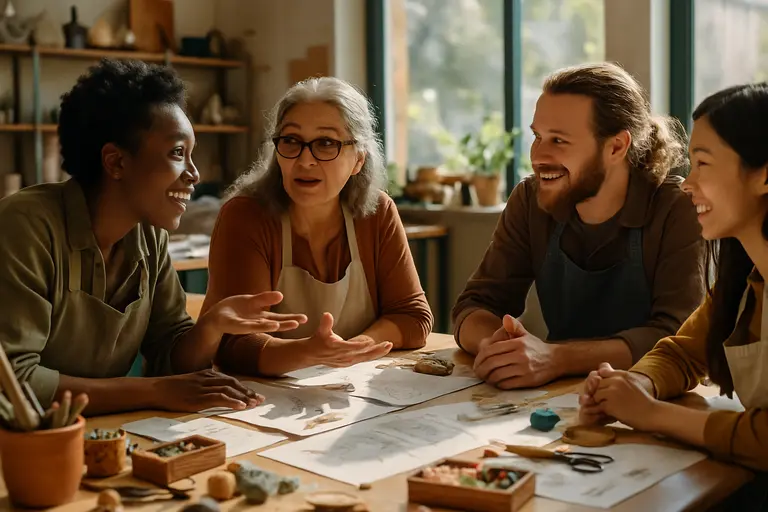
Local institutions can strengthen craft experiences by planning for both learning and movement from the start. A short viewing prompt can ask families to notice material, scale, or gesture before making begins. A workshop can then translate one formal idea into a safe, age-suitable activity. The goal is not to reproduce an artist’s work. It is to help families understand how choices in material, form, and process affect meaning.
Programs should also make uncertainty visible. If a technique has contested origins, multiple regional forms, or sacred uses not suitable for imitation, say so in plain language. Families can understand limits when they are explained respectfully. This protects the art and models ethical participation for children.
For Handmade Sellers And Teaching Artists
For sellers and teaching artists, family art events can become a trust-building setting when sales do not overpower education. Demonstrations should show process honestly: preparation, time, variation, failed attempts, and care. A short explanation of why handmade objects differ from factory goods can help children and adults see value without resorting to inflated claims.
Pricing discussions should be handled with the same care. Families may not need every business detail, but they benefit from understanding that handmade pricing can reflect materials, time, skill, and continuity of practice. That explanation supports creator commerce while respecting the maker’s labor.
Family-Focused Art Experiences At Local Events
Family-focused art experiences are strongest when they combine access, context, movement, and respect. The evidence shows that many adults attend arts events, many adults make or practice art, and many elementary school children already do arts and crafts with parents. The practical task is to make local programs worthy of that interest.
For families, the best family art events are not necessarily the largest or most polished. They are the ones that explain the work, welcome questions, give hands and bodies something meaningful to do, and treat cultural sources with care. For organizers and makers, that means designing each event as a trust exchange: the family brings time and attention; the host provides clarity, safety, and respect for the art.