
Cuttack’s silver filigree hub nearing reality is more than an infrastructure update. It is a test of whether dedicated craft spaces can help a fragile, high-skill handmade tradition survive modern cost pressure, buyer confusion, and shrinking artisan participation. Cuttack’s Tarakasi, also known as Chandi Tarakasi or silver filigree, has already earned Geographical Indication recognition. Yet recognition alone does not solve the daily problems artisans face: silver price volatility, workspace limitations, younger-generation hesitation, inconsistent buyer access, packaging challenges, and the difficulty of explaining handmade value online.
For Shimply readers, the Cuttack hub matters because it shows what handmade sellers need after a craft becomes famous. They need more than heritage language. They need tools, training, visibility, fair pricing systems, product documentation, buyer education, and a physical place where the craft can be seen as serious work rather than occasional souvenir production.
Why Cuttack’s Silver Filigree Hub Matters Now
The Times of India reported in July 2026 that Cuttack’s long-delayed silver filigree hub is finally nearing completion after years of delay, creating optimism for Tarakasi artisans and stakeholders. The report frames the hub as a milestone for preserving and promoting Cuttack’s intricate silver filigree work, with the potential to improve infrastructure, support livelihoods, attract buyers and tourists, and strengthen the local economy. That Cuttack silver filigree hub is arriving at a critical moment.
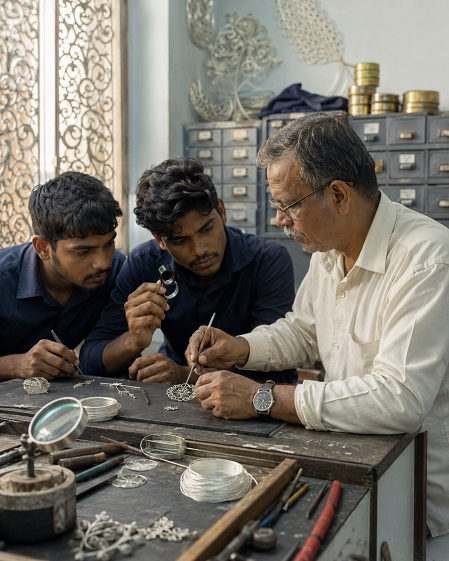
Cuttack’s Tarakasi artisans are dealing with the same pressure affecting many handmade sectors: the craft has cultural prestige, but the business model is strained. Rising silver prices have made production harder, especially before Durga Puja, when artisans prepare chandi medhas and other ceremonial work. A hub cannot control silver prices, but it can reduce other weaknesses around production, display, training, marketing, and buyer trust.
That distinction is important. Dedicated infrastructure does not revive a craft automatically. A building can remain underused if it does not connect artisans with real market systems. A strong hub, by contrast, can become a working bridge between artisan skill and modern commerce.
For Cuttack, that bridge is overdue. Tarakasi is delicate, slow, and highly visual. It benefits from being seen up close. A dedicated space can help buyers understand why a silver filigree piece costs more than a machine-made silver-tone object.
What Tarakasi Needs Beyond GI Recognition
Cuttack’s Chandi Tarakasi received a Geographical Indication tag in 2024. The Odisha State Cooperative Handicrafts Corporation Limited, Utkalika, had filed the GI application on July 1, 2021, and the recognition gave the craft stronger formal identity. The Chandi Tarakasi GI tag matters because it links the craft name to Cuttack’s place-based tradition.
Yet GI recognition is only one layer of protection. It tells buyers that Cuttack’s silver filigree has a defined regional identity. It does not guarantee that every buyer understands the craft. It does not automatically make artisans visible online. It does not solve the price of silver. It does not create packaging systems or product catalogues.
This is where infrastructure becomes useful. A hub can make the GI tag more visible and practical. It can create a place where buyers, tourists, students, designers, retailers, and online sellers can see actual process, not just finished objects. It can help artisans turn GI recognition into product education.
Shimply’s guide to GI-tagged Indian crafts by state makes a related point for buyers: GI names are useful only when they help people verify origin, compare products responsibly, and understand what makes a handmade item different from a generic alternative.
For Tarakasi sellers, the product page must still do the work. A listing should explain whether the item is handmade in Cuttack, what silver content or construction is used, whether it is jewellery, decor, devotional, collectible, or gift-ready, and how it should be stored.
How A Common Facility Centre Can Help Artisans
The New Indian Express reported in August 2025 that Odisha Deputy Chief Minister Pravati Parida laid the foundation stone for a Cuttack Silver Filigree Common Facility Centre at Bidanasi in CDA Sector 6. The report said the centre would be set up on a 20,000 sq ft area with an estimated cost of ₹10 crore. A separate Times of India report described the facility as a project intended to provide modern infrastructure, tools, training, and marketing support for Tarakasi artisans, while also supporting a heritage craft village and tourist-destination vision.
For handmade sellers, the Common Facility Centre model matters because many small artisans cannot individually afford the full stack of modern selling. They may have craft skill but not the equipment, lighting, photography setup, digital cataloguing system, packaging support, display space, or training access needed to compete beyond local buyers.
A good CFC can provide shared support without forcing every artisan to become a large business. It can help with improved workstations, finishing tools, design support, product testing, buyer meetings, workshops, and photography days. It can also help artisans separate workspace from home space, which matters for delicate silver work.
| Infrastructure Need | Why Tarakasi Artisans Need It | Seller Benefit |
|---|---|---|
| Shared Tools | Fine silver work requires precision and consistency | Better finishing and lower individual tool cost |
| Training Space | Younger makers need structured learning | Stronger skill transfer across generations |
| Display Area | Buyers need to see detail up close | Higher trust and better price justification |
| Photography Support | Online listings need close-up proof | Better marketplace and social-commerce visibility |
| Packaging Help | Silver filigree is delicate and tarnish-prone | Safer gifting and shipping |
| Buyer Meetings | Retailers and tourists need context | Stronger direct-order opportunities |
This is how craft infrastructure becomes seller infrastructure. It is not only about preserving the past. It is about helping artisans sell with less friction today.
Why Tarakasi Needs Better Buyer Education
Tarakasi is easy to admire but hard to understand without explanation. The craft involves delicate silver wire work shaped into intricate patterns. Odisha’s official handicraft context describes Cuttack silver filigree, locally called Tarakasi, as silver drawn into threads as fine as a spider’s web, known for delicate artistry, fine texture, and finish. That technical detail should be part of buyer education.
A buyer looking at a small silver filigree pendant, tray, decorative motif, or chandi medha component may not immediately understand the labor behind it. If the product page shows only the final object, buyers may compare it unfairly with cast metal decor, machine-made jewellery, or silver-colored accessories.
A hub can change that by showing process. Visitors can see wire drawing, shaping, soldering, pattern formation, and finishing. When buyers see the craft, they understand why handmade silver filigree cannot be priced like costume jewellery.
Online sellers can recreate part of that education digitally. They can use close-up photos, process shots, maker notes, care cards, and short explanations. A seller does not need to write a museum essay. They need enough detail to help buyers see the difference between handworked Tarakasi and generic metalwork.
Buyer education also protects pricing. When silver prices rise, buyers are more likely to accept changes if they understand the role of raw material and labor.
Can The Hub Attract Younger Artisans?
One of the biggest questions around any craft hub is whether it can make the craft viable for younger workers. Heritage alone rarely convinces younger people to stay in a difficult craft. They need income stability, dignity, tools, market access, and a visible future.
A well-run silver filigree hub could help by making Tarakasi look like a serious profession rather than a declining family trade. Training programs can make skill transfer more structured. Demonstration spaces can bring visibility. Marketing support can show that the craft has buyers beyond festival committees and local jewellery customers. Digital catalogues can help younger artisans see online selling as part of the craft’s future.
The hub could also support collaboration. Younger sellers may bring product photography, social media, packaging design, online order management, or digital catalogue skills. Older artisans bring technical mastery. A shared space can help those skills meet.
This is important because handmade revival often depends on practical respect. Young artisans need to see that their work can be valued not only culturally but economically. If the hub helps Tarakasi sellers create giftable products, custom orders, tourism experiences, and online collections, it may make the craft more attractive to the next generation.
What Craft Tourism Could Add To Cuttack
Cuttack already has a strong cultural identity, and Tarakasi can become part of a richer craft-tourism route if the hub is planned well. Visitors who see the making process are more likely to understand why the craft matters. They may purchase small items, commission custom pieces, share the experience, or later reorder online.
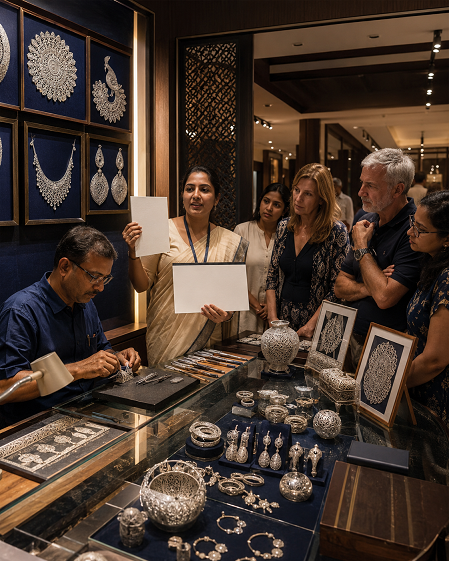
Craft tourism works best when it is respectful. The goal should not be to turn artisans into performers. The goal should be to create a setting where buyers can learn about materials, tools, process, history, and product care while artisans are paid fairly for their work.
A Tarakasi hub can support multiple buyer types. Tourists may buy small jewellery or decor. Devotees may be interested in chandi medha-related traditions. Collectors may want premium pieces. Designers may want collaboration. Retailers may want repeatable gift products. Online buyers may want packaging confidence and authenticity.
Each buyer type needs a different product pathway. The hub can help sellers organize those pathways. Small gift pieces should be clearly priced and packed. Premium pieces should have documentation. Custom work should have order forms, quote validity, and timelines. Tourist-friendly products should be easy to carry.
Craft tourism becomes more valuable when it connects to digital follow-up. Every product should have a way back to the maker or seller after the visitor leaves Cuttack.
How The Hub Can Help Sellers Build Better Product Lines
Tarakasi sellers should not depend only on large ceremonial orders or high-value pieces. Those are important, but a stronger product ecosystem can include multiple tiers: small jewellery, compact decor, framed filigree motifs, gift-ready keepsakes, limited-edition festival pieces, premium custom work, and educational craft sets.
A hub can help artisans test product lines with buyers. Which small pieces sell to tourists? Which products are suitable for online shipping? Which items feel premium enough for corporate gifting? Which designs preserve Tarakasi identity without becoming too expensive for casual buyers?
This product-range strategy matters because silver price volatility makes large pieces harder for some buyers. Smaller products can keep the craft accessible while maintaining quality. The key is honesty. If a product uses full silver Tarakasi, say so. If it is silver-plated, mixed metal, or inspired by filigree, say that clearly. Buyer trust depends on accurate material language.
Giftability also matters. A silver filigree product becomes a stronger gift when it comes with a care card, origin note, tarnish-prevention guidance, and protective packaging. Buyers purchasing for weddings, anniversaries, festivals, housewarmings, or cultural keepsakes need more than a beautiful object. They need a product that feels complete.
Why Infrastructure Must Include Digital Selling Support
A physical hub will be limited if it does not connect to digital selling. Modern handmade buyers often discover products through search, social media, marketplaces, and gift guides. A Tarakasi hub should help artisans create digital assets that match the quality of the craft.
That means product photography, short process videos, seller profiles, digital catalogues, pricing templates, order forms, packaging standards, and care guides. These are not extras. They are the tools that allow a delicate handmade product to compete online.
A buyer in Bengaluru, Mumbai, Delhi, London, Singapore, Toronto, or Dubai may never visit Cuttack. They need the online listing to explain the product clearly. They need close-up proof of craftsmanship. They need shipping confidence. They need to know whether the product is made to order or ready to ship.
Digital support can also protect artisans from weak bargaining. If a seller has a professional catalogue, clear pricing logic, and process documentation, buyers are less likely to treat the product like a generic trinket.
The hub should not only display craft. It should help sellers document it.
What Buyers Should Look For When Buying Tarakasi
Buyers interested in Cuttack silver filigree should shop with attention. Ask whether the product is handmade Tarakasi from Cuttack. Ask about silver content, weight, construction, finish, and care. For custom pieces, ask how pricing is calculated and how long the quote remains valid.

For gift purchases, look for packaging and care instructions. Silver filigree can be delicate, and tarnish prevention matters. A seller who provides storage advice, cleaning instructions, and protective wrapping is showing professional care.
Buyers should also be cautious of vague listings. A product labeled “Cuttack silver style” without maker context, material detail, or close-up photos may need more verification. If the price is unusually low for a product claiming handmade silver work, ask questions before buying.
A strong seller will welcome questions. Serious artisans know their process and can explain it. That is one of the advantages a hub can strengthen: it gives buyers more direct access to craft knowledge.
What Other Handmade Sellers Can Learn From Cuttack
Cuttack’s silver filigree hub offers lessons far beyond Odisha. Any handmade cluster can learn from the Tarakasi situation. Recognition helps, but infrastructure makes recognition usable. A craft name may be famous, but sellers still need tools, training, product documentation, packaging, buyer education, and digital follow-up.
A textile cluster needs dyeing, photography, care labeling, and size standards. A pottery cluster needs firing, glazing, packaging, and breakage policies. A bamboo craft cluster needs finishing tools, durability testing, and product-use photography. A jewellery cluster needs material documentation, tarnish care, and gift packaging.
The broader lesson is that handmade revival cannot rely only on nostalgia. Buyers may admire heritage, but they purchase when the product feels trustworthy, usable, and well-presented. Dedicated infrastructure can help artisans move from admiration to sales.
Can Dedicated Craft Infrastructure Revive Tarakasi?
Dedicated craft infrastructure can help revive Tarakasi, but only if the hub becomes a working ecosystem rather than a symbolic building. It must support artisans with tools, training, product development, buyer access, packaging, digital catalogues, tourism visibility, and fair pricing education. It must help younger makers see a future in the craft. It must help buyers understand why Cuttack silver filigree deserves respect and careful pricing.
The hub’s promise is real because Tarakasi already has what many crafts struggle to build: place identity, GI recognition, technical beauty, festival relevance, and cultural memory. What it needs now is a stronger bridge to modern buyers.
If the Cuttack silver filigree hub can provide that bridge, it may do more than preserve a craft. It may show how traditional handmade clusters can become more visible, more organized, and more resilient without losing the human skill that made them valuable in the first place.