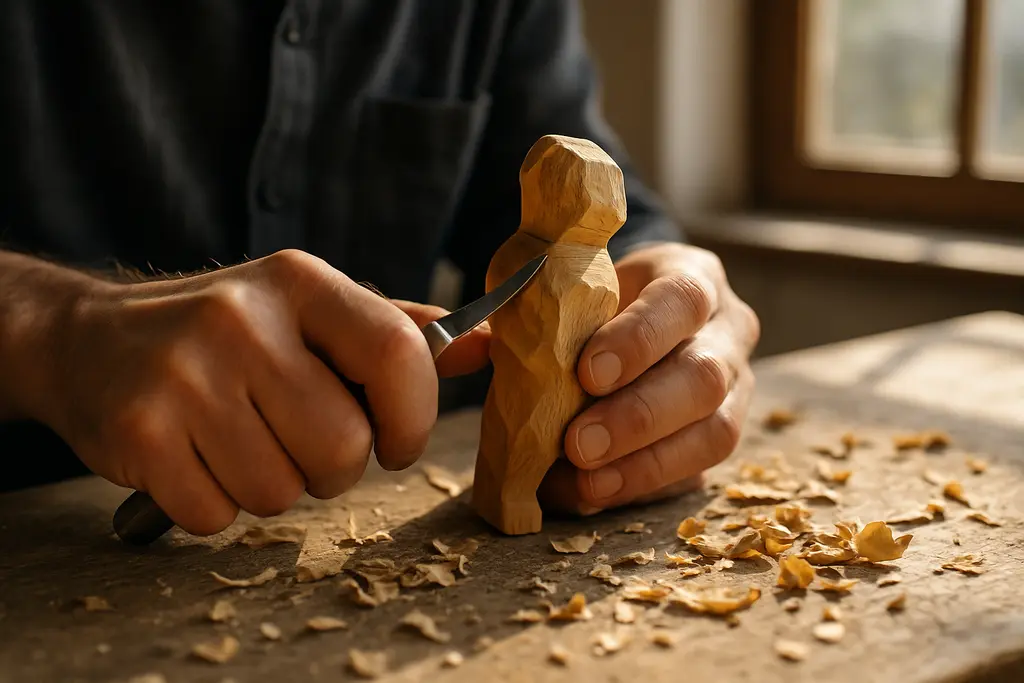
Handmade Authenticity has become a practical buying issue, not only an aesthetic preference. As AI-generated product images, patterns, and copy become easier to publish, artisans are making a sharper case for visible human effort: the slight asymmetry of a thrown pot, the irregular stitch in a textile, the tool mark in carved wood, or the documented hand process behind a piece. Those signs do not automatically prove value, but they can help buyers separate craft from simulation when paired with clear sourcing and honest product information.
The shift should be treated with care. Imperfection is not a decorative trick, and it should not be separated from the cultural, regional, and material knowledge that gives a handmade object meaning. A visible irregularity can be part of a craft process, a material behavior, or a maker’s hand. It can also be a flaw. Responsible sellers explain the difference instead of asking buyers to romanticize every variation.
Why Handmade Authenticity Is Being Repriced
Handmade Authenticity And The AI Comparison
On July 21, 2026, Forbes reported that the global handicrafts market was valued at US$740 billion in 2024 and was projected to reach US$983 billion by 2030. The same report connected interest in handmade goods with buyer fatigue around “AI slop,” a phrase used for low-quality AI-generated content, and noted that Etsy removed four times as many listings violating its handmade policy in 2024 as in prior years, partly because of AI-generated items misrepresented as handmade, including AI crochet patterns. As this shift occurs, platforms are evolving to better spot authenticity, as Forbes reported.
Those figures do not prove that every buyer now prefers handmade goods, and they should not be read as a guarantee for sellers. They do show a measurable pressure point: marketplaces and buyers are being asked to distinguish human-made work from machine-assisted or misrepresented goods. For a seller, Handmade Authenticity is no longer carried by the word “handmade” alone. It needs evidence.
Why Imperfection Needs Context
Imperfection can be useful evidence only when the buyer understands what caused it. A handwoven textile may show small variations in tension. A hand-built ceramic form may not repeat with factory precision. A natural dye may shift slightly across batches. These differences can help buyers see the maker’s process, but they need explanation in the product page, care card, or maker note.
The risk is that sellers may turn imperfection into vague branding. A product described as “perfectly imperfect” still leaves the buyer with questions: Who made it? What material was used? Is the variation expected? Does it affect function? Can the item be washed, worn, cooked with, framed, repaired, or stored safely? Clear answers protect the buyer and respect the maker’s work.
What Buyers Can Read In The Making Process
Process Evidence Without Performance
Process documentation can help buyers understand the difference between a finished object and a generated image of an object. Useful evidence may include studio photographs, short process clips, sketches, batch notes, tool descriptions, material sourcing statements, and time references. These do not need to become constant self-exposure for the artisan. The goal is not surveillance of labor; it is enough context for a buyer to see that a real person, material, and skill system stand behind the listing.
A seller can show process without turning the maker into a prop. Respectful documentation names the technique when appropriate, explains the material, credits artisan communities where relevant, and avoids treating cultural knowledge as generic content. This matters most in craft traditions where technique, region, caste, tribe, guild, cooperative, or family lineage may carry social and cultural significance.
Material Variation As A Trust Signal
Material variation is one of the most useful signals in a handmade buying guide. Wood grain, handspun yarn thickness, fired-clay surface changes, hammered metal marks, block-print registration shifts, and hand-dyed color differences can all be consistent with hand production. None should be used carelessly as proof on its own. The stronger listing explains what kind of variation is normal, what is outside the seller’s quality standard, and what the buyer will receive.
- State whether each item is one of a kind, made to order, or part of a small batch.
- Show at least one close view of texture, joinery, stitch, surface, weave, or finish.
- Explain expected variation in size, color, motif placement, or surface marks.
- Separate acceptable handmade variation from damage, defect, or unsafe use.
- Give care guidance that matches the material rather than using generic instructions.
These details help a buyer make a fair judgment. They also reduce returns caused by mismatched expectations, especially for gifts, home goods, clothing, ceramics, jewelry, and craft-based decor.
How Sellers Can Distance Craft From AI Claims
Show The Human Chain
In India, official craft labeling and digital access programs show how authenticity can be supported by systems, not just wording. As of June 30, 2026, 29,402 registrations had been issued under the Handloom Mark scheme, and 815 retail outlets carried products with that label. The Press Information Bureau also reported that the India Handmade platform had onboarded 4,186 weavers and artisans between 2023-24 and June 2026, as noted in a statement by the PIB.
For small sellers outside formal labeling systems, the same principle still applies. A trustworthy listing can identify the maker type, workshop, cooperative, cluster, region, material, and production method without exposing private supplier information. Shimply has explored this through Indiahandmade’s digital push, showcasing how clarity and visibility in listings build trust with buyers.
Avoid Overclaiming About Purity
Distancing craft from AI should not become a purity contest. Some artists may use digital tools for drafting, planning, inventory, photography organization, or accessibility while still making the final object by hand. Sellers should describe their process plainly: hand-built, handwoven, hand-painted, digitally printed, machine-cut, studio-assembled, AI-assisted design, or fully handmade where that is accurate. The most durable trust comes from precision, not from broad claims.
The same caution applies across creator commerce. Related network coverage at NextClues often points back to a shared problem in online buying: people need clear signals before they trust what they see on a screen. For handmade sellers, those signals should be grounded in process, provenance, and material facts.
Buyer Checks For Human-Made Work
Questions Before Purchase
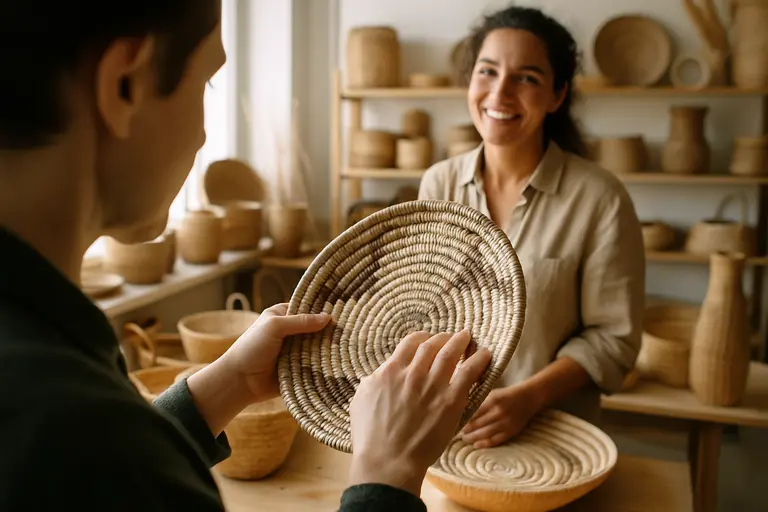
Buyers do not need to become forensic experts to shop with care. They can ask practical questions. Does the listing name the material? Does it show more than one angle? Does it explain who made the work or where the technique comes from? Are care instructions specific? Does the seller disclose whether patterns, images, or designs are AI-generated? Is the price consistent with the labor described? Does the seller explain variation honestly?
Handmade Authenticity is strongest when a listing can answer these questions without relying on sentimental language. A beautiful story can help, but story without evidence is thin. A short, factual maker note often does more for trust than a long paragraph filled with vague heritage claims.
Signals That Need More Proof
Buyers should be cautious when a shop uses only polished mockups, repeats the same product image across many listings, offers unlimited variation with no production explanation, or describes complex hand processes at unusually low prices without context. None of these signs proves deception on its own. They simply mean the buyer should look for more information before purchasing.
For artisans, the better response is not defensiveness. It is clear documentation. If a product takes six hours, say so. If the color changes by batch, show examples. If a tool assists part of the process, explain which part. If the piece is designed by the seller and produced by a partner workshop, state that relationship plainly. Trust can survive nuance; it is usually weakened by concealment.
Handmade Authenticity After AI Slop
Handmade Authenticity is not nostalgia for a pre-digital past. It is a practical framework for proving human authorship, material knowledge, and fair representation in online craft commerce. AI imitation has made the burden of proof heavier, but it has also clarified what many buyers value: visible effort, accountable sourcing, useful care information, and honest limits.
Artisans do not need to make every imperfection central to their brand. They need to teach buyers how to read the object. A slight variation should be connected to process. A material mark should be connected to use. A cultural technique should be named with respect where appropriate. A price should be connected to labor, skill, and scarcity without exaggeration.
The strongest handmade sellers will not win trust by rejecting technology in broad terms. They will win it by being specific about where the human hand enters the work, where tools assist, where materials vary, and where the buyer should expect difference rather than sameness. That is a more honest way to distance handmade creation from AI imitation while preserving artistic integrity.