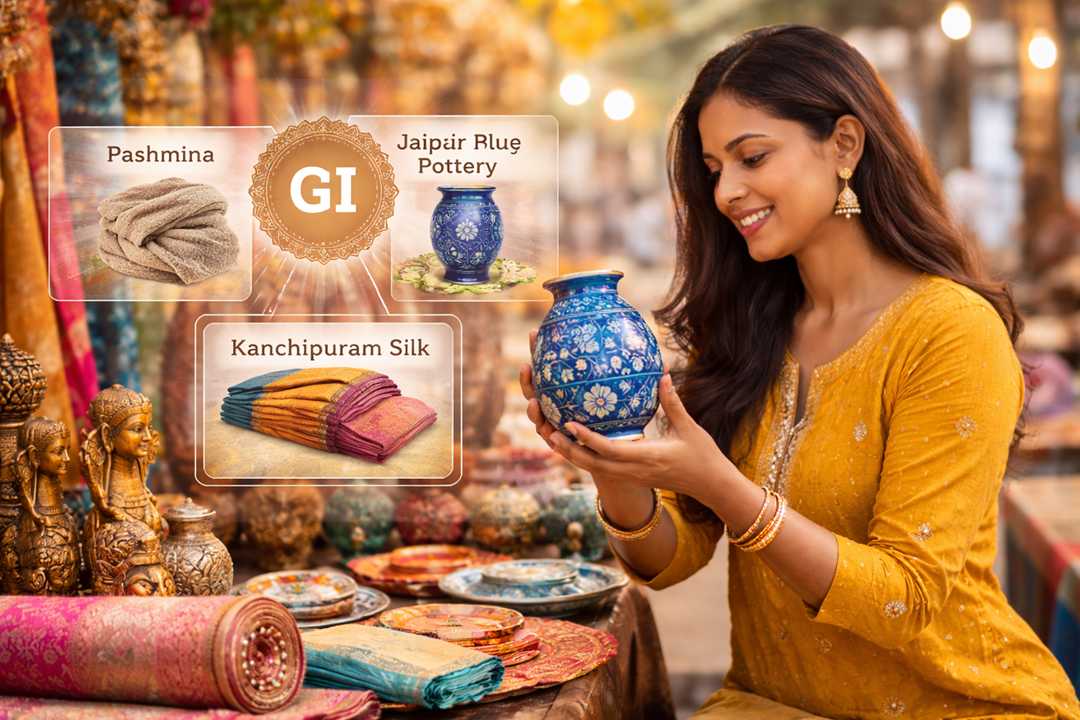
India’s craft traditions are deeply tied to geography. From textiles woven in historic temple towns to pottery shaped in desert communities, many Indian crafts are strongly associated with the regions where they originated. To protect these traditions, India uses the Geographical Indication (GI) tag, a certification that links a product to its place of origin and traditional production methods.
For buyers, understanding GI-tagged crafts helps ensure authenticity. These tags not only protect artisans and cultural heritage, but they also guide shoppers toward genuine handcrafted products rather than mass-produced imitations.
This guide provides a state-by-state overview of some of India’s most recognized GI-tagged crafts, helping collectors, gift buyers, and international shoppers identify authentic regional products.
What A GI Tag Means For Buyers
A Geographical Indication tag confirms that a product comes from a specific region and follows traditional production techniques unique to that location. These techniques often develop over centuries, shaped by local materials, climate, and cultural practices.
For buyers, the GI label acts as a trust signal. It indicates that the product’s characteristics—such as design patterns, materials, or craftsmanship—are tied to its origin. For example, a GI-tagged textile might use traditional weaving techniques only practiced in a particular town, while a ceramic craft might rely on locally sourced clay and distinctive firing methods.
Understanding these distinctions helps buyers avoid replicas that imitate the look of traditional crafts but lack the authentic process behind them.
Famous GI-Tagged Crafts Across Indian States
India currently has hundreds of registered GI products, many of which represent traditional handicrafts. The following table highlights several well-known examples and the regions associated with them.
| State | GI-Tagged Craft | Known For |
|---|---|---|
| Rajasthan | Jaipur Blue Pottery | Glazed pottery with Persian-influenced motifs |
| Rajasthan | Sanganeri Block Prints | Fine floral block printing on cotton fabrics |
| Gujarat | Patola Silk | Double ikat weaving technique with complex patterns |
| Uttar Pradesh | Banarasi Silk Sarees | Rich brocade weaving with gold and silver threads |
| Andhra Pradesh | Kalamkari Textiles | Hand-painted or block-printed storytelling fabrics |
| Kashmir | Pashmina Shawls | Ultra-fine wool from Himalayan goats |
| Karnataka | Mysore Silk | Smooth silk fabrics with distinctive zari borders |
| Tamil Nadu | Kanchipuram Silk Sarees | Heavy silk sarees woven with contrasting borders |
These crafts represent only a small portion of India’s regional traditions, but they demonstrate how craftsmanship often evolves within specific cultural environments.
Rajasthan: A Hub For Traditional Craftsmanship
Rajasthan is one of India’s most recognized regions for traditional crafts. Its desert climate, royal heritage, and vibrant artistic traditions have produced some of the country’s most iconic handicrafts.
Jaipur Blue Pottery, for instance, stands out because it uses a unique quartz-based ceramic technique rather than typical clay. The craft is known for its bright turquoise glaze and intricate floral motifs influenced by Persian design.
Similarly, Sanganeri and Bagru block printing are famous textile traditions from Rajasthan. Both rely on wooden blocks and natural dyes, but they differ in color palettes, motifs, and printing techniques. Buyers interested in understanding these differences can explore guides explaining the Sanganeri vs Bagru block print differences, which help distinguish the two styles during purchase.
Textile Heritage From Northern And Southern India
Many of India’s most famous GI-tagged crafts are textiles, reflecting the country’s long weaving traditions.
Banarasi silk from Varanasi is known for its elaborate brocade patterns and use of metallic threads. Historically worn by royalty and aristocrats, these sarees remain among the most prestigious garments in Indian fashion.
In southern India, Kanchipuram silk sarees are recognized for their durability and bold contrasting borders. These sarees often incorporate temple-inspired designs and are commonly worn during weddings and major cultural ceremonies.
The diversity of weaving techniques across regions highlights how local traditions influence everything from fiber choice to dyeing methods.
Kashmir And The Craft Of Luxury Fibers
Among India’s most globally recognized GI products are Pashmina shawls from Kashmir. These shawls are crafted from extremely fine wool collected from Himalayan goats and spun into lightweight yet warm textiles.
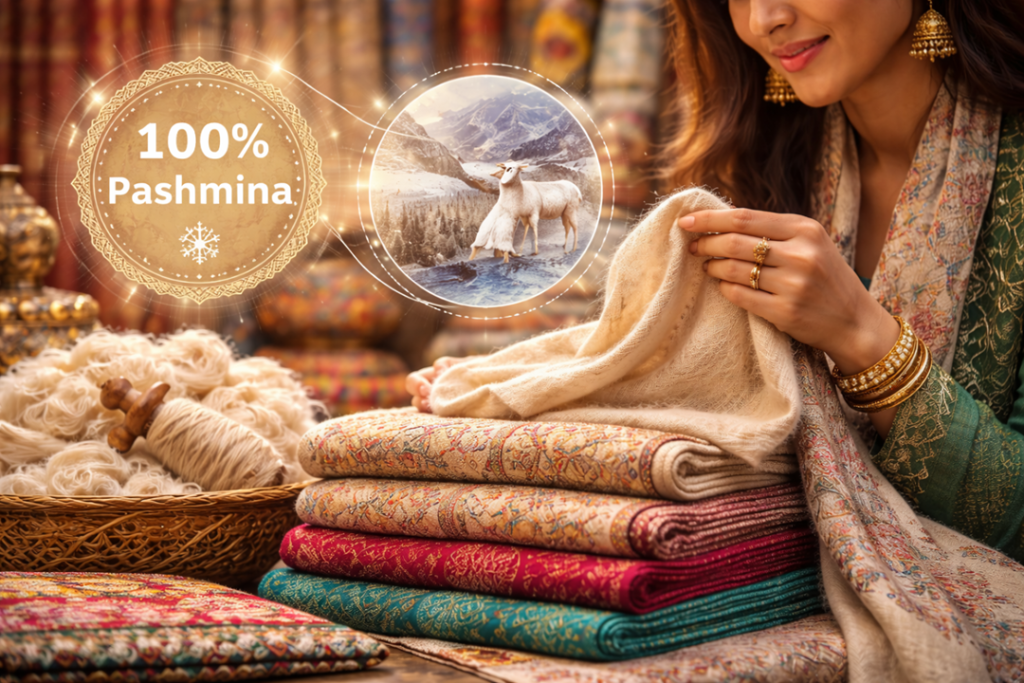
Authentic Pashmina involves a complex process that includes hand spinning, weaving, and detailed finishing work. Because of the craft’s international reputation, buyers often encounter imitations made from blended wool or synthetic fibers.
Understanding regional production methods helps buyers identify authentic products and appreciate the craftsmanship behind them.
Why Regional Knowledge Matters When Buying Crafts
For many shoppers, handcrafted goods represent more than decorative objects—they reflect cultural history and artisanal skill. Knowing the region behind a craft provides insight into how the product was made and why it carries certain design characteristics.
Regional knowledge also helps buyers recognize quality markers. For instance, certain motifs or dye techniques may be exclusive to specific villages or production clusters.
Organizations such as the official Geographical Indications Registry of India maintain records of certified GI products and help protect these traditional crafts from misuse and imitation.
Building A Smarter Craft Buying Strategy
Buying authentic Indian crafts involves more than simply choosing a visually appealing item. Understanding the craft’s origin, materials, and production process can help buyers make more informed decisions.
A practical approach includes:
- Learning which crafts are associated with specific regions
- Checking whether the product carries GI recognition
- Understanding the traditional materials and techniques involved
These steps help ensure that purchases support the artisans who continue to preserve India’s craft heritage.
The Cultural Value Behind GI-Tagged Crafts
GI-tagged crafts represent a bridge between tradition and modern markets. While these products are often admired for their beauty, they also sustain artisan communities and preserve regional knowledge passed down through generations.
For buyers, exploring India’s GI-tagged crafts offers an opportunity to connect with the country’s cultural diversity while supporting authentic craftsmanship.
Whether purchasing textiles, pottery, or handcrafted décor, understanding the regional origins of these products allows buyers to appreciate the deeper story behind each piece.