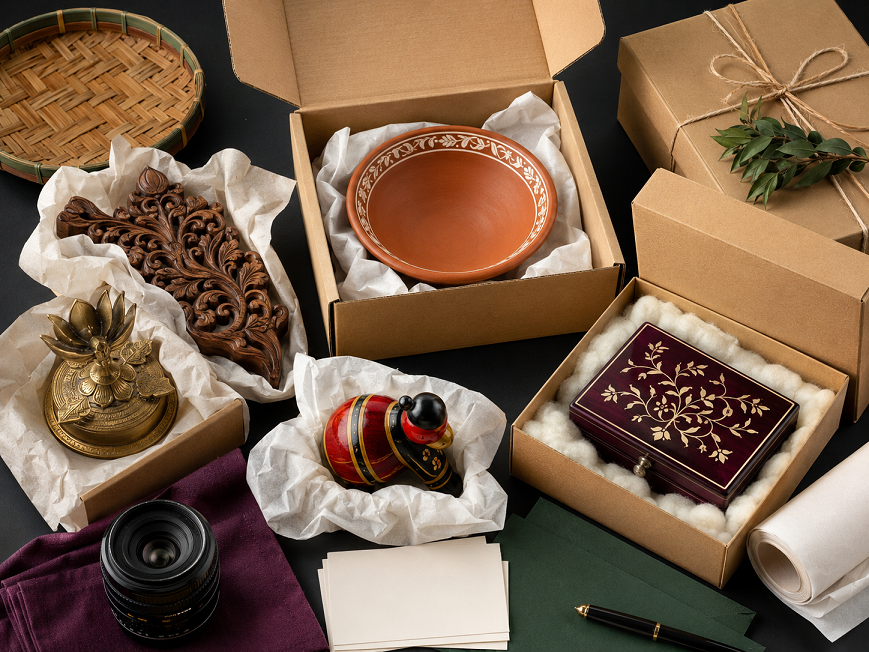
Dilli Haat GI Fest 2026 arrives at the right moment for India’s non-textile craft sellers. The official Indian Handicrafts event calendar lists GI Fest – Non Textiles Based Crafts at Dilli Haat, INA Market, Kidwai Nagar West, Delhi, from July 16 to July 31, 2026, with 78 stalls. That makes the event more than a Delhi craft-shopping stop. It is a live test of how well non-textile artisans can turn verified origin into buyer trust.
For Shimply readers, the phrase “verified origin” matters because non-textile handmade products often face a harder trust problem online than textiles. A buyer can compare fabric texture, drape, and weave through photos and descriptions. But for metalwork, woodcraft, pottery, stone carving, terracotta, lacquerware, jewellery, leather craft, toys, baskets, bamboo craft, glasswork, shell craft, natural-fiber decor, and ceremonial objects, the buyer often needs deeper proof: material, region, maker role, production process, safe packaging, authenticity language, and whether a famous craft name is being used correctly.
That is where GI-linked events matter. A Dilli Haat stall can introduce the craft. A clear product page can keep the buyer’s trust after the fair ends.
Why Dilli Haat GI Fest 2026 Matters For Non-Textile Crafts
Dilli Haat has long worked as a public-facing bridge between artisans and urban buyers. The GI Fest 2026 non-textile edition adds another layer: origin-based trust. Instead of grouping everything under vague handmade labels, a GI-focused event encourages buyers to think about place, technique, reputation, and producer identity.
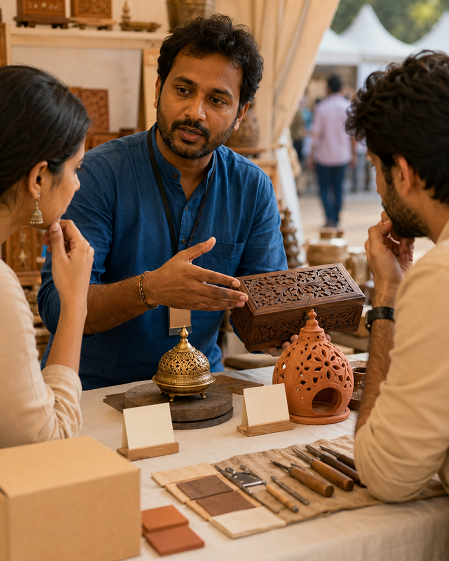
The official event page lists the event type as Dilli Haat, the title as GI Fest – Non Textiles Based Crafts, the event dates as 16/07/2026 to 31/07/2026, and the venue as INA Market, Dilli Haat, Kidwai Nagar West, Kidwai Nagar, Delhi, 110023. For sellers, those details matter because they create a time-bound buyer-discovery moment at a known craft venue.
A non-textile craft stall at this kind of event is not only selling objects. It is selling confidence. Buyers need to know whether a wooden object is genuinely linked to a region, whether a metal craft is handmade or cast in bulk, whether a painted piece is original or a cheap imitation, and whether a decorative item can be safely packed and shipped.
That is why GI Fest should be treated as a seller-training moment as much as a sales opportunity. Every buyer question asked at the stall can become future product-page content.
What Verified Origin Means In A GI Context
IP India explains that a Geographical Indication identifies goods originating from a definite geographical territory and having a special quality, reputation, or other characteristics linked to that place. For manufactured goods, the goods should be produced, processed, or prepared in that territory. IP India also says GI registration gives legal protection to registered geographical indications, helps prevent unauthorized use, supports exports, and promotes the economic prosperity of producers.
For non-textile crafts, that definition is practical. Verified origin is not only a label. It is a claim that should be supported by accurate product naming, maker or seller clarity, material detail, and region-specific context.
A buyer should not have to guess whether a product is truly linked to a GI-recognized craft. The product page should answer that clearly. It should say the craft name, region, material, production method, maker or seller role, and whether the seller is an artisan, cooperative, authorized user, reseller, collective, or curator.
Shimply’s guide to GI-tagged Indian crafts by state explains the same buyer-side problem: regional craft names become useful only when shoppers can connect the name with origin, verification, and responsible buying.
In online commerce, verified origin is a trust tool. It helps buyers support real craft communities and helps sellers avoid competing only on price.
Why Non-Textile Crafts Need Stronger Proof Than Generic Handmade Labels
Non-textile crafts carry many different risks. A metal item may use unclear alloy content. A wooden product may be machine-carved but marketed as hand-carved. A clay object may be fragile in shipping. A lacquered product may need special care. A painted craft may be copied from a protected design or sacred motif without context. A stone or shell object may raise sourcing questions. A jewellery item may need material disclosure.
That variety makes generic product pages weak. “Traditional handmade decor” is not enough. A buyer needs to know what the product is, where it is from, what it is made of, how it is made, how it should be used, and how it will arrive safely.
Non-textile crafts also create more packaging anxiety. A buyer can imagine a folded textile arriving safely. A terracotta lamp, carved wooden figurine, metal inlay box, lacquer toy, ceramic bowl, or filigree ornament needs stronger packaging proof. The seller should show the product wrapped, boxed, cushioned, or placed in gift packaging.
This is where verified origin and practical selling meet. A GI-linked craft may attract a buyer, but the buyer will still ask: Will this break? Is it safe to gift? Is the material real? Is the name accurate? Is the seller credible?
What A GI Product Page Should Explain
A strong GI product page should behave like a careful artisan at a stall. It should not overwhelm buyers with legal language, but it should answer the questions that affect trust.
| Product Page Element | Why It Matters For GI Crafts | Buyer Trust Signal |
|---|---|---|
| Registered Craft Name | Prevents vague or misleading naming | Shows origin awareness |
| Region Or Cluster | Connects product to place | Builds authenticity context |
| Material Details | Explains wood, metal, clay, lacquer, stone, shell, or other inputs | Reduces uncertainty |
| Maker Or Seller Role | Clarifies artisan, cooperative, reseller, or curator status | Builds accountability |
| Process Photos | Shows handmade work or finishing steps | Separates craft from imitation |
| Packaging Proof | Reassures buyers about fragile products | Supports gifting and shipping |
| Care Instructions | Prevents misuse and damage | Lowers return risk |
This structure is especially useful for non-textile crafts because buyers may not understand the material just by looking at a photo. A close-up image of a wood grain, metal finish, clay surface, lacquer shine, or carved detail can tell the buyer more than a generic beauty shot.
Sellers should also avoid unclear wording. If a product is inspired by a GI craft but not made by authorized producers or from the named region, the listing should not imply otherwise. Accurate naming protects buyers and protects the craft’s reputation.
How Dilli Haat Footfall Can Become Online Buyer Trust
The strongest part of a physical event is conversation. Buyers ask questions that sellers may forget to answer online. At Dilli Haat GI Fest, those questions can become a product-page checklist.
If buyers ask whether a pottery item is food-safe, the product page should explain its intended use. If they ask whether a wooden item is polished or painted, the seller should add finish details. If they ask whether metal will tarnish, the listing should include care notes. If they ask whether a fragile product can be shipped outside Delhi, the seller should show packaging.
The event also gives sellers a chance to test product language. Buyers may not search for the formal GI name first. They may search by object type, city, use, or gift occasion. A product title can combine both: “GI-Linked Cuttack Silver Filigree Gift Box” if the claim is accurate, or “Handmade Lacquer Toy From A Verified Craft Seller” if that is the stronger buyer-facing description.
The goal is not keyword stuffing. The goal is buyer clarity. A title should tell shoppers what the object is, where it comes from, and why it is trustworthy.
Why Seller Profiles Matter For GI Crafts
A product page explains the object. A seller profile explains who stands behind it. For GI-linked crafts, both matter.
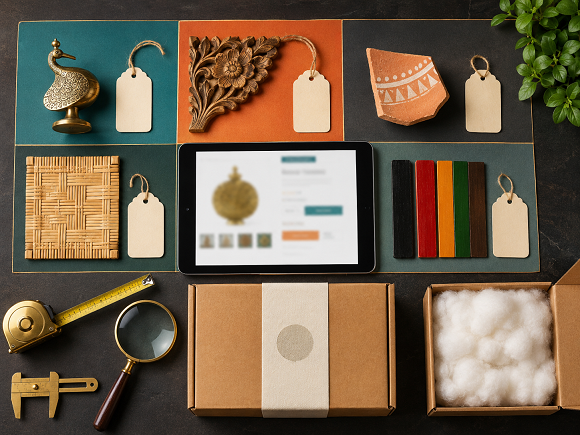
A strong seller profile should include the seller’s craft category, state or cluster, role in production, product range, packaging capability, custom-order rules, and care guidance. It should also be careful with authorization claims. If the seller is an authorized user of a registered GI, that should be stated accurately. If the seller sources from a cooperative or artisan group, the profile should explain that relationship without exaggeration.
Buyers are increasingly cautious about vague marketplace claims. Words like “authentic,” “traditional,” and “heritage” need support. A seller profile gives those words context.
For non-textile craft sellers, the profile can also reduce cultural misunderstanding. If the craft uses ritual forms, regional symbols, or traditional motifs, the seller can explain appropriate use and avoid presenting sacred or culturally sensitive objects as casual novelty items. That matters for buyer respect as well as brand trust.
How Non-Textile Crafts Can Become Gift-Ready
Many non-textile crafts are naturally giftable, but sellers still need to make the gift decision easy. A buyer should be able to see who the gift suits, how it will be packaged, whether it is fragile, and whether care instructions are included.
A metal craft may need anti-tarnish notes. A wooden craft may need moisture guidance. A pottery piece may need breakage-safe packaging. A lacquer item may need heat and scratch warnings. A jewellery item may need size, material, and storage detail. A decorative item may need placement advice.
Gift readiness is not only about a box. It is about reducing uncertainty for the buyer and the recipient. A craft product becomes more valuable when it arrives with a short origin card, care card, and safe packaging.
For sellers at GI Fest, this is a major opportunity. Buyers who visit Dilli Haat may purchase one item in person, but they may reorder later for weddings, housewarmings, festivals, corporate gifts, or overseas friends. That repeat demand depends on clear online product pages.
Why Photos Need To Show Process, Scale, And Packaging
Non-textile craft photography should do more than make the product look attractive. It should answer risk-based questions.
A good product page should show the full object, close-up detail, scale in hand or beside a neutral object, material texture, underside or back where relevant, packaging, and use context. For fragile items, the packaging photo is especially important. For decorative items, a home-styling image can help buyers imagine placement. For jewellery, a scale image helps prevent disappointment.
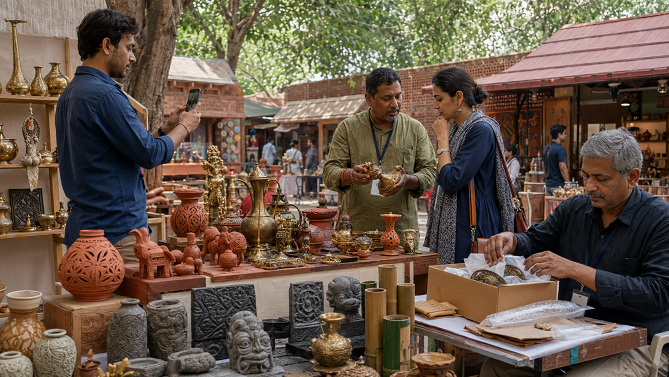
Process photos can also strengthen verified origin. A buyer seeing a craftsperson carving, shaping, polishing, painting, coiling, soldering, or finishing a product is more likely to understand the value. The photos should be real and respectful. Sellers should avoid staged poverty visuals, fake workshop scenes, unreadable certificate props, or stock images that do not match the actual product.
Photography is proof. For GI-linked crafts, proof is part of the product.
What Buyers Should Check Before Purchasing GI Non-Textile Crafts
Buyers should ask better questions before purchasing GI-linked non-textile crafts online. Start with the craft name and region. Does the seller explain where the craft comes from? Does the product page show real photos? Does it explain the material? Does it show packaging? Does it include care instructions?
For fragile products, ask how the item is packed. For metal, ask about tarnish and cleaning. For wood, ask about finish and moisture exposure. For clay, ask whether it is decorative or functional. For jewellery, ask about size, weight, and material. For culturally sensitive objects, ask about proper use and avoid treating sacred forms as novelty decor.
Be careful with listings that use famous GI names without proof. A low price is not always suspicious, but a vague description is. A trustworthy seller should be able to explain the product without pressure.
What Dilli Haat GI Fest Can Teach Handmade Marketplaces
Dilli Haat GI Fest 2026 highlights a larger marketplace lesson: GI-linked craft needs structured information. Online platforms should not treat GI craft listings like ordinary decor listings. They should give sellers fields for region, craft name, material, maker role, care, packaging, and verification.
A better marketplace template could ask sellers to clarify whether the item is made by an artisan, cooperative, authorized user, designer, reseller, or curated marketplace. It could require material disclosure and care instructions. It could prompt packaging photos for fragile goods. It could encourage process photos and origin notes.
These details help honest sellers stand out. They also make it harder for vague or misleading listings to borrow famous craft names without context.
For Shimply’s audience, the lesson is clear: verified origin is not a decorative badge. It is a product-information system.
How Verified Origin Wins Buyer Trust
Dilli Haat GI Fest 2026 shows why non-textile craft sellers need to connect cultural recognition with practical selling. A GI-linked event can draw buyers to the stall, but trust is built through what happens next: accurate product names, real seller profiles, material disclosure, process photos, care cards, packaging proof, and honest claims.
For artisans, verified origin can protect value when it is used carefully. It helps buyers understand why a product is more than a generic handmade object. It gives sellers a reason to explain place, process, and reputation. It supports better pricing because the buyer sees the craft’s identity and labor more clearly.
For buyers, verified origin creates a smarter way to shop. It helps them choose products that are tied to real regions and craft communities instead of vague “heritage-style” listings.
The GI Fest at Dilli Haat may end on July 31, but the seller lesson should last longer. Non-textile craft sellers who turn event visibility into clear, verified, gift-ready product pages will be better positioned to win buyer trust long after the fair closes.