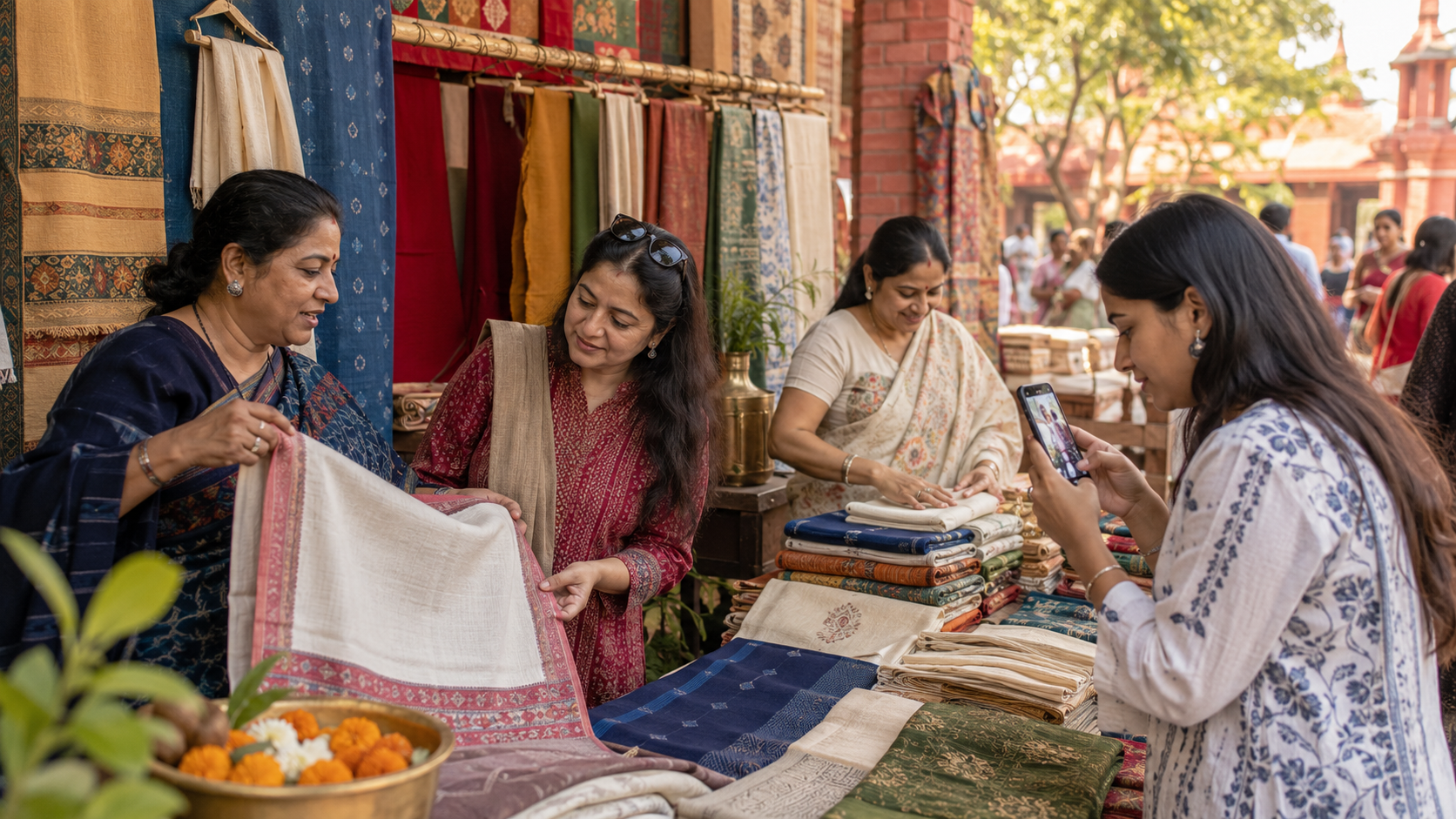
National Handloom Day 2026 at Dilli Haat is more than a seasonal craft event in New Delhi. It is a reminder that women artisans are central to India’s handloom economy, yet many still need stronger online seller profiles to convert event visibility into long-term buyer trust. The official Indian Handicrafts event calendar lists “National Handloom Day 2026 – Women artisans practicing Artistic Textiles” at Dilli Haat, INA Market, Delhi, from August 1 to August 15, 2026. The Development Commissioner (Handlooms) also lists the slot as “National Handloom Day Special – Bunkar Didi Dilli Haat 01.08.2026 – 15.08.2026.”
For Shimply readers, the event matters because handloom buying is increasingly shaped by trust signals. Buyers do not only want a beautiful saree, stole, dupatta, chadar, runner, shawl, or textile accessory. They want to know who made it, where it came from, what material it uses, how it should be cared for, whether the seller is credible, and whether the purchase supports real artisans rather than vague “handmade-style” listings.
That is why women artisans need more than a stall, a product photo, or a festival mention. They need digital seller profiles that carry their identity, craft process, product standards, and buying terms beyond Dilli Haat.
Why National Handloom Day At Dilli Haat Matters
National Handloom Day is observed on August 7, and the 2026 Dilli Haat event gives women artisans practicing artistic textiles a two-week public platform in one of Delhi’s best-known craft marketplaces. Dilli Haat’s format matters because it brings together shoppers, tourists, Delhi residents, craft buyers, students, designers, and gift shoppers in a physical setting where textiles can be touched, compared, discussed, and purchased.
That in-person experience is valuable, especially for handloom. Buyers can feel fabric weight, examine borders, ask questions about weaving, and understand color more accurately than they can from a screen. Yet the problem begins after the event. A buyer may remember a woman artisan’s textile but forget her name. A visitor may want to reorder later but have no clear seller page. A boutique buyer may ask for a catalogue but receive only scattered photos. A gift buyer may want shipping details, care instructions, and packaging options but find no digital profile.
This is the gap that stronger seller profiles can solve. A Dilli Haat stall creates discovery. A seller profile creates continuity.
Women Artisans Are Not A Side Story In Handloom
India’s handloom sector is deeply dependent on women workers. According to the Fourth All India Handloom Census 2019–20 data cited by PIB, India had 35,22,512 handloom workers, including 25,46,285 women workers, 9,75,733 male workers, and 494 transgender workers. That means women accounted for a dominant share of the handloom workforce.
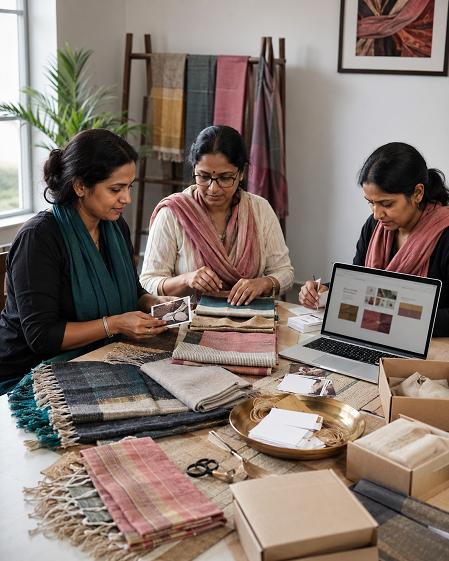
Those numbers should change how sellers, buyers, and marketplaces talk about handloom. Women are not simply helpers in the background of textile production. Many are weavers, allied workers, dyers, spinners, finishers, embroiderers, sellers, quality checkers, and family-business operators. Their labor shapes the final product even when the public seller identity is unclear.
A stronger online profile can help correct that invisibility. It can show the artisan’s role, textile focus, region, materials, production method, and product range. It does not need to reveal private details or turn women artisans into marketing props. It needs to give buyers enough confidence that a real maker or seller stands behind the product.
Shimply’s recent guide to Weaves of India Festival 2026 handloom product pages made a similar point for heritage textiles: event visibility becomes stronger when sellers translate it into product pages that answer buyer questions clearly.
What A Strong Seller Profile Should Include
A seller profile should work like a digital introduction at the stall. It should explain who the seller is, what she makes or sources, where the craft comes from, and how buyers can purchase responsibly. For women artisans at a handloom-focused event, the profile should be practical, respectful, and specific.
A good profile should include the artisan or seller name where appropriate, the region or cluster, textile category, materials used, product types, order capacity, care guidance, packaging options, and preferred contact or purchase method. It should also clarify whether the seller is the weaver, an artisan collective member, a cooperative representative, a designer working with weavers, or a reseller.
That last point is important. Not every legitimate seller is the individual weaver. Some women run small collectives. Some manage finishing and sales. Some work through cooperatives. Some handle embroidery, tassels, or value addition. The profile should explain the role honestly instead of using generic phrases such as “direct from artisans” without proof.
| Seller Profile Detail | Why Buyers Need It | What It Builds |
|---|---|---|
| Artisan Or Seller Identity | Buyers want to know who stands behind the product | Trust and accountability |
| Region Or Cluster | Handloom value is tied to place and technique | Origin clarity |
| Textile Category | Buyers need to understand product type | Better search discovery |
| Material And Care | Handloom products need proper handling | Lower return risk |
| Product Range | Buyers compare gifts, apparel, and home textiles | Easier purchase decisions |
| Ordering And Shipping Terms | Event shoppers may reorder later | Repeat demand |
A profile like this does not need to be complicated. It needs to be complete enough to help a buyer move from admiration to purchase.
Why Artistic Textiles Need Clearer Digital Context
The Dilli Haat event description focuses on women artisans practicing artistic textiles. That phrase can cover a wide range of work: woven sarees, embroidered fabrics, decorative textile panels, hand-painted cloth, handloom stoles, appliqué, natural-dyed pieces, and textile-based craft products.
Online, “artistic textile” is too broad by itself. A buyer needs to know whether the product is wearable, decorative, ceremonial, collectible, washable, framed, giftable, or made to order. A textile wall panel is not bought the same way as a saree. A stole needs different information from a table runner. A hand-painted fabric needs different care instructions from a woven cotton dupatta.
Sellers should avoid relying only on beauty shots. Artistic textiles need process and use-case clarity. A product page should show close-up texture, full product scale, edge finishing, color accuracy, packaging, and care information. The seller profile should then explain the broader craft practice.
A buyer who understands the textile is more likely to pay fairly for it. A buyer who sees only a pretty image may compare it with machine-printed fabric or mass-market decor.
How Dilli Haat Footfall Can Become Online Demand
Dilli Haat gives women artisans direct buyer feedback. That feedback should be captured and turned into online selling material. If visitors ask the same questions repeatedly, those questions belong on the seller profile and product pages.
If buyers ask whether a textile can be washed, add a care section. If they ask whether it can be shipped outside Delhi, add shipping terms. If they ask whether the textile is suitable for gifting, show packaging. If they ask whether the artisan takes custom orders, add a custom-order policy. If they ask about the maker’s story, add a short profile.
The event can also help sellers identify product names that buyers actually remember. A seller may think of a piece by technique, but buyers may remember it by color, use, occasion, or region. A strong online listing can combine both. For example, “Handwoven Cotton Stole From Women Artisan Collective” is more useful than “Beautiful Textile.” “Artistic Handloom Wall Textile With Care Card” gives the buyer a clearer purchase path than “Traditional Art Piece.”
Dilli Haat is a live testing ground. The smartest sellers treat visitor questions as product-page research.
Why Women Artisan Profiles Should Avoid Tokenism
A stronger profile should not reduce a woman artisan to a sentimental story. Buyers deserve authenticity, and artisans deserve professional respect. The goal is not to make every listing about hardship. The goal is to show skill, process, quality, and seller credibility.
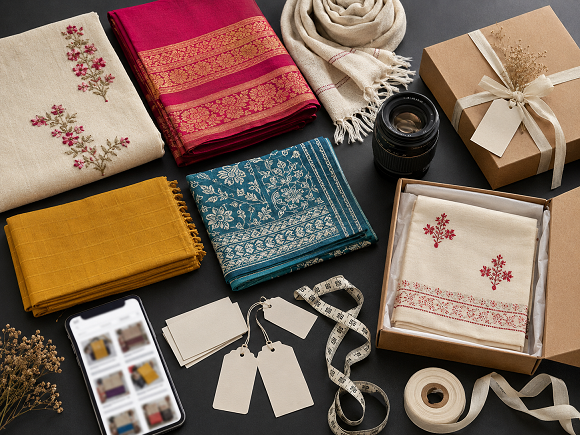
Too many craft pages use emotional language without practical details. They say the purchase “empowers women” but do not explain who made the item, how it was produced, what the material is, or how the buyer can verify the claim. That weakens trust.
A better profile might say: the seller is part of a women-led textile group; the group specializes in handwoven cotton stoles and embroidered home textiles; products are made in small batches; each item includes a care card; custom colors require advance notice; and natural variation is expected in handmade work.
This is respectful because it treats the artisan as a professional. It also helps buyers understand what they are buying.
Women artisan visibility should be specific, not decorative.
Product Photos Should Support The Profile
A seller profile becomes stronger when photos prove the claims. For handloom and artistic textiles, photography should show the product clearly and honestly.
The profile should include a portrait or workshop image when the artisan is comfortable with it, but privacy should be respected. Not every seller needs to show a face. Hands at work, tools, folded textiles, loom details, packaging, and stall displays can also communicate credibility. What matters is that the photos feel real and useful.
Product photos should include full textile views, detail shots, scale references, back-side or reverse detail where relevant, packaging, and care-card presentation. If colors vary by light, include a daylight image and a close-up. If texture is central, include macro shots. If the product is gift-ready, show the actual packaging rather than only a styled prop.
The buyer should be able to answer basic questions without messaging the seller: size, color, texture, use, care, and presentation.
Seller Profiles Help With Search
A profile is not only for human trust. It also helps search discovery. Buyers may search by region, material, technique, artisan type, gift use, or event connection. A seller profile can connect those terms naturally.
Useful profile language might include “women handloom artisan,” “artistic textile seller,” “Dilli Haat handloom seller,” “handwoven gift textiles,” “regional handloom sarees,” “cotton textile gifts,” or “handmade textile decor,” but only when those terms accurately describe the products.
Search should never become keyword stuffing. The strongest profile reads naturally and gives specific details. Search engines and AI answer systems are more likely to understand a seller when the page includes clear entity signals: person or group, craft, location, material, product type, event, and buyer use.
For women artisans, this matters because vague listings make them invisible. A profile that says “traditional handmade items” is difficult to find. A profile that says “women-led handloom textile seller offering handwoven stoles, sarees, and artistic textile gifts from a specific region” is more discoverable and more trustworthy.
What Marketplaces And Event Organizers Can Do
Women artisans should not have to solve digital visibility alone. Marketplaces, event organizers, cooperatives, and government-linked craft platforms can help by creating simple profile templates.
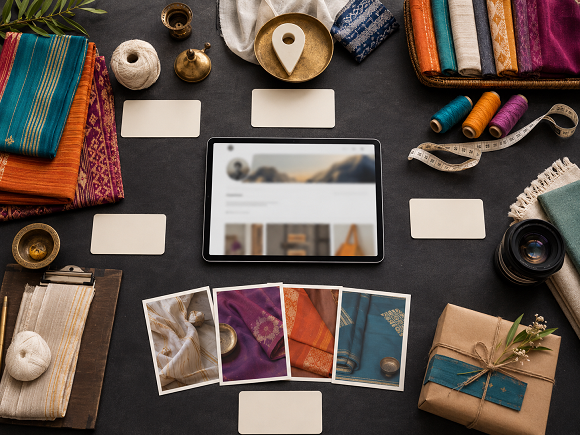
A good event profile template could ask for seller name, state, craft category, products, materials, price range, care needs, contact method, shipping availability, and whether custom orders are accepted. It could also include space for three product photos and one process photo.
For a Dilli Haat event, even a simple digital directory would help buyers find artisans after the visit. A QR code at the stall could lead to a profile page, catalogue, or verified contact point. The page should avoid fake claims and should not expose private personal information. It should focus on selling clarity.
Organizers can also offer short training before events: how to photograph products, write a profile, explain care instructions, handle buyer inquiries, and prepare a basic catalogue. These small steps can improve post-event demand.
A stall is temporary. A profile can keep working after the stall closes.
What Buyers Should Look For Before Purchasing
Buyers visiting Dilli Haat or shopping online after the event should look for seller clarity. Ask who made the product, where it comes from, what material is used, how it should be cared for, and whether the seller can provide packaging or shipping.
For artistic textiles, ask whether the product is meant for wearing, display, home decor, gifting, or collection. Ask about dimensions. Ask whether colors may vary. Ask whether custom orders are possible and how long they take. Ask whether the item is ready to ship or made to order.
A good seller should be able to answer these questions without pressure. If the product page already answers them, even better. That is the sign of a professional handmade seller.
Buyers should also avoid vague listings that use women artisan language without product detail. A claim about supporting women is meaningful only when the seller also provides honest information about the product and seller role.
Why Stronger Profiles Can Protect Handmade Value
National Handloom Day 2026 at Dilli Haat gives women artisans a valuable public platform, but the larger opportunity is digital continuity. Women make up a major share of India’s handloom workforce. Their visibility should not vanish when the fair ends.
Stronger online seller profiles can help women artisans build repeat customers, clarify product value, reduce buyer uncertainty, and compete against vague handmade-style listings. They can show the difference between a real artistic textile and a mass-produced imitation. They can help buyers understand care, origin, material, and purpose before purchasing.
For Shimply’s handmade-commerce audience, the lesson is direct: product pages sell the item, but seller profiles sell trust. Women artisans practicing artistic textiles need both. Dilli Haat can introduce their work to buyers in person. A clear, respectful, search-ready online profile can help that work travel farther.