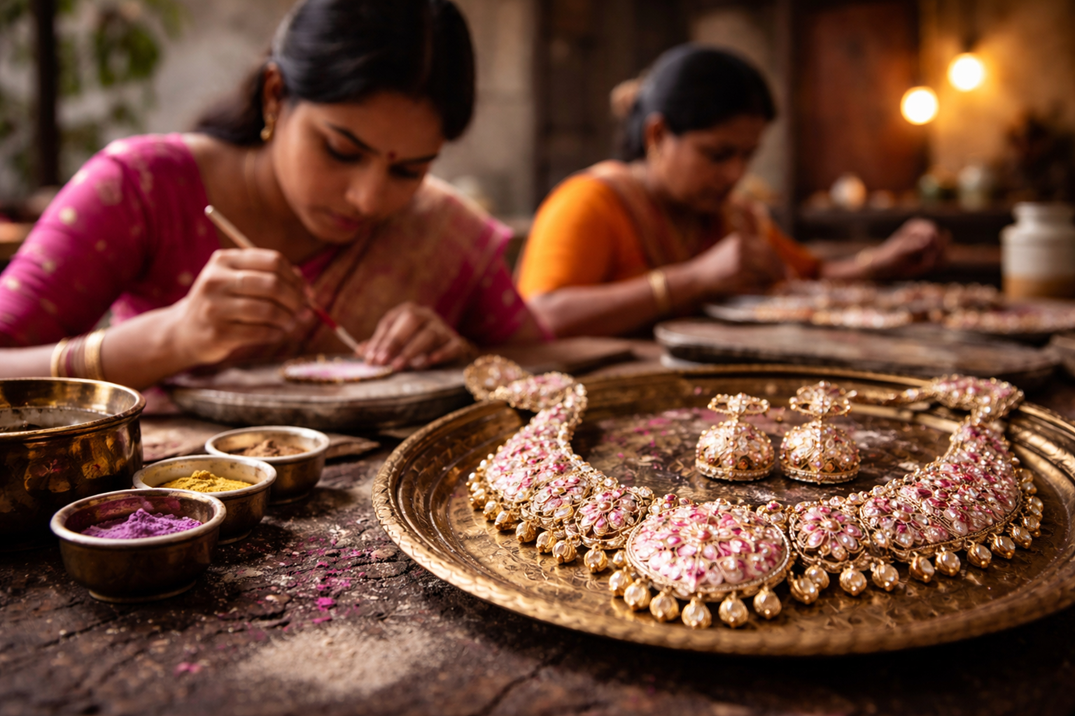
In recent months, Gulabi Meenakari from Varanasi has stepped into the international spotlight, drawing attention from global buyers, collectors, and luxury jewelry markets. What was once a niche decorative enamel art practiced by a limited group of artisans is now being recognized as a high-value, culturally rich craft with strong collector appeal.
For buyers, this shift matters. As demand grows, so does the risk of imitation. Understanding what Gulabi Meenakari is, where it comes from, and how to identify authentic pieces is now essential for anyone considering a purchase.
What Gulabi Meenakari Is And Why It Stands Out
Gulabi Meenakari is a distinctive form of enamel work that originated in Varanasi, Uttar Pradesh. The word “Gulabi” refers to its signature pink palette—delicate floral motifs rendered in soft rose tones against metallic surfaces like silver or copper.
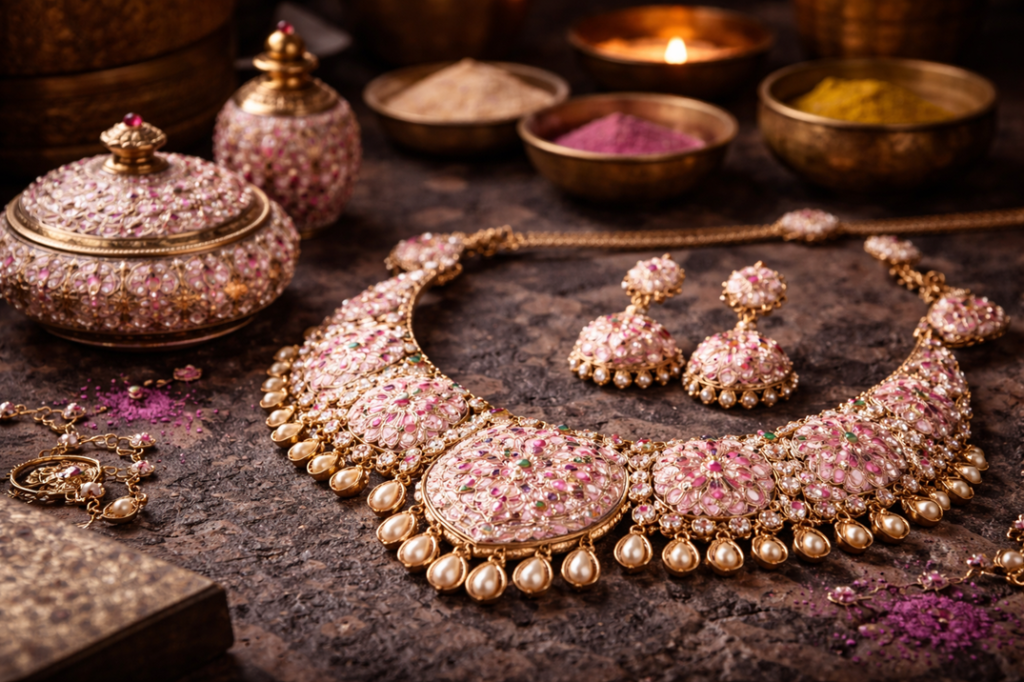
Unlike more widely known Meenakari styles from Jaipur, Gulabi Meenakari focuses on fine detailing, pastel coloration, and intricate floral storytelling. Each piece is handcrafted using traditional firing techniques, where colored enamel is fused onto metal surfaces at high temperatures.
The result is not just decorative—it’s collectible. Authentic pieces often carry a museum-like quality, blending artistry with heritage.
Why Global Demand Is Increasing
Recent exhibitions and international showcases have brought Gulabi Meenakari into a broader luxury conversation. As highlighted in this recent coverage of Varanasi’s GI-tagged craft gaining global recognition, buyers are beginning to view it as more than a souvenir—it’s now positioned as a heritage luxury product.
Several factors are driving this demand:
- Increased awareness of GI-tagged Indian crafts
- Rising interest in slow-made, handcrafted luxury
- Growth of global markets for cultural jewelry
- Limited artisan production, which creates scarcity
This combination of authenticity, scarcity, and cultural depth is what makes Gulabi Meenakari particularly attractive to collectors and international buyers.
GI Tag And What It Means For Buyers
Gulabi Meenakari holds a Geographical Indication (GI) tag, which formally recognizes it as a craft unique to its region of origin—Varanasi.
For buyers, this matters because a GI tag:
- Confirms the product’s regional authenticity
- Protects traditional techniques from mass replication
- Helps distinguish genuine pieces from generic enamel work
You can explore official listings through the GI registry of India, which documents recognized crafts and their origins.
This is also why understanding broader GI-tag verification principles is critical when buying online—especially for crafts that are gaining popularity and attracting imitation.
Key Differences Between Gulabi Meenakari And Other Meenakari Styles
While Meenakari exists across India, each region has its own identity. Gulabi Meenakari stands apart in several important ways:
| Feature | Gulabi Meenakari (Varanasi) | Jaipur Meenakari |
|---|---|---|
| Color Palette | Soft pinks, pastels | Bold reds, greens, blues |
| Motifs | Floral, delicate, symmetrical | Geometric and Mughal-inspired |
| Base Metal | Often silver or copper | Gold commonly used |
| Finish | Subtle, refined | Vibrant, high contrast |
| Market Position | Collector and niche luxury | Mainstream jewelry market |
For buyers, this distinction is essential. Many imitation products attempt to pass off generic enamel work as Gulabi Meenakari without matching its color signature or craftsmanship detail.
How To Identify Authentic Gulabi Meenakari
As demand rises, so does the presence of imitations—especially in online marketplaces. Authenticity comes down to a combination of visual cues, craftsmanship, and sourcing.
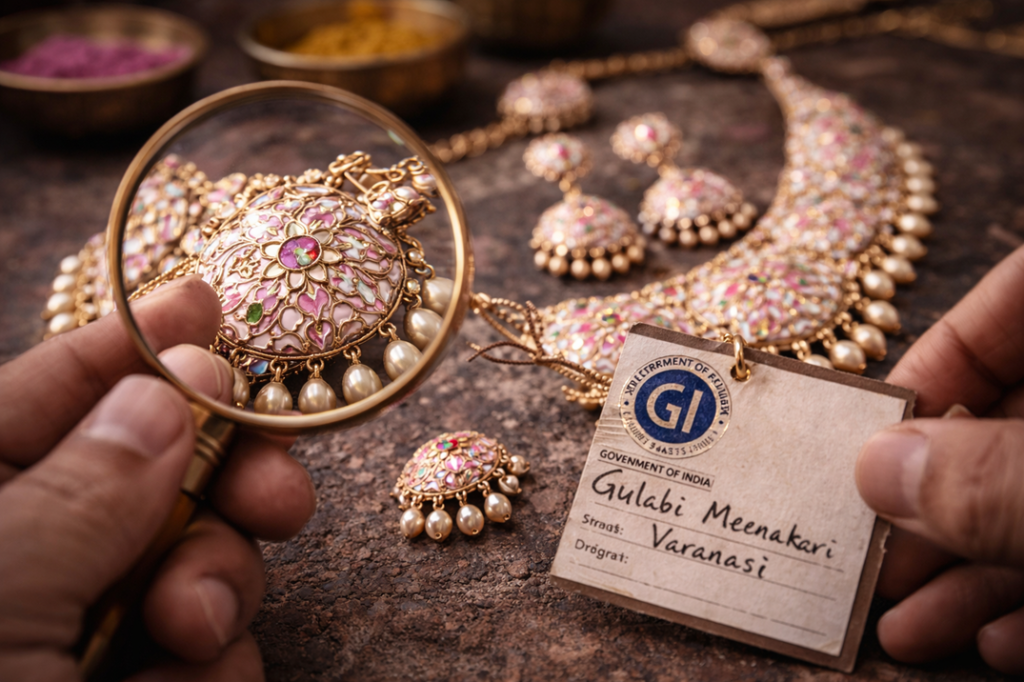
Look closely at the following:
- Color tone: Genuine Gulabi Meenakari uses soft, powdery pink shades—not bright or synthetic hues
- Detail precision: Floral patterns should be symmetrical and finely executed
- Surface finish: Smooth enamel without uneven bubbling or rough textures
- Back detailing: Authentic pieces often show careful finishing even on non-visible surfaces
- Seller transparency: Reputable sellers will disclose origin, artisan background, and process
For buyers already exploring regional crafts, this same verification mindset applies when comparing other traditional forms like Sanganeri and Bagru block prints, where subtle differences also define authenticity.
Pricing And Market Positioning
Gulabi Meenakari is no longer positioned as a low-cost decorative craft. Its pricing reflects:
- Skilled manual labor
- Limited artisan clusters
- High rejection rates during firing
- Increasing global demand
| Product Type | Typical Price Range (India) | Export / Premium Market |
|---|---|---|
| Small Jewelry (earrings, pendants) | ₹1,500 – ₹5,000 | $50 – $120 |
| Decorative Plates / Boxes | ₹5,000 – ₹15,000 | $120 – $300 |
| Collector Pieces / Custom Work | ₹15,000+ | $300+ |
Prices can vary significantly depending on intricacy, metal base, and artisan reputation. If a product is priced unusually low, it often signals machine-made enamel or non-authentic production.
What Buyers And Collectors Should Know
For collectors, Gulabi Meenakari represents a transition point in Indian crafts—where traditional artistry meets global luxury demand. This creates both opportunity and risk.
The opportunity lies in acquiring pieces before the market fully matures. The risk lies in buying imitations disguised as heritage crafts.
Serious buyers should prioritize:
- Direct artisan or verified seller sourcing
- GI-tag awareness
- Craft-specific knowledge
- Long-term value over short-term pricing
As more Indian crafts gain global recognition, Gulabi Meenakari stands out as a case study in how regional identity, craftsmanship, and authenticity can reshape buyer behavior worldwide.