
Kashmir has long been synonymous with refined craftsmanship. Nestled in the Himalayas, the region has developed a unique artistic identity shaped by natural resources, cultural influences, and centuries of artisanal tradition. From luxurious textiles to intricate woodwork, Kashmiri handicrafts are recognized worldwide for their precision, elegance, and cultural depth.
For buyers, Kashmir offers some of India’s most distinctive handcrafted products—but also requires careful attention to authenticity. Understanding what makes these crafts unique helps ensure that every purchase reflects genuine artistry rather than imitation.
Why Kashmir Is Known For Premium Craftsmanship
Kashmir’s craft traditions evolved under royal patronage and were influenced by Persian, Central Asian, and Mughal design aesthetics. The region’s cold climate also played a role, encouraging the development of textiles like Pashmina that provide warmth without sacrificing elegance.
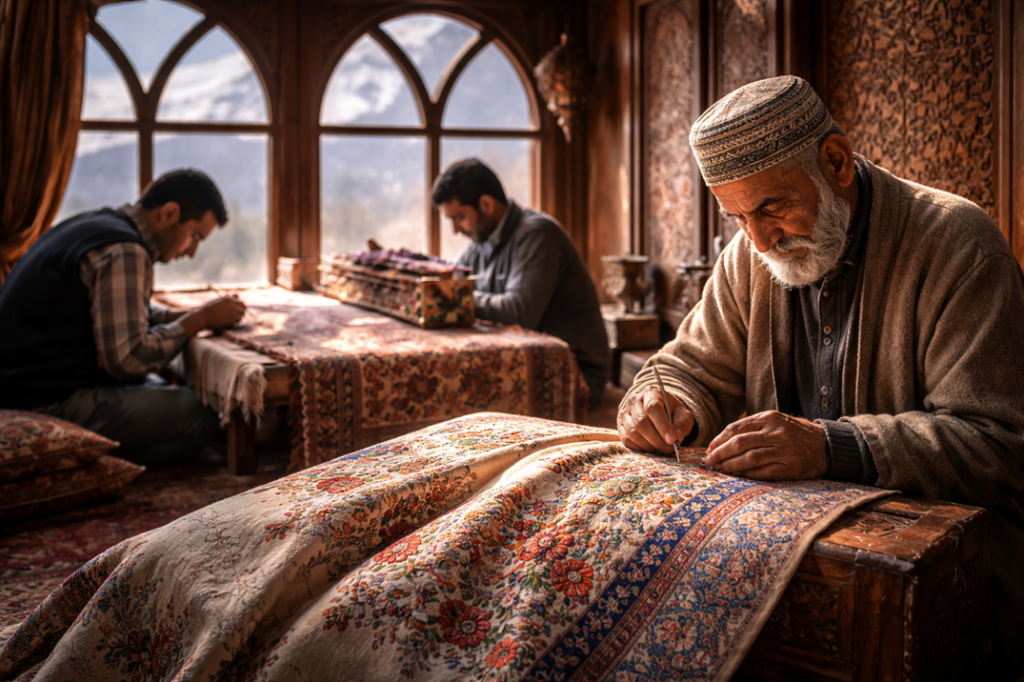
What sets Kashmiri crafts apart is the level of detail and labor involved. Many items require weeks—or even months—of manual work, making them highly valued among collectors and global buyers.
For those exploring regional craft diversity, Kashmir represents the luxury end of India’s handicraft spectrum.
Key Handcrafted Products From Kashmir
Kashmir produces a wide range of handcrafted items, each tied to specific artisan communities and techniques.
| Craft | Category | Known For |
|---|---|---|
| Pashmina Shawls | Textiles | Ultra-fine wool, lightweight warmth |
| Kashmiri Carpets | Home Decor | Hand-knotted silk and wool rugs |
| Paper Mâché | Decorative Art | Hand-painted intricate designs |
| Walnut Wood Carving | Furniture & Decor | Detailed carving on solid wood |
| Sozni Embroidery | Textiles | Fine needle embroidery patterns |
Each of these crafts reflects a unique combination of material, technique, and cultural influence.
Pashmina Shawls: The Symbol Of Kashmiri Luxury
Pashmina is perhaps the most iconic product from Kashmir. Made from the fine undercoat of Himalayan goats, authentic Pashmina shawls are known for their softness, warmth, and lightweight feel.
The production process involves:
- Hand spinning delicate fibers
- Traditional weaving techniques
- Detailed finishing work
Because of its global demand, Pashmina is also one of the most frequently imitated crafts. Buyers should be cautious of products labeled as “Pashmina” at unusually low prices, as these are often blends or synthetic alternatives.
Kashmiri Carpets: Precision In Every Knot
Kashmiri carpets are among the most intricate handmade rugs in the world. These carpets are typically hand-knotted using silk or wool and feature elaborate floral or geometric patterns.
What distinguishes authentic Kashmiri carpets is:
- High knot density
- Detailed pattern symmetry
- Natural dye usage
The time required to produce a single carpet can range from several months to years, depending on complexity. This makes them both functional decor and long-term investment pieces.
Paper Mâché: Colorful Decorative Art
Kashmiri paper mâché is a unique craft that transforms waste paper into beautifully decorated objects such as boxes, ornaments, and vases.
Artisans shape the base using paper pulp before applying multiple layers of paint and lacquer. The designs often feature:
- Floral motifs
- Bird patterns
- Traditional Kashmiri themes
The final product is lightweight yet durable, making it popular among buyers looking for decorative pieces that are easy to transport.
Walnut Wood Carving: Craftsmanship In Solid Wood
Kashmir is one of the few regions in India where walnut wood is abundantly available, and artisans have mastered the art of carving it into furniture and decor items.
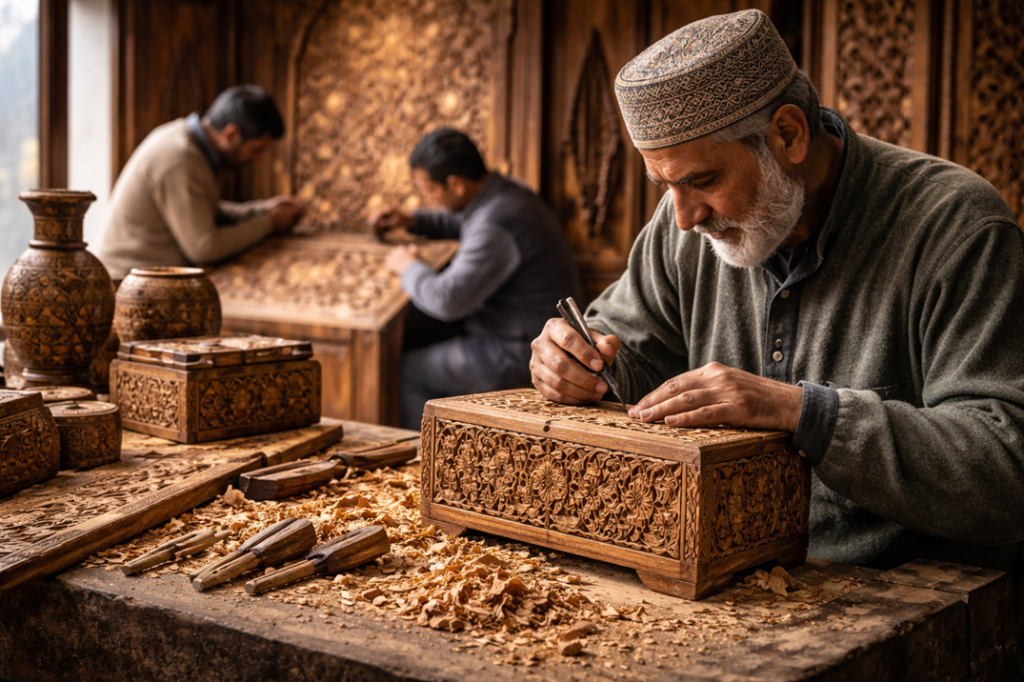
Common products include:
- Tables and cabinets
- Jewelry boxes
- Wall panels
Authentic walnut wood carvings are known for their depth and detail, often featuring floral and lattice patterns carved directly into solid wood surfaces.
Sozni Embroidery: Fine Needlework Tradition
Sozni embroidery is a delicate form of needlework often used on shawls and garments. Unlike heavier embroidery styles, Sozni is characterized by fine, precise stitches that create intricate patterns without adding bulk.
This technique requires exceptional skill and patience, making authentic pieces highly valued among collectors and textile enthusiasts.
Pricing And Value Considerations
Kashmiri handicrafts are generally positioned in the mid-to-high price range due to their craftsmanship.
| Product | Entry Price | Premium Range |
|---|---|---|
| Pashmina Shawls | Moderate | Very high |
| Carpets | High | Extremely high |
| Paper Mâché | Affordable | Moderate |
| Walnut Wood | Moderate | High |
| Embroidery | Moderate | High |
Buyers should approach unusually low prices with caution, especially for labor-intensive products like Pashmina or carpets.
How To Identify Authentic Kashmiri Crafts
Authenticity is critical when purchasing Kashmiri handicrafts, particularly online.
Buyers should look for:
- Clear mention of origin (Kashmir-specific production)
- Details about materials and techniques
- Evidence of handmade irregularities
- Transparent seller information
For those building broader knowledge, understanding traditional textiles of Gujarat and other regional crafts can help sharpen the ability to distinguish authentic handmade products across India.
Additionally, organizations like the Crafts Council of India provide valuable insights into traditional artisan practices and preservation efforts.
A Legacy Of Craftsmanship Worth Preserving
Kashmir’s handicrafts represent more than luxury—they embody generations of skill, cultural exchange, and artistic expression. Each piece tells a story of the region’s heritage and the artisans who continue to preserve it.
For buyers, investing in authentic Kashmiri crafts is not only about acquiring beautiful objects but also about supporting a tradition that has endured for centuries.