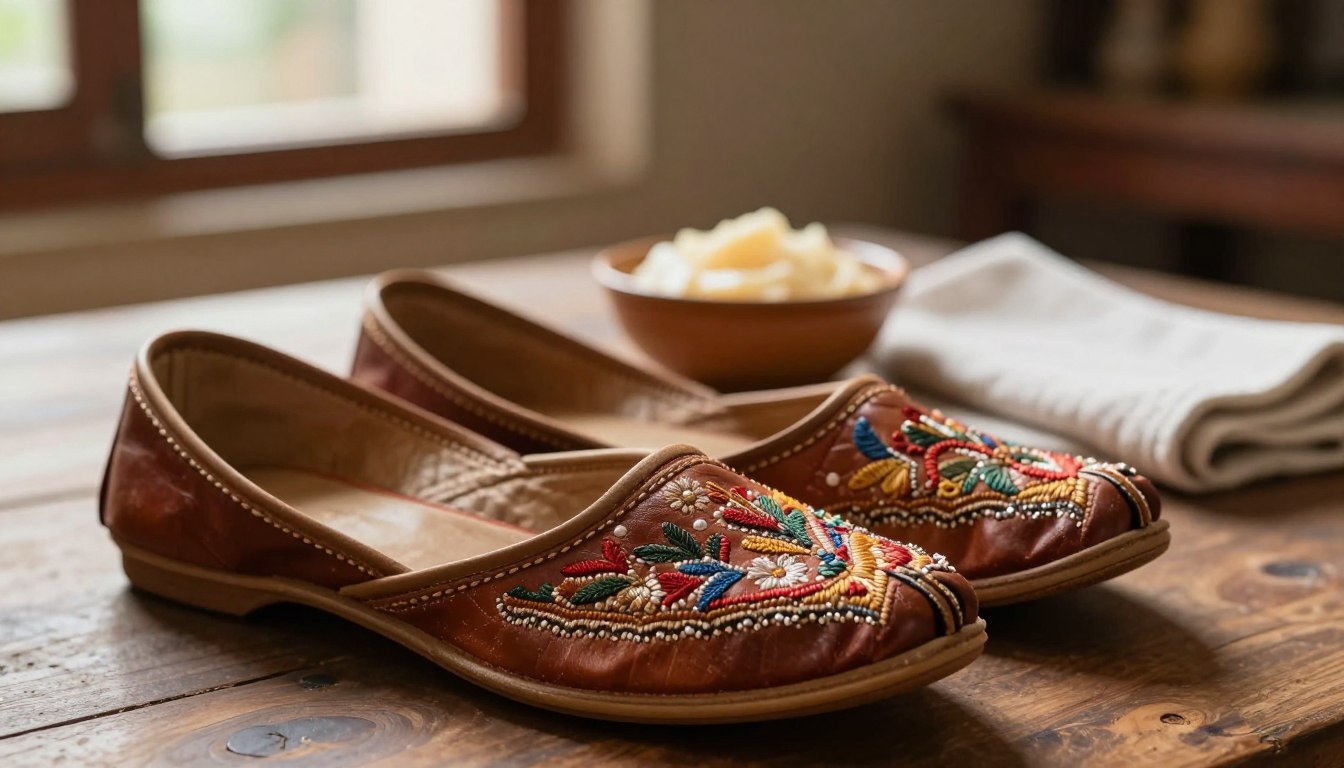
New shoes should make you happy, not hurt. But, that first time can be painful, causing blisters and raw skin.
This is often due to stiff materials and a tight fit. It’s tough when you want to break in leather shoes that look great.
Punjabi juttis are special. They’re made from vegetable-tanned leather and crafted by hand for quality.
This traditional making gives them great durability and beauty. But, they need a gentle break-in process.
You should have a perfect, comfy fit from the start. This guide shows you the No-Blister Method, a sure way to get it.
It lets you enjoy comfort without losing the shoe’s cultural charm.
Intro: Comfort without compromises
Forget the old saying that beauty comes with pain. A well-made jutti is meant to feel like a second skin, not cause blisters. This idea sets apart mass-made shoes from those made with care.
Real handcrafted leather juttis from places like Punjab are made to fit your foot perfectly. The leather is tough on purpose. It gets softer and fits your foot better over time.
The right fit should feel snug, not painful. Traditional Pakistani and Chappian Muktsar makers shape the shoe to fit your foot. The details, like embroidery, don’t get in the way. You’ll feel comfortable right away, and it will get even better over time.
- Structural Integrity: The leather has memory, allowing it to hold a shape while remaining pliable.
- Anatomical Lasting: The footbed and upper are constructed around a form that mirrors the natural foot, not a generic template.
- Gradual Adaptation: The break-in process is a collaborative journey between you and the artisan’s work.
So, the goal to soften juttis isn’t about forcing them to change. It’s about letting high-quality materials evolve naturally. The next parts will show how to make this snugness into legendary comfort.
Understanding vegetable-tanned leather behavior
New juttis may feel stiff at first, but that’s a sign of quality. The leather is made from natural materials and will mold to fit your feet perfectly over time. To break in leather shoes, you need to know how your material behaves.
Vegetable-tanned leather is made from natural tannins from plants. This old-fashioned method is slower but creates a strong, breathable leather. It changes shape based on how you wear it and care for it.
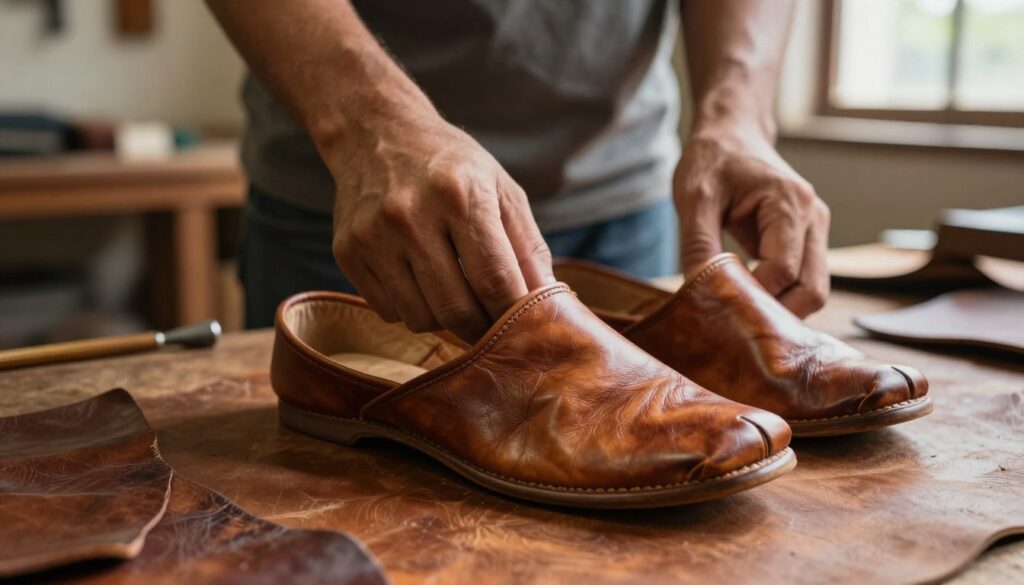
Vegetable-tanned leather is different from chrome-tanned leather. The table below shows why it’s better for high-quality shoes.
| Feature | Vegetable-Tanned Leather | Chrome-Tanned Leather |
|---|---|---|
| Tanning Process | Natural plant tannins (oak, chestnut) | Chemical chromium salts |
| Initial Feel | Firm and structured | Softer immediately |
| Break-in & Molding | High moldability; shapes to your foot | Less molding capacity |
| Aging & Patina | Develops a rich, unique patina over years | Color may fade or crack |
| Breathability | Excellent moisture-wicking | Can retain heat and moisture |
The leather’s natural makeup affects how it behaves. At first, it’s firm to provide support and structure. This stiffness is a good thing, as it helps the shoe keep its shape while molding to your foot.
The leather changes as you wear it. With gentle, consistent use, it softens and molds to your foot. This is why you should use soft, gradual methods to stretch it. Hard pressure can harm the leather, but gentle pressure helps it adapt.
Vegetable-tanned leather also absorbs and releases moisture. It may feel stiffer in dry air and softer in humid air. Knowing this helps you wear your shoes when the leather is most pliable and use light conditioning to help the process.
Understanding this makes breaking in your shoes easier. You’re working with the leather, not against it. This knowledge helps you use gentle stretching methods, ensuring your shoes fit comfortably without blisters and last for many years.
Step-by-step break-in: Socks method, heat-free flexing, heel grips, toe stretchers
The No-Blister Method uses careful techniques to shape the leather to fit your foot. Rushing can damage the leather and cause discomfort. The method includes four stretch methods that work with the leather, not against it.
These methods are the socks trick, heat-free flexing, heel grips, and toe stretchers. Each method targets a specific area for a customized fit.
Follow this sequence for the best results. Start indoors during relaxed evenings. Limit initial wear to 30-60 minutes.
The Four Pillars of a Pain-Free Break-In
| Technique | Primary Purpose | Pro Tip |
|---|---|---|
| Socks Method | Gently expands the overall volume and width of the jutti. | Begin with thin socks, progress to athletic socks, then thick wool socks over 5-7 days. |
| Heat-Free Flexing | Loosens the sole and upper, increasing flexibility without drying the leather. | Flex the shoe along its natural bend points for 2-3 minutes, several times a day. |
| Heel Grips | Secures the heel cup to eliminate slippage and friction, the main cause of blisters. | Use silicone or padded adhesive grips. Ensure your heel sits snugly without pinching. |
| Toe Stretchers | Provides targeted relief for tight toe boxes or specific pressure points. | Insert a professional wooden stretcher or a rounded, smooth object for short periods. |
Executing Each Technique
Master the Socks Trick: This classic socks trick is your first line of action. Wear your juttis around the house with progressively thicker socks. The incremental pressure coaxes the vegetable-tanned leather to stretch gradually. This mimics natural wear but accelerates it safely.
If you’re preparing juttis for a wedding, start this process at least two weeks in advance. Consistency is more important than duration.
Apply Heat-Free Flexing: Never use a hairdryer or direct heat. Instead, use your hands. Hold the jutti firmly and bend the sole back and forth at the ball of the foot. Also, gently twist the upper from side to side. This manual manipulation softens the fibers and reduces initial stiffness.
Install Heel Grips for Security: A secure heel is non-negotiable. Adhesive heel grips fill the empty space between your heel and the shoe’s lining. They prevent the up-and-down rubbing that causes blisters. For a perfect fit, the heel should feel hugged, not cramped.
Use Toe Stretchers for Precision: For pinching at the toes, use a targeted tool. Insert a shoe stretcher with a bunion plug or a smooth, rounded object like a handle. Apply gentle pressure for a few hours at a time. Never force it, as this can distort the leather’s shape permanently.
Combining these stretch methods creates a complete break-in strategy. The socks method handles general tightness. Flexing improves overall flexibility. Heel grips and toe stretchers solve specific fit issues.
Remember, patience preserves the leather’s integrity and your comfort. A proper break-in over one to two weeks ensures your juttis will be beautiful and comfortable for years, not just for one event.
What not to do: Soaking, hairdryers, harsh oils
Many people try to speed up the break-in process of their shoe care. But, these shortcuts can harm vegetable-tanned leather. This advice helps you avoid common mistakes to keep your shoes in good shape.
Here are three big no-nos:
- Never Soak or Machine Wash Your Juttis: Water can damage the leather’s fibers. It can also break the glue that holds the shoe together. Always clean spills with a damp cloth.
- Avoid Direct Heat from Hairdryers: Heat from hairdryers can dry out the leather. This makes it brittle and prone to cracking. Letting the shoes soften naturally is safer.
- Steer Clear of Harsh Oils and Chemical Cleaners: Oils and cleaners can damage the leather’s finish. They can darken and discolour the shoes. Use conditioners made for vegetable-tanned leather instead.
These mistakes can harm your shoes’ structure and look. Soaking weakens them, heat causes cracks, and harsh chemicals damage the finish. Knowing why these rules exist helps you make better choices.
Good shoe care is about keeping them in top shape. Avoiding these mistakes lets your juttis develop a nice patina and stay comfortable. Your shoes will appreciate the care you give them.
Long-term comfort: Insoles, rotation, airing
Getting long-term comfort from your shoes is more than just a good fit. It’s about taking care of your shoes and your feet. After the initial break-in, you become a caretaker. This ensures your leather juttis bring joy every day, not just for a short time.
Comfort for the long haul depends on three key things. Learning these will make your shoes last longer and feel better.
- Strategic Insoles for Enhanced Support
- Consistent Rotation for Leather Recovery
- Diligent Airing for Moisture Management
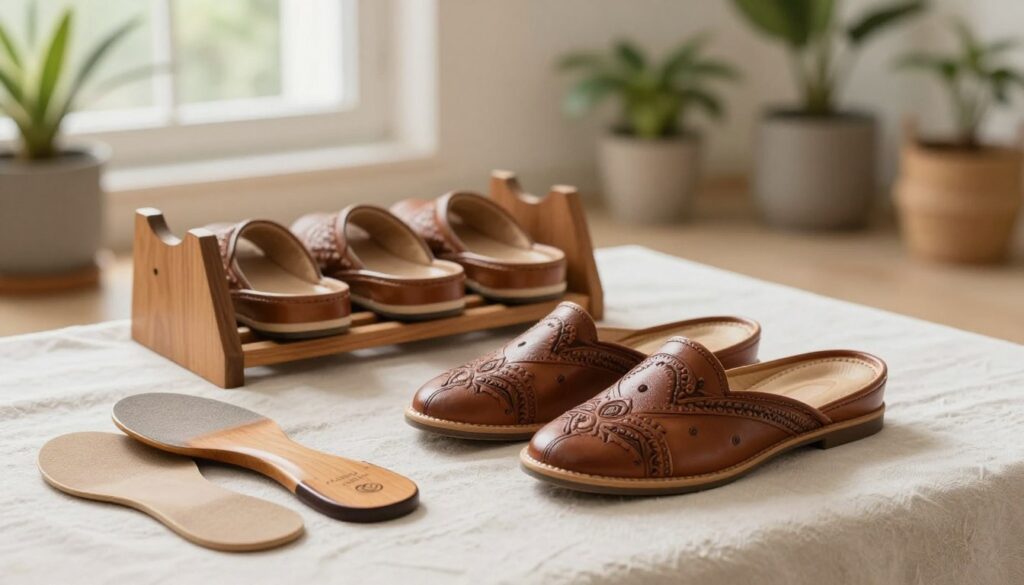
Insoles are your secret weapon for custom comfort. Even after your shoes are broken in, a good insole can make a big difference. Thin, padded, or gel inserts add extra cushioning. They help absorb shock with every step. If you used heel grips during the break-in, a supportive insole can work well with them for total comfort.
Rotation is non-negotiable for leather longevity. Wearing the same pair every day doesn’t let the leather recover. Leather needs to breathe and regain its natural shape. By switching between pairs, you give each one a day to rest. This reduces wear and tear and prevents the leather from getting permanently compressed.
Airing out your shoes is a daily essential. After wearing, moisture from your feet gets trapped. Just leaving your juttis in a well-ventilated area overnight makes a big difference. For the best results, take out any insoles and let them air separately. Using cedar shoe trees helps keep the shape and absorbs moisture. Never store shoes in a sealed bag or direct sunlight. Proper airing is key to smart shoe care and keeping them smelling fresh.
By following these three habits, you become a knowledgeable owner. You move from fixing problems to preventing them. This approach protects your investment and ensures comfort for many seasons. True shoe care is about daily, thoughtful actions.
Care routine: Cleaning, conditioning, odor control
Think of leather jutti maintenance as a simple, three-part ritual: clean, condition, and protect. This consistent shoe care protocol is non-negotiable for preserving the beauty, comfort, and lifespan of your footwear. It transforms them from a seasonal purchase into a lasting investment.
Gentle Cleaning is Fundamental. Always start with a soft, damp cloth to wipe away surface dirt and dust. For stubborn spots, use a tiny amount of mild soap on the cloth, never directly on the leather. This spot-cleaning approach prevents overall saturation. A key “do” is to protect juttis from heavy rain; if they get wet, let them air dry naturally away from direct heat.
Nourish with the Right Conditioner. Conditioning is what keeps vegetable-tanned leather supple and prevents it from drying out and cracking. Apply a dedicated leather conditioner every few months. Look for products containing natural oils like lanolin or beeswax.
These ingredients nourish the leather fibers deeply. This regular nourishment will inherently soften juttis over time, making them more flexible and comfortable with each wear.
Control Odor Naturally. Moisture from wear is the main cause of odors. Combat this with simple, natural solutions. Cedar shoe trees are excellent for absorbing moisture and imparting a fresh scent.
Other effective methods include:
- Placing baking soda sachets inside the shoes overnight.
- Using dried tea bags to absorb odors.
- Ensuring juttis are fully aired out after each wear before storage.
Adopting this straightforward clean-condition-protect habit ensures your juttis remain fresh, supple, and beautiful. This essential shoe care routine is the definitive way to preserve their craftsmanship and continuously soften juttis for enduring comfort.
Repairs & resoling options
A thinning leather sole is a sign of love, not a problem. Your favorite juttis will wear out with time. Getting them professionally repaired can make them last longer and feel better.
Skilled cobblers can fix many issues, including:
- Restitching loose embroidery or embellishments: This keeps your juttis looking beautiful.
- Re-gluing a separated sole: If the leather starts to peel from the base.
- Reinforcing worn heels: This is key if you’ve stretched them a lot.
Adding a thin rubber half-sole is a game-changer. A cobbler sands the old sole and attaches a new one. It’s a big improvement.
Your juttis become more stable and last longer. The rubber also adds a soft cushion. It makes them more comfortable than before.
When you take your juttis for resoling, share their history. Tell the cobbler about how you’ve stretched them and cared for them. This helps them understand the leather’s condition.
Repairs are not a failure. They’re a new chapter for your shoes. A skilled cobbler can restore their look and function. This lets you enjoy your juttis for years to come.
Travel/overseas tips: Humidity and storage boxes
Traveling far or storing shoes for seasons? Keeping leather juttis away from humidity is key. This shoe care step keeps your shoes safe from extreme weather.
Leather juttis are alive and react to their environment. Too much humidity can make them swell and change shape. On the other hand, dry air can make them brittle and crack. So, your storage and travel plans must consider both.
- Use Breathable Bags: Put each jutti in a soft, cloth bag. This lets air in and keeps them from getting scratched.
- Stuff for Shape: Stuff acid-free tissue paper into the toe and heel. This keeps the shoe’s shape and stops creases.
- Position Carefully: Place them in the middle of your luggage, surrounded by soft clothes for extra padding.
Conquering High Humidity
Going to a humid or coastal place? Moisture is your biggest foe. A simple trick is to add silica gel packets in each bag. These small helpers soak up extra moisture, keeping your leather dry.
Combating Dry Conditions
Traveling to dry places or places with dry air? Moisture is sucked out of leather. Before heading to a dry area, condition your juttis lightly. This keeps the leather from cracking in dry air.
The Power of Dedicated Storage Boxes
For keeping juttis at home, a good box is vital. Avoid plastic that traps moisture. Choose a sturdy, breathable box instead. It offers many benefits:
- Dust Shield: Keeps shoes clean between wears.
- Light Barrier: Stops leather from fading from sunlight.
- Organized Space: Prevents crushing and keeps shape.
Learning these travel and storage tips boosts your shoe care game. It makes your juttis look great, feel comfy, and last long, wherever you go.
Quick troubleshooting FAQ + product recommendations
You’ve learned the methods, but specific questions might remain. Let’s address them directly.
How long does breaking in leather shoes take? Breaking in vegetable-tanned juttis takes one to two weeks. Wear them gently every day. Rushing can cause blisters.
What if my heels slip? If heels keep slipping, you need a heel grip. Use adhesive pads from Dr. Scholl’s for extra friction. Wear thicker socks when you first start wearing them.
Can I speed up the process to soften juttis? Yes, but safely. Apply a leather conditioner like Bickmore Bick 4 or Lexol after flexing the shoes. Never use heat or soak them.
How do I prevent future shoe bites? Keep the leather soft. Condition it every few months. Use a fabric protector spray, like Scotchgard, to prevent water stains. Rotate your shoes and use cedar shoe trees from Woodlore to keep them in shape.
What’s the best daily care tip? Always air them out after wearing. A quick wipe with a dry cloth removes dust. This simple habit greatly extends your shoes’ life.
Learning how to break in leather shoes is an investment in lasting comfort. With the right techniques and products, your juttis will fit perfectly, becoming a favorite for years.