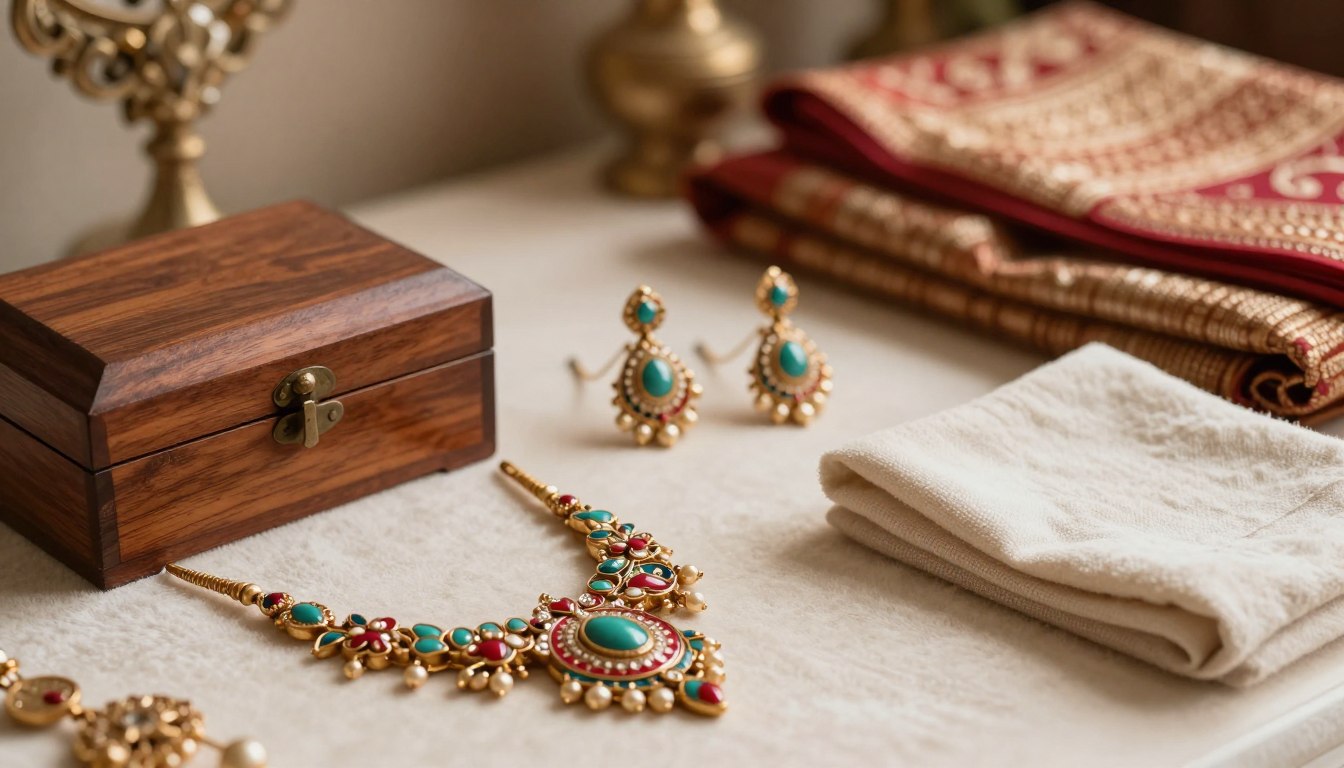
Having Meenakari jewelry is like holding a piece of history. It’s a colorful masterpiece where enamel and metalwork meet. This art form shows centuries of culture and skill.
The enamel details and designs give these pieces a royal shine. But, this beauty can be fragile. Without care, colors fade and metals tarnish.
Proper care is more than just cleaning. It’s about preserving culture. By following a care plan, your jewelry stays beautiful for years. This guide shows you how to keep it looking great.
Intro: Preserve color and shine for decades
Meenakari enamel is glass fused to metal. It’s a beautiful but fragile mix that needs special care. The colors you see are not paint but powdered glass fired onto metal.
This process makes stunning art but also makes it fragile. Like glass, it can crack from thermal shock. It’s also at risk from harsh chemicals and abrasion.
Why is this important for your jewelry? The enamel and gold plating can lose their shine if exposed to threats. Moisture, perfume, and rough handling are the main dangers. Taking care of your jewelry protects its value and sentimental worth.
By caring for your Meenakari jewelry, you become its guardian. You’re keeping a piece of Indian art alive for future generations. This care keeps your jewelry looking vibrant and “royal” for years.
The table below outlines the key vulnerabilities of Meenakari materials and the primary focus for protection:
| Material Component | Primary Vulnerabilities | Protection Focus |
|---|---|---|
| Enamel (Glass Coating) | Thermal shock, harsh chemicals (acids, alkalis), abrasion from hard surfaces | Avoid sudden temperature changes, contact with cleaners/perfumes, and scraping against other objects. |
| Metal Base (Gold/Silver) | Tarnishing (silver), scratching, weakening of solder points | Regular gentle polishing, secure storage to prevent tangling, and stress on clasps. |
| Overall Adhesion | Impact from drops or rough handling | Always handle over a soft surface and put jewelry on last when dressing. |
Knowing a bit and caring consistently makes a big difference. Understanding the glass-based coating helps you make smart choices every day. You show respect for the artisan’s work by storing jewelry carefully and removing it before lotion.
This care lets the color and shine last. It turns a beautiful piece into a lasting symbol of craft and culture.
Do/don’ts: Water, heat, chemicals, perfume proximity
Keeping your enamel jewelry in top shape is easy with a few simple rules. Meenakari pieces are not just jewelry; they are art. But, their bright colors need special care to stay that way.
Knowing why you should follow these rules makes them easier to remember. It helps you take good care of your jewelry with confidence.
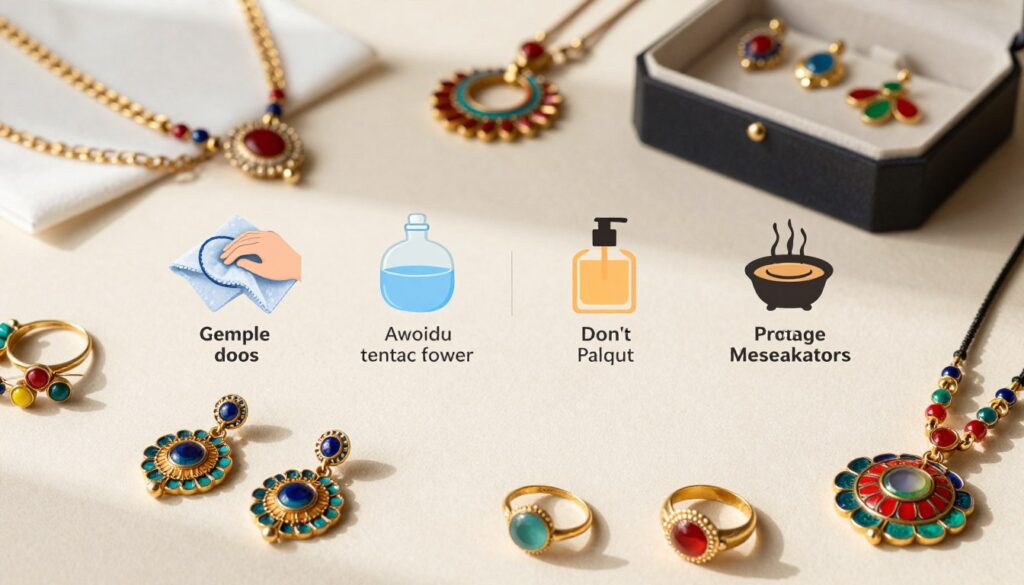
Essential Do’s and Don’ts for Meenakari Care
Follow this list to keep your jewelry looking great for years to come.
The Don’ts: What to Avoid
- Don’t expose to water: Water can damage the enamel, making it dull and cloudy. Always take off your jewelry before bathing, swimming, or working out.
- Don’t subject to heat: Heat can cause the metal and enamel to expand differently, leading to cracks. Avoid direct sunlight, hairdryers, and stovetops.
- Don’t contact harsh chemicals: Chemicals like chlorine and bleach can harm the enamel. Even diluted chemicals in pools and spas are risky.
- Don’t apply perfume or lotion directly: Perfumes and lotions can damage the enamel over time. This makes your jewelry lose its shine.
The Do’s: Positive Habits to Adopt
- Do put jewelry on last: Wear your Meenakari piece after makeup, perfume, and hairspray. This helps protect it.
- Do take jewelry off first: Remove your jewelry as soon as you get home. This prevents damage from household chemicals or water.
- Do wipe gently after wear: Use a soft, dry cloth to wipe your jewelry. This removes oils and salts from your skin.
- Do store immediately: Store your jewelry in a dry place when not wearing it. This is key to good enamel jewelry care.
These rules are the basics of caring for your enamel jewelry. By following them, you protect the beauty and value of your Meenakari pieces.
Cleaning routines for gold/silver bases
To keep your jewelry looking its best, you need a special cleaning plan for the metal base. Gold and silver need different care to stop tarnish and keep colors bright. This guide will show you how to clean your jewelry every day and deep clean it once a month.
There are two main steps: a quick clean after wearing and a deeper clean once a month. The daily clean gets rid of sweat and dust. The monthly clean removes more dirt without harming the meenakari work.
Daily Care Versus Monthly Deep Cleaning
Start with a simple clean after wearing. Use a soft, lint-free cloth to wipe your jewelry. This keeps oils away and stops residue from building up.
For a deeper clean meenakari jewelry, do a monthly deep clean. Use a mild cleaning solution and pay extra attention to small areas. Always clean over a soft surface to avoid damage if the piece falls.
Gold is stable, but the enamel on it is delicate. For a monthly deep clean, mix lukewarm water with a few drops of mild, phosphate-free dish soap.
- Dip a soft-bristled brush (like a clean makeup brush) into the solution.
- Gently agitate the brush over the enameled areas to dislodge dirt.
- Rinse by quickly passing the jewelry under a slow stream of lukewarm water. Do not soak.
- Immediately pat dry with a microfiber cloth, ensuring no moisture remains in the setting.
Stay away from commercial jewelry dips or ultrasonic cleaners. They can crack the enamel with their vibrations and harsh chemicals.
Silver Base Cleaning Protocol
Silver tarnishes easily, so it’s important to prevent this. The goal is to clean meenakari on silver without making it tarnish faster.
For monthly cleaning, use a special anti-tarnish polishing cloth for silver. Rub the metal parts and borders gently. For the enamel, use a dry, soft brush to dust it.
If the metal is very tarnished, use a damp cloth with soap on the silver only. Avoid touching the colored enamel. Rinse and dry right away.
| Aspect | Gold Base Meenakari | Silver Base Meenakari |
|---|---|---|
| Primary Daily Tool | Soft microfiber cloth | Anti-tarnish polishing cloth |
| Deep Cleaning Solution | Mild soap & lukewarm water | Dry brushing & specialized silver cloth |
| Key Risk | Chemical abrasives damaging enamel | Moisture accelerating tarnish on metal |
| Intricate Design Tool | Soft-bristled brush (slightly damp) | Soft-bristled brush (completely dry) |
| Absolute Avoidance | Ultrasonic cleaners, steam, soaking | Liquid silver dips, abrasive pastes |
Being gentle is key, no matter the metal. Avoid harsh chemicals, stiff brushes, and abrasive pastes. When you clean meenakari pieces right, they will shine brightly for years to come.
Storage: Anti-tarnish pouches, silica gel, climate tips for UK/Canada/UAE
Proper storage is key to keeping Meenakari jewelry in top shape. It’s more than just putting pieces in a box. It’s about creating a safe space that protects them from harm.
Start with a soft pouch or a velvet-lined Indian jewelry box. But for long-term protection, you need more. You must fight tarnish, control moisture, and handle your local climate’s threats.
Creating Your Anti-Tarnish Arsenal
First, keep your pieces apart. Never let them touch. This prevents scratches that can dull the enamel’s shine.
Here are some tools you’ll need:
- Individual Anti-Tarnish Pouches: These pouches fight tarnish-causing gases in the air. Each piece has its own safe spot.
- Acid-Free Tissue Paper: Wrap pieces gently before storing. This prevents scratches and doesn’t react with anything.
- Silica Gel Packs: These small packets control humidity. Add a few to your jewelry box drawer to absorb moisture quietly.
Store your collection in a cool, dry place. Avoid direct sunlight and heat sources like radiators. Bathrooms and kitchens are bad places for your jewelry box because of the humidity.
Climate-Specific Storage Challenges
Your location affects how you store your jewelry. A single storage method won’t work everywhere. Here’s how to adjust:
| Climate Region | Primary Challenge | Recommended Storage Solution |
|---|---|---|
| United Kingdom | Persistent dampness and high ambient humidity. | Use a larger silica gel canister inside your storage cabinet. Consider a dehumidifier in the room where jewelry is kept. |
| Canada | Extremely dry, cold air in winter, followed by humid summers. | In winter, keep jewelry away from heating vents. In summer, use lots of silica gel for moisture control. Keep the room temperature steady. |
| UAE & Gulf Regions | Intense heat combined with very high coastal humidity. | Store jewelry in an interior, climate-controlled room. Use anti-tarnish strips inside your box and refresh silica gel packets monthly. |
Pro Tips for a Stable Micro-Environment
For collectors, extra steps are key to preserving jewelry like a museum. Check the humidity in your storage area with a hygrometer. Aim for 40-50% relative humidity.
For a cabinet or safe, add a rechargeable silica gel canister. It shows when it’s full and can be dried in an oven for reuse. This is a cheap, effective way to control humidity.
Make it a habit to inspect your jewelry every few months. This helps catch tarnish or moisture issues early. With this approach, your Meenakari jewelry will stay bright for years.
Travel & gifting: Safe packing, customs considerations
Traveling with your favorite pieces or gifting them to someone special requires care. Meenakari jewelry needs special handling to avoid damage. With a bit of planning, your jewelry will arrive in perfect condition, ready to impress.
Choosing the Right Travel Case for Meenakari
Getting a jewelry travel case is essential. Choose one with padded slots or compartments. This keeps pieces from scratching each other.
A soft interior is best for gold and silver. Look for a case with a secure closure. Always carry your jewelry in hand luggage to avoid damage.
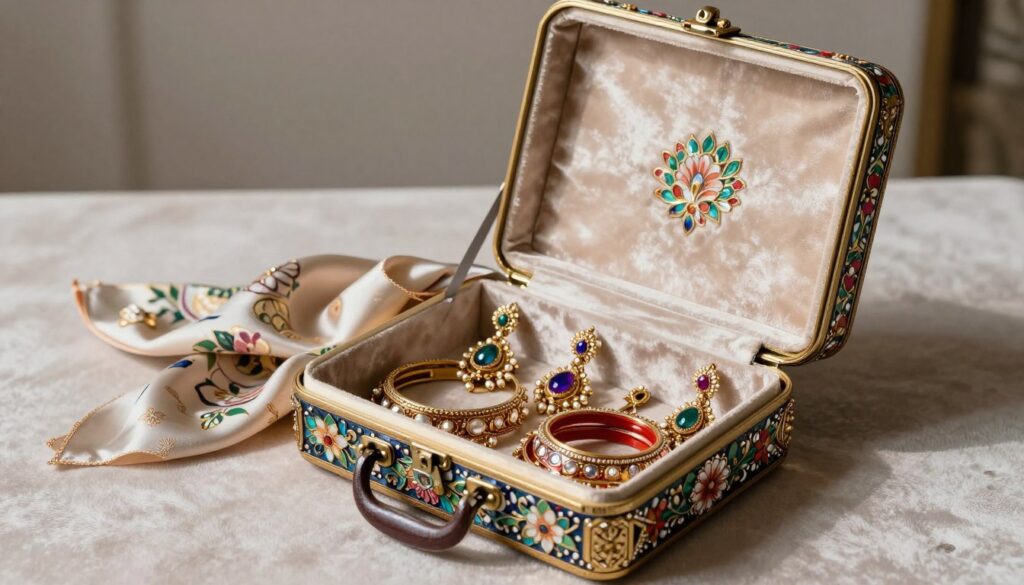
Use a simple travel case to stay safe. It’s less noticeable than a fancy box. Store your case in a cool, dry spot in your bag, away from sunlight.
Navigating Customs and International Travel
Be ready when crossing borders. Pack receipts and certificates of authenticity for your jewelry. Customs might ask for proof of value.
Check duty-free allowances for your destination. Declare your jewelry at entry and exit. This is key for items you plan to bring back.
Keep your travel case with you. The cabin is drier than the cargo hold. This helps maintain a stable temperature.
Gifting Meenakari Jewelry Safely
Giving Meenakari jewelry is a kind act. Package it like you would for travel. Use a strong box with padding for the jewelry.
For valuable gifts, consider insurance and tracking. Include a care guide for the recipient. A personal note about the jewelry’s care adds a thoughtful touch.
When giving in person, put the jewelry in a pouch inside a box. Share basic care tips. This shows you care about the gift’s beauty.
By following these tips, your Meenakari jewelry will stay beautiful, no matter where it goes.
Minor repairs & when to consult a craftsperson
Knowing when to fix something yourself and when to get help is key. Even your favorite jewelry can get damaged over time. Learning to spot these problems helps you make the right choice.
It’s smart to have your jewelry checked by a pro now and then. They can spot loose stones or damaged settings early. Getting regular professional care is part of keeping your jewelry in top shape.
Identifying What You Can Fix at Home
Some small problems can be fixed with a bit of care. The trick is knowing your limits and using the right tools.
A loose jump ring is a common issue. If the clasp or a ring feels loose, you can try tightening it with pliers. Make sure to work on a soft, clean surface to avoid scratches.
Light dust or smudges can be wiped off with a dry, soft cloth. This is a safe first step before using any liquids.
Important: If you’re unsure, it’s better to err on the side of caution. Home fixes should only be for simple mechanical issues, not for the enamel or delicate stone work.
Signs You Need a Meenakari Specialist
Some problems need a pro’s touch. Trying to fix them yourself can lead to more damage and cost.
Hairline cracks in the enamel are a big warning sign. These small cracks can spread if not handled right. Only a craftsperson can fix them properly.
Chipped enamel segments also need a specialist. Repairing enamel chips involves matching colors and firing the glass-like material. It’s not just a matter of gluing and painting.
Loose gemstones in Polki or Kundan settings are delicate. The soft foil backing and detailed setting need a skilled hand to fix without harming the stone or metal.
Worn or faded gold plating on silver-based Meenakari needs expert replating. This process brings back the shine and protects the metal underneath.
Finding the right person is important. Look for a jeweler with experience in enamel work or Indian jewelry techniques. Ask to see their enamel repair work. A true expert will know how to handle Meenakari’s unique challenges.
| Issue Type | Description | Recommended Action |
|---|---|---|
| Loose Jump Ring | A connecting ring is open or weak, but the enamel and stones are intact. | DIY with caution. Gently close with pliers on a soft cloth. |
| Surface Dirt | Light dust or oils from handling on the metal surfaces. | DIY. Wipe gently with a dry, soft microfiber cloth. |
| Hairline Enamel Crack | A fine, shallow crack visible in the colored enamel. | Consult a craftsperson immediately. Requires professional assessment and filling. |
| Chipped Enamel | A piece of the vitreous enamel is missing, exposing the metal base. | Professional repair only. Needs color matching and kiln work for chip repair. |
| Loose Polki Stone | A flat, uncut diamond feels loose in its foil-backed setting. | Specialist repair required. Foil and setting are extremely delicate. |
If you’re unsure, always choose to get a professional’s help. The cost of proper repair for enamel chips or other damage is worth it. It keeps your jewelry beautiful and valuable for years.
Make sure to schedule a check-up with your jeweler every year or two. This proactive step helps avoid major professional repair needs later on.
Warranty/return expectations from ethical sellers
Ethical jewelry sellers are known for their quality and fair warranty terms. This builds trust and protects your investment. Knowing what to expect helps you care for your Meenakari art better.
What a Standard Warranty Typically Covers
A good warranty from a reputable seller protects you from manufacturing defects. This means issues that happen during making, not from daily use.
For example, if the enamel on your piece lifts or cracks without being damaged, it’s covered. Ethical sellers back their artisans’ work.
It’s important to know what’s not covered. Warranties don’t cover damage from accidents, wrong cleaning, or harsh chemicals. Normal wear, like small scratches, is also not included.
Navigating Return and Exchange Policies
A fair return policy lets you return or exchange items within 15 to 30 days. The item must be in its original condition, with tags and packaging.
Good communication is key for an ethical seller. Their policies should be easy to find online or in sales documents. They’ll tell you about any restocking fees or who pays for return shipping.
Always check these policies before buying. Keep your receipt, warranty card, and product description. This info is important for any claims you might need to make.
Knowing about warranty and return policy details helps you choose sellers who value integrity. This ensures you get beautiful Meenakari jewelry from trusted sources.
Quick checklist + recommended care kits
Keeping your Meenakari jewelry bright is easy with a regular routine. This quick guide covers the key steps for daily care and long-term protection.
Your Daily Meenakari Care Checklist
Follow this simple list to keep your enameled jewelry in top shape.
- Wipe pieces with a dry, soft microfiber cloth after wearing.
- Store each item separately in an anti-tarnish pouch or cloth.
- Keep jewelry away from water, perfumes, and harsh chemicals.
- Remove pieces before swimming, showering, or applying lotions.
- Inspect clasps and settings for minor repairs monthly.
- Use a soft-bristled brush for light dusting only.
Building Your Meenakari Care Kit
A dedicated care kit makes maintenance easy. Gather these items for the best Meenakari jewelry care.
Begin with a premium microfiber cloth, like those from Goddard’s, for safe polishing. Use individual soft jewelry pouches from brands like Tiffany & Co. for storage. Add anti-tarnish strips inside your jewelry box to prevent silver tarnish.
For deeper cleaning, a museum-quality storage box with a soft lining protects against humidity. A magnifying glass helps you spot early signs of wear. With this kit, your Meenakari’s color and shine will last for years.