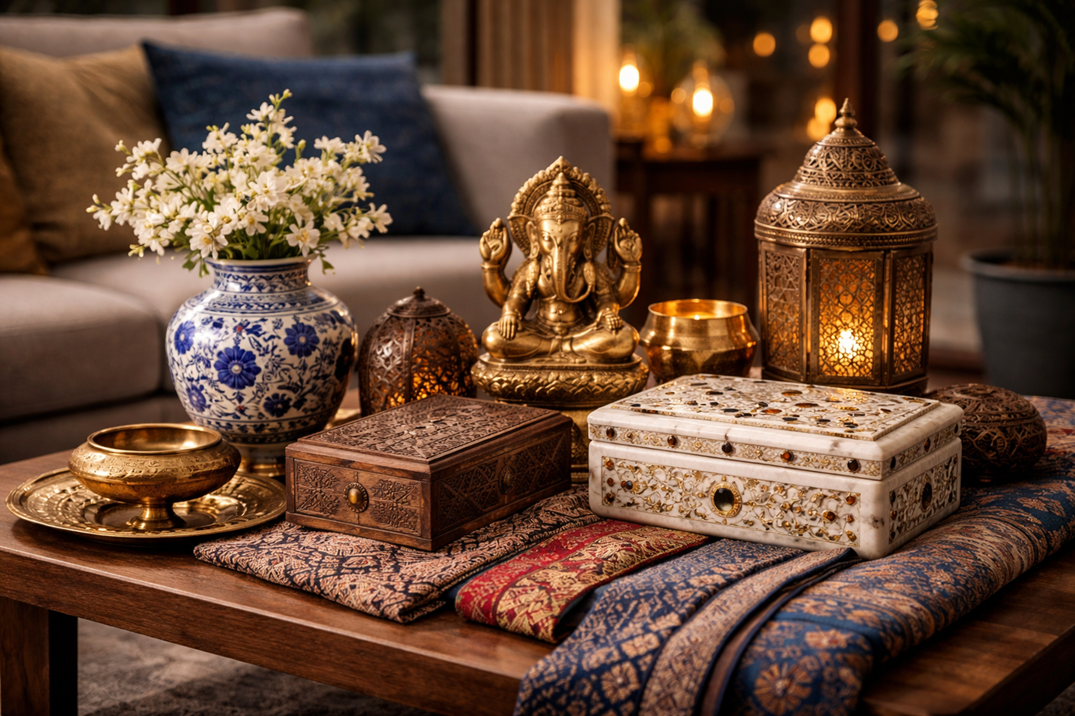
As global interest in authentic craftsmanship continues to rise, handmade Indian home decor is no longer seen as purely decorative—it is increasingly viewed as a long-term investment in culture, artistry, and material quality.
For buyers, the shift is clear. Instead of mass-produced decor, there is growing demand for region-specific, handcrafted pieces that carry heritage value and stand the test of time. But not all handcrafted items are equal. Knowing what to invest in—and why—can make the difference between a meaningful purchase and a decorative impulse buy.
Why Handmade Decor Is Becoming A Long-Term Investment
Recent trends in both Indian and international markets show a move toward slow-made, artisan-driven products. Buyers are prioritizing:
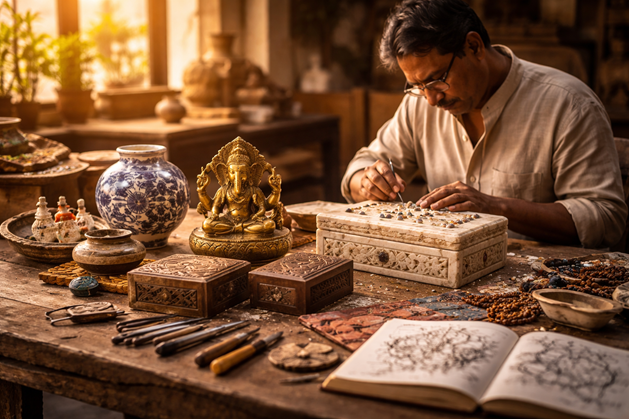
- Authentic craftsmanship over factory production
- Natural materials over synthetic alternatives
- Unique pieces over uniform designs
This shift is also driven by the increasing recognition of GI-tagged and regionally significant crafts, which adds both cultural and financial value to certain decor categories.
For home buyers and collectors alike, handmade decor is now seen as a way to combine aesthetic appeal with long-term significance.
Marble Inlay And Stone Craft From Rajasthan
Marble inlay work, particularly from Rajasthan, is one of the most refined forms of Indian home decor. Inspired by Mughal artistry, these pieces involve embedding semi-precious stones into marble surfaces to create intricate floral and geometric patterns.
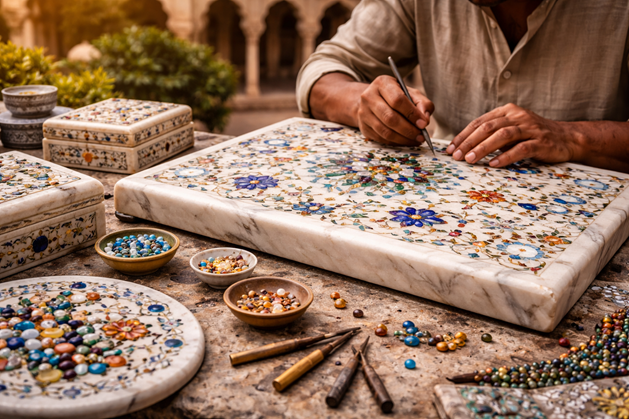
Popular items include:
- Decorative boxes
- Tabletops
- Coasters and trays
| Feature | Buyer Value |
|---|---|
| Craftsmanship | Highly skilled, labor-intensive |
| Durability | Extremely long-lasting |
| Aesthetic | Elegant, heritage-inspired |
| Investment Potential | High |
Because of the precision involved, authentic marble inlay pieces are often positioned as collector-grade decor items.
Jaipur Blue Pottery For Statement Interiors
Jaipur Blue Pottery offers a distinct visual identity with its turquoise palette and Persian-influenced motifs. Unlike traditional ceramics, it uses a quartz-based composition, making it both unique and lightweight.
Ideal uses include:
- Decorative plates and wall pieces
- Vases and jars
- Table accents
For buyers, authenticity matters significantly. Understanding a proper Jaipur Blue Pottery authenticity guide helps ensure that the piece reflects traditional craftsmanship rather than ceramic imitations.
These pieces work especially well in modern interiors, where they provide a contrast between traditional design and contemporary spaces.
Brass And Metal Decor With Cultural Significance
Brass decor remains one of the most versatile and culturally rooted categories in Indian home design. These pieces often serve both decorative and symbolic functions, making them particularly valuable.
Common investment pieces include:
- Sculptures of deities
- Antique-style lamps
- Decorative bowls and trays
What makes brass decor worth investing in is its longevity and evolving aesthetic. Over time, brass develops a natural patina, adding character rather than diminishing value.
Wooden Carvings And Handcrafted Furniture
Woodcraft from regions like Saharanpur is known for its intricate carving techniques and durable construction. Unlike factory-made furniture, handcrafted wooden decor offers both structural integrity and artistic detail.
Examples include:
- Carved wall panels
- Jewelry boxes
- Accent furniture pieces
| Attribute | Handcrafted Wood | Machine-Made Alternatives |
|---|---|---|
| Detail | Intricate, varied | Uniform |
| Material Quality | Solid wood | Engineered materials |
| Longevity | High | Moderate |
| Uniqueness | One-of-a-kind | Mass-produced |
For buyers, woodcraft represents a balance between functionality and artistic value, making it a practical investment category.
Textile-Based Decor: Ajrakh, Kalamkari And Beyond
Textiles are often overlooked as decor investments, yet they offer one of the most versatile ways to bring authenticity into a space.
Ajrakh and Kalamkari fabrics can be used as:
- Wall hangings
- Cushion covers
- Table runners
These textiles stand out for their natural dyes, storytelling patterns, and regional identity, making them ideal for buyers who want decor that feels both artistic and culturally grounded.
Because textiles are easier to ship and adapt, they are also a preferred choice for international buyers looking for authentic Indian decor.
How To Identify Investment-Worthy Pieces
Not every handcrafted item qualifies as an investment. Buyers should evaluate decor pieces based on a combination of factors:
- Material quality: Natural materials like marble, brass, and solid wood
- Craft complexity: Labor-intensive techniques often indicate higher value
- Regional authenticity: Origin tied to known craft clusters
- Longevity: Ability to maintain or increase aesthetic value over time
For broader guidance on identifying authentic crafts, institutions like the Crafts Council of India provide valuable insight into traditional techniques and artisan communities.
Comparing Top Handmade Decor Investments
To simplify decision-making, here’s how key categories compare:
| Decor Type | Investment Value | Durability | Maintenance | Best For |
|---|---|---|---|---|
| Marble Inlay | High | Very High | Low | Collectors |
| Blue Pottery | Medium to High | Medium | Moderate | Modern interiors |
| Brass Decor | High | Very High | Low | Traditional spaces |
| Wood Carvings | Medium | High | Moderate | Functional decor |
| Textiles | Medium | Medium | Moderate | Flexible styling |
This comparison highlights an important insight: investment value is not just about price—it’s about craftsmanship, durability, and cultural relevance.
Why Regional Identity Drives Value
As Indian crafts gain global recognition, buyers are increasingly valuing where a product comes from, not just how it looks.
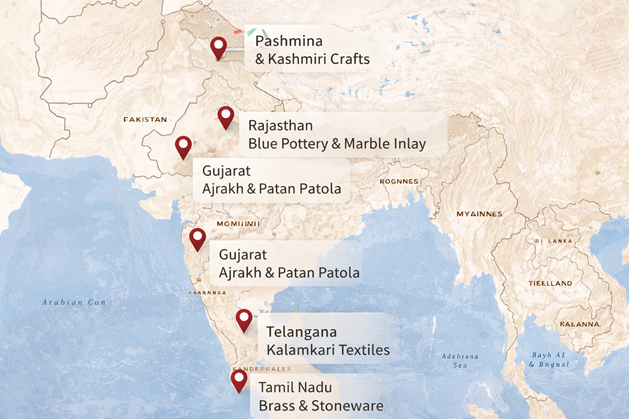
Regional identity adds:
- Authenticity
- Cultural depth
- Market differentiation
This is especially important in a market where imitations are common. Knowing the origin of a piece helps ensure that the investment supports genuine artisan work rather than mass production.
Making Smarter Decor Choices
Investing in handmade Indian home decor is not about buying more—it’s about buying better. Each piece should reflect:
- Authentic craftsmanship
- Material integrity
- Cultural significance
As demand continues to grow, buyers who understand these factors are better positioned to build collections that are not only visually appealing but also meaningful and enduring.