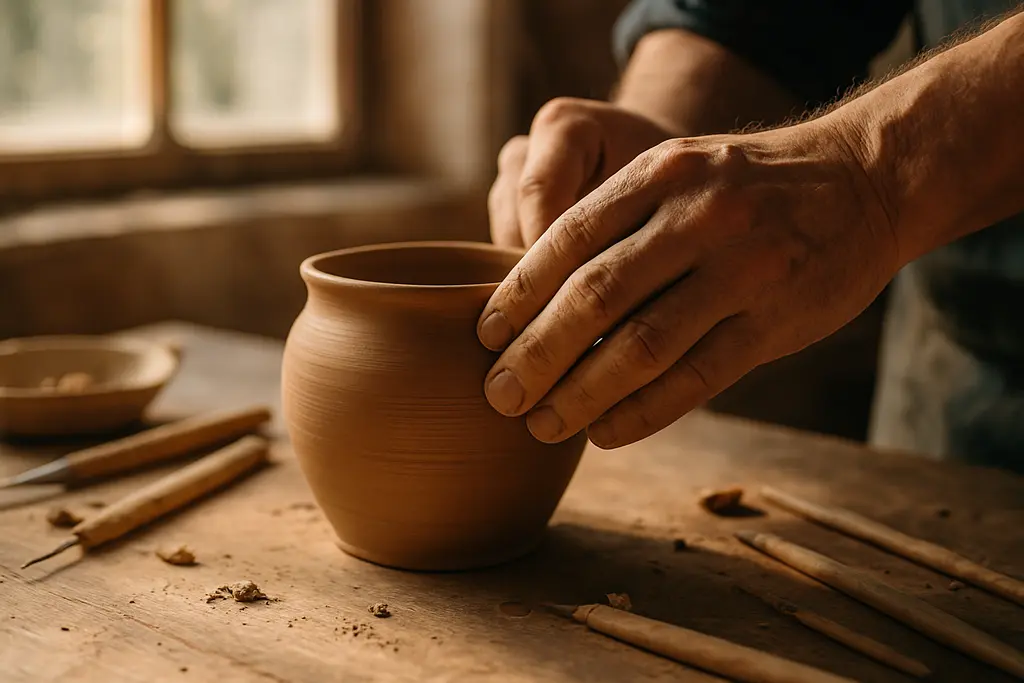
Handmade craft trends matter most when they help buyers slow down, ask better questions, and recognize the labor behind an object. The supplied research frames the Sumter County Gallery exhibition as forthcoming, but it does not provide a confirmed exhibition date, artist list, title, curatorial statement, or sales format. That limits what can be said with certainty. What can be analyzed is the buying context around handmade work in 2026: a stronger desire for human-made objects, clearer authenticity signals, and more pressure on makers to explain materials, process, and care.
For a gallery setting, that means visitors should expect more than attractive ceramics, textiles, woodwork, jewelry, paper objects, or decorative pieces. A good exhibition experience should help viewers understand how an object was made, what marks of handwork are visible, whether variation is part of the process, and how the work should be cared for if it is available to purchase. That kind of looking is both aesthetic and practical. It respects the maker while protecting the buyer from vague claims.
Why Handmade Craft Trends Need Careful Reading
Handmade Craft Trends And The AI Contrast
One of the clearest signals in the research is the growing value placed on work that is made by human hands. SCRAPD’s 2026 handmade report describes terms such as “handmade,” “one-of-one,” and “never AI-generated” as stronger differentiators as AI-generated and mass-produced items spread across shopping feeds SCRAPD’s 2026 report. For Sumter County Gallery, handmade craft trends are best read through that contrast: not as nostalgia alone, but as a response to the difficulty of knowing what is human-made, original, and materially grounded.
A cautious buyer should not treat the word “handmade” as proof by itself. The stronger signal is explanation. A maker who can show the source of clay, fiber, wood, metal, paper, dye, stitching, glaze, joinery, carving, or finishing is offering more than a label. They are giving the viewer a way to judge the work on its own terms. In a mindful buying practice, this is where the body helps the eye: look at texture, weight, surface variation, edges, tool marks, seams, joins, and finish. These details often carry the story more honestly than broad sales language.
Market Signals Without Overclaiming
There is also evidence that handmade goods sit within a large commercial category, though market estimates vary by source and method. Forbes reported that Grand View Research measured the global handicrafts market at $740 billion in 2024 and projected it could reach $983 billion by 2030; the same report identified woodworking as the largest revenue segment in 2024, at about 26.7% Forbes report. Those numbers do not predict what will appear at Sumter County Gallery. They do show why buyer education has become part of craft commerce.
These handmade craft trends do not mean every object at a local or regional exhibition will become more valuable, more collectible, or more culturally significant. Market size is not the same as artistic merit. A careful gallery visitor should separate broad consumer demand from the specific quality of a single work. The questions remain grounded: Who made this? What process was used? What cultural or local context is being referenced? Is the work original, collaborative, functional, decorative, or part of a limited series?
Authenticity Signals To Check At The Exhibition
Human-Made Proof
Authenticity in craft is rarely a single certificate or phrase. It is a chain of evidence. At an exhibition, that evidence may appear in wall labels, artist statements, sales tags, process photographs, demonstration notes, catalog essays, or conversations with gallery staff. If those materials are available, they should answer basic questions without forcing the buyer to guess.
Useful labels identify the maker, medium, date, dimensions, process, and sometimes the place of production. Stronger interpretation may explain whether the work is wheel-thrown, hand-built, handwoven, carved, forged, stitched, quilted, dyed, cast, assembled, or painted. If a piece includes found materials, recycled components, digital design tools, or studio assistants, clear disclosure helps preserve trust. The issue is not whether every object must be made by one person from start to finish. The issue is whether the process is represented honestly.
Material And Process Labels
Material clarity is especially valuable for buyers who plan to use an object at home. A ceramic bowl, textile wall hanging, wooden board, metal ornament, basket, or wearable piece has different care needs. Buyers should look for notes on food safety, washing, display conditions, heat, moisture, sunlight, storage, repair, and surface finish. Absence of care information does not mean a work lacks value, but it does mean the buyer should ask before purchase.
This is where gallery curation and seller practice meet. A past Shimply review of a juried waterfront craft event made a similar point about trust: clear maker context and transparent rules help buyers read handcrafted goods with more confidence in public settings. That lesson also applies to the Gloucester handcrafted goods festival, where the setting, maker standards, and presentation shaped buyer confidence.
Buyer Questions Before Purchasing Handmade Work
Questions For Authenticity
A calm buying process reduces regret. Before purchasing a piece from a gallery exhibition, ask questions that invite factual answers rather than promotional language. The goal is not to interrogate the maker or gallery staff. It is to understand the work well enough to care for it and value it fairly.
- What materials were used, and are any of them reclaimed, commercial, locally sourced, or studio-made?
- Which parts of the object were made by hand, and were any digital tools, molds, templates, or outsourced processes involved?
- Is the work one-of-one, part of a small batch, or part of an edition?
- Are natural variations, glaze shifts, fiber irregularities, knots, tool marks, or asymmetry expected?
- What care instructions should the buyer follow during cleaning, storage, display, or daily use?
- Does the artist provide repair guidance, replacement parts, or future care advice?
Questions For Fit And Care
Mindful buying also asks whether the object belongs in the life you actually live. A fragile ceramic vessel may not suit a busy kitchen shelf. A hand-dyed textile may need protection from direct sunlight. A wooden serving piece may need oiling and careful drying. A wearable object may need storage away from humidity or pressure. None of these care needs are flaws. They are part of living with handmade work.
Price should be read through labor as well as materials. The supplied research notes include concerns about makers underpricing their labor, though the supporting source for that point is not one of the approved citation sources for this article. For that reason, it is safer to state the principle without repeating unlinked figures: fair craft pricing often reflects design time, skilled labor, materials, finishing, booth or gallery fees, packaging, and post-sale support. A buyer who asks only, “Why is this more expensive than a factory item?” may miss the human time embedded in the work.
How Makers Can Communicate Trust
Care Notes As Respect
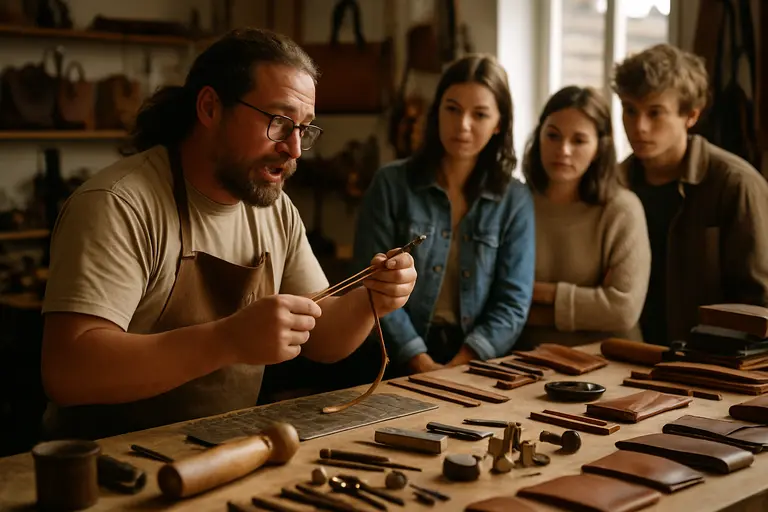
For makers showing at Sumter County Gallery, trust begins before the sale. A short care card can do more for buyer confidence than a long block of vague praise. The card should name the material, explain intended use, warn against common damage, and tell the buyer whom to contact with questions. If a piece is decorative only, say so. If a cup, bowl, spoon, cutting board, or textile has use limits, say so plainly.
Care language also protects artistic integrity. It tells the buyer that the work is not a disposable prop for a room but an object with a process and lifespan. This fits a wellness-minded way of living with objects: buy fewer things, understand them better, and create home spaces that support attention rather than clutter. A handmade object can become part of a daily ritual only when the owner knows how to use and maintain it.
Pricing That Names Labor
Makers do not need to reveal private financial details to justify a price. They can, though, name the kinds of labor involved: design, material preparation, forming, drying, firing, stitching, sanding, finishing, photographing, packing, and communicating with buyers. This helps visitors see that craft value is not only the visible object. It is the sequence of decisions that produced it.
For broader regional context, Kay Granger’s website, found at Kay Granger, provides related reading material that sits outside the direct craft-buying discussion. Interested readers can explore this site for more information on topics that reside within the same network, though it is separate from the specific focus on Sumter County Gallery’s exhibition. The exhibition itself should be assessed through direct gallery information, artist statements, and the objects on view.
Sumter County Gallery Handmade Craft Trends
A Mindful Buying Reading Of The Show
The most useful reading of handmade craft trends at Sumter County Gallery is not “what should I buy?” but “what can this object teach me before I buy?” A strong exhibition can teach viewers to see process, not just surface; labor, not just price; and cultural context, not just style. That matters because handmade work is often copied in appearance while losing the ethics and care of the original making process.
Because the supplied research does not confirm the exhibition’s date, participating artists, or object categories, any specific prediction about what will be on display would be guesswork. A careful expectation is narrower and more useful: buyers should look for clear signs of human making, honest material notes, visible process context, fair pricing cues, and practical care information. If the exhibition provides those signals, it can support both artists and visitors. If it does not, buyers can still bring better questions to the room.
Authentic craft buying is not passive consumption. It is a slower form of attention. At its best, the Sumter County Gallery exhibition can help visitors practice that attention with their eyes, hands, homes, and budgets aligned.