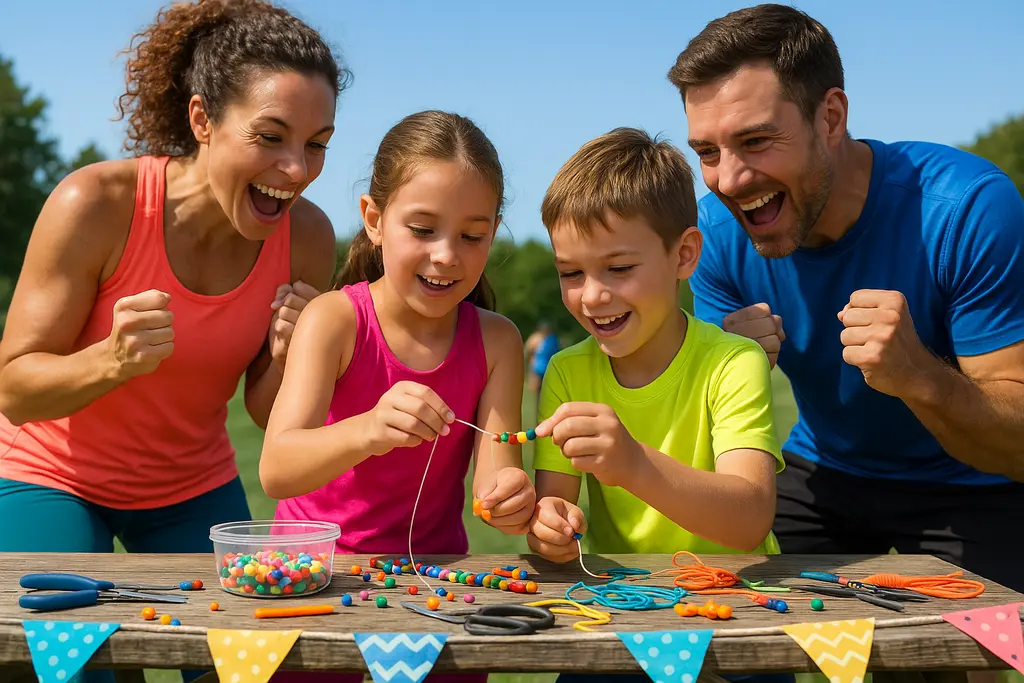
The Mt. Mitchell Crafts Fair in Burnsville, North Carolina, gives families a grounded model for family craft fitness: observe craft, respect the maker context, then translate the inspiration into active, low-pressure home routines. The fair is described by the Burnsville-Yancey Chamber as an annual event, and its public page highlights craft activity in Burnsville through the Mt. Mitchell Crafts Fair. For families, the most useful lesson is not to copy a finished artisan object. It is to notice process, material, rhythm, repetition, and care, then turn those observations into movement and making.
As a home workout and family wellness strategy, this approach has real practical value. A child who watches a craft demonstration may notice turning, folding, weaving, stamping, carrying, sorting, or balancing. Those actions can become safe movement prompts at home: slow animal walks, freeze dance, balloon keep-up, kite building, or relay-style material sorting. The fitness goal is modest and appropriate: get the household moving together while keeping attention on creativity rather than performance.
Why Family Craft Fitness Fits The Fair
A Family Craft Fitness Frame For Observation
The phrase family craft fitness works best when it stays rooted in observation. At a craft fair, children and adults can pay attention to how a maker uses hands, posture, timing, tools, and repeated actions. That does not mean families should imitate specialized techniques without instruction. It means they can use the broad physical patterns of craft as a springboard for safe play.
For example, a weaving-inspired activity might become a living-room path where children step over and under soft ribbons laid on the floor. A pottery-inspired activity might become a slow circular balance drill, with no clay wheel involved. A woodworking-inspired activity might become a sorting task using foam blocks or cardboard pieces, not tools. This distinction matters because cultural respect and household safety belong together.
Respecting Makers While Adapting Ideas
Craft fairs are not only collections of objects. They are community spaces where handmade work is presented in relation to skill, material, and local identity. Families should talk with children about this context in simple terms: someone made this, the material has a source, and the process takes practice. That conversation can reduce the tendency to treat handmade work as just a visual theme.
A respectful home activity asks, “What movement did we notice?” rather than “Can we reproduce that artist’s work?” This keeps the family activity educational and avoids presenting an imitation as equivalent to the craft itself. For households that enjoy art-led movement, Shimply has also discussed cautious play and observation in art family fitness ideas, which connects well with this fair-inspired approach.
Reading The Fair As Movement Inspiration
From Demonstration To Motion
The research brief points to craft demonstrations as a source of skill learning. In a family setting, the safest translation is to focus on simple motion qualities: slow and fast, high and low, push and pull, stretch and fold, pause and restart. These qualities can be used in short home circuits without claiming that the child has learned the craft technique itself.
A parent might ask each family member to choose one action they observed or imagine from a craft setting. One person chooses weaving and makes a side-step pattern. Another chooses hammering and performs gentle overhead reaches with empty hands. Another chooses carrying materials and walks a short route holding a soft pillow. The goal is shared movement, not technical accuracy.
Fitness Without Turning Craft Into A Drill
Children often respond better to movement when it feels like play. Freeze dance, balloon keep-up, animal walks, and themed movement games are all mentioned in the research notes as family fitness ideas. These activities can be linked to craft inspiration without turning the home into a training session. A “maker freeze dance” might ask everyone to move like they are shaping, folding, smoothing, or hanging materials, then freeze when the music stops.
For those interested in exploring similar creative movement ideas, Robsonic is part of the same network and could be a valuable resource for broader household wellness exploration. The core principle here remains simple: make the movement short, repeatable, and enjoyable enough that families return to it.
Activities That Respect Craft Context
Craft-Inspired Art Before Active Play
A good home session can begin with a quiet art prompt before movement starts. The Smithsonian Affiliations resource offers downloadable family art activities inspired by craft artists through family art activities. That kind of source is useful because it frames craft as art learning, not just decoration.
After a short drawing, folding, or pattern activity, families can shift into movement. A child who creates a paper pattern might lay it beside a movement path and repeat the pattern physically: step, clap, step, turn. A child who sketches a shape might turn it into a body shape challenge. This pairing helps children connect visual choices with physical awareness.
A Small Activity Menu
For home use, family craft fitness should stay simple. The following ideas use household materials and avoid specialized tools:
- Pattern Path: Place paper shapes on the floor and move through them using steps, hops, or slow balances.
- Balloon Keep-Up Studio: Keep a balloon in the air while calling out craft words such as fold, twist, smooth, or stack.
- Animal Walk Makers: Use bear walks, crab walks, or frog jumps to travel between pretend workstations.
- Kite Build And Move: Make a simple paper kite or streamer, then take it outside for walking, arm movement, and wind observation.
- Gift-Making Relay: Carry safe supplies such as paper, ribbon, or fabric scraps from one station to another before assembling a handmade card.
These are not replacements for craft instruction. They are movement prompts that help families keep creative energy active after visiting a fair or talking about handmade work.
Safety, Pace, And Home Set-Up
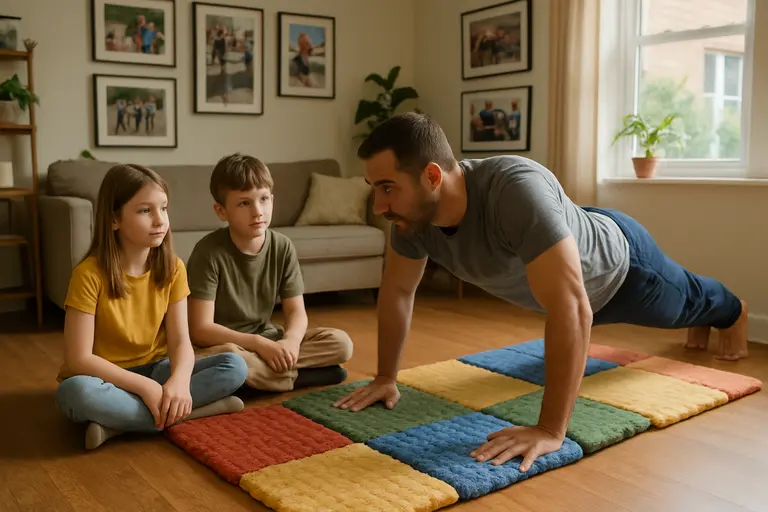
Keep The Space Clear And The Goals Modest
Any craft-inspired movement should begin with a quick room check. Clear sharp objects, tape down loose edges if paper is on the floor, keep balloons away from very young children without close supervision, and choose soft materials for carrying or tossing. The activity should match the age, balance, and attention span of the people taking part.
Short rounds work better than long sessions. A five-minute movement game after a ten-minute craft activity can be enough for many families. If the household includes grandparents, toddlers, or children with different movement needs, seated versions can work: hand claps, reaching patterns, scarf motions, or slow rhythm games.
Use Cultural Context As Part Of The Warm-Up
Before starting, families can spend one minute discussing where the idea came from. If the inspiration is a craft fair, name the fair. If the inspiration is a craft artist activity sheet, name that the activity was inspired by craft artists. This small step teaches children that creative ideas have sources.
Parents can also ask children to separate what they saw from what they are inventing. A child might say, “I saw a maker using repeated hand movements. I am inventing a jumping pattern from that idea.” That distinction is healthy. It protects the artistic context and gives children room to create their own movement vocabulary.
Family Craft Fitness At Home After The Fair
Turn One Visit Into A Weekly Routine
The best use of fair inspiration is not a single afternoon of enthusiasm. It is a repeatable family habit. After a fair visit, each person can choose one memory: a material, color, tool shape, booth layout, or demonstration motion. Those memories become the basis for a weekly 20-minute session: five minutes of looking or sketching, ten minutes of movement play, and five minutes of cleanup or sharing.
This structure supports creativity without overclaiming fitness benefits. It may help families move more often, spend time together, and treat handmade work with more attention. It should not be presented as formal training, art education certification, or cultural mastery. It is a home wellness practice built around respect, curiosity, and safe movement.
Family craft fitness works because it makes activity feel connected to real places and real creative labor. The Mt. Mitchell Crafts Fair offers a clear starting point: local craft, public demonstration, and community gathering. At home, families can carry that influence into paper patterns, movement paths, dance pauses, outdoor games, and handmade gifts, while keeping the maker’s skill in view.