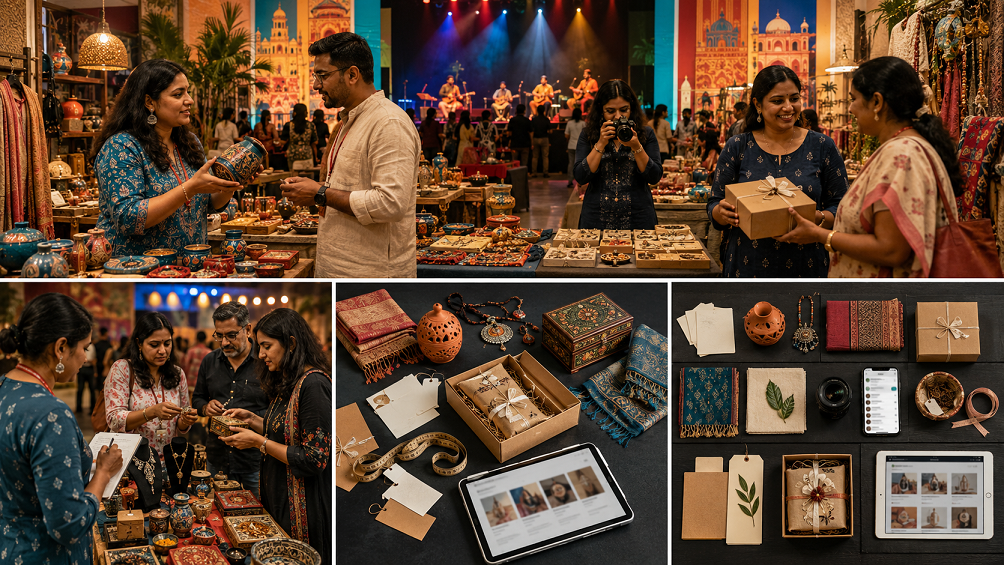
Ramjhol 4.0 returned to Kolkata as more than a cultural festival. It showed why culture-and-craft festivals are becoming discovery engines for handmade sellers who need more than a stall, a product display, or a few social media photos to reach serious buyers. Hosted by Kolkata Centre for Creativity from July 30 to August 1, 2026, at 777 Anandapur, E.M. Bypass, Kolkata, the fourth edition carried the theme “Desert Meets Delta,” celebrating the cultural relationship between Rajasthan and Bengal through art, craft, food, performances, workshops, talks, literature, and community programming.
For Shimply readers, Ramjhol 4.0 matters because it brings together the exact ingredients that help handmade sellers grow: regional identity, live buyer interaction, product storytelling, cultural context, giftable objects, and post-event search demand. A buyer may discover a textile, craft object, jewellery piece, food product, workshop, or artisan story at a festival. But the sale does not have to end there. If sellers prepare online catalogues, product pages, care cards, origin notes, and follow-up systems, a three-day event can become a longer discovery channel.
Why Ramjhol 4.0 Matters For Handmade Sellers
Kolkata Centre for Creativity’s Ramjhol 4.0 was built around the theme “Desert Meets Delta,” a phrase that links Rajasthan’s desert traditions with Bengal’s riverine cultural world. That theme is useful for sellers because buyers often remember stories before they remember product names. “Rajasthan meets Bengal” gives visitors a cultural frame. Handmade sellers can use that frame to explain materials, motifs, food traditions, craft histories, and regional use cases without reducing products to generic souvenirs.
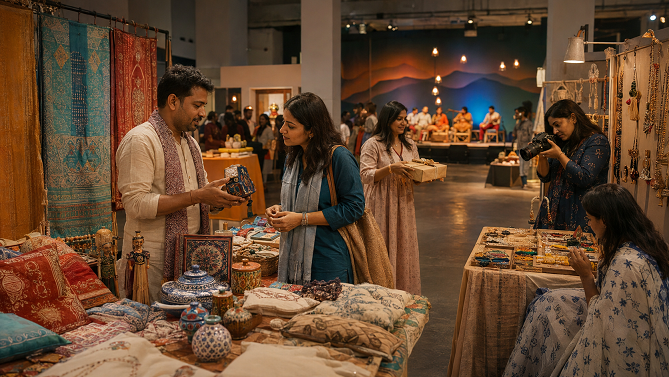
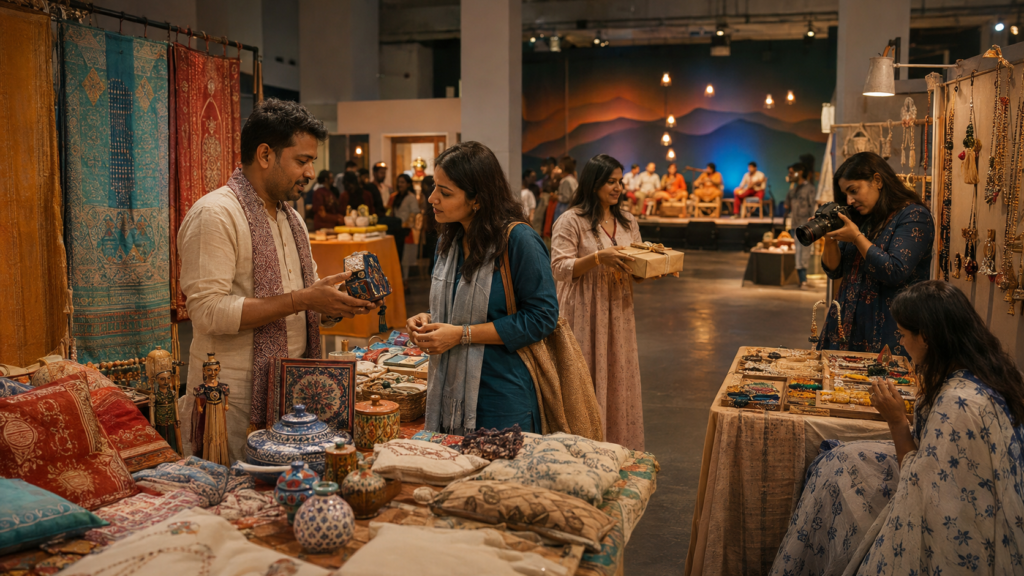
The official Ramjhol Bazaar programming listed a marketplace from July 30 to August 1, 2026, on KCC’s fourth floor, featuring traditional handicrafts, handmade products, textiles, jewellery, regional delicacies, and artisanal creations. That mix matters because modern handmade buying is rarely limited to one product category. A visitor may come for music, stay for food, notice a craft stall, attend a workshop, and later search for the seller online.
This is why festivals are becoming discovery engines. They give handmade sellers access to buyers who are already emotionally open to culture, storytelling, and regional identity. A marketplace listing cannot always create that feeling by itself. A festival can.
Yet discovery is not the same as conversion. A seller still needs clear product information, photographs, pricing, packaging, and a way for the buyer to reconnect after the event.
What Culture-And-Craft Festivals Do Better Than Marketplaces Alone
A marketplace shows products. A culture-and-craft festival shows context. Ramjhol 4.0 included performances, exhibitions, workshops, talks, food, literature, and community programmes. That wider environment helps handmade sellers because the product sits inside a larger cultural experience.
A jewellery buyer may understand a piece differently after watching a performance or hearing a conversation about regional aesthetics. A textile buyer may care more about a scarf or stole after seeing related craft demonstrations. A home-decor buyer may connect more strongly with a handmade object when it appears beside food, music, storytelling, and regional memory.
This context can justify better pricing. Handmade sellers often struggle when buyers compare handcrafted products with mass-made decor or accessories. A festival helps shift the comparison. The buyer sees the maker, the material, the story, the region, and the use case. The product becomes part of a cultural experience, not just an object on a table.
Shimply’s guide to Indian craft gift sets makes a related point for online gifting: handmade products become stronger when buyers understand how different objects can travel together as meaningful, well-explained gifts. Festivals give sellers a live version of that bundling opportunity.
Why Ramjhol Bazaar Is A Seller Discovery Model
Ramjhol Bazaar is especially important because it gives the cultural festival a buyer-facing commercial layer. The official description says the bazaar brings together the colours, craftsmanship, and flavours of Rajasthan and Bengal in a curated three-day marketplace. That means buyers can move from appreciation to purchase inside the same event.
For handmade sellers, this model is powerful. A product does not have to fight for attention in an isolated online feed. It appears in a live environment where visitors are already exploring regional traditions. The seller can explain the product, answer objections, observe buyer reactions, and test which items attract attention.
The best sellers treat this as research. Which products do visitors pick up first? Which colors draw buyers? Which price points slow them down? Which questions repeat? Do buyers ask about shipping, gifting, care, origin, custom orders, or wholesale? Each answer should shape the seller’s online product pages after the event.
A festival stall should produce more than sales. It should produce buyer language. That language helps sellers write better titles, descriptions, FAQs, and social captions.
What Handmade Sellers Should Capture During A Festival
A three-day festival can create months of seller content if artisans plan carefully. Sellers should document the stall, products, buyer questions, packaging, process, display details, and product combinations. These materials can become online product-page assets.
| Festival Moment | What Sellers Should Capture | How It Helps Online |
|---|---|---|
| Product Display | Full-table photos and close-up product shots | Builds catalogue visuals |
| Buyer Questions | Repeated doubts about use, care, price, or shipping | Creates FAQ content |
| Live Demonstrations | Process photos or short videos | Shows handmade value |
| Gift Packaging | Wrapping, boxes, care cards, and origin notes | Supports gift-ready listings |
| Product Pairings | Items buyers naturally group together | Builds bundles and gift sets |
| Cultural Context | Regional story, performance, food, or workshop links | Strengthens product storytelling |
This is where culture-and-craft festivals become discovery engines. The seller is not only selling in person. They are collecting proof, language, and visual material for later digital selling.
A handmade seller who leaves Ramjhol with only leftover inventory has missed part of the opportunity. A seller who leaves with product photos, buyer questions, contact leads, packaging tests, and catalogue ideas has built a stronger business asset.
How “Desert Meets Delta” Can Shape Product Storytelling
The “Desert Meets Delta” theme gives sellers a useful storytelling model. It connects two regions without flattening either one. Rajasthan and Bengal have different climates, color palettes, craft traditions, food cultures, performance histories, and design languages. When placed together thoughtfully, they create contrast and conversation.
Handmade sellers can learn from that structure. Product storytelling should not simply say “traditional” or “ethnic.” It should explain what region, material, technique, and use case make the product distinct.
For example, a textile seller could explain whether a piece draws from desert color stories, riverine softness, festive wear, everyday utility, or home styling. A jewellery seller could explain whether the product is meant for occasion wear, everyday gifting, or cultural keepsakes. A food or artisanal product seller could explain regional ingredients, storage, shelf life, and gifting format.
The important part is specificity. Buyers do not need vague heritage language. They need enough context to understand why the product exists and how it fits into their lives.
Why Workshops And Talks Help Sellers Build Trust
Ramjhol 4.0’s wider programming included workshops, conversations, literature, music, and cultural experiences. These are not separate from the seller opportunity. They help buyers become more informed.
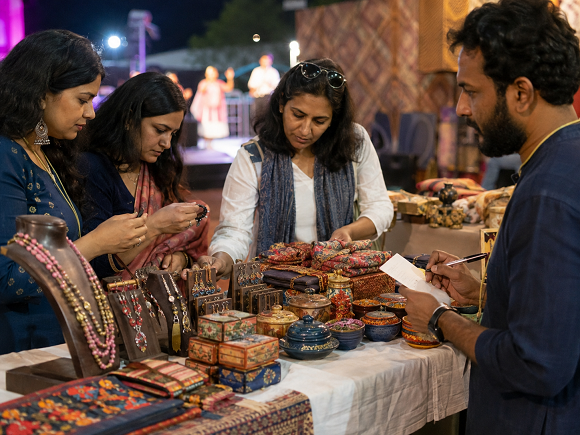
A workshop can show process. A conversation can explain cultural context. A performance can create emotional memory. A food experience can make a region feel more tangible. A craft bazaar can then connect those impressions to handmade products.
This matters because trust is one of the biggest challenges in handmade commerce. Online buyers often wonder whether a product is genuinely handmade, fairly priced, regionally accurate, and safe to gift. In-person festival programming helps reduce that uncertainty.
Sellers should connect workshop learning to product pages. If buyers attend a craft activity and then visit a stall, the product page should preserve that educational path. It can include process photos, short technique notes, maker context, care instructions, and styling suggestions.
A festival helps buyers understand the craft once. A product page helps them remember it later.
Why Handmade Sellers Need Post-Event Catalogues
The biggest weakness of many craft events is what happens afterward. Buyers may leave with a card, a photo, or a memory, but no easy way to reorder. That is where sellers lose long-term value.
Every seller at a festival like Ramjhol should have a post-event catalogue ready. It can be a website collection, marketplace page, PDF catalogue, WhatsApp catalogue, or simple product list. The format matters less than the clarity.
A strong catalogue should include product name, region or craft context, material, size, price range, care instructions, packaging options, delivery terms, custom-order rules, and seller contact. For giftable products, it should show what the package looks like. For fragile products, it should explain safe shipping. For textiles, it should include dimensions and care. For jewellery, it should include material, weight, and storage.
The catalogue should also reflect festival learning. If buyers at Ramjhol grouped certain products together, turn that into a gift set. If visitors asked for smaller items, create an entry-level section. If buyers wanted corporate gifts or wedding favors, add bulk-order notes.
Post-event catalogues turn a three-day festival into a longer sales window.
How Sellers Can Build Gift Bundles From Festival Discovery
Culture-and-craft festivals are ideal places to test bundles. Buyers often browse across categories: a textile with jewellery, a craft object with regional food, a handmade notebook with a textile bookmark, a decorative object with a care card, or a small accessory with gift packaging.
Sellers should observe which combinations buyers naturally make. Those combinations can become online gift bundles. A “Rajasthan-Bengal craft gift set” should only be used if the products truly fit that theme, but thoughtful pairing can help buyers who want meaningful gifts without assembling everything themselves.
Gift bundles need clear boundaries. Do not mix products only for visual effect. Explain why they belong together. Are they from the same region? Do they share a material story? Are they meant for a housewarming, festive gift, wedding return gift, travel keepsake, or cultural learning kit?
A good bundle page should show each item clearly, explain care, list dimensions, include packaging, and describe the gift moment. This is how festival browsing becomes online buying.
Why Cultural Accuracy Matters In Festival Selling
Culture-and-craft festivals can create strong commercial opportunities, but sellers must avoid careless cultural mixing. Ramjhol’s theme connects Rajasthan and Bengal, but that does not mean every product can freely borrow from both traditions without explanation.
Sellers should be accurate about origin, technique, and inspiration. If a product is from Rajasthan, say so. If it is Bengali, say so. If it is a contemporary design inspired by both regions, say that carefully. If it uses sacred motifs, ritual objects, or community-specific symbols, avoid turning them into casual novelty products without context.
Cultural accuracy protects buyer trust. It also protects artisans from having their work misrepresented. A buyer who values handmade craft wants real information, not decorative confusion.
This is especially important online, where product pages can travel far beyond the festival audience. The seller’s language should be specific enough for readers who did not attend Ramjhol to understand the product responsibly.
What Buyers Should Look For After A Craft Festival
Buyers who discover sellers at culture-and-craft festivals should look for clear follow-up information. A good seller should be able to provide product names, materials, care instructions, price range, packaging details, and ordering terms.
If the buyer is purchasing a gift, they should ask whether an origin note or care card is included. If the product is fragile, ask how it will be packed. If it is textile-based, ask how to wash or store it. If it is jewellery, ask about material and maintenance. If it is food or regional delicacy, ask about ingredients, shelf life, and storage.
Buyers should also be cautious of vague cultural claims. A product described as “Rajasthani-Bengali traditional handmade” without details may need more explanation. Trustworthy sellers can explain what is traditional, what is contemporary, and what role they play in the product.
The strongest festival purchases are the ones buyers still understand after they get home.
Why Culture-And-Craft Festivals Are Becoming Discovery Engines
Ramjhol 4.0 shows why culture-and-craft festivals are becoming more valuable for handmade sellers. They combine emotion, education, product discovery, regional storytelling, and live feedback. They help buyers encounter craft through music, food, performance, literature, conversation, and community rather than through a flat product grid.
For sellers, the challenge is to extend that experience beyond the event. A festival can introduce the product, but digital systems keep the relationship alive. Sellers need catalogues, product pages, care cards, packaging photos, seller profiles, and follow-up messages. They need to turn buyer curiosity into searchable product information.
For buyers, festivals like Ramjhol make handmade products easier to understand. They show that a craft object is not only a thing to buy. It is connected to people, place, performance, food, memory, and regional identity.
That is why the future of handmade selling will not be only online or only offline. The strongest sellers will use culture-and-craft festivals as discovery engines, then use digital product pages to preserve the trust those festivals create.