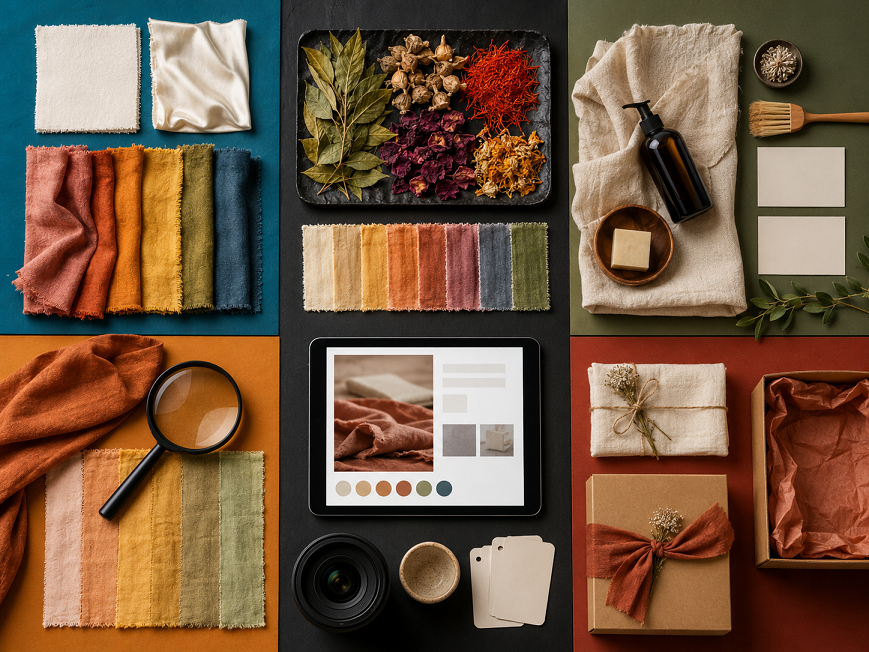
Aranya Natural’s botanical eco printing event in Chennai highlights a quiet but important problem in handmade textile commerce: natural-dyed craft needs better care cards. Botanical printing and natural dyeing are visually powerful because they carry traces of leaves, flowers, bark, minerals, heat, pressure, cloth, and hand process. Yet those same qualities can make buyers uncertain. Will the color fade? Can the fabric be washed? Should it be kept away from sunlight? Is every print supposed to look different? What happens if the recipient treats it like a mass-produced printed textile?
Those questions matter for Shimply’s handmade-commerce audience because natural-dyed products often sell through beauty first and explanation second. A botanical eco-printed scarf, stole, cushion cover, table runner, textile panel, gift wrap, or garment may look meaningful in a workshop or craft event, but online buyers need practical confidence before they purchase. That confidence comes from care cards, honest product pages, real photos, material details, and clear expectations about handmade variation.
Why Aranya Natural’s Chennai Event Matters For Handmade Sellers
The Crafts Council of India’s events ecosystem places craft workshops, exhibitions, and pop-ups inside a broader mission of preserving India’s living crafts, supporting artisan communities, and connecting makers to wider audiences. Its Chennai base at 37 Venkatanarayana Road, T. Nagar, has become part of a craft-public interface where buyers, students, makers, and textile enthusiasts can encounter techniques that may otherwise remain inside studios or artisan clusters.
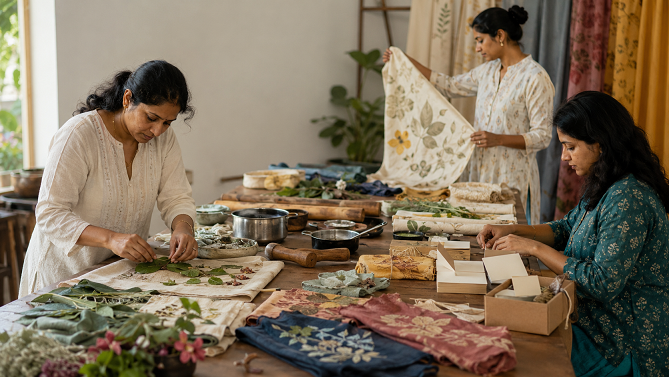
Aranya Natural’s botanical eco printing event fits that role because eco printing is both craft and education. It is not only a display of finished products. It is a process-based practice where participants and buyers learn how plant material can leave marks, shades, and patterns on cloth. That makes it especially relevant for sellers who work with natural dyes, slow textiles, sustainable craft, and giftable handmade products.
The seller lesson is direct: a workshop can create excitement, but a care card protects the purchase after the excitement fades. If a buyer takes home a naturally dyed textile without care guidance, the product may be washed incorrectly, dried in harsh sun, stored badly, or judged against machine-printed color standards. A care card turns the product from a beautiful object into a better-understood handmade item.
What Botanical Eco Printing Needs Buyers To Understand
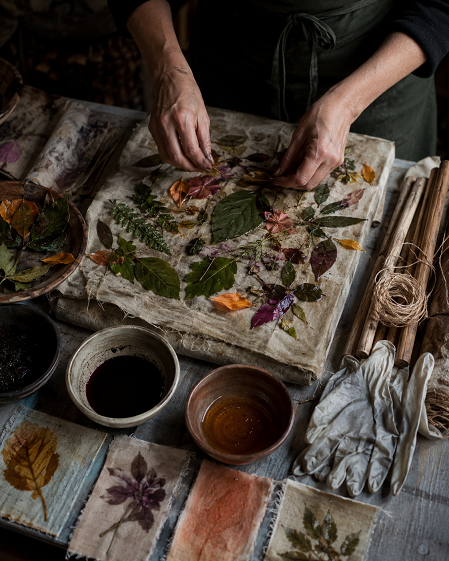
Botanical eco printing uses plant material and textile preparation to create impressions on fabric or paper. Depending on the process, leaves, flowers, stems, bark, or other botanical matter can transfer color, shape, or ghost-like silhouettes. The result is often irregular, layered, and site-specific. That irregularity is part of the appeal.
Online, though, irregularity can be misread. A buyer may think uneven color means a defect. A recipient may think fading means poor quality. A gift buyer may not realize that natural-dyed surfaces can respond differently to light, water, detergent, rubbing, and storage than synthetic prints.
That is why natural-dyed craft needs language that prepares the buyer before purchase. A seller should not hide the living quality of the textile. They should explain it. If each print is unique, say that. If color variation is expected, say that. If the textile should be washed gently or dry cleaned, say that. If direct sunlight can change color over time, say that.
The goal is not to make natural-dyed craft sound fragile in a negative way. The goal is to make care part of the value.
Why Natural Dyes Need Clearer Care Guidance
Natural dye research often evaluates color fastness through wash, light, and rub behavior. Reviews of natural-dyed textiles discuss how dye performance depends on mordants, fiber type, dye source, process, and exposure conditions. Textile-care guidance from museum sources also warns that light can fade textile dyes and make fibers brittle over time.
For sellers, this means care instructions are not optional. They are part of product honesty. A botanical eco-printed textile should not be listed with only poetic language about leaves and nature. It should also include practical care.
A strong care card might explain whether the product should be hand washed, dry cleaned, washed separately, air dried in shade, ironed on the reverse, stored folded in cotton cloth, or kept away from prolonged direct sunlight. Sellers should not copy generic care instructions. They should match care guidance to the specific fiber, dye process, mordanting method, and intended use.
| Care Card Detail | Why It Matters | Buyer Trust Signal |
|---|---|---|
| Fiber Type | Cotton, silk, wool, linen, and blends behave differently | Shows product-specific knowledge |
| Dye Source Or Process | Botanical prints vary by plant, preparation, and technique | Explains natural variation |
| Washing Guidance | Natural colors may respond differently to detergents and water | Reduces damage and complaints |
| Light Exposure | Prolonged sunlight can fade textile dyes | Sets realistic expectations |
| Drying And Ironing | Heat and sun can affect color and texture | Helps buyers preserve the textile |
| Storage Advice | Moisture, pests, and folds can damage fabric | Supports long-term gift value |
This table is not only useful for natural-dye sellers. It is a checklist for any handmade textile seller who wants buyers to care for products correctly.
Why Care Cards Build Buyer Trust
A care card does more than prevent washing mistakes. It signals that the seller understands the product. That matters because buyers of natural-dyed craft often pay for process, material, and story, not only utility.
A textile without care instructions can feel incomplete. The buyer may wonder whether the seller tested the dye, knows the fiber, or understands the product’s limits. A textile with clear care guidance feels more professional, even when it is handmade in small batches.
This is especially important for gift products. The person buying the product may understand botanical eco printing, but the recipient may not. A short care card helps the gift travel with its explanation. It tells the recipient that the piece is naturally dyed, handmade, variable, and worth caring for.
Shimply’s earlier guide to Weaves of India Festival 2026 handloom product pages made a similar point for heritage textiles: product pages and care details help buyers move from admiration to confident purchase. Natural-dyed craft needs the same clarity because the color itself is part of the craft’s identity.
What Sellers Should Put On A Natural-Dyed Product Page
A natural-dyed product page should answer buyer questions before they become doubts. Start with the product type: scarf, stole, table runner, cushion cover, yardage, garment, wall textile, wrap, or art textile. Then explain the fiber, dye method, botanical source where appropriate, size, use, and care.
Photos should show the full product, close-up botanical marks, edge finishing, reverse side where relevant, scale, packaging, and care card. If colors can appear different in indoor and daylight settings, sellers should say so and use accurate photography.
The product description should avoid overclaiming sustainability. A natural dye process may be lower-impact in some ways, but sellers should not claim that a product is automatically zero-waste, chemical-free, non-toxic, or environmentally safe unless they can support those claims. Natural dyeing can still involve mordants, water use, heat, and process decisions. Responsible language builds trust.
A better product page might say: “Naturally dyed using a botanical eco-printing process. Each piece carries unique plant impressions and tonal variation. Hand wash gently in cold water or dry clean as advised. Dry in shade. Avoid prolonged direct sunlight.”
That language is practical, calm, and buyer-friendly.
Why “Natural” Should Not Replace Specific Material Disclosure
The word “natural” can attract buyers, but it can also become vague. A buyer needs more than “natural-dyed.” They need to know the fabric and the care risk.
Cotton and silk do not behave the same way. Wool and linen do not behave the same way. A table runner faces different use than a scarf. A wall textile has different care needs than a garment. A cushion cover may encounter rubbing, washing, and sunlight more often than a framed textile panel.
Material disclosure should include fiber type, size, intended use, and care limits. If a product is decorative only, say that. If it is washable, explain how. If it is not meant for frequent laundering, say so before purchase.
Sellers should also distinguish between botanical printing, natural dyeing, hand painting, block printing, and digital printing inspired by natural dye aesthetics. These are different things. A buyer who wants a true botanical eco-printed textile should not receive a digitally printed leaf pattern without clear disclosure.
Accurate naming protects both buyer trust and craft value.
How Care Cards Can Reduce Returns And Complaints
Many handmade returns happen because expectations were unclear. The buyer may receive a naturally dyed textile and find slight color variation, minor irregularity, or a softer tone than expected. If the listing and care card explained these qualities, the buyer is more likely to understand them as part of handmade character.
Care cards also prevent accidental damage. A buyer may use strong detergent, soak the textile too long, dry it in direct sun, iron at high heat, or store it in a damp area. If the product later fades or changes, the buyer may blame the seller. Clear care guidance lowers that risk.
For small sellers, return reduction matters financially. Handmade products often cannot be easily replaced, especially if each botanical print is unique. A damaged return may not be resellable. A care card is a low-cost protection tool.
It also helps with reviews. Buyers who understand how to care for a product are more likely to have a positive long-term experience and describe the purchase accurately.
What A Better Natural-Dye Care Card Could Say
A care card should be short enough to read and specific enough to help. Sellers can use a simple structure: what it is, what to expect, how to wash, how to dry, how to store, and how to protect color.
For example, a botanical eco-printed textile care card could include:
- Naturally dyed and botanical eco printed; color and leaf impressions may vary slightly from piece to piece.
- Wash gently in cold water with mild detergent, or dry clean if advised for the fabric; dry in shade and avoid prolonged direct sunlight.
That is enough for many buyers. For premium products, sellers can add more detail: iron on the reverse, store in breathable cotton cloth, avoid bleach, test spot-cleaning first, and do not wring harshly.
The key is honesty. If a seller has not tested wash fastness, they should not promise machine-wash durability. If the product is decorative, the card should say so. If the textile uses a delicate silk or hand-finished surface, care guidance should reflect that.
Why Natural-Dyed Craft Needs Better Photography
Natural-dyed products often have subtle color, texture, and irregularity. Photography has to show those qualities accurately. Over-saturated images may make the product look brighter than it is. Heavy editing can create disappointment. Poor lighting can hide botanical detail.
A strong natural-dye photo set should include daylight color, close-up surface detail, full product shape, scale, packaging, and care-card placement. If the textile is wearable, show drape. If it is home decor, show placement. If it is a gift item, show folding and wrapping.
The seller should avoid using generic “green lifestyle” props that distract from the product. Leaves, flowers, and natural materials can support the scene, but they should not make unsupported sustainability claims. The product itself should remain the focus.
Good photography also helps buyers understand variation. If no two pieces are identical, sellers can show a small batch together so buyers understand the range of tones and prints.
Why Workshops Should Create Digital Selling Assets
An event like Aranya Natural’s botanical eco printing session should not end with the workshop. It can create digital selling assets for artisans, studios, and handmade sellers.
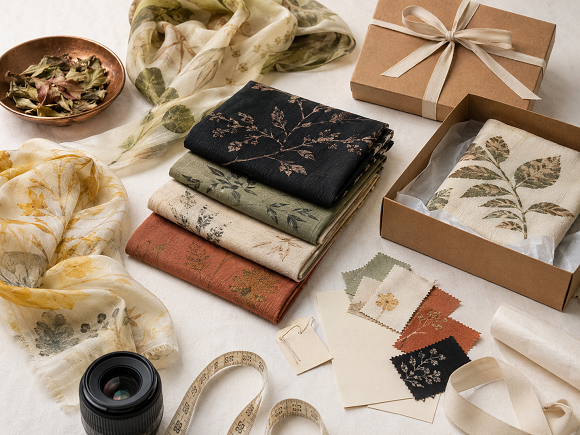
Sellers can document process steps, material samples, fabric before and after printing, plant impressions, drying stages, finished products, packaging, and care cards. These assets can become product-page images, social posts, buyer FAQs, and educational inserts.
Buyer questions from the event are especially valuable. If participants ask whether botanical prints fade, that belongs in the FAQ. If they ask whether the textile is washable, that belongs on the care card. If they ask whether the product is safe for gifting, packaging photos should be added.
Workshops help sellers see what buyers do not understand yet. The best product pages are built from those questions.
What Buyers Should Ask Before Purchasing Natural-Dyed Craft
Buyers should ask practical questions before purchasing natural-dyed textiles. What fiber is used? Is the product botanical eco printed, naturally dyed, hand painted, block printed, or digitally printed? Is each piece unique? How should it be washed? Will the color change over time? Should it be kept away from direct sunlight? Is it wearable, decorative, or both?
For gifts, buyers should ask whether a care card and origin note are included. A naturally dyed product is easier to appreciate when the recipient understands how it was made and how to protect it.
Buyers should also be cautious of vague listings that use “eco,” “natural,” or “sustainable” without explaining materials or process. Those terms can be meaningful, but they need context. A trustworthy seller will explain what is known and avoid claims that cannot be supported.
Why Care Cards Are Part Of The Product
Aranya Natural’s botanical eco printing event in Chennai points to a larger handmade-commerce lesson: care is not separate from craft. For natural-dyed products, care instructions are part of the buyer experience, part of the gift presentation, and part of the seller’s trust signal.
A beautiful botanical print may win attention. A clear care card helps it last. That matters for artisans, buyers, and handmade sellers who want natural-dyed craft to be valued beyond the first impression.
For Shimply’s audience, the message is simple. Do not let natural-dyed products rely only on visual charm. Explain the fiber. Explain the process. Explain variation. Explain care. Show packaging. Give buyers the information they need to protect the textile.
Natural-dyed craft becomes more valuable when buyers understand how to live with it.