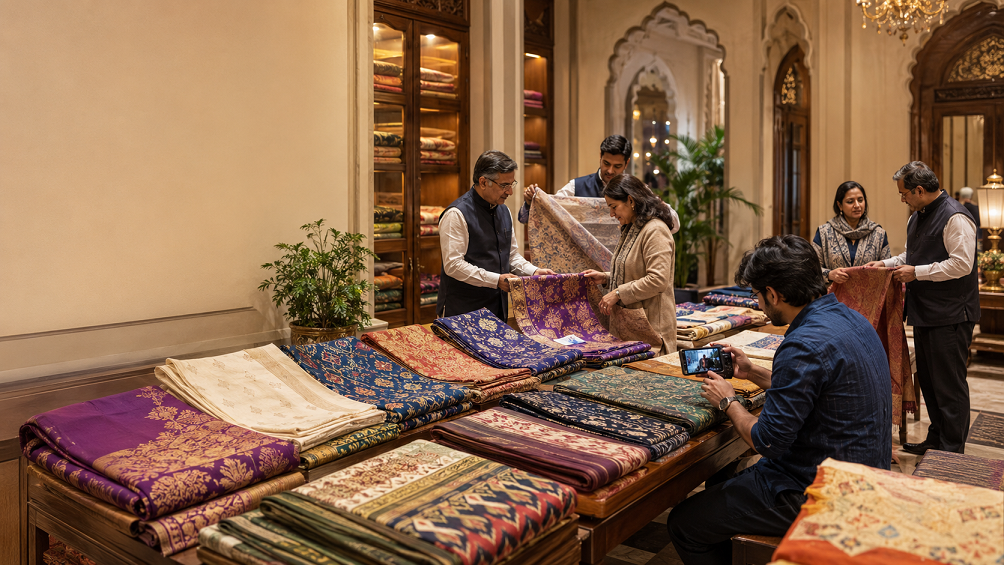
The Weaves of India Festival 2026 is more than a handloom exhibition in New Delhi. It is a live reminder that India’s textile heritage can attract attention in a physical marketplace, but online sellers still need better product pages if they want that attention to become gift-ready demand. Held from July 24 to August 7, 2026, at the Central Cottage Industries Emporium on Janpath, the festival showcases 116 heritage weaves from across India as part of the lead-up to the 12th National Handloom Day on August 7.
For Shimply readers, the number matters. A showcase of 116 weaves is a powerful cultural statement, but it also creates a buyer problem. How does a shopper compare Banarasi, Jamdani, Kanchipuram Silk, Sambalpuri Ikat, Paithani, Kani Pashmina, Ilkal, Kotpad, Himroo, and dozens of other regional textiles without clearer product explanations? A buyer may admire a fabric in person, but online they need searchable names, real photos, dimensions, care instructions, gift packaging, region clarity, and enough context to understand why one handloom is right for a wedding, housewarming, festive gift, travel wrap, or heirloom purchase.
Why Weaves Of India Festival 2026 Matters For Handmade Sellers
The Weaves of India Festival is organized by the Office of the Development Commissioner (Handlooms) under the Ministry of Textiles, in collaboration with Central Cottage Industries Emporium. The event is being held at CCIE, Janpath, New Delhi, from July 24 to August 7, 2026, with daily visitor access from 11:00 AM to 8:00 PM. Its timing before National Handloom Day gives the showcase a national craft calendar role rather than making it a routine retail fair.
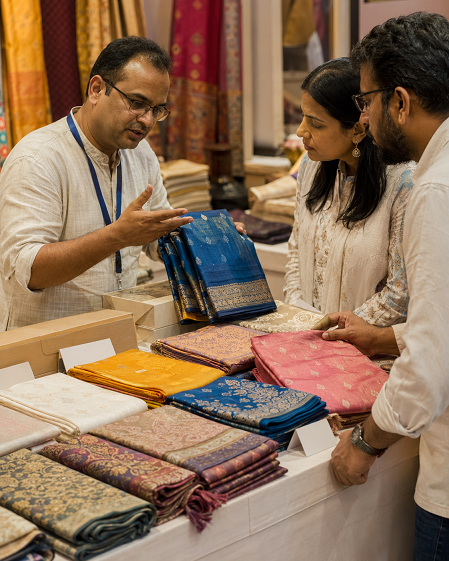
The festival brings together 116 heritage weaves, including Banarasi, Jamdani, Kanchipuram Silk, Sambalpuri Ikat, Paithani, Kani Pashmina, Ilkal, Kotpad, and Himroo. That list shows the scale of India’s textile diversity. It also shows why handmade sellers need product pages that do more than say “traditional handloom.”
A buyer who already knows Kani Pashmina may search differently from a buyer discovering Kotpad for the first time. A person shopping for a wedding saree may need one kind of information. A person buying a handloom stole as an overseas gift may need another. A home-decor buyer looking for a textile runner may need care, size, and color-fastness details more than ceremonial history.
This is where event visibility meets digital selling. A festival can introduce the textile. A product page has to close the sale later.
What 116 Heritage Weaves Reveal About Buyer Confusion
A large handloom showcase is exciting, but it can also overwhelm buyers. Many shoppers admire handwoven textiles but cannot easily distinguish fiber, region, weave structure, craft history, price logic, or care requirements. Online, that confusion becomes stronger because the buyer cannot touch the fabric.
A seller may believe the product speaks for itself. It rarely does online. A Kanchipuram Silk saree, Jamdani stole, Sambalpuri Ikat dupatta, Paithani textile, Kani Pashmina shawl, Ilkal saree, Kotpad fabric, or Himroo weave needs its own explanation. The buyer needs to understand what makes it different, who it suits, how it feels, how it should be stored, and whether it works as a gift.
Shimply’s guide to GI-tagged Indian crafts by state reflects the same buyer challenge: regional craft names help only when they are explained clearly. A name alone may attract attention, but detail builds trust.
The strongest product pages act like a helpful seller at a handloom counter. They explain the textile without overwhelming the buyer. They answer the questions a person would ask in person: What is it made of? Where is it from? Is it heavy or light? Is it for daily wear or special occasions? Can it be gifted? How should it be cared for?
Why Gift-Ready Product Pages Matter More Than Ever
Handloom sellers often think of product pages as catalog entries. Gift buyers use them differently. A gift buyer wants to know whether the item will feel meaningful, arrive safely, look presentable, and be understood by the recipient.
That means a handloom product page should not only describe the textile. It should explain the gift moment. A Banarasi textile may suit weddings, festive gifting, or heirloom collections. A Jamdani stole may work as a lightweight premium gift. A Kani Pashmina shawl may be positioned as a winter luxury gift. A Kotpad textile may appeal to buyers looking for earthy, region-rooted craft. A Sambalpuri Ikat item may work for those who value pattern, color, and regional identity.
Gift-ready pages need packaging proof. Sellers should show how the textile is folded, wrapped, boxed, and protected. A care card should be visible. A short origin note can help the recipient understand the textile. If the item is fragile, delicate, dry-clean only, handwash only, or prone to color variation, that should be clear before purchase.
Calling something “premium” is not enough. A premium gift page should feel complete: textile story, product use, packaging, care, and delivery confidence.
What Product Pages Should Explain For Each Handloom
Different handlooms need different buyer information. A generic template weakens the product. Sellers should build textile pages around the questions that matter most for that weave.
| Heritage Handloom Type | Buyer Question | Product Page Detail Needed |
|---|---|---|
| Banarasi | Is it formal, bridal, or lighter occasion wear? | Drape, zari detail, weight, care, and occasion |
| Jamdani | Is the weave delicate or everyday wearable? | Motif detail, transparency, fabric feel, and storage |
| Kanchipuram Silk | What makes the silk suitable for ceremonies? | Silk quality, border detail, weight, and blouse information |
| Sambalpuri Ikat | What makes the pattern handloom-specific? | Ikat process, color behavior, and close-up weave photos |
| Paithani | What makes it gift-worthy? | Border, pallu detail, occasion, and packaging |
| Kani Pashmina | How should it be cared for? | Warmth, softness, storage, cleaning, and authenticity notes |
| Kotpad | What makes the textile region-rooted? | Natural color story, material, texture, and styling ideas |
| Himroo | Is it apparel, decor, or collector textile? | Use case, texture, pattern detail, and care |
This kind of product-page structure helps buyers compare without reducing all textiles to the same sales language. It also helps sellers avoid vague descriptions such as “beautiful ethnic fabric,” which may sound familiar but does not build confidence.
How Event Footfall Can Improve Online Listings
Weaves of India Festival 2026 gives sellers something online analytics cannot fully provide: buyer questions in real time. When visitors ask the same questions repeatedly, sellers should treat those questions as product-page instructions.
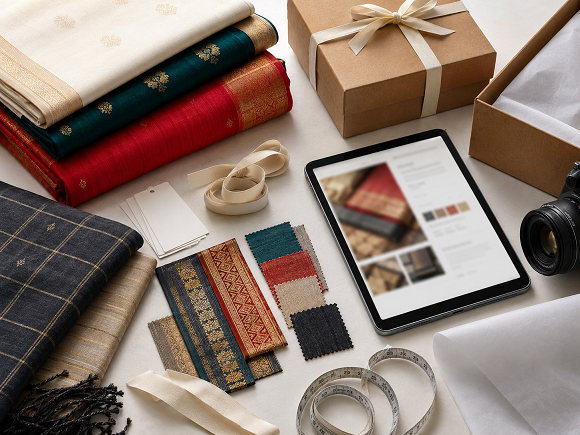
If buyers ask whether a textile is washable, add care instructions. If they ask whether it is suitable for a summer wedding, explain season and fabric weight. If they ask whether it can be gifted internationally, show lightweight packaging and shipping details. If they ask whether the colors will look different in natural light, add daylight photos.
A festival stall can also reveal which products need better naming. Buyers may refer to a fabric by region, color, use, or occasion rather than by formal textile name. Sellers should listen to that language, then build product titles that combine accurate craft naming with buyer search behavior.
For example, “Jamdani Handloom Stole For Lightweight Festive Gifting” may work better than only “Jamdani Stole” because it tells the buyer how to use it. “Kotpad Handloom Textile For Earth-Tone Home Styling” gives a decor buyer more direction than a bare fabric name. The wording should remain accurate, but it should meet buyers where they search.
Why Product Photography Needs To Be More Useful
Handloom photography often fails because it focuses only on beauty. Beauty matters, but online buyers need proof. They need to see full length, fold, drape, border, weave, thickness, color, packaging, and scale.
A good textile page should include at least five image types. The hero image should show the full product clearly. The second should show texture or weave detail. The third should show scale on a person, table, chair, or display surface. The fourth should show packaging. The fifth should show a use case: worn, gifted, stored, styled, or displayed.
For sarees, buyers need pallu, border, body, blouse piece where relevant, and drape. For shawls and stoles, they need fold thickness, warmth, close-up texture, and styling scale. For fabrics, they need width, length, fall, and color accuracy. For home textiles, they need placement photos.
Sellers should avoid using artificial-looking product images in place of real textile photography. Handloom buyers care about actual texture, tiny irregularities, color depth, and weave character. Over-polished images can reduce trust if the delivered product looks different.
Why Care Cards Are Part Of Buyer Trust
Care cards should be treated as part of the product, not an afterthought. Handloom textiles can be delicate, expensive, and emotionally important. Buyers want to know how to protect them.
A care card can explain washing, dry cleaning, sunlight exposure, storage, ironing, folding, and moisture protection. It can also explain handmade variation. Many buyers are willing to accept small irregularities in handwoven products when they are told in advance that variation is part of the craft.
For gift buyers, care cards are especially useful because the recipient may not know the textile’s background. A gift note can briefly say what the weave is, where it comes from, and how it should be handled. This turns a textile into a more complete gift.
Care instructions also reduce complaints. A buyer who damages a fabric through improper cleaning may blame the seller if the page gave no guidance. Clear instructions protect both the buyer and the artisan.
How Sellers Can Build Searchable Handloom Gift Collections
Weaves of India Festival 2026 shows that handloom sellers have more than single products. They have collection opportunities. Online sellers should organize textiles around buyer intent.
Useful collection names might include “Handloom Wedding Gifts,” “Lightweight Indian Textile Gifts,” “Handwoven Stoles For International Shipping,” “Heritage Sarees For Festive Wear,” “Textile Gifts Under A Fixed Budget,” “Handloom Home Styling Pieces,” or “Regional Weaves For Collectors.” The seller should choose categories that match real inventory and buyer needs.
Collections help buyers who do not know exact weave names. A shopper may not begin by searching “Himroo,” but they may search “heritage textile gift.” A collection page can introduce Himroo in a buyer-friendly context. A person may not know Kotpad, but they may search “earth-tone handloom fabric.” A seller can bridge that gap with clear copy.
The collection page should not replace individual product detail. It should guide buyers to the right textile. Each product still needs its own page with material, size, origin, photos, care, and packaging.
Why Seller Profiles Matter For Heritage Weaves
A handloom product page also needs seller identity. Buyers want to know who is selling the textile: a weaver, cooperative, artisan collective, boutique, state platform, designer, reseller, or marketplace curator. Each role can be legitimate, but it should be clear.
For heritage weaves, seller identity can affect trust. A buyer may pay more when they understand that the product comes from a weaving cluster, a verified cooperative, or a seller working directly with artisans. A vague shop profile weakens the product.
A seller profile should explain region, textile focus, sourcing method, packaging standards, and order support. It should not overclaim. If the seller is not the weaver, they should say how they source. If a product is inspired by a weave but not made in that tradition, the listing should say so.
Trust is built through clarity. Heritage buyers are often willing to support craft when they can see the path between maker, seller, and product.
What Buyers Should Check Before Purchasing Heritage Handlooms Online
Buyers should not rely only on beautiful images or famous weave names. Before purchasing, check whether the product page explains the textile clearly. Look for material, dimensions, region, care, seller identity, return policy, and packaging.
For sarees, ask about length, width, blouse piece, fabric weight, zari or embellishment, and care. For shawls and stoles, ask about warmth, fiber, softness, and storage. For fabric, ask about width, cut length, shrinkage, and color behavior. For gifts, ask whether the product includes a care card and origin note.
Be cautious of listings that use many famous handloom names together without explaining the actual item. A page that mentions Banarasi, Jamdani, Paithani, Ikat, and Pashmina in one product description may be using keywords rather than accurate product information.
The best product pages make buyers feel informed before they ask a question.
Why The Festival’s Digital Lesson Matters
The Weaves of India Festival 2026 gives India’s handloom heritage a visible platform in New Delhi, but the larger opportunity is what happens after visitors leave Janpath. A buyer may remember a weave, search for it later, compare sellers, and choose the product page that feels most trustworthy.
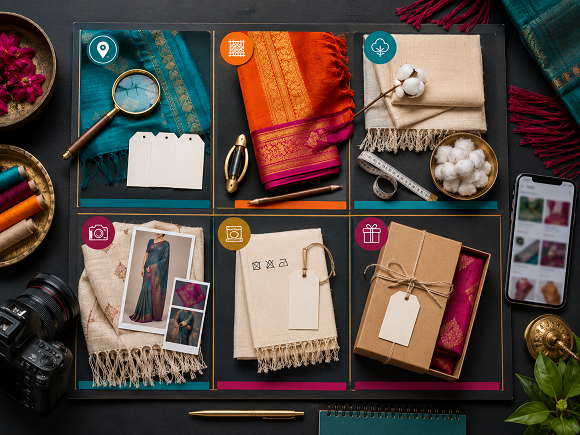
For sellers, the lesson is practical. Use the festival as a research moment. Listen to buyer questions. Photograph products properly. Document materials and dimensions. Prepare care cards. Build gift packaging. Update online listings. Create buyer-friendly collections. Make each heritage weave searchable by name, region, use, and occasion.
For buyers, better product pages make Indian handlooms easier to support. They help shoppers choose meaningful textiles without relying only on visual attraction or vague heritage language.
A showcase of 116 heritage weaves proves the depth of India’s handloom culture. Better gift-ready product pages can help that depth travel farther, sell more fairly, and reach buyers who want handmade textiles with both beauty and clarity.