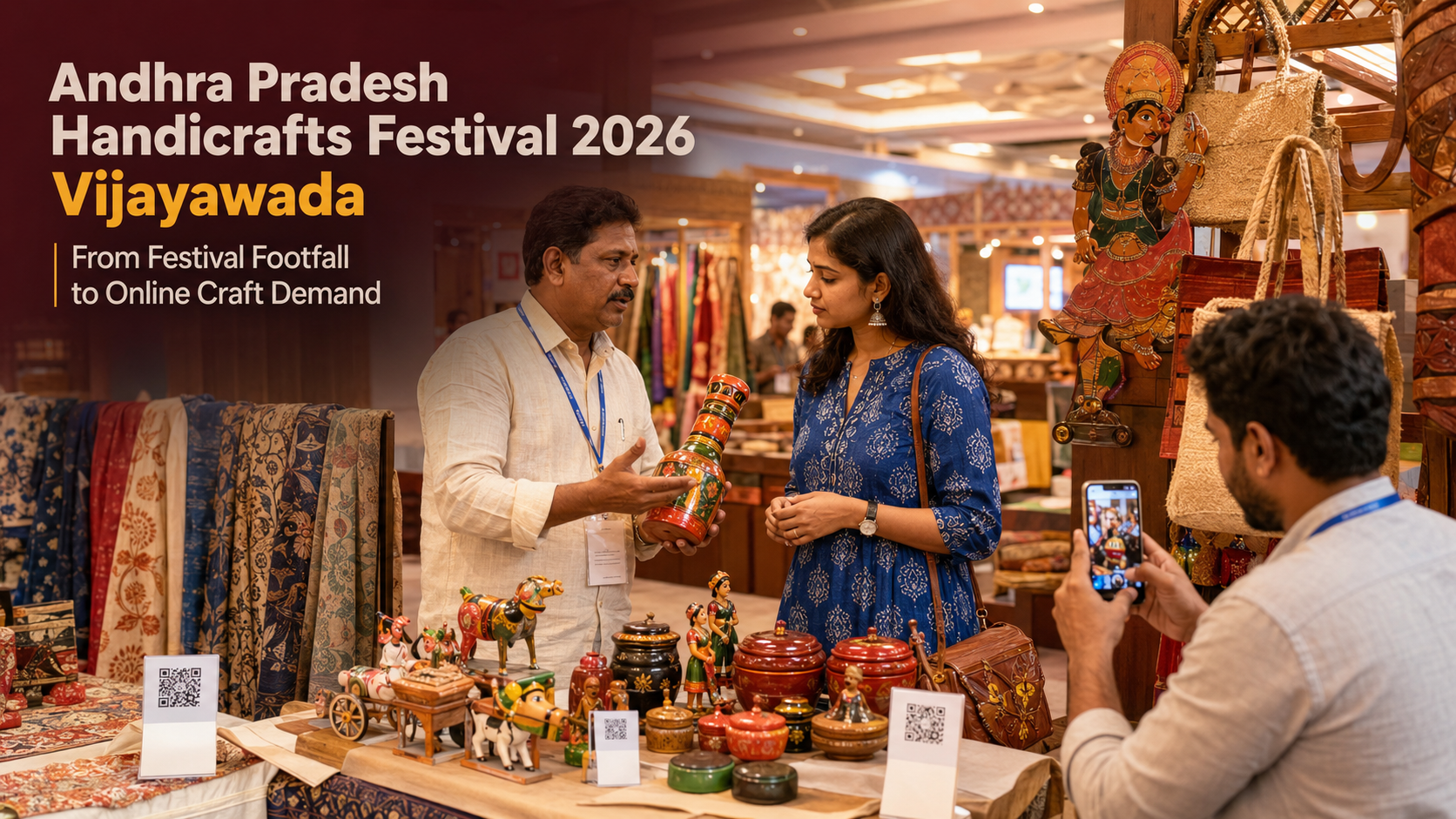
The Andhra Pradesh Handicrafts Festival 2026 in Vijayawada has done what every regional craft event needs first: it brought people to the stalls. Reports from the festival at Maris Stella College Indoor Stadium described large visitor turnout, encouraging sales, and strong interest in handloom sarees, textiles, handicrafts, and traditional art products from different parts of Andhra Pradesh. That physical response matters. For artisans, weavers, and craft sellers, footfall is not only a festival metric. It is proof that buyers still respond to touch, texture, origin, and maker stories when those details are presented clearly.
The bigger question is what happens after the final day. The exhibition was open daily from 10 a.m. to 9 p.m. and concluded on July 20, 2026, according to The Hans India’s festival report. Deccan Chronicle also reported strong crowds at the Vijayawada venue, with Lepakshi Vice-Chairman and Managing Director Vishva Manohar saying visitors were purchasing handloom fabrics, handcrafted products, sarees, and traditional artefacts in large numbers through the AP Handicrafts Festival crowd report. The online opportunity is clear: if festival interest remains trapped inside a temporary venue, artisans get a short sales bump. If that interest becomes searchable product pages, repeat buyers, gift guides, QR-linked stories, and marketplace trust, Vijayawada footfall can become longer-term craft demand.
Why Vijayawada Footfall Is A Buyer-Intent Signal
A craft festival visitor is different from a casual browser. Someone who visits a handicrafts festival has already made a decision to spend time around handmade products. They may not buy every item they touch, but they are signaling interest in regional identity, material quality, traditional skill, and direct artisan support.
That is valuable buyer intent. Online sellers often spend months trying to understand what shoppers want through search terms, abandoned carts, comments, and marketplace analytics. A crowded exhibition gives a more physical version of the same data. Which stalls attracted the most people? Which products were handled but not purchased? Which price points created hesitation? Which crafts drew questions from younger buyers? Which products worked as gifts? Which items needed more explanation before visitors understood their value?
The Vijayawada festival created that feedback loop in person. Reports did not publish a precise official visitor count, so sellers should avoid turning “large crowds” into invented footfall numbers. The useful data is qualitative: visitors came, purchased, asked questions, and showed interest in Andhra Pradesh’s handlooms and craft traditions.
For online craft commerce, that is enough to shape the next step. The most visited products at the exhibition should not vanish when the stall closes. They should become the first products sellers photograph, describe, categorize, and list with clearer online information.
How Lepakshi Gives The Festival A Trust Layer
The festival’s connection to Lepakshi matters because trust is one of the biggest barriers in online craft shopping. Buyers may love handmade items but still hesitate when they cannot verify origin, material, artisan identity, or whether a product is genuinely tied to a region.
Lepakshi Handicrafts, the Andhra Pradesh Handicrafts Development Corporation platform, describes itself as working with more than 5,000 artisan partners across 26 districts and 36-plus craft forms, including Kalamkari, Kondapalli toys, Etikoppaka lacquerware, and other Andhra Pradesh craft traditions through the official Lepakshi Handicrafts platform. That kind of institutional connection can help buyers feel more confident, especially when product pages carry the same trust signals that an in-person stall provides.
A festival stall gives the buyer a person, a product, and a story. A product page has to recreate that trust without the artisan standing there. That means the page cannot rely on one image and a vague title such as “Traditional Handicraft Item.” It needs product origin, artisan or cluster context, material details, dimensions, care instructions, use cases, shipping expectations, and visual proof of texture.
For Shimply readers, this is the key lesson: physical festivals prove demand, but digital trust converts demand into repeat buying.
Why Pawan Kalyan’s QR-Code Push Matters For Online Demand
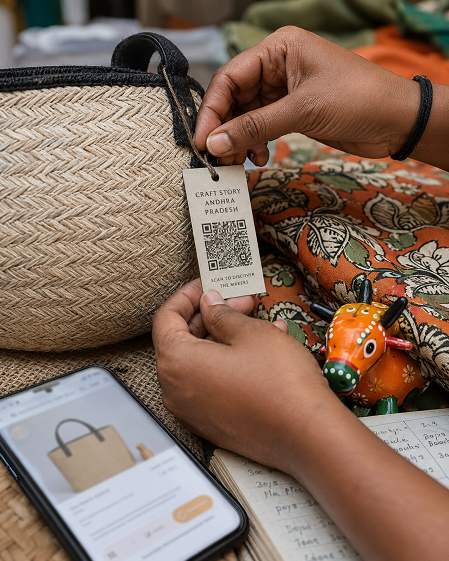
Deputy Chief Minister Pawan Kalyan’s comments at the festival gave the event a stronger digital-commerce angle. The New Indian Express reported that, while inaugurating AP Handicrafts Mahotsavam 2026 at Dr. B.R. Ambedkar Kalavedika in Vijayawada, he said every handicraft would be tagged with a QR code carrying the artisan’s profile and the story behind the craft. He also called for documentaries highlighting artisan skill and announced Common Facility Centres under the VB-G RAM-G scheme through the Andhra Pradesh handicrafts tourism report.
That QR-code idea matters because it connects offline curiosity to online follow-through. A visitor may love a banana-fibre handbag, a Kalamkari textile, a Kondapalli toy, or a leather puppetry piece but not buy it immediately. A QR code can let that interest continue after the visitor leaves the venue.
The QR code should not only lead to a generic homepage. It should lead to a product or artisan page that answers the questions a buyer would ask at the stall:
| Festival Question | Product Page Answer |
|---|---|
| Who made this? | Artisan name, cluster, or workshop profile |
| Where is it from? | District, craft cluster, and regional tradition |
| What is it made of? | Material, process, natural or recycled inputs where relevant |
| How do I use it? | Gift use, home use, styling, storage, and care |
| Why does it cost this much? | Time, skill, material, handmade variation, and origin value |
| Can I buy later? | Clear online listing, stock status, and contact or checkout option |
That structure turns festival browsing into delayed conversion. It also gives artisans a way to collect demand signals without relying only on same-day purchases.
How Product Photography Can Extend The Festival Experience
The festival’s strongest online asset may be visual. Visitors responded to physical products because they could see texture, color, weave, shape, and workmanship up close. Product pages need to preserve that sensory quality.
For Andhra Pradesh crafts, flat catalog shots are not enough. A handloom saree needs a full drape image, border close-up, weave texture, folded product image, and scale reference. A Kondapalli toy needs front, side, detail, and context shots. A Kalamkari textile needs motif close-ups, natural-light color accuracy, and a description of whether it is hand-painted, block-printed, or screen-printed. A banana-fibre product needs material close-ups that show why the surface differs from synthetic bags.
This is where festival sellers can use the footfall moment wisely. During an exhibition, sellers see which products make people stop. Those items deserve the first serious photo sessions after the event. The right image set can turn a one-time stall hit into a year-round digital listing.
Shimply has covered this larger marketplace shift in its guide to digital marketplaces for Indian handicrafts, where online visibility, direct-to-buyer models, and regional product storytelling are becoming more important for artisans. The Vijayawada festival gives sellers fresh evidence of what buyers notice in person. The next task is translating that attention into searchable images and product pages.
Why Online Craft Pages Need More Than Cultural Pride
Cultural pride helps bring attention to a product, but it does not complete an online sale by itself. Many buyers admire traditional crafts yet hesitate because they cannot answer practical questions: Will this fit my home? Is it washable? Is the color accurate? Is this a decorative item or daily-use product? Can I gift it? Will it arrive safely? Is it authentic?
That is why online craft demand depends on practical product content. A strong page for an Andhra Pradesh handicraft should combine heritage with buying clarity. The story brings emotional value. The details reduce hesitation.
A product title should be specific enough for search. “Handmade Andhra Craft” is weak. “Etikoppaka Lacquered Wooden Toy Set From Andhra Pradesh” is stronger. “Kalamkari Cotton Dupatta With Mythological Floral Motif” gives the buyer material, craft style, product type, and design direction. Sellers should avoid overclaiming GI status, handmade process, natural dye use, or artisan identity unless those claims can be verified.
This matters because regional crafts are vulnerable to vague marketplace language. If every product is called “ethnic,” “traditional,” or “heritage,” buyers cannot compare quality. Search engines also cannot understand the difference between categories. Better titles and descriptions help both human shoppers and search systems.
How Handicraft Tourism Can Feed Online Commerce
Pawan Kalyan also pitched handicraft tourism on the lines of temple tourism and eco-tourism, according to AP7AM’s report on the festival. The report said he showed interest in banana-fibre products, leather puppetry, and Uppada Jamdani sarees, and purchased a handbag while speaking about broader support for artisans through handicraft tourism development.
That tourism idea can support online commerce if it is treated as a demand funnel. A tourist may discover a craft in Vijayawada, Tirupati, Lepakshi, Machilipatnam, Visakhapatnam, or another Andhra Pradesh destination. That discovery should lead to a digital trail: QR code, seller profile, product catalog, craft explainer, shipping option, and follow-up collection.
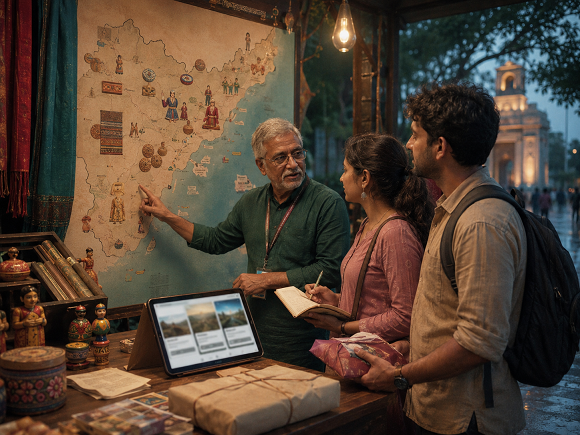
A craft tourist often wants proof that they bought something rooted in place. Online pages can supply that proof through cluster maps, artisan stories, process photos, and short videos. The goal is not to turn every handmade object into a souvenir cliché. The goal is to make origin visible enough that buyers understand what they are supporting.
For Andhra Pradesh, this is especially useful because the state has recognizable craft forms that can travel digitally: Kalamkari, Kondapalli toys, Etikoppaka lacquerware, leather puppetry, Uppada textiles, Durgi stone carving, wood carving, brass and bronze work, lace, and other regional products. Each craft needs its own product-language strategy.
What Sellers Should Capture Before The Festival Memory Fades
The best time to convert festival interest into online demand is immediately after the event. Sellers should not wait months to build listings. The buyer questions, stall photos, popular products, and sales patterns are freshest right after the final day.
A useful post-festival workflow can be simple:
- Identify the five products that drew the most stall questions or sales.
- Photograph each product in natural light with scale, detail, and use-context images.
- Write one clear product page per item with material, origin, dimensions, care, and story.
- Add a short artisan or cluster note rather than a generic cultural paragraph.
- Connect QR codes, WhatsApp catalogs, marketplace listings, and social posts to the same product page.
That workflow matters because footfall fades fast. A buyer who visited the stall on Sunday may still remember the product on Monday. By the next week, they may only remember that they saw “a beautiful handloom saree” or “a nice wooden toy.” The product page has to be ready while memory still has purchase potential.
Why Andhra Pradesh Craft Pages Should Be Built For Search And AI Discovery
Online buyers are changing how they search. Some still type into marketplaces. Others search Google. Many now ask AI assistants for gift ideas, regional craft recommendations, or explanations of Indian handicrafts. That means product pages need to be understandable to both humans and machines.
A strong Andhra Pradesh craft page should name the product, craft form, place, material, maker context, use case, and authenticity boundary in plain language. For example, a page for a Kondapalli toy should explain that Kondapalli toys are traditionally associated with Andhra Pradesh, describe the material and style, show close-up images, and clearly say whether the item is handmade by an artisan or produced in a workshop.
The same applies to handloom textiles. A saree page should not only say “beautiful saree.” It should state fabric, weave or craft type where verified, region, color, border style, occasion, care, and whether variations are expected because of hand production.
This is how Vijayawada footfall becomes search demand. The festival proves people are curious. Product pages make that curiosity findable after the buyer leaves.
Why Artisan Welfare And Online Demand Must Grow Together
The Times of India reported that Pawan Kalyan said more than two lakh artisans are engaged in Andhra Pradesh’s handicrafts sector and that the state wants to connect them with international markets, better branding, and stronger marketing opportunities through the artisan welfare and global promotion report. That number shows why the online-demand conversation matters. A large artisan base cannot depend only on temporary exhibitions, seasonal fairs, and local festival traffic.
Yet online growth should not be framed as a magic fix. Many artisans need photography support, packaging help, fair pricing, digital training, catalog writing, inventory systems, and protection from copycat sellers. Common Facility Centres, QR storytelling, and official platforms can help only if they connect to real seller workflows.
Online demand must also respect craft limits. Handmade production cannot always scale like factory production. Product pages should explain lead times, made-to-order availability, small-batch limits, and handmade variation. That honesty builds trust and protects artisans from unrealistic buyer expectations.
The best digital craft strategy is not about making handmade products look mass-produced. It is about making handmade value easier to understand.
How Vijayawada Can Become A Model For Craft Demand Conversion
The Andhra Pradesh Handicrafts Festival 2026 shows that physical craft events still matter. Buyers still want to see, touch, compare, and speak to sellers. Artisans still benefit from direct appreciation. Regional craft still has emotional power when it is presented in a lively public setting.

The next step is conversion. Every crowded aisle should become a question: which products deserve better online pages? Every buyer question should become product-description language. Every popular stall should become a photo priority. Every QR code should lead to a useful page, not a dead end. Every festival report should push sellers to ask how in-person interest can survive after the exhibition closes.
For shimply.com’s handmade-commerce audience, the Vijayawada lesson is practical. Footfall is not the finish line. It is market research. It tells artisans and sellers that demand exists. Online product pages decide whether that demand can return, travel, and grow.
If Andhra Pradesh can connect Lepakshi’s trust layer, QR-code storytelling, craft tourism, seller photography, and search-ready listings, the festival’s strongest legacy may not be one week of sales. It may be a stronger digital path from Vijayawada’s craft stalls to buyers who discover, understand, and purchase Andhra Pradesh handicrafts long after the venue lights go off.