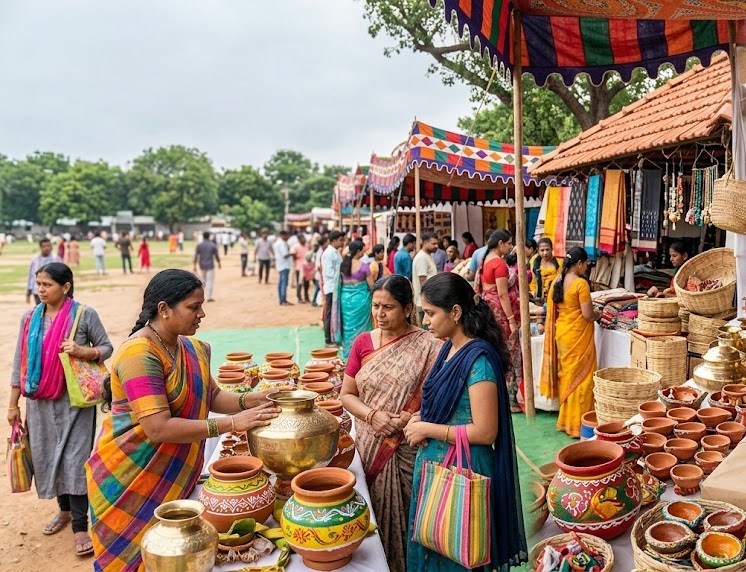
Bonalu 2026 is becoming more than a major devotional calendar moment in Telangana. It is also becoming a handmade-commerce opportunity. Telangana Transport and BC Welfare Minister Ponnam Prabhakar announced that the state government will organize a State-level Handicrafts Exhibition-cum-Sale at the HMDA Grounds in Hyderabad from July 16, 2026, in connection with Ashada Bonalu. The exhibition, organized by the Rural Development Department under SERP, will bring traditional artisans directly in front of festival crowds looking for ritual items, decor, gifts, and regional craft products.
For Shimply readers, the story matters because festival footfall can do what online search alone cannot. It lets buyers see, touch, compare, ask questions, and understand the use of handmade products in real time. For sellers, Bonalu offers a practical lesson: regional crafts become more giftable when they are packaged around occasion, use, cultural clarity, and buyer trust.
Why Bonalu 2026 Creates A Strong Craft-Commerce Moment
Bonalu is one of Telangana’s most visible cultural and devotional festivals. The Hyderabad District official festival page describes Bonalu as an annual festival celebrated in Hyderabad, Secunderabad, and other parts of Telangana, usually during Ashada Masam in July or August, where Goddess Mahakali is worshipped. That official Bonalu festival context is important because the exhibition is not being placed beside a random shopping event. It is being tied to a moment when ritual, community movement, temple visits, family gatherings, food, music, and traditional dress already shape buyer behavior.
The New Indian Express reported that Bonalu festivities in 2026 will be held from July 16 to August 13, beginning with the jatara at Sri Jagadamba Mahankali Devasthanam at Golconda. It also reported that lakhs of devotees are expected to visit Mahankali temples across Hyderabad during Ashada Masam, with major celebrations across Golconda, Balkampet, Secunderabad, Lal Darwaza, Subzi Mandi, Karwan, and Haribowli. That Bonalu 2026 schedule creates the footfall logic behind the handicrafts exhibition.
For artisans, this matters because festival buyers are not browsing abstractly. They already have reasons to buy. Some need Bonam pots, lamps, vessels, flower decorations, bangles, toranams, baskets, or pooja materials. Others may buy gifts for relatives, home decor for the season, or small traditional items that carry Telangana identity. The same product can serve ritual use, home styling, gifting, and memory.
That overlap is where handmade sellers can grow. A clay Bonam pot can be a ritual item, but a smaller decorated clay vessel can also become a keepsake gift. A bamboo basket can carry offerings, but it can also be styled as home storage. A brass vessel can support worship, but it can also work as a festive housewarming gift. The seller’s task is to explain those uses clearly without diluting the cultural meaning.
What The HMDA Grounds Exhibition Is Expected To Showcase
Deccan Chronicle reported that the exhibition will be held at HMDA Grounds beside the Dr. B.R. Ambedkar statue in Hyderabad from July 16. It said the government plans to set up a larger number of stalls than last year to give more artisans an opportunity to showcase products and earn livelihoods. It also listed participating traditional occupations including potters, blacksmiths, carpenters, Vishwabrahmins, Padmashali weavers, goldsmiths, stone sculptors, basket makers, leather artisans, and other traditional craftspeople.
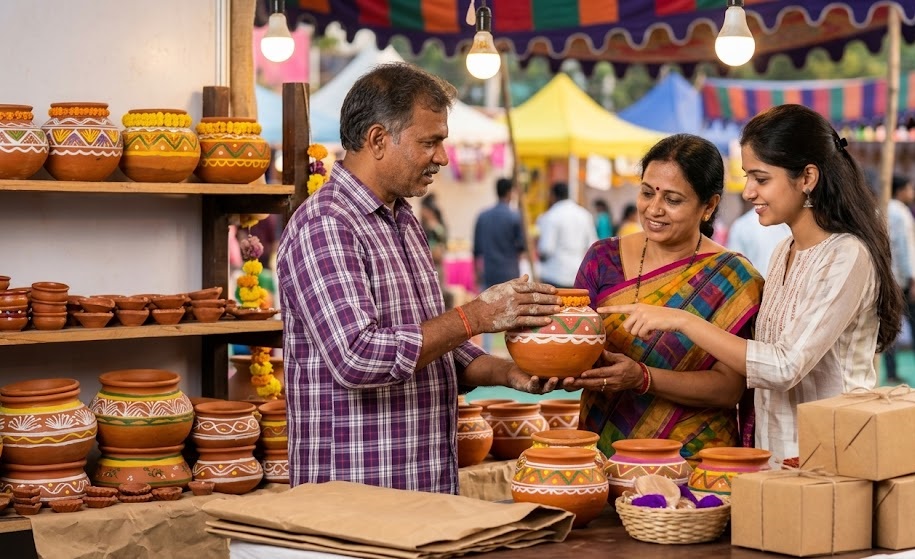
That mix is commercially useful because it covers both ritual-specific and gift-friendly categories. Visitors will be able to purchase clay Bonam pots, earthen lamps, bamboo baskets, brass and copper vessels, kalashams, bells, pooja materials, flower garlands, toranams, Bonam decoration items, bangles, bead ornaments, Pothuraju accessories, traditional musical instruments such as dappu and dhol, wooden pooja platforms, and other traditional products. The Bonalu handicrafts exhibition report shows how broad the product universe can be.
For handmade sellers, the category spread offers a useful template. Festival commerce works best when sellers organize products by buyer need, not only by craft type. A buyer may not walk into the venue thinking, “I need a product from a specific artisan category.” They may think, “I need items for Bonalu,” “I need something for my home altar,” “I want a gift for my mother,” or “I want a traditional product I can carry home.”
That means display strategy matters. A potter can group products into ritual-use pieces, small gift pieces, and decor pieces. A basket maker can separate offering baskets, storage baskets, and gift hampers. A metal artisan can display vessels, lamps, bells, and decorative objects by use. A weaver can show festival textiles, giftable cloth pieces, and home-use products.
The same logic applies online after the event. A product that sells well at Bonalu should later appear on a digital shop with a clear title, material detail, size, care instruction, use case, and packaging photo.
How Festival Footfall Converts Into Gift Demand
Footfall alone does not guarantee seller growth. A crowded festival can create sales for a day, but long-term value comes when sellers convert visitors into repeat buyers. The key is to turn the product from “something I saw at the festival” into “something I can gift, reorder, or recommend.”
Festival buyers often make faster decisions because the setting creates urgency and emotion. They are already in a cultural mood. They may be shopping with family. They may want something meaningful from the day. They may be willing to buy an extra small item if it is well displayed, fairly priced, and easy to carry.
Giftability depends on presentation. A pair of earthen lamps can become a small festive gift set if packed with a care card. A brass bell can become a home blessing gift if presented in a cloth pouch. A bamboo basket can become a gift hamper base if shown with suggested contents. Bangles and bead ornaments can become return gifts if grouped by color and size. A wooden pooja platform can become a housewarming product if the seller explains dimensions, finish, and care.
Shimply’s buyer guide to GI-tagged Indian crafts by state shows why state and origin matter in handmade buying. The same idea applies at Bonalu. A product tied to Telangana’s ritual season becomes more meaningful when buyers understand its place, use, material, and maker context.
For sellers, the practical rule is simple: every festival product should answer three questions. What is it used for? Why is it meaningful during Bonalu? How can it be gifted or used after the festival?
What Regional Craft Sellers Should Prepare Before The Event
A festival exhibition is not the place to improvise every sale. Sellers can benefit from preparing product groups, packaging, simple pricing, product cards, and digital follow-up before the first visitor arrives.
The best stalls usually make product use obvious. A buyer should not need a long explanation to understand what is ritual-specific, what is decorative, what is wearable, and what is gift-ready. Products should be grouped by function: Bonam-related items, pooja items, home decor, personal accessories, music-related items, baskets, lamps, and gift sets.
Sellers should prepare a few small bundles. A low-cost gift bundle might include two earthen lamps and a small decorative element. A home altar bundle might include a brass bell, small vessel, and cloth pouch. A basket seller can create festival offering baskets and reusable storage baskets. A weaver can create small textile sets for gifting, wrapping, or decor.
| Festival Product Type | Event Use | Giftable Product Strategy |
|---|---|---|
| Clay Bonam Pots | Ritual offering and decoration | Offer smaller keepsake versions with care notes |
| Earthen Lamps | Festival lighting | Pair in small festive gift sets |
| Bamboo Baskets | Offerings and carrying items | Present as reusable storage or hamper bases |
| Brass And Copper Vessels | Pooja and home use | Add cleaning instructions and gift packaging |
| Bangles And Bead Ornaments | Festival dressing | Group by color, size, and gifting tier |
| Wooden Pooja Platforms | Home worship setup | Show dimensions, finish, and placement examples |
This kind of display helps buyers decide quickly. It also helps sellers explain value without repeating the same pitch all day.
Product cards do not need to be elaborate. A simple tag can include material, size, maker or cluster, care instruction, and suggested use. For sellers who want repeat orders, every stall should also have a scannable digital contact method, but the card should not depend only on QR codes. Some buyers still prefer a phone number, business card, or printed catalogue.
Why Festival Products Need Better Packaging
Packaging can decide whether a festival purchase becomes a gift. A buyer may love a clay lamp or metal vessel but hesitate if it feels hard to carry, fragile, or unsuitable for gifting. Handmade sellers should treat packaging as part of the product experience, not an afterthought.
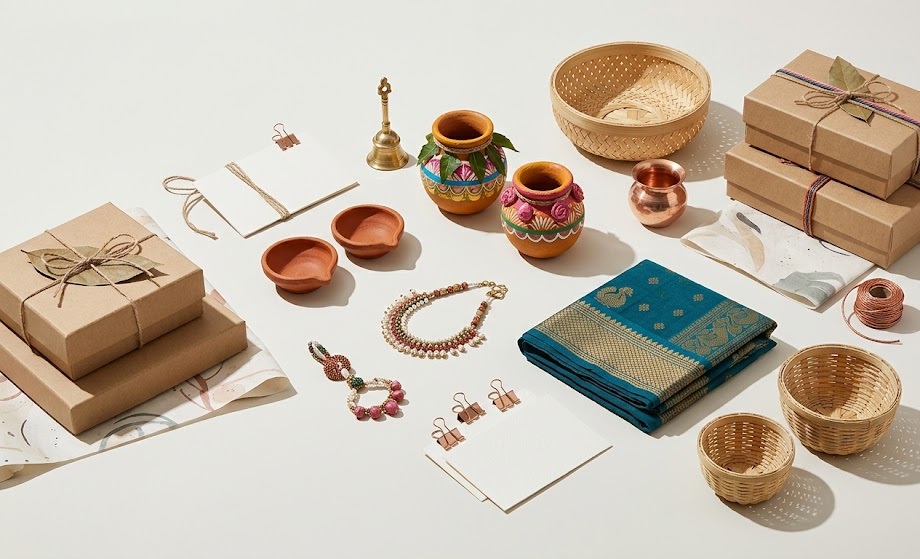
For Bonalu-related products, packaging has to balance practicality with cultural respect. Ritual items should not be wrapped in flashy, generic packaging that makes them feel like novelty goods. A better approach uses kraft boxes, cloth bags, protective paper, simple care cards, and clean product grouping.
Clay items need shock protection. Brass and copper products need scratch protection and cleaning notes. Bangles and bead ornaments need compartmental packaging. Bamboo baskets need dust protection if they are being gifted later. Textile products need folding, color-care instructions, and moisture protection during monsoon weather.
This matters because July in Hyderabad can involve heat, humidity, rain, and crowded movement. A buyer may visit temples, travel by car or metro, walk through busy areas, and carry multiple purchases. If the seller makes carrying easier, the product becomes more appealing.
Packaging also supports online sales after the event. A buyer who sees thoughtful packaging at the stall is more likely to trust the seller for a future shipment. A seller can photograph the packaging and use it in marketplace listings, social media, or WhatsApp catalogues.
How Artisans Can Use Bonalu To Build Digital Demand
Bonalu footfall can become digital demand if sellers capture buyer interest properly. Many visitors may not buy large items on the spot, but they may follow a seller, request customization, or order later. That only happens if the seller gives them a clear way back.
A digital follow-up plan can be simple. Sellers can prepare a WhatsApp catalogue, Instagram page, marketplace shop, or website product list before the exhibition begins. Product photos should be ready before the event, not taken hurriedly after customers ask. Each product should have a name, price, size, material, and delivery note.
Sellers should also pay attention to buyer questions. If several visitors ask whether a brass vessel is easy to clean, the online listing needs a cleaning section. If buyers ask whether a bamboo basket can be reused after Bonalu, the listing needs lifestyle photos. If they ask whether a wooden platform fits a small apartment altar, the seller needs dimensions and scale images.
India’s national handicraft context supports this shift. PIB has reported that India’s handicraft sector includes 318 GI-tagged handicraft products and around 455 formally classified craft categories, with an estimated 64.66 lakh handloom and handicraft artisans as of August 2025. That Indian handicraft sector data shows why sellers need sharper digital identity. There are many artisans competing for attention. The sellers who document their products best will be easier to find after the event ends.
Festival buyers should also be invited into repeat relationships. A stall sign or card can say “custom orders available,” “gift packaging available,” “shipping within India,” or “festival bundles available.” These claims should be accurate, not decorative. Trust begins when the seller promises only what can be delivered.
Why Direct Selling Helps Traditional Occupations
The Bonalu exhibition’s list of participants matters because it includes traditional occupations that often rely on seasonal demand and local networks. Potters, blacksmiths, carpenters, weavers, goldsmiths, basket makers, leather artisans, and stone sculptors all have different production cycles, raw-material pressures, and buyer expectations.
A direct exhibition gives these artisans a chance to sell without every product passing through a reseller. It also lets buyers hear the product story from the maker or seller close to the making process. That improves trust and can help buyers understand fair pricing.
Direct selling is especially useful for products that buyers may not fully understand online. A visitor can compare clay pot sizes, inspect weaving, hear the sound of a bell, test the weight of a brass vessel, examine bamboo finishing, or ask about the care of a wooden platform. That physical trust can later support online purchases.
Yet direct selling also reveals the importance of presentation. A handmade product may be excellent, but if it is displayed in a confusing pile, buyers may miss its value. A stall should help buyers move from curiosity to decision. Product grouping, clear pricing, clean surfaces, good lighting, and a short story can improve sales.
For traditional artisans, festival exhibitions also create feedback. Buyers reveal what sizes, colors, combinations, and prices work. Sellers can use that feedback to adjust future production. A potter may learn that small giftable lamps sell faster than large decorative pieces. A basket maker may learn that customers want reusable storage sizes. A metal artisan may learn that cleaning instructions increase buyer confidence.
What Buyers Should Look For At The Bonalu Exhibition
Buyers can support artisans better when they shop with attention. Festival energy can encourage impulse buying, but thoughtful buying helps artisans build stronger relationships with customers.
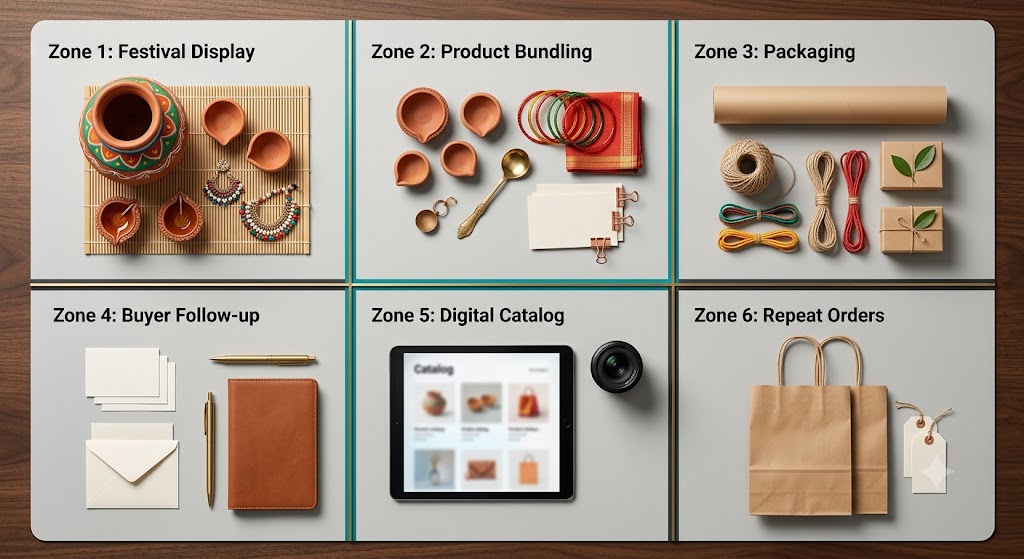
A buyer should ask what the product is made from, where it was made, whether it is ritual-specific or suitable for general home use, how to care for it, and whether the seller accepts repeat orders. For fragile products, ask how to carry or pack them safely. For metalware, ask about cleaning and whether the item is decorative or functional. For textiles and ornaments, ask about size, color care, and storage.
Buyers should also respect pricing. Handmade items carry labor, material, travel cost, stall cost, and seasonal preparation. Bargaining is common in many markets, but pushing too hard can erase the value of direct artisan selling. A fair price supports production beyond the festival weekend.
Gift buyers should look for products that travel well. Earthen lamps, bangles, baskets, small brass objects, bead ornaments, and compact textiles may work better as gifts than fragile oversized items. Larger products can still be excellent purchases if the seller can pack or deliver them properly.
How Festival Craft Events Can Shape Future Handmade Sales
The Bonalu 2026 Handicrafts Exhibition can become more than a seasonal fair if sellers and organizers treat it as a product-development moment. The products that attract the most attention should be photographed, documented, and added to digital catalogues. Buyer questions should become listing improvements. Popular bundles should become permanent gift sets. Repeat buyers should be invited to order after the festival.
For Telangana artisans, the event can help regional crafts move from ritual visibility to wider gift-commerce visibility. For buyers, it creates a chance to purchase products with cultural context rather than anonymous festive goods. For online sellers, it offers a field lesson in buyer behavior.
Festival footfall is powerful because it concentrates attention. A buyer walking through HMDA Grounds during Bonalu is already thinking about tradition, home, devotion, family, and celebration. The seller who understands that mindset can present craft products as useful, respectful, and gift-ready.
The long-term lesson is not limited to Bonalu. Every regional festival can become a handmade-commerce classroom. The sellers who learn from these moments can build better product pages, better packaging, better gift bundles, and better buyer trust. Bonalu 2026 shows how regional crafts can move from festival stalls into year-round handmade gifting when artisans connect cultural meaning with practical selling.