
Threads of Hope Bazaar is not only another craft shopping event in Hyderabad. It is a sign of how India’s handmade ecosystem responds when artisan clusters face sudden loss. The Crafts Council of Telangana has announced Kausalyam 2026 and Threads of Hope Bazaar as two connected initiatives that celebrate handmade traditions while raising support for the Bharoon Embroidery Cluster and artisans affected by the March 15, 2026 fire at Dastkar Nature Bazaar in New Delhi. For handmade sellers, buyers, and craft organizers, the story shows why events are becoming more than retail spaces. They are turning into recovery platforms where artisans can rebuild inventory, restore buyer confidence, reconnect with collectors, and turn public attention into practical livelihood support.
Why Threads Of Hope Bazaar Matters Now
The timing matters. On March 15, 2026, a fire broke out at Dastkar Nature Bazaar in South Delhi’s Andheria Mor area, destroying more than 40 stalls just hours before the market was set to open for the day. The Indian Express reported that products including pashmina shawls, Afghan carpets, home decor, and handmade goods worth crores were reduced to ashes, with no injuries reported. The same report said Delhi Fire Services received the call at 7.37 am, and the fire was doused at 9.10 am after 40–50 stalls were gutted.
That kind of loss is different from a bad sales weekend. For many artisans, stock represents months of work, borrowed capital, family labor, and future orders. Hindustan Times later reported that affected stalls included products from Jammu and Kashmir, West Bengal, Manipur, Rajasthan, Karnataka, and Afghanistan, with goods such as pashmina shawls, scarves, papier-mâché products, kantha work, konna grass products, Bagru prints, Lambani embroidery garments, and carpets. The Dastkar Nature Bazaar fire report makes clear that the damage was not only physical. It disrupted sales cycles, seasonal inventory, and artisan cash flow.
Threads of Hope Bazaar responds to that disruption through a market format buyers already understand: come, see, buy, support. The difference is that the purpose is not only discovery. It is recovery. Deccan Chronicle reported that Threads of Hope Bazaar will be held at CCT Spaces, MLA Colony, off Road No. 12, Banjara Hills, Hyderabad, on July 31 and August 1, 2026, from 10 am to 7 pm. It will feature 26 artisan groups and creative enterprises affected by the Delhi fire, with products including carpets, block prints, Banarasi sarees, Chikankari garments, Pashmina shawls, cane crafts, papier-mâché, tribal jewellery, embroidery, hemp clothing, and home decor. The Threads of Hope Bazaar details show how a local event can become a national craft-support mechanism.
How Craft Events Became Recovery Infrastructure
Craft events used to be judged mainly by footfall and sales. That is still important, but events now carry a wider role. They create trust, visibility, storytelling, documentation, networking, and relief. When an artisan cluster loses stock or market access, a well-run bazaar can restore more than revenue.
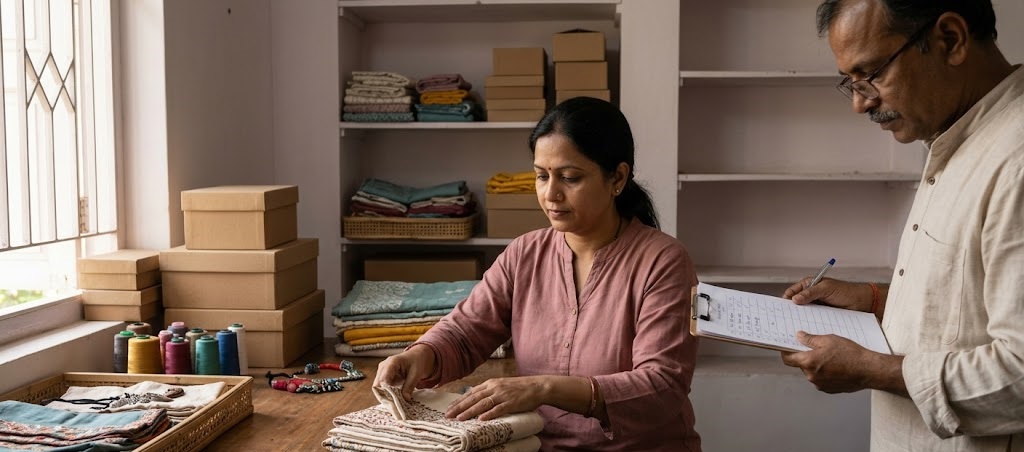
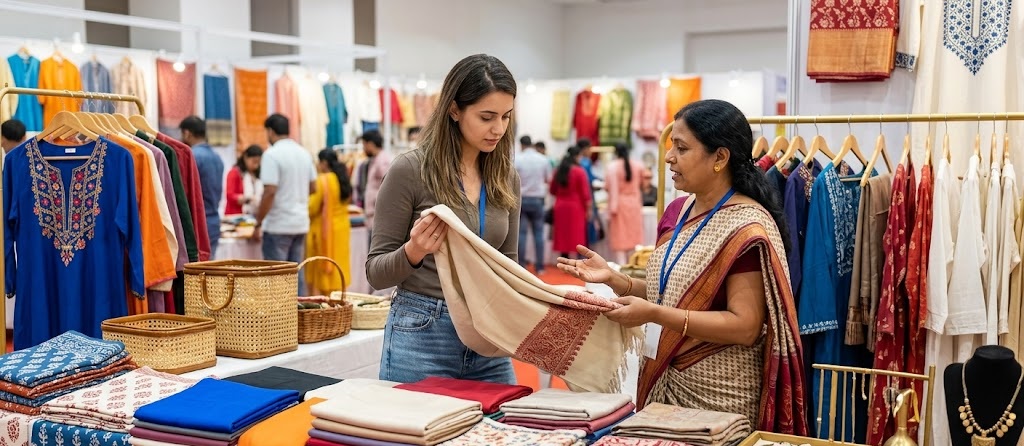
A recovery event gives artisans a public stage after a setback. It tells buyers that the affected craft groups are active, present, and worth supporting directly. It gives sellers a chance to rebuild customer lists, take orders, explain delays, sell replacement stock, and raise awareness around the real cost of handmade production.
The Crafts Council of Telangana is suited to that role because it already works through exhibitions, craft support, and market access. The council’s official site says it supports artisans, revitalizes traditional crafts, and creates sustainable opportunities across Telangana. It lists 37-plus years of heritage, more than 100 craft forms, over 500 artisans supported, and 75-plus exhibitions. The Crafts Council of Telangana profile helps explain why its events can serve as more than shopping weekends.
For Shimply readers, this is the first seller lesson: live events are not separate from online handmade commerce. They strengthen it. A buyer who meets an artisan at a bazaar may later search for the seller online, order a gift set, follow a social page, or recommend the product to a friend. A craft recovery bazaar can become the starting point for a longer buyer relationship.
What Kausalyam 2026 Adds To The Recovery Story
Threads of Hope Bazaar is connected to Kausalyam 2026, and that connection matters. Kausalyam 2026 is not framed only as a fundraiser. It is a large craft showcase that brings national textile and handmade traditions into one venue.
Architecture Update reported that Kausalyam 2026 will be held at Anvaya Convention, Financial District, Hyderabad, from July 15 to 16, 2026, with the inaugural day on July 14 by invitation and public entry free on July 15 and 16 from 10 am to 7 pm. It will feature more than 75 textile studios and craft exhibitors, over 120 stalls, and 40-plus curated handcrafted collections from across India. The same report says the event is organized once every five years in collaboration with textile revivalist Gaurang Shah and will include a Museum of Textiles, Conversations with Craftpreneurs, artisan interactions, and handmade traditions from regions including Kashmir, Gujarat, Uttar Pradesh, Assam, Manipur, Rajasthan, and West Bengal. The Kausalyam 2026 showcase gives the recovery effort a broader stage.
That matters because recovery works better when it is attached to visibility. A small relief sale can help, but a larger curated craft event can bring collectors, designers, serious buyers, journalists, cultural organizations, and repeat customers into the same ecosystem. It gives affected artisan groups a stronger chance to regain market attention.
Kausalyam also shows how craft events can balance heritage and commerce. The Museum of Textiles gives visitors context. Conversations with Craftpreneurs turn sellers into knowledge holders, not just vendors. Cultural presentations such as leather puppetry and Cheriyal Scroll storytelling connect handmade products with performance, memory, and place.
For online sellers, this is a useful model. Product pages should do the same thing in miniature. A good listing does not only show the object. It explains material, origin, process, occasion, care, and why the buyer should trust the seller. Shimply’s guide to Indian craft gift sets follows that practical logic: handmade value becomes easier to buy when the buyer can understand how the gift will be used, packed, and delivered.
Why Artisan Clusters Need More Than Sympathy
A disaster can bring public sympathy, but sympathy does not always rebuild livelihoods. Artisan clusters need orders, working capital, material replacement, equipment support, buyer access, photography, packaging, shipping help, and a way to restart production without losing market momentum.
The Dastkar fire showed why this matters. Hindustan Times reported that many products were uninsured because they were held in temporary structures, and one pashmina seller said all his stock was at the stall because of a seasonal sale that runs until April. Another artisan connected to kantha work described the challenge of paying artisans back in his village after losing pieces that took months to produce. The artisan loss report shows that craft inventory is not disposable retail stock. It is time, skill, material, and payment responsibility.
A recovery bazaar can help because it converts sympathy into transactions. Buyers can purchase directly. Organizers can spotlight affected groups. Media coverage can guide people toward the event. Designers and retailers can place orders. Craft councils can coordinate support instead of leaving each seller isolated.
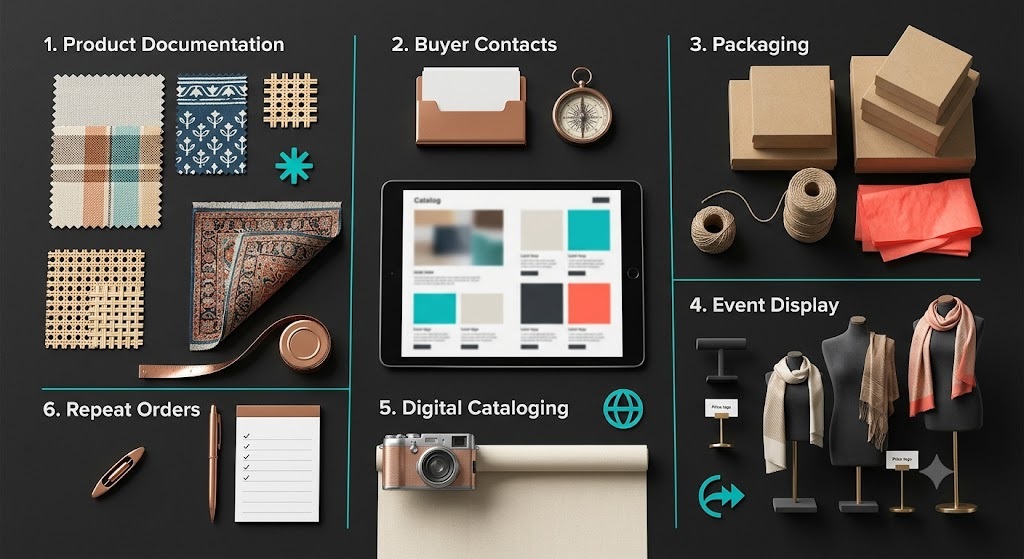
For handmade sellers, the lesson is risk planning. Event sales are powerful, but sellers need basic documentation of stock, product photos, price lists, customer contacts, order sheets, and digital catalogues. If physical inventory is damaged, those records can help rebuild. A seller who has photographed products, recorded dimensions, saved buyer contacts, and documented material costs can restart faster than a seller whose entire business record lived at the stall.
What Buyers Should Understand About Recovery Bazaars
Buyers often attend craft events looking for beautiful products. Recovery bazaars ask them to look deeper. A carpet, shawl, textile, cane object, jewellery piece, or home decor item may carry a story of loss and rebuilding. That does not mean buyers should treat the purchase as charity. It means they should understand that fair pricing, patience, and direct buying can support a real recovery process.
A handmade buyer can help in practical ways. Buy from affected artisan groups when the product suits your need. Ask respectful questions about material, care, origin, and shipping. Avoid bargaining so aggressively that the support purpose disappears. Share the event with people who value handmade goods. Place future orders if the artisan needs time to rebuild inventory.
| Buyer Action | Why It Helps Artisans | What To Ask Before Buying |
|---|---|---|
| Buy Directly At The Bazaar | Immediate cash flow returns to affected sellers | Who made it, where, and how should it be cared for? |
| Place Custom Or Future Orders | Gives artisans demand beyond the event weekend | What timeline is realistic for handmade production? |
| Share Product Photos Responsibly | Helps sellers reach new buyers | Does the seller want to be tagged or credited? |
| Pay Fair Prices | Respects lost labor and rebuilding costs | What material and process shape the price? |
| Keep Seller Contact Details | Supports repeat business | Does the seller have a website, phone, or marketplace page? |
This buyer behavior matters because craft recovery is rarely solved in one weekend. A bazaar can restart momentum, but repeat buyers help sustain it.
How Recovery Events Help Online Handmade Sellers
A craft event can also generate online assets. Sellers can use the event to photograph product displays, collect buyer questions, test pricing, identify popular colorways, and learn which products people touch first. Those insights can improve marketplace listings.
If many buyers ask whether a shawl is washable, the online listing needs care instructions. If buyers want to know whether a basket can hold books, the product page needs a scale photo. If customers ask whether a textile works as a wall hanging or table runner, the seller can add lifestyle images showing both uses. If buyers worry about fragile shipping, the seller should show packaging.
Recovery events also create trust signals. A seller can mention participation in Threads of Hope Bazaar or Kausalyam 2026 if accurate. That helps buyers see the seller as part of a real craft network. The wording should stay factual. Sellers should not imply official endorsement beyond participation, and they should not use event names as decorative keywords if they were not involved.
For artisan clusters, event participation can support collective branding. If several makers from one region or craft group attend together, they can coordinate product tags, care cards, photography, and buyer education. A cluster that presents itself clearly is easier for buyers to remember.
Why Craft Councils Are Becoming Market Intermediaries Again
The rise of digital platforms did not make craft councils obsolete. It changed their role. Organizations like the Crafts Council of Telangana can act as bridges between artisans, buyers, designers, event venues, media, and online visibility. Their role is not just to preserve craft. It is to help craft survive modern selling conditions.
Telangana Today previously reported that CCT helped artisans take products online by teaching them how to photograph products, catalogue them, and prepare write-ups. The same report quoted members describing design support, product development, marketing, and sales support. That CCT artisan support history makes Threads of Hope Bazaar part of a longer pattern: craft organizations increasingly have to provide both cultural advocacy and seller infrastructure.
That is especially important after a crisis. A single artisan may struggle to secure press coverage, arrange a venue, rebuild customer trust, and organize sales after loss. A council can gather attention around many artisans at once.
For handmade sellers outside Hyderabad or Delhi, the model is still useful. Look for local craft councils, design schools, artisan networks, non-profits, tourism boards, museum shops, and cultural venues that can host recovery-style or cluster-support events. The best partnerships are not one-off stalls. They include product documentation, training, buyer follow-up, and online catalog support.
What Threads Of Hope Bazaar Teaches Handmade Sellers
Threads of Hope Bazaar teaches a practical lesson: resilience needs structure. Handmade sellers often hear that craft survives because artisans are resilient. That is true, but it can become an unfair burden if it means artisans are expected to recover alone.
Real resilience needs buyers, organizers, venues, records, digital catalogues, packaging support, fair pricing, and public attention. A recovery bazaar gives those elements a shared place. It lets buyers participate without turning artisans into symbols. It lets sellers sell without hiding the reality of loss. It lets craft councils convert cultural goodwill into livelihood support.
For online sellers, the article’s lesson is direct. Do not wait for a crisis to document your work. Photograph inventory. Save product details. Keep customer contacts. Build a simple digital catalogue. Explain material and care. Track prices and production timelines. Show packaging. Keep proof of event participation. These habits build trust in ordinary times and make recovery easier in difficult ones.
For buyers, Threads of Hope Bazaar is a reminder that handmade products carry more than design. They carry livelihoods, regional skill, and fragile supply chains. Buying thoughtfully from recovery events can help artisans move from loss back into production, but the strongest support is repeat trust.
Craft events are becoming recovery platforms because handmade commerce is built on relationships. A stall is not only a stall. It is a meeting point between maker and buyer. When a fire destroys that space, the recovery has to rebuild both inventory and confidence. Threads of Hope Bazaar shows how a craft event can do both.