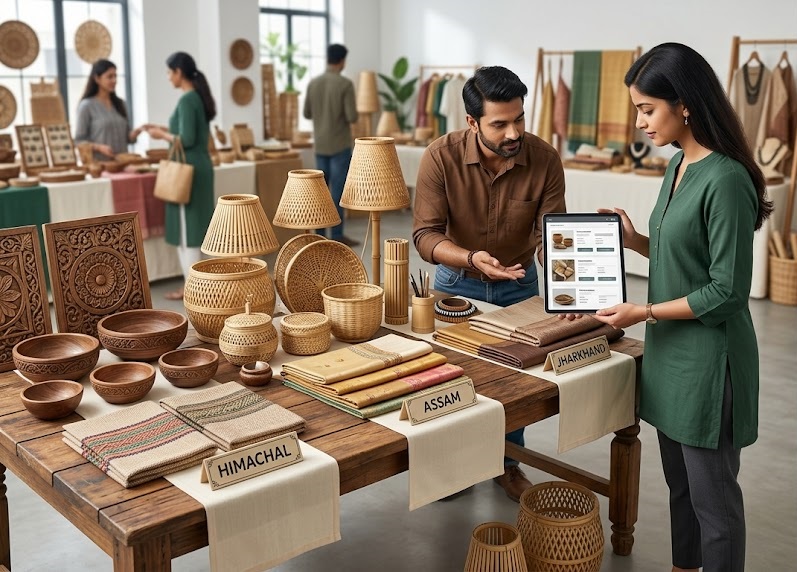
India’s newest GI-tagged crafts are not only heritage news. They are a clear signal for handmade sellers, gift buyers, and online craft marketplaces: authenticity is becoming easier to search, compare, and question. In June 2026, traditional products from Himachal Pradesh, Assam, and Jharkhand received fresh Geographical Indication recognition, bringing regional crafts such as Himachal Ransingha, Handmade Galecha, Himachali Wood Carving Craft, Assam’s Bihu Pepa, Bah Silpa, Deori handlooms, Karbi Anglong handlooms, Jharkhand’s Bhagaiya silk, Kuchai silk, Munda jewellery, and bamboo craft into a stronger authenticity conversation. For Shimply readers, the trend matters because buyers are no longer searching only for “handmade Indian gifts.” They are asking where a product comes from, who made it, what makes it region-specific, and whether the seller can prove the claim.
Why New GI Tags Matter For Handmade Buyers
A Geographical Indication tag links a product to a specific place and to qualities, reputation, or characteristics associated with that origin. India’s official Geographical Indications framework recognizes categories such as agricultural goods, natural goods, handicrafts, and industrial goods, and the Intellectual Property India introduction notes that a registered GI is valid for 10 years from the date of application, with renewal possible for further 10-year periods. That Geographical Indications introduction gives the tag a legal and commercial weight that ordinary product wording does not have.
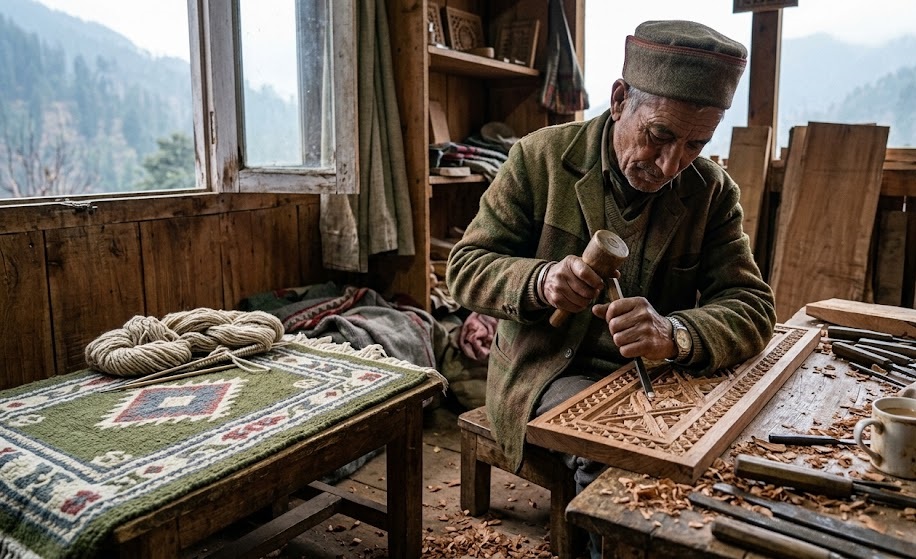
For handmade buyers, the practical value is clarity. A GI tag does not automatically mean every item carrying a regional name is genuine. It does tell buyers that the product name is tied to a recognized place, tradition, material process, or reputation. That makes the tag useful in crowded online marketplaces where sellers may use broad words like “tribal,” “traditional,” “heritage,” or “authentic” without giving evidence.
The June 2026 recognitions are especially useful because they cover different product types. Himachal’s new GI list includes a musical instrument, a textile craft, and wood carving. Assam’s includes handlooms, bamboo craft, and the Bihu Pepa hornpipe. Jharkhand’s includes silk, jewellery, and bamboo craft. Together, they show that authenticity is not limited to luxury sarees or famous pottery. It can apply to objects used in music, home decor, textile gifting, jewellery, and regional craft commerce.
For buyers, that widens the search field. A person shopping for a wedding gift, housewarming item, cultural keepsake, or international craft parcel can use GI recognition as a starting filter. Shimply’s existing guide to GI-tagged Indian crafts by state already frames this behavior clearly: state-specific craft knowledge helps buyers avoid vague product claims and make more respectful choices.
What Himachal’s New GI Tags Teach About Place-Based Craft Value
Himachal Pradesh’s June 2026 recognitions show how a region can protect both ceremonial culture and home-oriented craft. The Tribune reported that Ransingha, Himachali Wood Carving Craft, and Handmade Galecha received GI status, with the recognition framed as a milestone for the state’s traditional craftsmanship and indigenous knowledge. The report also noted that Himachal already had 15 products with GI status. That Himachal GI recognition matters because it expands what buyers may associate with the state beyond tourism and shawls.
Ransingha is especially interesting for handmade-commerce analysis because it is not a typical decor object. It is a traditional metal wind instrument associated with ceremonial, religious, and cultural life in the state. For buyers, that makes the object more context-sensitive. A Ransingha-inspired or Ransingha-related listing should not be treated like generic metal decor. It needs accurate description, origin clarity, and respect for use context.
Handmade Galecha points toward textile and home decor search demand. Rugs, carpets, and woven floor pieces often appear in global handmade markets, but many listings blur the difference between machine-made, hand-finished, handwoven, and region-specific products. GI recognition gives serious sellers a stronger reason to explain technique, fiber, region, size variation, and care.
Himachali Wood Carving Craft offers another seller lesson. Woodwork can be highly vulnerable to vague listing language because “hand-carved” is easy to claim and hard for buyers to verify online. A seller working with region-specific wood carving should show close-up photos, tool marks, material notes, design background, and maker information. GI status can support the product story, but the product page still has to do the work.
How Assam’s GI Tags Turn Regional Identity Into Searchable Craft Language
Assam’s June 2026 GI additions show how regional identity can become more visible in online craft discovery. The New Indian Express reported that Assam received GI recognition for Bihu Pepa, Bah Silpa or bamboo craft, and handloom products from Karbi Anglong and the Deori community, citing Chief Minister Himanta Biswa Sarma’s announcement. That Assam GI tag update is important because it gives buyers more precise names to search.
Precision matters. A buyer searching “Assam bamboo craft” is not the same as a buyer searching “Bah Silpa.” A buyer searching “Assam handloom” may need guidance to understand the difference between Deori handloom products and Karbi Anglong handloom products. A buyer searching “Bihu Pepa” is likely looking for a culturally specific instrument, not a generic horn-shaped souvenir.
For handmade sellers, the lesson is product naming. Good search visibility should not come from keyword stuffing. It should come from correct naming, location, material, and use context. A strong product listing might say “Karbi Anglong handloom textile” if the product is genuinely tied to that origin and production system. It should not use every Assamese craft name as a traffic trap.
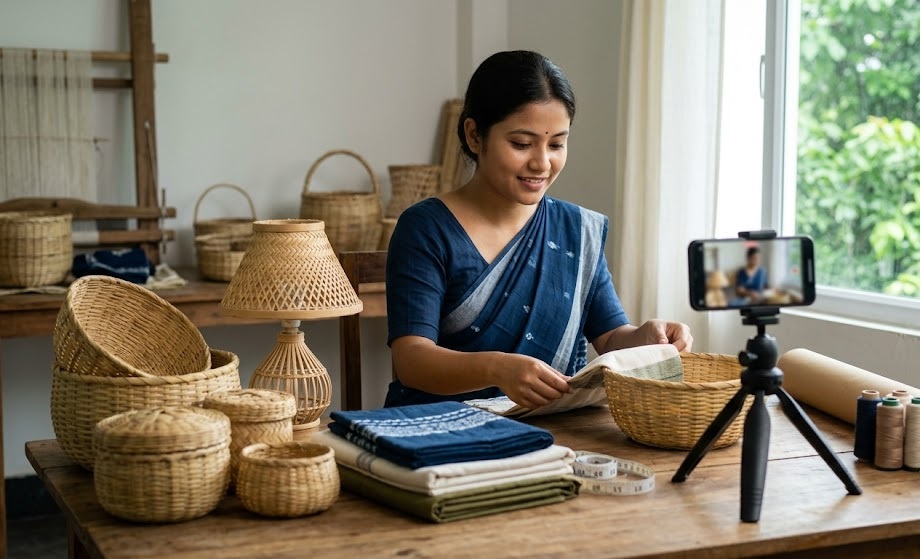
Assam’s bamboo craft recognition is especially relevant to modern gift and decor buyers. Bamboo products fit current demand for natural materials, lightweight gifting, storage baskets, lighting, trays, and home accessories. Yet the market is full of generic bamboo products. GI recognition can help serious craft sellers explain what makes a regional bamboo tradition different from mass-produced bamboo decor.
For buyers, this means search behavior should become more specific. Instead of only asking whether an item is bamboo, they should ask where it was made, which community or cluster is connected to it, whether the seller identifies the craft correctly, and whether the photos show handmade variation.
Why Jharkhand’s New Tags Matter For Tribal Craft Visibility
Jharkhand’s June 2026 GI recognitions push authenticity into a different space: tribal textiles, jewellery, and forest-linked bamboo craft. The Economic Times reported that Bhagaiya silk, Kuchai silk, Munda jewellery, and bamboo craft products from Jharkhand received GI tags, with NABARD described as playing a key role. That Jharkhand GI tag report gives the state a stronger position in India’s craft search map.
For handmade sellers, Munda jewellery is the most sensitive category in this group. Jewellery tied to a specific tribal culture should not be flattened into generic “boho” or “ethnic” styling. Those words may perform in marketplace search, but they can reduce cultural specificity and buyer trust. A better listing explains design language, region, material, community connection, and whether the product is made by authorized artisans or inspired by the tradition.
Bhagaiya silk and Kuchai silk also matter for textile buyers. Silk is a premium keyword, but it is often overused. GI-linked silk products help buyers distinguish region-specific textiles from generic silk labels. A seller should explain origin, fiber, weave, finishing, texture, and intended use. A buyer should ask whether the product page gives more than a broad “pure silk” claim.
Jharkhand bamboo craft adds another practical category for home decor and gifting. Bamboo products can be affordable, sustainable, lightweight, and useful for storage, lighting, baskets, trays, and small decor. GI recognition can help authentic craft clusters stand apart from factory-made bamboo imports or reseller inventory with vague handmade claims.
The state’s new recognitions also show why support organizations matter. NABARD’s involvement is not just administrative detail. It suggests that GI recognition often needs institutional work: documentation, applications, artisan-group support, market linkage, and post-recognition promotion. A GI tag can open the door, but sellers still need buyer-facing systems.
Why GI Tags Are Becoming A Handmade Search Signal
A search signal is not only an SEO keyword. It is a clue that helps buyers decide which product deserves attention. GI tags are becoming a handmade search signal because they help answer three buyer questions quickly: is this product tied to a real place, is the craft name being used properly, and does the seller understand what they are selling?
This is especially important for international buyers. Someone shopping from the United States, Canada, the United Kingdom, Singapore, or the UAE may not know the difference between a genuine region-linked textile and a generic “Indian handmade” product. GI language gives them a way to compare more responsibly.
| New GI Region | Recognized Craft Examples | Buyer Search Lesson | Seller Listing Lesson |
|---|---|---|---|
| Himachal Pradesh | Ransingha, Handmade Galecha, Wood Carving Craft | Search by craft name and region, not only broad category | Explain use, material, and regional technique |
| Assam | Bihu Pepa, Bah Silpa, Deori Handlooms, Karbi Anglong Handlooms | Distinguish community-linked handlooms and bamboo craft | Avoid generic “Assam handmade” wording |
| Jharkhand | Bhagaiya Silk, Kuchai Silk, Munda Jewellery, Bamboo Craft | Check tribal, textile, and bamboo craft origin carefully | Use cultural terms accurately and respectfully |
The table shows why the June 2026 GI news is not only about registration. It is about how product discovery changes. The more specific buyers become, the harder it is for vague listings to compete.
How Handmade Sellers Should Use GI Language Responsibly
GI recognition can help sellers, but it also raises the standard. A seller should not use a GI product name unless the product genuinely fits that origin and production context. If the seller is not an authorized user, or if the product is only inspired by a region, the language should be clear.
The Department for Promotion of Industry and Internal Trade has stated in official GI user guidance that authorized users are the people registered with the Geographical Indications Registry and authorized to use the registered GI name and GI logo on specified goods. That GI authorized user guidance matters for online sellers because authenticity is not only a storytelling issue. It can become a compliance and trust issue.
A responsible seller should describe the product in layers. Start with the product name. Add region. Explain material. Explain technique. State use case. Add care instructions. Include maker or cooperative details where possible. Use photographs that show texture, close-ups, backs, edges, scale, and handmade variation. Avoid vague claims such as “ancient,” “royal,” “tribal,” or “authentic” without support.
Buyers should also become more careful. A product page that uses a GI name but gives no origin details, no maker context, no material information, and only stock-style photos should be treated with caution. A lower price is not always a bargain if the origin claim is weak.
What Buyers Should Do Before Purchasing New GI-Linked Crafts
Buyers do not need to become legal experts to shop better. They need a practical checklist. Before purchasing a GI-linked craft from Himachal, Assam, Jharkhand, or any other Indian state, ask whether the seller names the exact craft, identifies the region, explains the material, shows real product photos, describes handmade variation, and offers realistic care or shipping details.
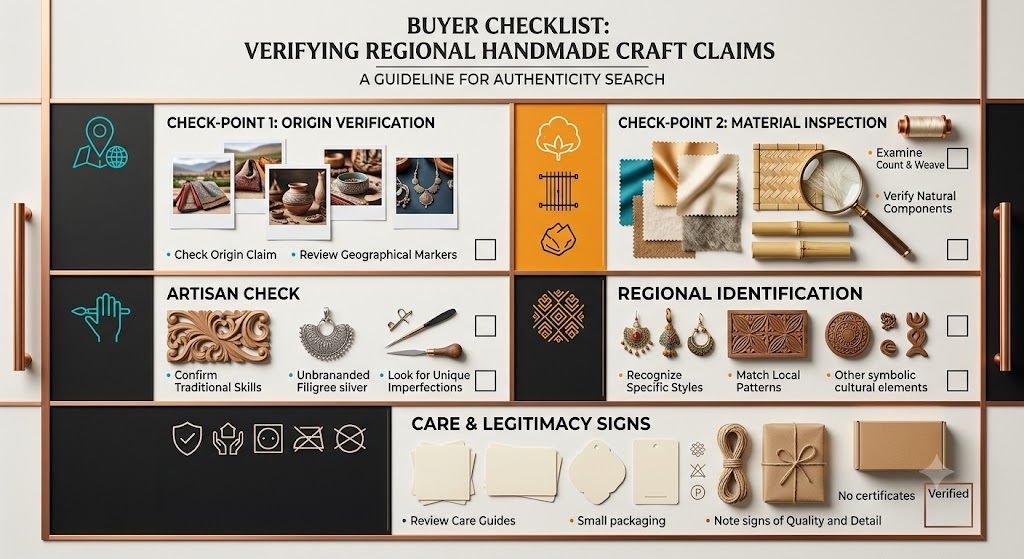
For textiles, check fiber, weave, size, finish, and washing instructions. For wood carving, look for material type, carving method, finish, and close-up details. For bamboo craft, check structure, durability, coating, and whether the item is decorative or functional. For jewellery, check metal, fastening, dimensions, cultural context, and whether the seller avoids costume-like exaggeration.
India’s craft economy is large enough for these details to matter. The Press Information Bureau reported in December 2025 that India’s handicraft sector includes 318 GI-tagged handicraft products and about 455 classified craft categories, with exports excluding hand-knotted carpets reaching ₹33,122.79 crore in 2024-25. That Indian handicraft sector data shows why authenticity is a commercial issue, not only a cultural one.
When demand grows, imitation grows too. GI recognition helps, but the buyer still has to read carefully. The safest purchases combine region-specific naming, transparent seller information, clear product photography, and realistic pricing.
Why Authenticity Is Becoming The New Handmade Advantage
The new GI tags in Himachal, Assam, and Jharkhand show that India’s handmade market is becoming more searchable by place, craft, and proof. That is good for serious artisans. It gives genuine makers a better way to stand apart from vague handmade claims, reseller products, and mass-made items using heritage language.
For sellers, the opportunity is clear. GI-linked products need better product pages, stronger origin stories, sharper photography, and honest wording. The goal is not to turn every listing into a legal document. The goal is to make authenticity easy for buyers to recognize.
For buyers, the lesson is just as clear. Search beyond “Indian handmade gift.” Search by state, region, craft name, material, and GI status. Ask whether the product page explains why the object belongs to its claimed place. Look for evidence, not only aesthetics.
Himachal’s Ransingha, Handmade Galecha, and wood carving; Assam’s Bihu Pepa, Bah Silpa, Deori and Karbi Anglong handlooms; and Jharkhand’s Bhagaiya silk, Kuchai silk, Munda jewellery, and bamboo craft all point to the same future. Handmade commerce is moving from broad charm to verified identity. Authenticity is becoming the search signal that serious buyers will follow and serious sellers will need to earn.