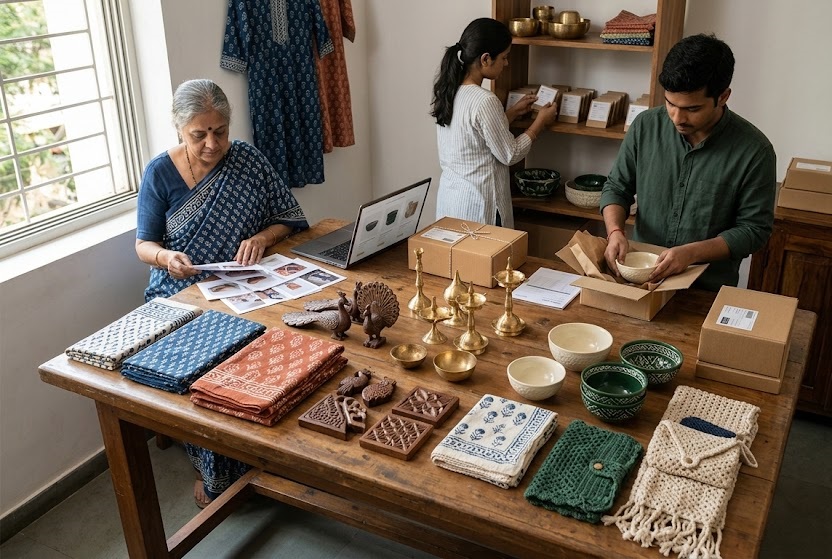
India’s handicrafts market is still growing, but the most useful lesson for online sellers is not just that demand is rising. The real lesson is that handmade commerce is becoming more structured, more searchable, and more competitive. IMARC Group’s June 18, 2026 forecast says India’s handicrafts market reached USD 4,856.73 million in 2025 and is projected to reach USD 8,299.45 million by 2034, expanding at a 6.13% CAGR during 2026–2034. For Shimply readers, that forecast should not be read as a promise that every seller will grow automatically. It should be read as a map of what buyers now expect: clearer product stories, better photos, stronger packaging, verified origin, reliable shipping, and handmade items that feel useful in modern homes.
Why The 2026–2034 Forecast Matters For Handmade Sellers
The market forecast matters because it confirms that handmade products are not stuck in a small heritage corner. IMARC’s India handicrafts market forecast points to growth supported by demand for handmade products, online retail access, contemporary design transitions, tourism, exports, and use across homes, offices, hotels, and hospitals.
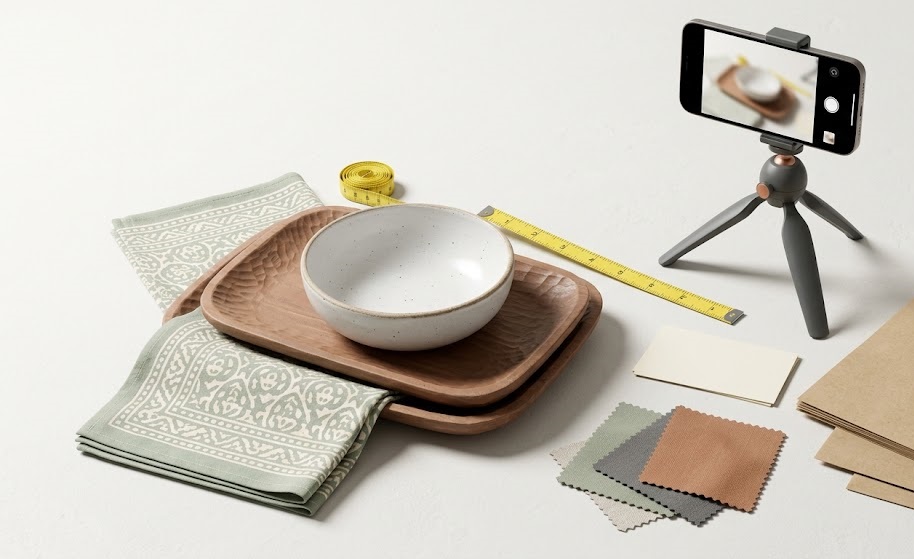
That mix is important. It means online sellers should stop thinking only in terms of festival gifts or tourist souvenirs. The buyer base is wider. A handwoven basket can be storage decor. A block-printed runner can be home styling. A brass tray can be a housewarming gift, corporate gift, or match-night serving piece. A crochet accessory can work as a personal gift, product bundle, or small international shipment.
The forecast also shows why sellers need stronger positioning. Growth brings more competition. More sellers, more marketplaces, more resellers, more mass-produced lookalikes, and more generic “handmade Indian gift” listings will crowd search results. The winners will not be the sellers who simply upload more products. They will be the sellers who make each product easier to understand and easier to trust.
This is where Shimply’s handmade-commerce focus becomes practical. Sellers need to think like buyers search. A buyer rarely searches only for “craft.” They search for a gift, a decor need, a material, an occasion, a region, a shipping concern, or a price range. A strong online listing has to answer those searches before the buyer sends a message.
Online Access Is No Longer Optional
India’s handicrafts growth is closely tied to digital access. IBEF notes that significant improvements in availability across online platforms are supporting market growth, and its industry profile says India has 744 handicraft clusters employing nearly 212,000 artisans and offering more than 35,000 products. The Indian handicrafts industry data shows a sector large enough to compete online, yet fragmented enough that product presentation still varies widely.
For individual sellers, this creates both opportunity and pressure. Online channels make it possible to reach buyers outside a local haat, exhibition, boutique, or tourist district. A buyer in Mumbai can find a bamboo lamp from Assam. A buyer in London can browse a ceramic bowl from Jaipur. A buyer in Toronto can order a lightweight Indian craft gift set if the seller explains dimensions, material, and shipping well.
Yet online access only helps when the listing is clear. A product that looks beautiful in person may fail online if the photos are dark, the scale is unclear, or the description uses vague words. “Traditional handmade decor” tells the buyer little. “Hand-block printed cotton table runner, 72 inches, natural dye-inspired palette, washable, suitable for dining tables and gift hampers” is much more useful.
Sellers should treat every product page as a mini showroom. The page needs a hero image, a scale photo, a material close-up, a packaging photo, and a use-case image. Buyers should not have to guess whether the product is decorative, functional, washable, fragile, foldable, lightweight, or gift-ready.
What The Forecast Says About Product Categories
The IMARC forecast segments India’s handicrafts market by product types such as woodware, art metal ware, handprinted textiles and scarves, embroidered and crocheted goods, zari goods, imitation jewellery, sculptures, pottery and glassware, attars and agarbattis. That spread should guide online sellers toward category-specific strategy rather than one-size-fits-all marketing.
A woodware seller needs to emphasize finish, size, use, weight, polish, and care. An art metal seller needs to explain metal type, coating, cleaning, and whether the item is food-safe or decorative only. A textile seller needs fiber, dimensions, wash care, color variation, and styling images. A pottery seller needs packaging confidence, glaze details, and shipping safety. An embroidered or crocheted goods seller needs close-up texture shots, care instructions, and handmade variation notes.
| Product Category | What Buyers Need To Know | Seller Listing Lesson |
|---|---|---|
| Woodware | Finish, size, use, care, weight | Show scale and surface detail |
| Art Metal Ware | Metal type, coating, cleaning, use | Clarify decorative vs functional use |
| Handprinted Textiles | Fabric, dimensions, wash care, color | Add styled room photos |
| Embroidered And Crocheted Goods | Stitch detail, fiber, durability | Use close-up texture images |
| Pottery And Glassware | Fragility, glaze, packaging | Show shipping-safe packaging |
| Imitation Jewellery | Material, fastening, dimensions | Photograph on neutral backgrounds |
This table matters because buyers judge risk differently by category. A buyer worries about breakage for pottery, tarnish for metal, fading for textiles, and size for jewellery. Sellers who address those fears early reduce friction.
For gift sellers, bundles can work especially well. A handcrafted home decor set, textile-and-brass tray pairing, pottery snack bowl set, or lightweight international gift package can help buyers solve a complete gifting problem. Shimply’s guide to Indian craft gift sets is a useful internal reference for this strategy because it connects authenticity with practical shipping concerns.
Why Authenticity Has Become A Commercial Filter
India’s handicrafts market cannot grow sustainably if buyers lose trust in the word “handmade.” PIB states that India has 318 GI-tagged handicraft products and around 455 formally classified craft categories, and that handicrafts differ from mechanically produced goods of similar utility through aesthetic, artistic, ethnic, or culturally attached features. The same official handicraft sector data says India had an estimated 64.66 lakh handloom and handicraft artisans as of August 2025, with women accounting for 71% of handloom weavers and 64% of total artisans.
That data should change how sellers write product pages. Authenticity is not only a moral claim. It is a search and conversion signal. Buyers want to know whether a product is handmade, hand-finished, machine-assisted, artisan-made, cooperative-made, or reseller-sourced. They want to understand origin and material without being misled by poetic wording.
A seller should not rely on words like “heritage,” “authentic,” “tribal,” “royal,” or “ancient” without context. These words can sound attractive, but they create weak listings when they are unsupported. A better page explains the craft name, region, maker or group, material, technique, and care. If a product is inspired by a regional style rather than made within that tradition, the description should say so clearly.
This is especially important for GI-linked products. Buyers increasingly search by place and product name. A seller using a recognized craft term should know what it means and whether they have the right to use it commercially. Trust grows when the seller is precise.
What Digital Growth Means For Pricing And Packaging
Online selling changes price expectations. In a physical craft fair, a buyer can touch the product, speak with the artisan, and inspect quality. Online, the buyer uses photos, descriptions, reviews, delivery timelines, return policies, and packaging cues to decide whether the price feels fair.
That means handmade sellers need to explain price through value. A higher price can make sense when the listing shows labor, material, finish, origin, packaging, and use case. A buyer may accept handmade variation if the seller explains it in advance. A buyer may pay more for a gift-ready product if it includes safe packaging, a care card, and clean presentation.
IBEF’s digital-expansion analysis says digital platforms, export facilitation, and cluster-based development are helping artisans reach national and international buyers directly, improving income stability and long-term sustainability. It also notes that digital payment systems and logistics solutions have made it easier for artisans to reach wider markets. The digital handicraft growth trend means packaging is no longer a back-office issue. It is part of the product.
For online sellers, packaging photos are now sales assets. Show how fragile items are packed. Show the care card. Show reusable kraft boxes, cloth bags, or protective wraps. Do not overclaim sustainability unless materials support it. Buyers appreciate honesty: recycled paper, reusable cloth pouch, plastic-free outer wrap, or shock-safe inner packaging should be described accurately.
A seller shipping pottery, glass, metal, or fragile decor should list packaging layers and delivery handling notes. A textile seller should explain folding, color protection, and care. A jewellery seller should show pouch or box quality. Packaging confidence can reduce abandoned carts.
How Sellers Should Adapt Product Photography
The growth forecast should push sellers to improve visuals. Online buyers compare handmade products against boutique brands, mass retailers, Instagram shops, marketplace listings, and export catalogues. Poor photography makes a product look less valuable even when the craft is strong.
A basic seller photo set should include five images. The first should show the product clearly on a neutral background. The second should show scale in use. The third should show material or craft detail. The fourth should show packaging. The fifth should show the product in a real setting, such as a dining table, wall shelf, entryway, festive gift setup, work desk, or living-room corner.
For textiles, show drape and close-up texture. For wood, show edges and finish. For metal, show reflection and scale. For pottery, show inside and outside views. For baskets, show storage capacity. For jewellery, show fastening and dimensions.
The goal is not to make every handmade item look like a luxury brand. The goal is to make the product understandable. Buyers should know what they are getting, how it fits into their home, and whether it suits the occasion.
Sellers should avoid fake lifestyle scenes, copied product photos, unreadable labels, exaggerated “limited stock” pressure, and unclear AI-generated product visuals. Trust is easier to lose than to gain. Real product photos with good light are stronger than polished images that hide the actual item.
Why Online Sellers Need Occasion-Based Collections
The 2026–2034 growth forecast should encourage sellers to move beyond single-item listings. Buyers often shop by occasion. They need Diwali gifts, wedding favors, housewarming gifts, corporate hampers, festive decor, small return gifts, international gift sets, home-office decor, or travel-friendly souvenirs.
Occasion-based collections help sellers organize products around buyer needs. A brass diya is not only a brass diya. It can be part of a Diwali puja set, a housewarming gift, a corporate festive hamper, or a small decor bundle. A block-printed textile can be a table runner, gift wrap, festive styling piece, or dining set accessory. A ceramic bowl can be a snack bowl, tea-time gift, or tableware bundle.
This strategy matters for search. A product that appears under “handmade ceramic bowl” may reach one buyer. The same product organized under “housewarming gift,” “festive snack bowl,” or “handmade kitchen gift” can reach buyers with stronger purchase intent.
Sellers should build small collections with clear names: “under ₹1,500 gift sets,” “lightweight international gifts,” “handmade housewarming decor,” “festival hosting pieces,” “desk gifts for clients,” or “new home textile sets.” Each collection should include matching product photography and simple buying guidance.
What The 2026–2034 Forecast Really Means For Sellers
India’s handicrafts market is growing, but growth will reward sellers who become clearer, not louder. The 2026–2034 forecast is a signal that handmade commerce is becoming more professional. Buyers are still attracted to craft, story, and cultural identity, but they expect better product information, better packaging, and better online trust.
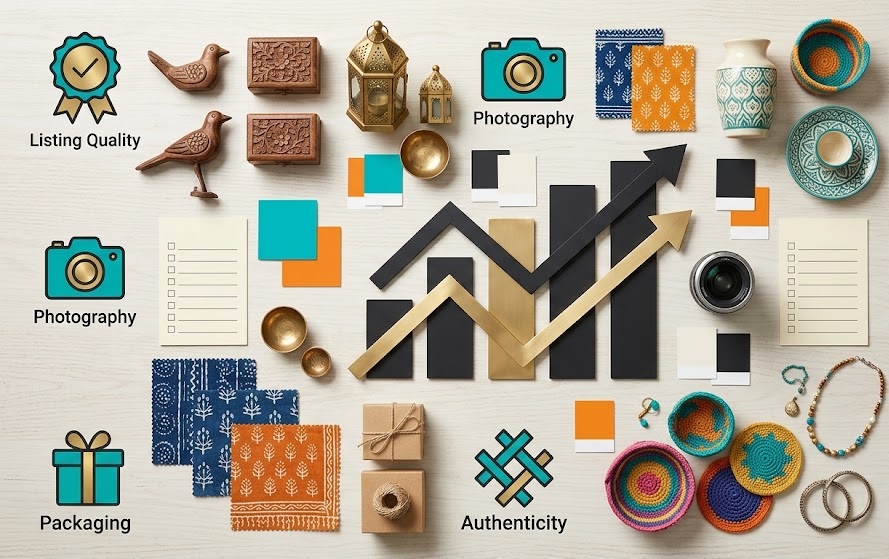
For small sellers, the next step is practical. Audit every listing. Remove vague wording. Add material details. Add dimensions. Add care instructions. Add region and craft context where accurate. Update photos. Show packaging. Create occasion-based collections. Make shipping timelines visible. Explain handmade variation before the buyer has to ask.
For artisan groups and small brands, the forecast points to a wider shift. Handmade products can compete online when they are presented as modern lifestyle goods with real cultural value. They do not need to look mass-produced. They need to look reliable.
India’s handicrafts market still has room to grow. The sellers who benefit most will be those who treat every product page as a trust-building tool, every photo as evidence, and every craft story as a buyer decision point. Growth is not automatic. It has to be earned through clarity, authenticity, and product presentation that respects both the artisan and the customer.