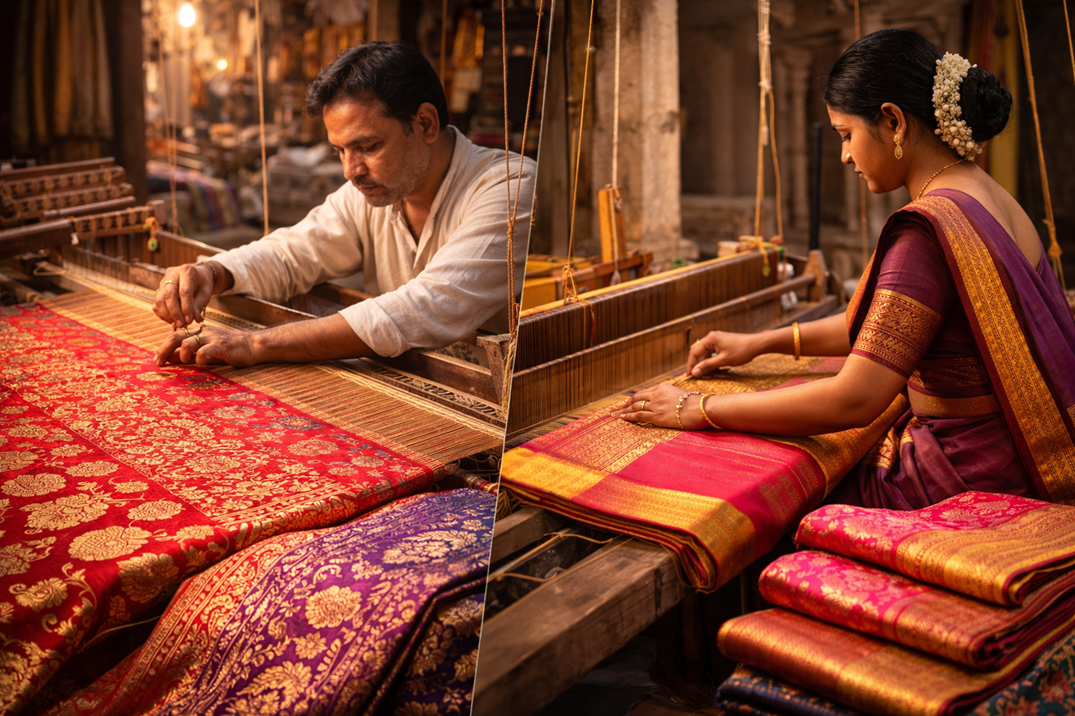
Among India’s most prestigious textile traditions, Banarasi silk and Kanjivaram silk stand out for their craftsmanship, cultural significance, and enduring value. Both are GI-tagged fabrics associated with ceremonial wear, especially weddings, yet they differ significantly in weaving techniques, texture, durability, and pricing.
For buyers, collectors, and gift shoppers, understanding these differences is essential—not only to choose the right saree but also to ensure authenticity when purchasing online or abroad.
This guide breaks down the key distinctions between Banarasi and Kanjivaram silk to help you make a more informed decision.
Origins And Cultural Significance
Banarasi silk originates from Varanasi (Banaras) in Uttar Pradesh and is deeply tied to Mughal-era design influences. Known for its intricate brocade work and floral motifs, Banarasi silk sarees are often associated with North Indian weddings and formal occasions.
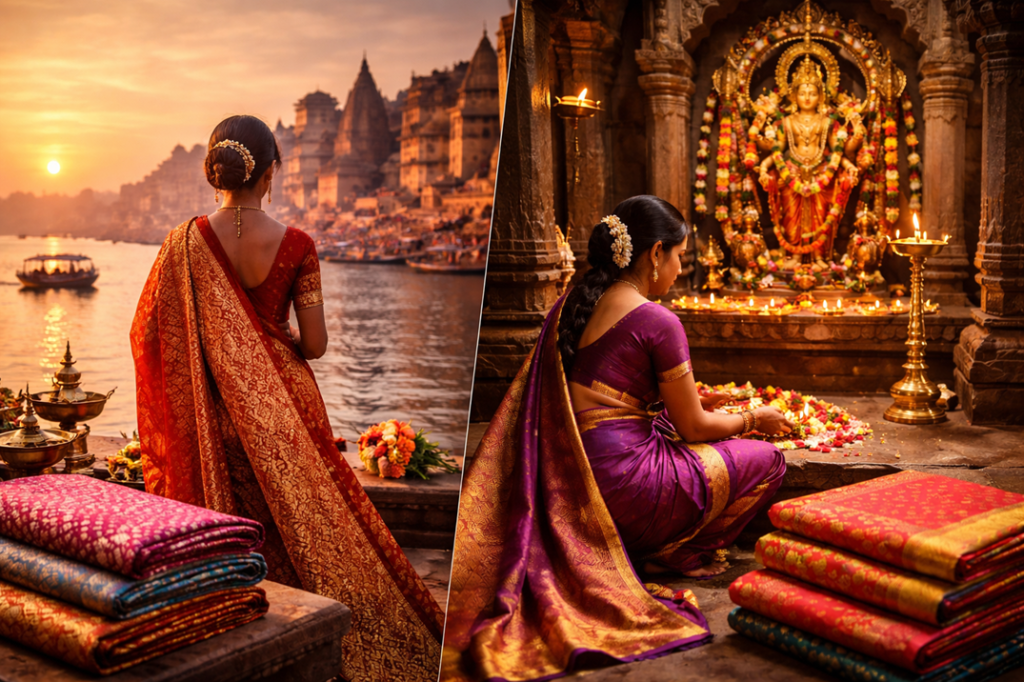
Kanjivaram silk, on the other hand, comes from Kanchipuram in Tamil Nadu. These sarees are rooted in South Indian temple traditions and are recognized for their bold colors, contrasting borders, and durability.
Both textiles carry GI status, meaning their production methods and regional identity are protected under India’s Geographical Indication system.
Differences In Weaving Techniques
The weaving process is one of the most important factors that separates these two silk traditions.
Banarasi silk uses a brocade weaving technique, where supplementary threads (often gold or silver zari) are woven into the fabric to create intricate patterns. The designs are typically inspired by Mughal art, including floral vines, paisleys, and geometric motifs.
Kanjivaram silk employs a more structural weaving technique. The body, border, and pallu (end piece) are often woven separately and then interlocked using a method known as korvai. This creates a strong, durable join that is characteristic of authentic Kanjivaram sarees.
Comparing Weight, Texture And Durability
One of the most noticeable differences for buyers is how each fabric feels and behaves when worn.
| Feature | Banarasi Silk | Kanjivaram Silk |
|---|---|---|
| Weight | Lightweight to medium | Heavy |
| Texture | Smooth, flowing | Thick, structured |
| Durability | Moderate | High |
| Drape Style | Soft and fluid | Stiff and voluminous |
Banarasi silk sarees are generally lighter and easier to drape, making them suitable for long events where comfort is important.
Kanjivaram sarees, in contrast, are heavier and more rigid, which gives them a more formal and grand appearance—often preferred for traditional ceremonies.
Design Aesthetics And Visual Identity
The visual style of each silk reflects its cultural background.
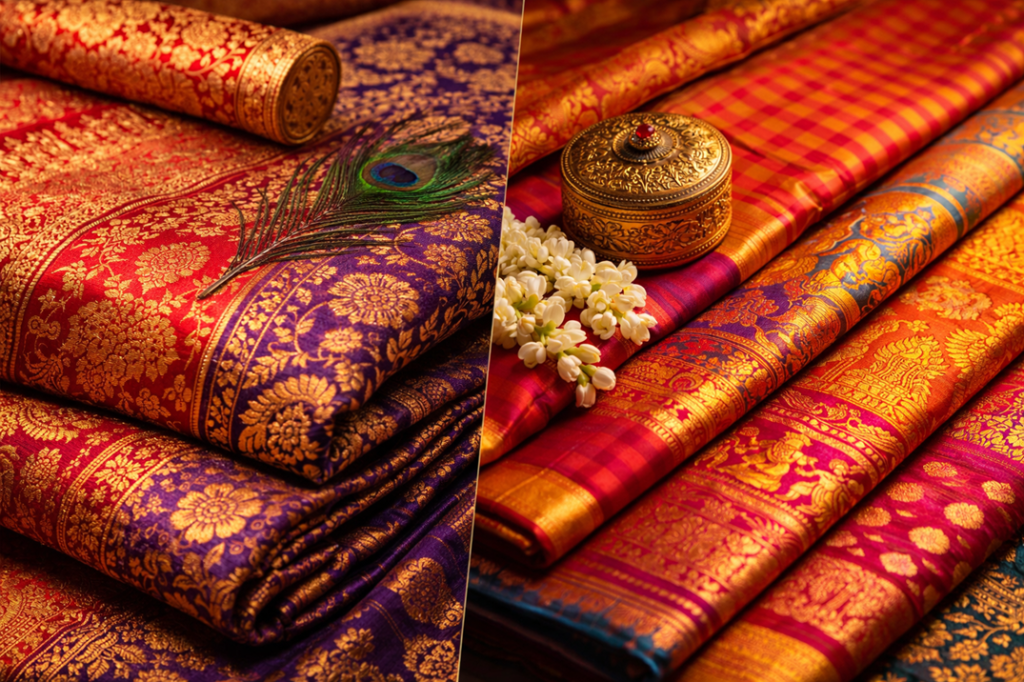
Banarasi sarees typically feature delicate, detailed patterns with metallic zari work. The designs often appear intricate and refined, with a strong emphasis on fine detailing.
Kanjivaram sarees are known for bold color combinations and striking contrasts between the body and borders. Temple-inspired motifs, checks, and stripes are commonly used, giving the fabric a more structured visual identity.
For buyers comparing handcrafted textiles, understanding these stylistic differences is as important as recognizing techniques—similar to how collectors distinguish regional variations in traditional crafts across India.
Price Differences And Value Factors
Pricing for both Banarasi and Kanjivaram silk sarees can vary widely depending on factors such as silk quality, zari content, weaving complexity, and authenticity.
| Price Factor | Banarasi Silk | Kanjivaram Silk |
|---|---|---|
| Entry-Level | More accessible | Moderately high |
| Premium Range | High (due to zari work) | Very high (due to silk weight and craftsmanship) |
| Labor Intensity | High | Very high |
| Longevity Value | Medium to high | Very high |
Kanjivaram sarees tend to be more expensive overall due to their heavier silk content and durable construction. However, high-end Banarasi sarees with intricate zari work can also reach premium price points.
Buyers should be cautious of unusually low prices, as authentic handcrafted sarees require significant time and expertise to produce.
How To Identify Authentic Pieces When Buying
When purchasing either Banarasi or Kanjivaram silk, authenticity should be a top priority.
Key indicators include:
- Clear mention of the production region
- Details about weaving techniques
- Information about zari composition
- Seller transparency regarding artisan sourcing
Buyers interested in verifying handcrafted authenticity can refer to guides on how to verify GI tagged crafts online, which provide practical steps for evaluating sellers and product claims.
Additionally, institutions like the Silk Mark Organisation of India help certify genuine silk products and provide resources for identifying authentic materials.
Which One Should You Choose?
The choice between Banarasi and Kanjivaram silk depends largely on personal preference and intended use.
Banarasi silk is ideal for buyers who prefer lightweight fabrics with intricate detailing and a softer drape.
Kanjivaram silk is better suited for those seeking durability, bold aesthetics, and a more traditional, structured look—especially for ceremonial occasions.
Both options represent some of India’s finest textile traditions, and each offers a unique combination of artistry, heritage, and craftsmanship.
A Timeless Investment In Indian Textile Heritage
Banarasi and Kanjivaram silks are more than garments—they are cultural artifacts shaped by centuries of tradition. Their GI status ensures that these weaving techniques remain tied to their regions, preserving the identity and livelihood of artisan communities.
For collectors and buyers, understanding the differences between these two iconic textiles not only improves purchasing decisions but also deepens appreciation for India’s rich craft heritage.