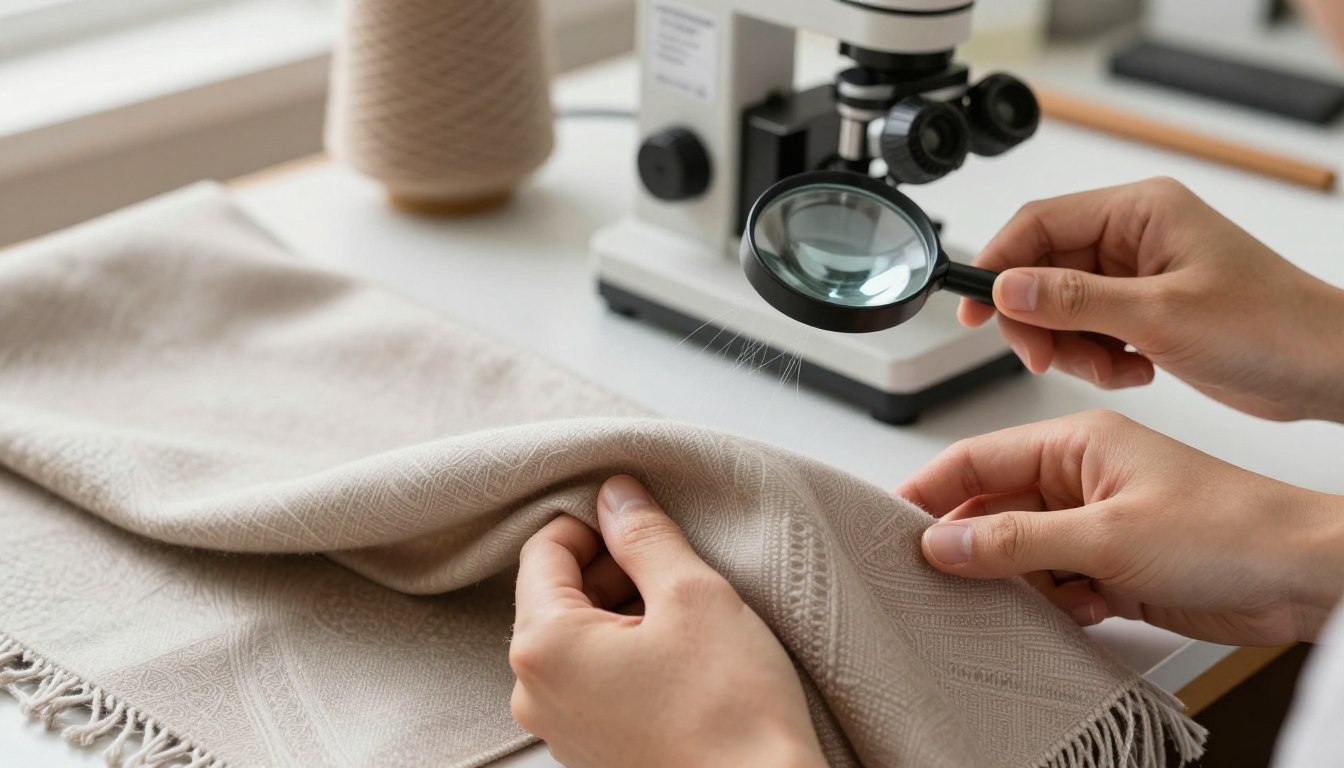
Exploring luxury wraps can be tricky. Many fakes are out there, even for those who know what to look for. Knowing about pashmina authenticity is more than just saving money. It’s about respecting a tradition.
This guide is here to help. We break down how to check for real pashminas into three key areas. These are fiber tests, weave analysis, and certification marks.
Each area shows a part of the real shawl’s story. It begins with soft cashmere from high places.
Then, it moves to ancient weaving methods. And ends with official stamps that prove it’s genuine.
By the end, you’ll know how to choose wisely. You’ll see the beauty of Kashmir and Ladakh’s craftsmanship in a new light.
Intro: The fiber story from Ladakh/Kashmir
The tale of real pashmina starts on the windswept highlands of Ladakh and Kashmir. This area, known as the roof of the world, is the only place where this precious fiber is found. The harsh climate is not a problem but a key factor.
In this place, the Changthangi goat, also known as the pashmina goat, has developed a special undercoat. It grows a soft, warm, and fine down to survive extreme cold. This down is the raw material of genuine pashmina. It’s a natural response to the climate, making terroir—the complete natural environment—a core part of its value.
This origin story is key to understanding the cashmere vs pashmina difference. All pashmina is a type of cashmere, but not all cashmere is pashmina. “Cashmere” is a broader term for fiber from various cashmere goats worldwide. True pashmina refers to the finest undercoat of the Changthangi goat from the Himalayas.
The historical heritage of Kashmiri shawls is built on this specific fiber. For centuries, artisans have turned this raw material into legendary textiles. The geographical significance is everything; the harsh conditions produce a fiber with a micron count often finer than 15 microns, setting it apart.
To clearly see the distinction, let’s break down the key differences:
| Feature | Generic Cashmere | Authentic Pashmina |
|---|---|---|
| Source Goat | Various cashmere breeds (e.g., Mongolian, Chinese) | Changthangi (or Pashmina) goat exclusively |
| Origin Region | Multiple (Mongolia, China, Iran, etc.) | High Himalayas of Ladakh & Kashmir, India |
| Fiber Fineness (Typical) | Under 19 microns | Often 12-15 microns (ultra-fine) |
| Climate Influence | Cold, but less extreme | Severe, high-altitude cold; defines fiber quality |
| Common Terminology | Cashmere wool, cashmere fiber | Cashmere pashmina, pashmina wool |
Why does this origin matter for quality? The colder the habitat, the finer and more insulating the goat’s undercoat becomes. The Changthangi goat’s fiber is nature’s perfect insulation. This results in a fabric that is remarkably lightweight, soft, and warm.
When you choose a product made from this specific fiber, you’re getting more than a material. You are getting a piece of a centuries-old tradition shaped by a unique landscape. This is the foundation of its value and what separates true pashmina from other cashmere.
Materials: Micron count, staples, blends vs pure—what’s acceptable
Let’s explore the science behind luxury pashmina, starting with the micron count. This measure is key to knowing if a pashmina is high-quality. We’ll make it easy to understand.
Understanding Micron Count: The Measure of Luxury
A micron count shows how thin a fiber is. It’s measured in microns, which are tiny units. Pashmina from the Changthangi goat has an incredibly low micron count.
The best pashmina has a micron count between 12 and 16. This makes the fiber soft, light, and warm. It’s what makes pashmina feel like a cloud.
Fibers over 18-19 microns are often called cashmere. They’re not as soft as true pashmina. The micron count is what sets top-quality pashmina apart.
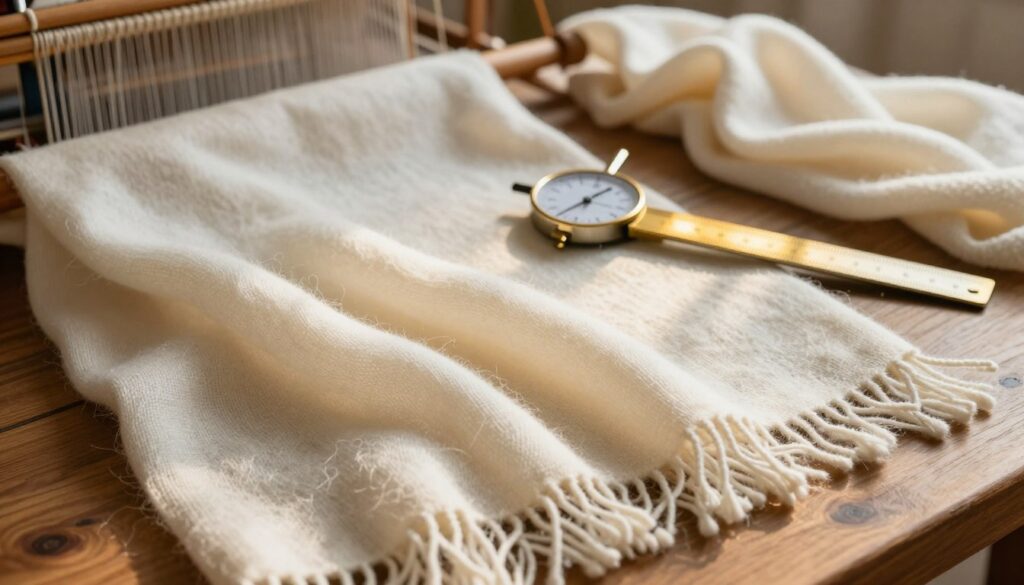
Staple length is also important. Longer fibers make stronger, smoother yarns. This means less pilling.
Quality pashmina has a medium-length staple. This makes the yarn strong and the fabric soft. It should feel both substantial and incredibly soft.
The Blend vs. Pure Pashmina Reality
It’s important to know what’s common in the industry. 100% pure pashmina is the best, but blends are okay if they’re labeled right.
The most common blend is pashmina with silk. This adds shine and strength. Pashmina-wool blends are less luxurious.
Always look for transparent labeling. A shawl labeled “Pashmina” should be 100% pashmina. If it’s a blend, it should say “Pashmina & Silk.” This helps you avoid overpaying for fake items.
Debunking the DIY Test Myths
The internet is full of quick tests to check if something is real. Most of these tests are not reliable and can harm real items. We need to talk about the ring test myth.
The myth says a real pashmina shawl will go through a wedding ring. This is not true. While pashmina is light, the weave and stiffness often stop it. A failed ring test doesn’t mean it’s fake.
Tests like burning a piece to smell it are also bad. They ruin your shawl and are hard to understand for non-experts.
Instead of trying these tests, learn about the materials and look for proper certification. We’ll cover that next.
Weave & finish: Twill/diamond, selvedge view, sozni work indicators
Looking at the weave and finish of a Pashmina shows its handmade quality. The process from raw fiber to beautiful fabric shows the weaver’s skill. It highlights the telltale signs of authentic craftsmanship that make it special.
Two main handloom weaves are used in Pashmina making: twill and diamond. The twill weave has a diagonal pattern, making it strong and elegant. The diamond weave creates a light, geometric pattern.
A quality handloom weave is tight and even. Hold the shawl up to light. You should see a consistent density without thin spots. This even texture comes from the weaver’s skill on the loom.
The selvedge, or finished edge, is key. It shows if the fabric was made on a handloom or power-loom. A power-loom selvedge is straight, stiff, and may have synthetic threads.
An authentic handloom selvedge is different. Look for these signs:
- Slight Irregularities: The edge may have a natural wave, not a straight line.
- Soft and Flexible: The edge feels soft and pliable, not stiff.
- Fringe Integration: Fringed shawls have fringe that’s hand-knotted into the selvedge, making it seamless.
For embroidered Pashminas, like Sozni or Kanikar work, the embroidery is the main focus. Real hand-embroidery has a unique soul and subtlety that machines can’t match.
Here are signs of real Sozni work:
- Precision with Imperfection: The motifs are detailed but may have small human errors. This shows it’s art, not machine-made.
- Texture on the Reverse: Turn the shawl over. Real hand-embroidery has a raised texture on the back. The threads are woven through, not glued or stamped.
- Complex Motif Development: Designs grow from a center point, with shading and detail that gets richer. Machine embroidery looks flat and dense.
Learning these visual checks helps you see the true artistry in every thread. The weave and finish are the maker’s signature, linking to centuries of tradition that you can see and feel.
Certification & Lab Reports: The Official Proof
Investing in a luxury textile like pashmina means you want to know it’s real. Beyond feeling and looking, official documents are key. This part talks about the trusted certifications and lab reports that prove a pashmina’s true heritage.
The top proof is the Geographical Indication (GI) tag. Given by the Government of India, it shows a pashmina was made in Kashmir. A real gi pashmina will have this logo on its tag or packaging.
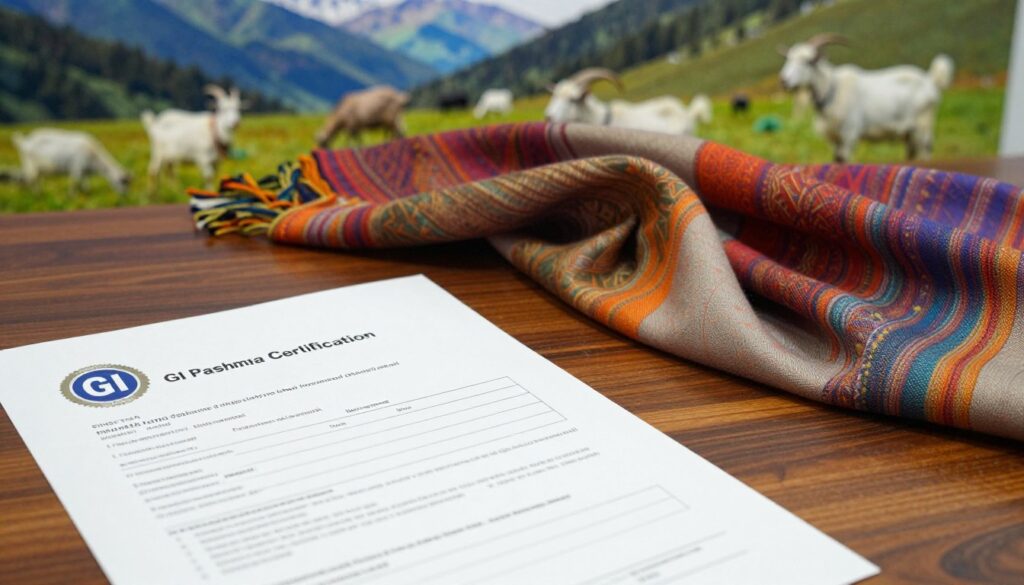
Look for a unique number and hologram on the GI tag. It protects the craft’s heritage and ensures quality and origin. It’s your first sign of trust.
Other seals also show a piece’s true story. These include:
- Craft Council of India Certification: Shows the item meets high standards of craftsmanship and ethical production.
- Handloom Mark: Confirms the textile was woven on a handloom, not a power loom.
- Seller-Provided Authenticity Certificates: Reputable dealers often provide their own documentation, which should reference third-party verification.
But the most scientific proof is a lab report. Textile testing facilities can analyze fiber samples without damaging the shawl. They give a detailed breakdown that home methods can’t match.
A detailed lab report will clearly state two key metrics:
- Fiber Content: Precisely identifies the percentage of cashmere, silk, wool, or other fibers present.
- Average Micron Count: Measures the fineness of the fibers, confirming they fall within the true pashmina range (often 12-16 microns).
This report is the definitive alternative to guesswork and harmful home tests, like burning a thread. A burn test is unreliable, can damage your shawl, and proves nothing about micron quality or geographic origin.
Always ask a seller if they can provide a lab report or details of the GI pashmina certification. A transparent vendor will have this information readily available. Your purchase is not just for a beautiful accessory, but for a piece of certified heritage. Let official seals and scientific data be your final, trusted guides.
Price transparency: fiber yield, handwork hours, wastage
Understanding the price of a genuine pashmina shawl requires a look at the economics behind its creation. The premium price tag is not arbitrary. It directly reflects the rare materials and immense human effort invested in every piece.
The journey begins with the fiber yield. A single Changthangi goat produces only about 100-150 grams of the ultra-fine undercoat each year. After cleaning and de-hairing, the usable yield is even lower. This scarcity forms the foundation of the cost.
Next comes the handwork hours. Transforming that delicate fluff into yarn is a skill of immense patience. Hand-spinning on a charkha wheel is a slow, deliberate process. Weaving the intricacies on a handloom is equally time-intensive. A simple shawl can take weeks; an embroidered masterpiece can require months of labor.
Material wastage is another silent cost driver. The delicate pashmina fiber can break during spinning and weaving. A significant portion is lost as shorter staples are separated out to maintain quality. This inherent loss is factored into the initial raw material cost.
When you see these factors together, the real cost drivers become clear:
- Low Fiber Yield: Extremely limited annual harvest per animal.
- High Handwork Hours: Skilled manual labor from spinning to finishing.
- Natural Wastage: Inevitable loss of fiber during meticulous processing.
This price transparency reframes the purchase. You are not just buying a shawl. You are investing in artisanal labor, sustainable pastoral communities, and a centuries-old craft. A price that seems too good to be true often means one or more of these cost pillars has been compromised—usually by substituting machine work or inferior blends. Knowing the economics empowers you to value authentic craftsmanship and make an informed investment in quality.
Styling/seasonality: urban India vs cold‑climate diaspora
People in urban India and families in cold countries love pashmina for different reasons. It’s not just for extreme cold. Here, we share ways to use this luxury in your wardrobe, no matter where you live.
In big Indian cities, a thick wool shawl is too heavy most of the year. But, pashmina styling is perfect as a light layer. It keeps you warm in air-conditioned spaces like offices and cars.
It’s great for cool evenings or festive events in winter. Its breathable nature keeps you comfortable without overheating.
In North America or Europe, pashmina is more than an accessory. It’s a key warmth layer. Use it under coats for extra warmth, as a blanket scarf, or to stay cozy in drafty homes.
The same shawl is light in Bangalore but vital in Boston. Its versatility makes it a great value.
Here’s how to style pashmina for each setting:
- For Urban Indian Settings: Emphasize lightweight layering. Pick soft colors that match both traditional and modern outfits. It’s perfect as a stylish stole or with western wear. It’s useful all year, great for travel.
- For Cold-Climate Living: Opt for thicker, neutral or deep-toned weaves. Wrap it around your neck several times for warmth. It looks good with wool coats and as a small throw. Pure pashmina is a smart investment for cold weather.
Pashmina is truly versatile. It’s great for light layering in some places and essential warmth in others. Knowing this helps you choose the right pashmina for your lifestyle.
Buying pashmina is more than getting a shawl for one season. It’s investing in a year-round companion that adapts to your environment. This makes the cost and effort worthwhile for your style and comfort.
Care & longevity: storage, moth safety, repairs
Keeping a genuine pashmina in top shape requires careful care and knowledge. Treating your shawl like a family heirloom starts the moment you buy it. With the right care, it can stay beautiful for many years.
Gentle Cleaning is Non-Negotiable. Always hand-wash your pashmina in cool water with a mild, pH-neutral detergent. Don’t wring or twist the fabric. Instead, gently press the water through the fibers and rinse well.
Let the shawl air dry flat on a clean, dry towel, away from sunlight or heat. Never use a tumble dryer, as it can harm the delicate fibers.
Strategic Storage Prevents Damage. First, clean your pashmina before storing it. Moths like dirty fibers. Fold it loosely and store it in a breathable cotton bag or acid-free tissue paper in a drawer.
Use natural moth deterrents like cedar blocks or lavender sachets. Avoid plastic bags, as they trap moisture and can cause mildew. Let your stored shawls air out now and then to keep them fresh.
Addressing Wear and Tear. Minor pulls or snags are common with fine textiles. For a small pull, use a blunt needle to gently work the thread back into the weave from the reverse side. Don’t cut the thread.
For bigger damage, find a professional who specializes in fine textile restoration. A skilled artisan can often re-weave areas or reinforce edges. This investment keeps the value and story of your piece safe.
Remember, care is an act of preservation. By following these steps, you honor the craftsmanship and ensure your pashmina stays a timeless treasure.
Buyer checklist + maker spotlight
Before you buy, make sure you have a checklist. It should cover all the important steps to check if something is real.
First, check where the fibers come from and the micron count. Look at the weave density and the selvedge for hand-rolled edges. Also, check for official marks like the Pashmina Mark or GI tags.
Think about the cost too. Consider the raw materials and the time it took to make it by hand.
Real craftsmanship is about the maker. Brands like Asoka Palace work with groups like the Sambhav Trust. Each piece comes from a master weaver in a village like Hemis.
This way, your purchase helps the weaving communities. It’s a way to support their work.
By choosing wisely, you help keep traditions alive. For more tips on buying artisan textiles, check out this complete buying guide. Keep learning with us to become a true supporter of authentic crafts.