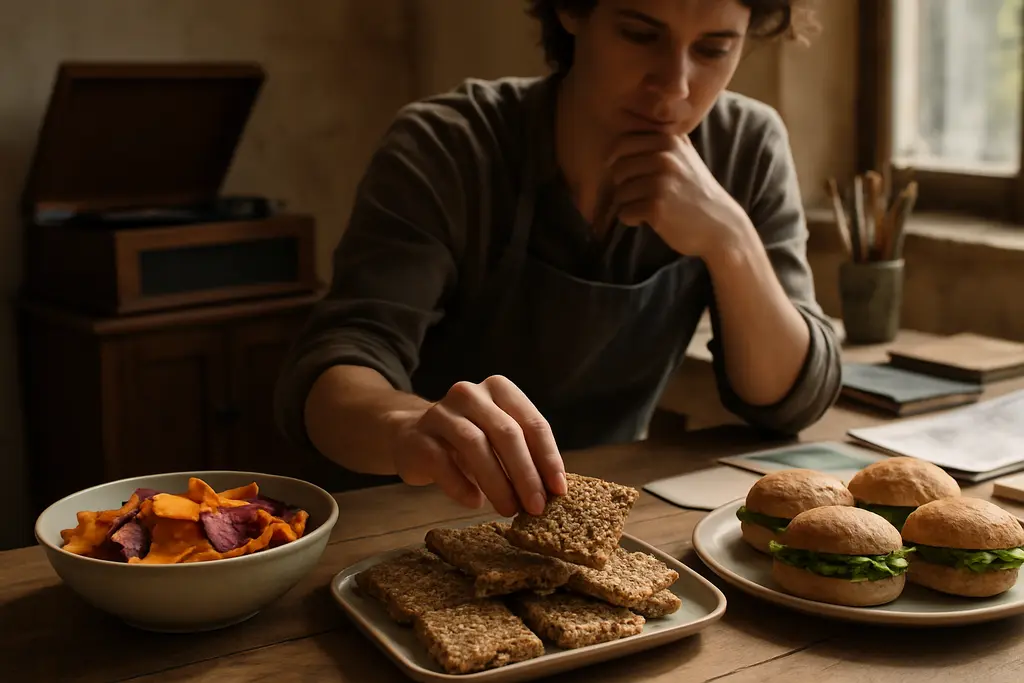
Crafting snacks deserve the same practical planning as thread, glue, paper, findings, or reference books. A maker working at home after a vintage or antique-market visit may spend hours sorting buttons, studying old bookplates, repairing textiles, sketching costume ideas, or arranging found objects. Food choices during that time can either support steady work or interrupt it with sticky hands, distracted grazing, and energy dips.
The evidence available here points to a careful, modest approach: plan portions, favor nutrient-dense foods, and keep snacks easy to eat away from fragile materials. A modeling analysis using NHANES 2017–2023 data reported that snack foods contributed about 22.6% of daily calories in the U.S. diet, and that replacing typical solid snacks with a 30-gram serving of almonds improved modeled diet quality by lowering added sugars, saturated fats, and sodium while increasing protein, fiber, and healthy fats NHANES almond analysis. That does not mean almonds are the only good choice, but it does show why small snack decisions matter during long creative sessions.
Why Crafting Snacks Shape Long Studio Hours
Crafting Snacks And The Vintage-Table Mindset
A vintage-inspired work session often has a slower rhythm than many digital tasks. You may be comparing aged papers, cleaning costume jewelry, tracing a pattern from an old garment, or deciding whether a salvaged trim belongs on a handmade gift. These activities reward patience. They also make distracted eating easy, especially if a large bag of chips, cookies, or sweets sits within arm’s reach.
The best crafting snacks for this kind of work are not dramatic. They are ordinary foods arranged with intent: a small bowl of almonds, sliced apple with cheese, yogurt with berries, carrots with hummus, olives with whole-grain crackers, or air-popped popcorn eaten during a clear break. The point is not dietary perfection. It is to avoid letting snack food become invisible while the maker’s attention is on the object.
What The Almond Evidence Can And Cannot Say
The almond modeling research is useful because it addresses a realistic swap: replacing common solid snacks such as cookies, chips, and sweets with a measured serving of almonds. It supports the idea that snack quality can influence diet quality. It does not prove that every maker will feel more creative after eating almonds, and it should not be framed as a cure for fatigue or a guaranteed focus tool. A cautious reading is stronger: almonds can be one practical option within a planned snack setup because they contain protein, fiber, and fats, and because a measured serving is easy to keep near a workspace.
A Vintage-Inspired Snack Setup That Protects The Work
Separate Food From Fragile Materials
Antique books, old fabrics, paper ephemera, beads, lace, and unfinished surfaces can be harmed by oils, moisture, crumbs, and spills. A sensible setup keeps food on a side table rather than in the center of the project area. If you are handling delicate materials, eat during breaks and wash or wipe your hands before returning to the work. This is not only about neatness. It respects the age, labor, and cultural setting of the objects that inspire the project.
Readers interested in the intersection of style and storytelling through dress may find fantasy fashion context intriguing as it offers insights into how bygone styles can spark innovative crafting concepts.
Portioning Crafting Snacks Before The First Cut
The CDC’s healthy meals and snacks guidance, dated April 29, 2026, recommends portioning snacks such as vegetables, fruits, nuts, seeds, whole-grain breads and crackers, and plain yogurt at home rather than eating from large containers CDC snack guidance. For a maker, this advice fits the studio table especially well. Pre-portioning reduces the chance of constant reaching, and it keeps the project area cleaner.
- Use a small bowl for nuts or popcorn instead of an open bag.
- Keep wet foods, dips, and yogurt on a tray away from papers, fabrics, and tools.
- Choose foods that can be eaten during planned pauses, not while glue, dye, blades, or needles are in use.
- Keep water nearby, but place it where an elbow cannot easily knock it into the project.
For longer public selling days, the same planning logic applies at a larger scale. Shimply has covered related timing and hydration considerations in craft fair nutrition, which connects well with the home version: prepare before attention and fatigue start competing.
Snack Pairings For Different Creative Tasks
For Sorting, Sketching, And Low-Mess Research
Quiet work with vintage books or antique finds often invites a tea-and-snack ritual. A measured portion of almonds, apple slices with cheese, or whole-grain crackers with hummus can fit that rhythm. These pairings combine different macronutrients rather than relying only on refined carbohydrates. The research notes provided here include evidence that protein, carbohydrate, and fat each affected memory measures in older adults in a controlled study; while that does not translate directly into a crafting-performance claim, it supports the value of balanced snack thinking rather than one-note grazing.
For crafting snacks during research-heavy sessions, clean handling matters. Dry snacks are often easier than sticky bars or frosted pastries. If using fruit, cut it ahead of time and eat it away from the table. If using yogurt, keep it for a scheduled break rather than beside paper or textiles.
For Repetitive Handwork And Longer Builds
Needlework, bead sorting, hand quilting, paper cutting, and small assemblage can stretch for several hours. In those situations, hunger may arrive gradually. A planned break with Greek yogurt and berries, a boiled egg with carrot sticks, or fruit with nut butter may be more useful than nibbling continuously. The practical aim is satiety and steady attention, not a dramatic promise about creativity.
Energy bites made with oats, nut butter, flaxseed, a small amount of chocolate, and honey appeared in the research notes as a prepared option with protein and fiber. Since they can be calorie-dense, portioning is still relevant. For makers, their strongest advantage is convenience: they can be prepared ahead and eaten away from the work surface without opening multiple packages.
Authenticity, Food Claims, And Handmade Culture
Avoid Turning Snacks Into Wellness Theater
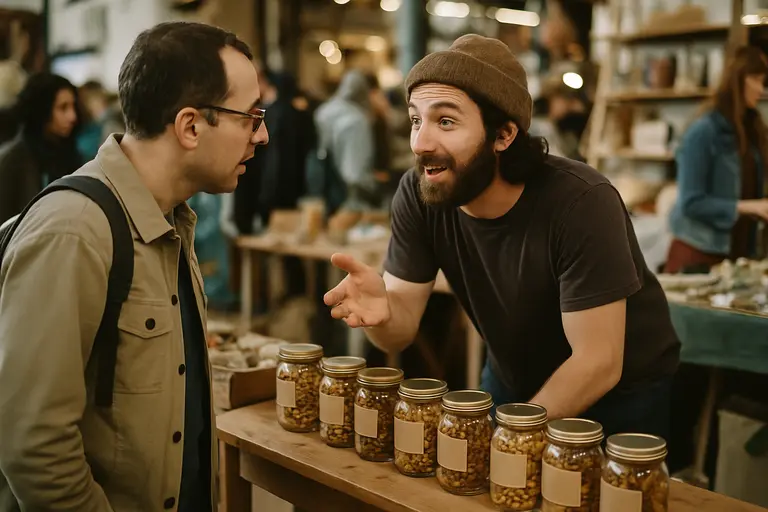
Handmade culture values trust. That applies to food language as much as product descriptions. It is reasonable to say that nuts, fruits, vegetables, whole grains, seeds, and plain yogurt are common nutrient-dense snack choices. It is not responsible to claim that one snack will guarantee artistic focus, prevent burnout, or make a project better. Creative work depends on skill, rest, time, tools, and context as well as food.
This restraint is especially relevant when handmade sellers discuss edible gifts, culinary crafts, or market-day preparation. Health claims should be modest and supported. Cultural references should be treated with care. If a snack tradition comes from a specific community, sellers and writers should avoid reducing it to an aesthetic prop.
How Vintage Influence Can Stay Respectful
Vintage and antique markets often inspire people because objects carry signs of use: patina, repair, handwork, regional style, or traces of past ownership. A snack setup can echo that slower ethic without romanticizing scarcity or copying cultural forms out of context. A cloth napkin, reused small dish, or tea break can support a thoughtful mood, but the food itself should be chosen for practical reasons: portion, cleanliness, satiety, and fit with the task.
For home makers, authenticity is less about staging a perfect studio photograph and more about designing a work session that respects the materials. If a nineteenth-century book, old lace collar, inherited tool, or flea-market textile is on the table, food should be managed so the object is not put at risk.
Crafting Snacks For Vintage-Market-Inspired Making
A Practical Plate For The Next Home Session
A balanced home setup can be simple: water, a small bowl of almonds or mixed nuts, fruit, a protein option such as yogurt or cheese, and a whole-grain or vegetable component. Keep the foods portioned before the project begins. Place them away from tools and materials. Take real breaks to eat rather than treating the project table as a grazing surface.
The strongest lesson from the available nutrition evidence is scale. Snacks can represent a notable share of daily calories, so improving them can be meaningful. Almonds have specific support as a replacement for typical solid snacks in the cited modeling analysis, and CDC guidance supports portioning snacks at home. Beyond that, claims should stay measured. Food can support comfort and steadier habits during making, but it does not replace sleep, ergonomic breaks, or realistic project timing.
For makers inspired by vintage and antique markets, crafting snacks are part of a broader practice of care: care for the body doing the work, care for the materials on the table, and care for the cultural references that shape the project. A small, planned snack station is not glamorous. It is simply one more way to make the creative session last without losing attention, cleanliness, or respect for the objects that started the idea.