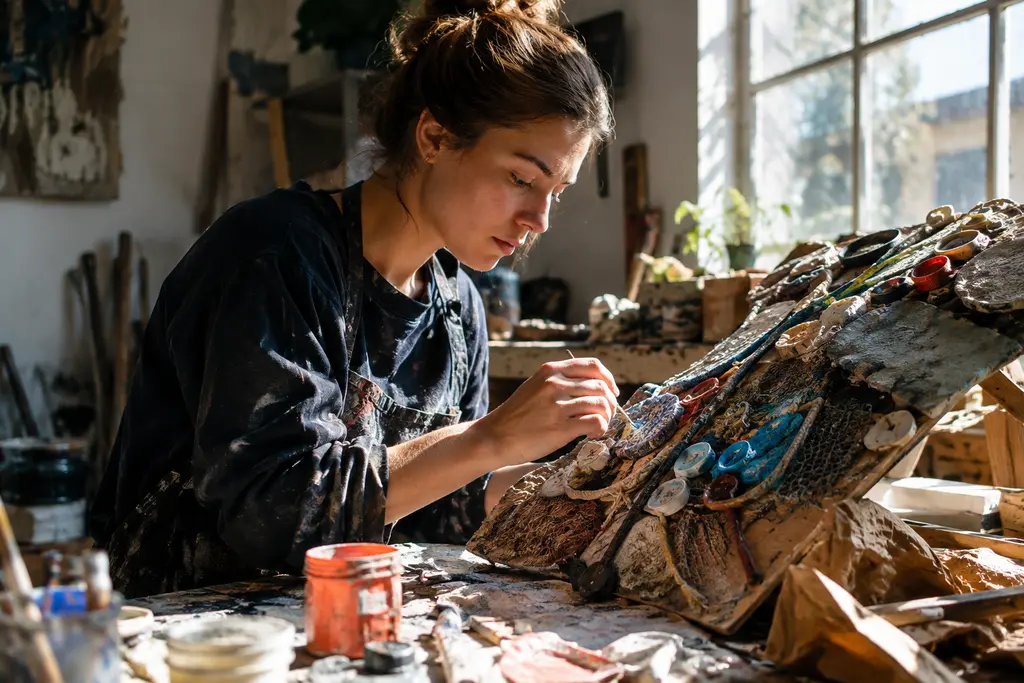
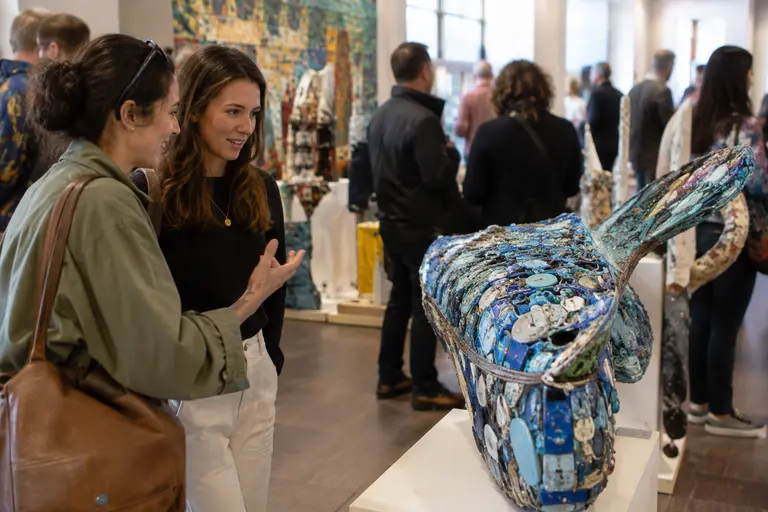
Upcycled art authenticity became a practical buying question at the inaugural Living Memory Upcycled Art Exhibition in New York City. Held on September 18, 2026, as a three-day event, the exhibition presented upcycled work across fashion, textiles, furniture, and visual art, with each one-of-a-kind piece tied to material history, process, and provenance, according to the Living Memory recap. For buyers, that structure matters because it shifts attention from a simple object description to a record of origin, authorship, and transformation.
Living Memory was founded by Mona Dinal and Brownie Brown as a regenerative design initiative. Its stated mission, as reported in the exhibition recap, is to create a framework where upcycled artists are officially recognized, documented, and supported in equitable ways. That framing is useful for craft buyers, not because every upcycled object needs the same system, but because it gives buyers a clearer way to ask what has been preserved, changed, credited, and recorded.
The exhibition also sat between New York Fashion Week and Climate Week, linking upcycled practice to art-fashion attention and environmental urgency. The available record says panel discussions addressed Digital Product Passports, Extended Producer Responsibility, ESPR standards, blockchain, and AI for provenance. Those subjects can sound technical, but the buying issue is simple: if a work depends on discarded, salvaged, or altered materials, the record should help a buyer understand what the object was, who changed it, and why that change matters.
Why Upcycled Art Authenticity Mattered At Living Memory
Upcycled Art Authenticity As A Record Of Change
The strongest lesson from Living Memory is that upcycled art authenticity cannot rest on the word “upcycled” alone. The exhibition’s works were described as having verified histories of materials, transformation process, and provenance. That means the work’s value is not only visual. It also sits in the relationship between the original object, the artist’s intervention, and the evidence that traces that passage.
This is especially relevant for buyers who encounter upcycled art in galleries, pop-ups, studio sales, fashion events, or online shops. A finished object may look compelling, but the claim behind it needs support. What material was used? Was it discarded, deadstock, salvaged, inherited, or found? How did the maker alter it? Which parts were preserved, cut, repaired, joined, covered, or reframed? Those questions are not suspicious by nature. They are respectful questions that help buyers understand the work without treating craft as decorative marketing.
Material Examples With Cultural Weight
The Living Memory recap named examples that show how material choice can carry both design force and emotional meaning. Bicycle inner tubing was used instead of leather, and discarded teddy bears were transformed into art reflecting nostalgia and comfort. These examples point to a central feature of upcycled work: the material is not neutral. It brings earlier associations into the new object.
For buyers, that means the most useful listing or wall text should not hide the source material. A teddy bear carries childhood memory and softness. Inner tubing carries use, movement, repair culture, and industrial residue. Neither material should be treated as a gimmick. The artist’s treatment of that material is part of the work’s ethical and aesthetic argument. Upcycled art authenticity depends on making that argument visible enough for a buyer to assess it.
How Buyers Can Read Provenance Without Reducing The Work
Records Should Clarify, Not Replace, Artistic Judgment
Living Memory’s opening-night page described each piece as including a digital record tracing its lifecycle: the original object, the transformation, and what happens to it going forward, according to the opening-night listing. That record is a strong trust signal, but it should not be mistaken for the whole artwork. Documentation can support authenticity, while the buyer still needs to look at form, construction, composition, finish, use of material, and the maker’s stated intention.
A cautious buyer can treat provenance as a set of questions rather than a certificate that ends all doubt. The record should identify the source material as clearly as possible, describe the intervention, connect the work to the artist, and explain any future care or custody expectations. If a work is wearable, furniture-based, or handled often, the record may also need care information. That is not secondary; it affects whether the piece can be preserved in the way the artist intended.
Shimply has considered related trust signals through craft trust cues, where provenance, maker intention, and community context help buyers avoid treating handmade objects as trend copy. Living Memory adds a focused upcycling case: the prior life of the material is not background information. It is part of the object’s identity.
A Practical Buying Checklist
The exhibition record points to a grounded way to evaluate upcycled work before purchase. Buyers do not need to demand private studio information or pressure artists to disclose sensitive sourcing relationships. They should ask for enough information to understand origin, process, authorship, and care.
- Material origin: Ask what the original object or material was, and how specific the artist can be about its source.
- Transformation process: Look for a clear account of cutting, joining, dyeing, repairing, assembling, reshaping, or other interventions.
- Provenance record: Prefer pieces with documentation that links the work to the artist and records the object’s lifecycle.
- One-of-a-kind status: Confirm whether the piece is unique, part of a series, or a repeatable design using different recovered materials.
- Care and custody: Ask how the work should be stored, worn, cleaned, moved, or repaired if the medium requires care.
This checklist is not meant to police artists. It helps buyers avoid vague claims and gives serious makers a fairer way to show labor, process, and accountability.
What The Exhibition Suggested About Value And Trust
Story Adds Context, But It Does Not Excuse Weak Evidence
Living Memory’s buying insight is that value is tied not only to physical craftsmanship but also to story and material history. That is persuasive, but it should be handled carefully. A moving story can deepen a work’s meaning; it should not replace evidence. Upcycled art authenticity is strongest when the story, material record, and visible craft support one another.
This matters in creator-commerce settings where poetic language often fills the gap left by thin documentation. Phrases about rescue, rebirth, or sustainability may be sincere, but buyers should look for specifics. Which material was redirected from waste? How was it handled? What makes the result one-of-a-kind? What did the artist choose to preserve, and what did the artist alter? Clear answers help buyers understand rarity without relying on romantic language alone.
Community Recognition Is Part Of The Trust Question
The research record says Living Memory emphasized whose voices are recognized, with storytelling, identity, and authorship placed at the center. That is not a decorative concern. In craft and upcycled art markets, attribution affects trust. If an artist’s cultural position, material knowledge, or community experience shapes the work, a buyer should avoid stripping the object from that context.
The named exhibitors included Chibuike Ifedilichukwu, Sandra Luks, Mira Musank, Sophie Boylan, Sarah Nsikak, Frida Martinsson, Sabrina Aguirre, Serafim Segunda Yssolo, and Brownie Brown. The available information does not support ranking their works or assigning market performance. It does support a more restrained point: Living Memory used a group format to connect upcycling with recognition, documentation, and support for makers whose practices may not fit older art-market categories.
Readers comparing art, craft, and event coverage across related culture sources may also find insight at the broader network reference provided by Next Clues. For a buyer, though, the immediate task remains focused: identify the maker, read the record, and assess whether the object’s claim is supported.
Living Memory As A Buying Reference
What Buyers Should Carry Forward
Living Memory offers a useful reference for upcycled art authenticity because it treated documentation as part of preservation rather than a sales extra. The exhibition did not present upcycling only as an aesthetic. It connected one-of-a-kind objects to material origin, transformation, and future custody. That is the level of clarity buyers should increasingly expect when an artist or seller makes strong claims about provenance.
The reference is not a rigid rulebook. Smaller artists may not have access to advanced digital records, blockchain systems, or formal product-passport tools. A careful buyer should not dismiss a maker only because their documentation is modest. A dated studio note, material description, process photographs, signed statement, care card, or clear invoice can still support trust when the information is specific and consistent.
For sellers, the lesson is equally direct. If the work is one-of-a-kind, say why. If the material had a prior use, identify it as precisely as possible. If the transformation is central to the piece, describe the process in plain language. If the work carries cultural, personal, or communal memory, credit that context with care. Upcycled art authenticity is not only a matter of proof; it is also a matter of respect for the maker and for the materials that have been carried into a new form.
For buyers, the safest approach is patient attention. Read the documentation, study the object, ask proportionate questions, and resist the urge to treat sustainability language as automatic value. Living Memory showed that upcycled work can hold memory, material intelligence, and artistic authorship at once. The best buying practice is to keep all three visible.