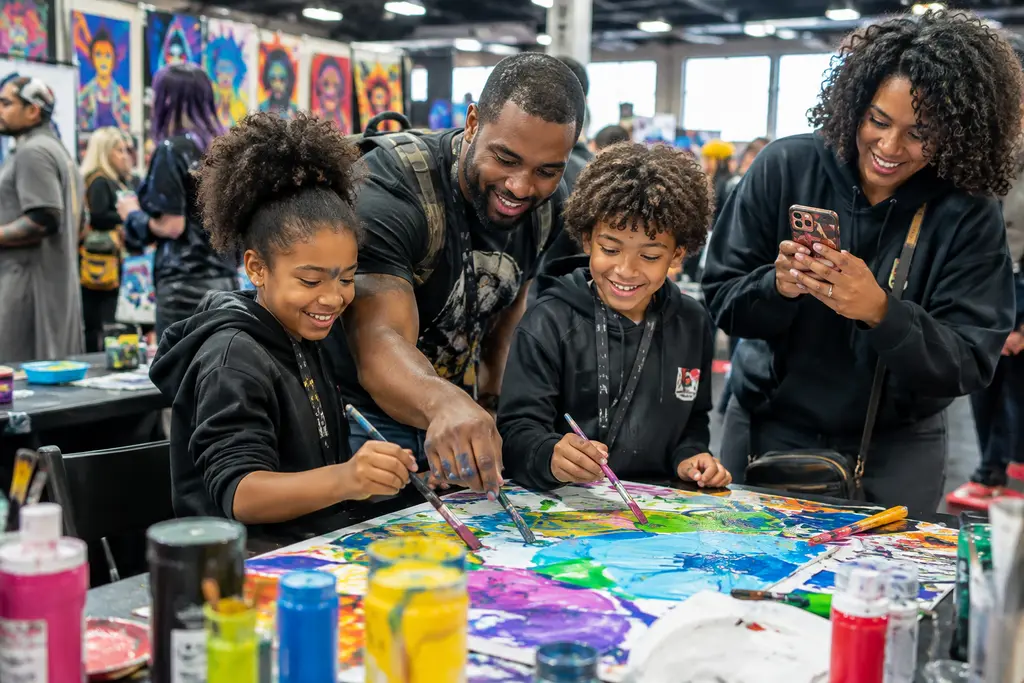
Family Engagement in Art can give families a practical way to combine looking, making, walking, and low-pressure movement at Youmacon 2026 in Detroit. As of October 27, 2026, Youmacon 2026 is scheduled for Thursday, October 29 through Sunday, November 1, 2026, with programming at Huntington Place in Downtown Detroit. The event details in the research notes include panels, gaming, Vendor Hall, Artist Alley, the Youma Youth program, cosplay programming, dance-oriented events, and a Charity Ball. For families, the useful question is not whether an anime convention can replace structured exercise. It cannot. The better question is how caregivers can use art-centered spaces to support gentle activity, shared attention, and creative confidence without treating children, costumes, or handmade work as props.
Why Family Engagement in Art Fits Youmacon 2026
Youmacon’s family-relevant programming gives caregivers several ways to connect art and movement. The Youma Youth program is listed as running Friday through Sunday and includes hands-on arts and crafts, carnival games, a trick-or-treat parade, movie night, and a cosplay showcase. The research notes also identify an Art Class on October 31, 2026, from 3:00 to 4:00 pm. Since convention schedules can change, families should check the posted schedule at the venue before committing a child’s energy to a fixed plan.
Family Engagement in Art As Gentle Movement
The evidence for arts and health should be read carefully. A study using the Early Childhood Longitudinal Study 2011 kindergarten cohort, with 15,820 children, found that arts participation in elementary school was associated with a reduced risk of being overweight year-to-year; the reported effect size ranged from about 12% to 23% of a standard deviation of BMI for all children according to PubMed. That does not mean a single convention weekend changes a child’s health. It does suggest that repeated arts participation may sit within a broader ecology of activity, confidence, routine, and social support.
At Youmacon, that can mean choosing activities that require more than sitting: walking through Artist Alley, standing at a craft station, posing for a family photo after a cosplay showcase, or taking a calm loop through a marketplace area. These small movements matter most when caregivers frame them as part of shared making and observation rather than as a forced workout.
Respecting Costume Culture And Handmade Labor
Cosplay is not only movement. It is design, patterning, material choice, comfort testing, performance, and care. A family costume plan can include sketching, cutting safe lightweight materials, testing shoes, checking sightlines, and practicing how to move without bumping others. Websites such as Fairy Tale Fashion highlight the connection between clothing and artistic expression, providing valuable insights into the craftsmanship involved in costume culture.
Families should avoid pressuring children into elaborate costumes they cannot comfortably wear. A foam accessory, decorated hat, painted cardboard shape, or simple cape can still support creativity. The strongest family cosplay plans usually leave room for rest, weather, crowds, and sensory needs.
Art, Walking, And Shared Attention At Huntington Place
The research notes describe a large convention setting, including Artist Alley with more than 200 artists and a marketplace area covering more than 200,000 square feet. Those figures matter for family fitness because large halls can create step count without making exercise the center of the day. Yet large spaces can also tire children quickly. A cautious plan treats walking as a flexible rhythm: one viewing loop, one seated break, one making activity, then another short loop if everyone still has energy.
Artist Alley Scavenger Hunts With Boundaries
A family scavenger hunt can help children look closely at art without turning artists into scenery. Caregivers might ask children to find three different uses of color, two handmade accessories, or one booth where the artist explains a process. The goal should be observation, not grabbing free interactions from busy creators. If a child wants to ask a question, a caregiver can model courtesy: wait until the booth is not crowded, ask briefly, and respect the artist’s time.
This kind of activity can also help children understand creator commerce. Artist Alley is a marketplace, but it is also a place where drawings, prints, accessories, and handmade items carry labor. Families can use it to discuss why original work costs money, why copying designs is not fair to makers, and why attribution matters. That discussion should stay age-appropriate and should not become legal advice.
Vendor Hall Movement Without Overstimulation
The Vendor Hall can be useful for walking, but it can also be noisy and visually intense. Families can set a short route before entering: one aisle, one water break, then one decision point. Children who enjoy games may respond well to a color-counting or shape-finding task. Younger children may do better with a simple rule, such as “find three handmade-looking textures,” then step out for quiet time.
For caregivers interested in related planning ideas beyond this convention, Shimply’s discussion of family art fitness from local craft makes a similar point: local art spaces can support movement when adults plan pace, rest, and participation with care.
Costume Activities, Parade Walking, And Dance Events
The Youma Youth program includes a trick-or-treat parade and a Youth Cosplay Showcase during the Friday-to-Sunday portion of the convention. Youmacon 2026 also includes cosplay programming, with the Integrated Cosplay Contest listed for Saturday and described in the research notes as involving performance, craftsmanship, and walking the stage. These activities can add modest movement, but families should keep expectations realistic. A parade route, stage walk, or pose sequence is not the same as sustained physical training. It is a social and artistic activity with movement inside it.
Simple Costume Checks Before Moving
Before a child joins a parade or showcase, caregivers can check three things: whether the child can see clearly, whether shoes are stable, and whether any prop can be carried safely in a crowd. Costumes that drag, overheat, block vision, or require constant repair may turn an art experience into a stressful one. Children should also know that they can stop participating if they feel tired or uncomfortable.
Dance-oriented events, including the Charity Ball named in the research notes, may be another option for families with older children or teens, depending on age policies and schedule details. Dancing can encourage posture, rhythm, balance, and social confidence. Caregivers should match the event to the child’s comfort level and avoid pushing children into formal or crowded dance settings if they are not interested.
A Practical Family Activity Plan For October 29 To November 1
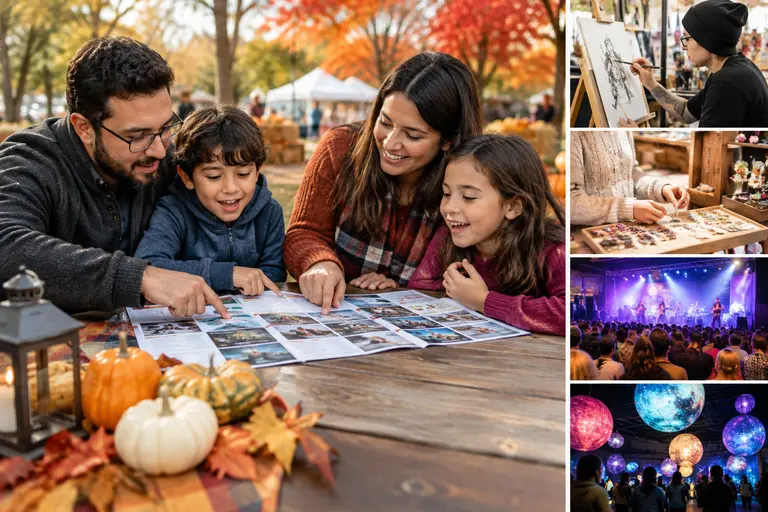
A family does not need to do every activity to benefit from the art-and-movement potential of Youmacon. A smaller plan is usually kinder. One craft session, one Artist Alley loop, one cosplay viewing period, and one outdoor or hallway reset may be enough. The research notes mention weekend access and youth badge categories, but families should verify badge rules, room capacity, and schedule changes before arrival.
- Choose one anchor activity: a Youma Youth art class, cosplay showcase, parade, Artist Alley visit, or dance-related event.
- Pair art with movement: after sitting for a panel or movie, take a slow walking loop through a less crowded area.
- Protect rest time: schedule water, snacks, restroom breaks, and quiet pauses before children become overwhelmed.
- Keep craft supplies light: a small sketchpad or simple prop repair kit is easier than a heavy bag.
- Use observation prompts: ask children about color, material, shape, and motion rather than only asking what they want to buy.
Social motivation also matters. The National Endowment for the Arts reported that spending time with family or friends was the most common reason survey respondents attended exhibits or performances, with 77% citing socializing as a primary motivation in its arts engagement report. That finding fits the convention context: many families participate because the event lets them share interests, not because they are seeking a formal fitness program.
Family Engagement in Art at Youmacon 2026
The most respectful use of Youmacon 2026 for family fitness is modest, creative, and child-led. Family Engagement in Art works best here when caregivers treat movement as part of making and noticing: reaching during a craft activity, walking carefully through Artist Alley, practicing a costume pose, dancing only if it feels comfortable, and pausing when the space becomes too much.
That approach protects the artistic setting. Artists are not workout stations. Cosplayers are not public props. Vendor and Artist Alley booths are working spaces. Children can still move, learn, and create inside those boundaries. For families attending Huntington Place from October 29 through November 1, 2026, the strongest plan is not a packed schedule. It is a steady rhythm of art, walking, rest, respect, and shared attention.