
Sustainability is no longer a niche concern—it is now a central driver of global buying behavior. In this shift, Indian handicrafts are gaining renewed attention, not just for their cultural depth but for their inherently eco-friendly production methods and material choices.
From natural dyes and handloom weaving to recycled metals and organic fibers, many traditional Indian crafts align closely with modern sustainability values. As international markets increasingly prioritize ethical sourcing and low-impact production, Indian handicrafts are being repositioned as both heritage products and sustainable investments.
Why Sustainability Is Reshaping Global Craft Demand
Over the past few years, consumer preferences—particularly in Europe and North America—have shifted toward products that demonstrate:
- Reduced environmental impact
- Ethical labor practices
- Traceable sourcing
This has directly influenced demand for handcrafted goods, especially those made using traditional, low-energy techniques.
According to export updates from the Ministry of Textiles (2023–2024), Indian handicrafts and handloom products have seen increased international traction due to their alignment with sustainability trends.
Unlike industrial manufacturing, most Indian crafts rely on:
- Manual production methods
- Minimal electricity usage
- Natural or locally sourced materials
This positions them uniquely in a global market increasingly focused on carbon-conscious consumption.
The Role Of Natural Materials In Indian Handicrafts
One of the strongest advantages of Indian handicrafts is their reliance on natural, biodegradable, and renewable materials.
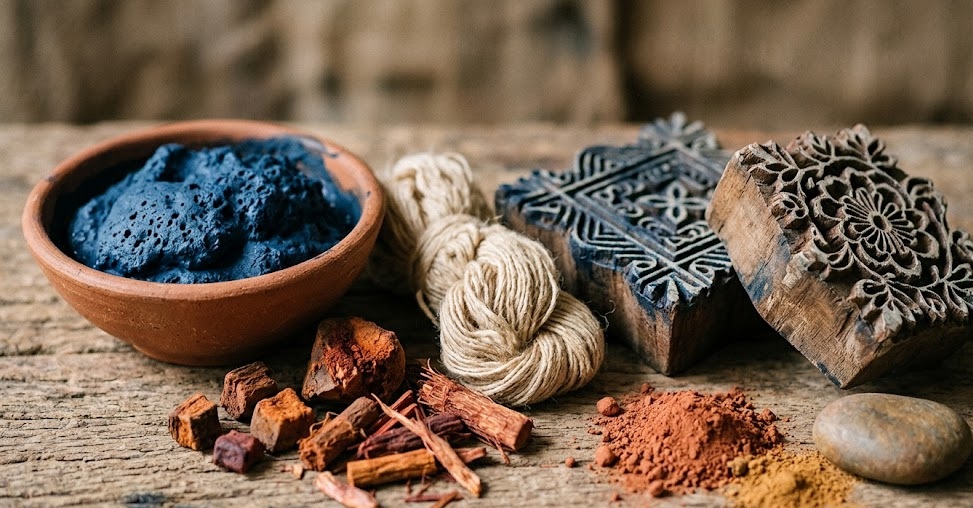
Common examples include:
- Cotton and silk in handloom textiles
- Clay and quartz in pottery
- Wood from locally managed sources
- Natural dyes derived from plants and minerals
These materials not only reduce environmental impact but also contribute to product longevity and aesthetic depth.
For instance, crafts like Ajrakh and Kalamkari use plant-based dyes that age gracefully, offering a stark contrast to synthetic alternatives.
Key Sustainable Craft Categories Buyers Should Know
Not all handicrafts are equally sustainable. Buyers should focus on categories where traditional methods naturally align with eco-friendly production.
| Craft Category | Materials Used | Sustainability Advantage |
|---|---|---|
| Handloom Textiles | Cotton, silk, natural dyes | Low energy, biodegradable |
| Dhokra Metal Craft | Recycled brass, wax casting | Minimal waste process |
| Blue Pottery | Quartz, natural pigments | No clay firing pollution |
| Bamboo And Cane Crafts | Fast-growing natural fibers | Renewable and lightweight |
These categories are gaining traction among buyers who value both environmental responsibility and cultural authenticity.
How Traditional Techniques Reduce Environmental Impact
What makes Indian handicrafts particularly relevant today is that sustainability is not a new adaptation—it is built into the process itself.
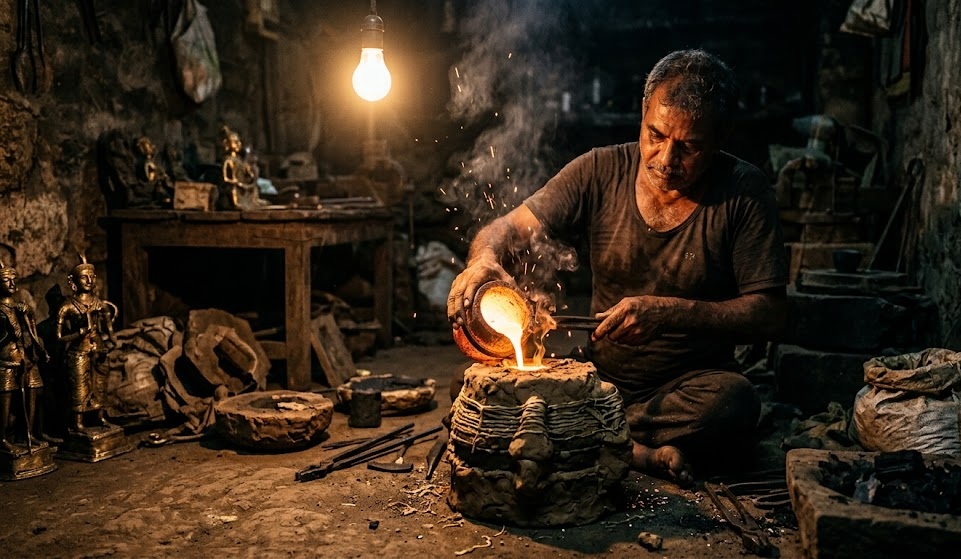
Traditional production methods often involve:
- Hand-operated tools instead of machinery
- Multi-stage natural dyeing processes
- Local sourcing of raw materials
For example, Ajrakh printing involves repeated washing, dyeing, and sun-drying cycles that rely on natural elements rather than industrial processes.
Buyers exploring these textiles can benefit from understanding Ajrakh fabric guide and authenticity insights, which also highlight how sustainability and craftsmanship intersect.
Why Global Buyers Are Paying Premiums For Sustainable Crafts
Sustainability has shifted from a preference to a value driver in pricing. Buyers are increasingly willing to pay more for products that offer:
- Verified eco-friendly production
- Artisan-made authenticity
- Cultural storytelling
This trend is especially visible in international markets, where handcrafted goods are positioned as premium lifestyle products rather than basic commodities.
For Indian artisans, this creates an opportunity to move beyond volume-based sales toward value-driven pricing models.
Challenges In Verifying Sustainability Claims
Despite the growing demand, not all products marketed as “eco-friendly” meet genuine sustainability standards. Buyers should remain cautious of:
- Synthetic dyes marketed as natural
- Mass-produced items labeled as handmade
- Lack of transparency in sourcing
Verification requires attention to detail, particularly in material composition and production methods.
The Role Of Certification And Institutional Support
To support authentic and sustainable crafts, several Indian institutions and organizations are actively promoting transparency and traceability.
The Development Commissioner for Handicrafts (DC Handicrafts) plays a key role in supporting artisan clusters and promoting sustainable practices across regions.
Such institutional backing helps buyers identify products that are not only authentic but also aligned with ethical and environmental standards.
Comparing Sustainable vs Conventional Craft Production
Understanding the difference between traditional and industrial production helps clarify why sustainability matters.
| Factor | Sustainable Handicrafts | Mass Production |
|---|---|---|
| Energy Use | Low | High |
| Materials | Natural | Synthetic |
| Waste | Minimal | Significant |
| Uniqueness | High | Low |
| Environmental Impact | Low | High |
This comparison highlights why handcrafted products are increasingly viewed as responsible alternatives to industrial goods.
Why Sustainability And Authenticity Go Hand In Hand
In Indian handicrafts, sustainability is closely tied to authenticity. The same factors that make a product environmentally friendly—such as natural materials and manual processes—also define its cultural and artistic value.
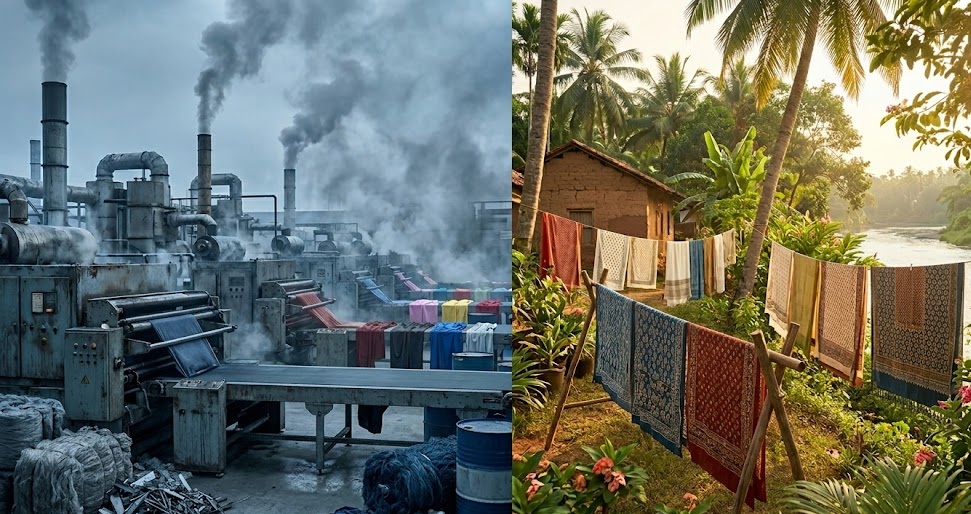
For buyers, this creates a powerful intersection:
- Authentic crafts are often more sustainable
- Sustainable products often carry deeper cultural significance
This dual value is a key reason why Indian handicrafts are gaining traction globally.
What Buyers Should Prioritize Moving Forward
As sustainability continues to influence global markets, buyers should focus on:
- Products with clear material transparency
- Crafts linked to specific regions or traditions
- Sellers who provide process-level details
Choosing sustainable handicrafts is not just about reducing environmental impact—it is about supporting artisan communities, preserving traditions, and investing in long-term value.