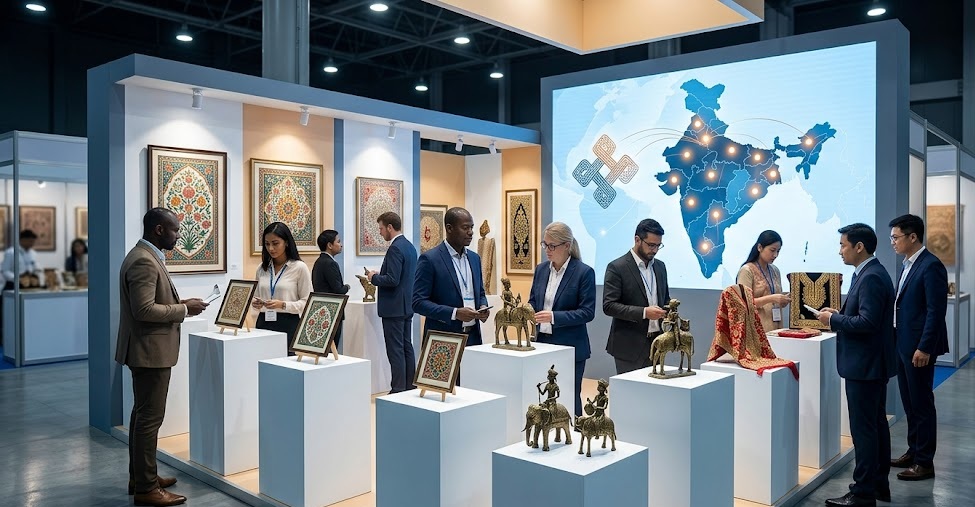
India’s Geographical Indication (GI) ecosystem continues to expand, reshaping how buyers evaluate authenticity and regional craftsmanship. As of 2024, India has crossed 500 registered GI products, with a growing share dedicated to handicrafts, textiles, and artisan-driven goods.
This surge in GI recognition is not just a bureaucratic milestone—it directly impacts buyers. New GI tags highlight emerging crafts that are gaining visibility, protection, and market value, making them increasingly attractive for both collectors and everyday buyers.
Understanding which newly recognized crafts are worth investing in can help buyers stay ahead of trends while ensuring authenticity and cultural relevance.
What GI Tags Mean For Buyers Today
A GI tag links a product to a specific geographic origin and guarantees that it is produced using traditional methods associated with that region. In India, the system is governed under the Geographical Indications of Goods (Registration and Protection) Act, 1999.
For buyers, GI tagging offers three critical advantages:
- Verified regional authenticity
- Protection against imitation products
- Stronger long-term value
As global demand for Indian crafts grows, GI tags are becoming a key trust signal in both domestic and international markets.
Recent GI Tags That Are Gaining Attention
Several newly recognized or recently spotlighted GI crafts are now entering mainstream buyer awareness, particularly after being featured in exhibitions, export fairs, and government promotion campaigns between 2023 and 2025.

Here are some notable examples:
| Craft | State | GI Status | Why It Matters |
|---|---|---|---|
| Kutch Rogan Craft | Gujarat | Revived & promoted | Rare hand-painted textile art |
| Varanasi Gulabi Meenakari | Uttar Pradesh | Increased global exposure (2024 exhibitions) | Luxury enamel jewelry |
| Kinnauri Shawls | Himachal Pradesh | Expanded recognition | Fine wool craftsmanship |
| Bastar Dhokra | Chhattisgarh | Strengthened GI awareness | Tribal metal casting |
| Toda Embroidery | Tamil Nadu | Rising global interest | Distinct geometric needlework |
Many of these crafts are not entirely new—but their recent recognition, promotion, and export visibility have positioned them as emerging buying opportunities.
Why Emerging GI Crafts Are Worth Investing In
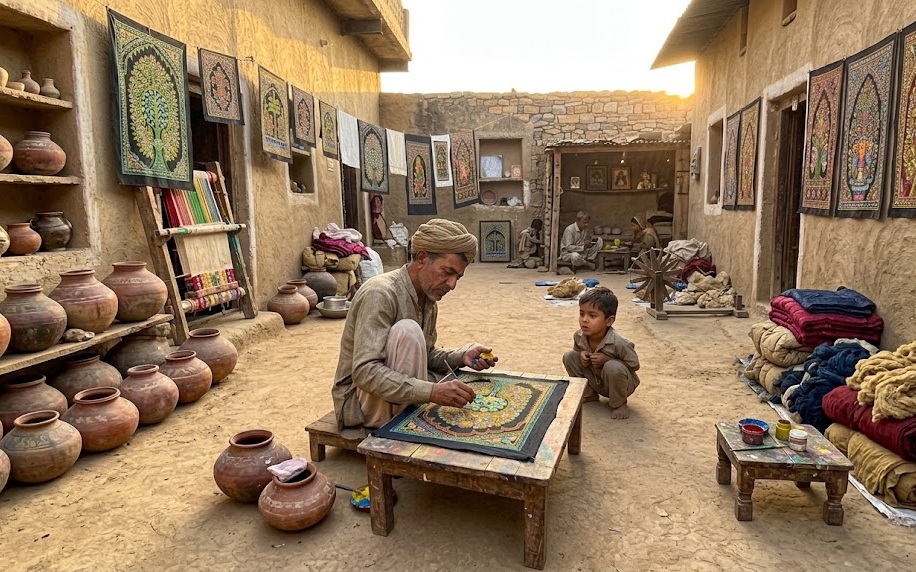
Newly spotlighted GI crafts often present a unique advantage: they combine authentic heritage with relatively lower market saturation.
For buyers, this translates into:
- Better pricing compared to highly commercialized crafts
- Greater uniqueness and rarity
- Strong storytelling and cultural value
For example, while Banarasi silk remains a premium staple, crafts like Rogan art or Toda embroidery offer lesser-known alternatives with equally strong authenticity credentials.
How Government Initiatives Are Driving GI Growth
The Indian government has actively expanded GI registrations through initiatives led by the Ministry of Commerce and Industry and the Development Commissioner (Handicrafts).
Key developments between 2023 and 2024 include:
- Increased funding for artisan clusters
- Promotion of GI crafts in global trade fairs (e.g., Dubai Expo follow-ups, international textile expos)
- Digital marketplaces highlighting GI-certified products
These efforts have contributed to a noticeable rise in both domestic awareness and international demand, particularly among buyers seeking traceable and ethical products.
How To Identify Newly Valuable GI Crafts
Not every GI-tagged product automatically becomes a strong purchase. Buyers should evaluate emerging crafts based on a few key indicators:
- Recent visibility: Featured in exhibitions, exports, or media
- Limited production: Lower supply often increases value
- Strong regional identity: Clear connection to a specific artisan community
- Process uniqueness: Distinct techniques not easily replicated
For buyers exploring regional craft clusters, guides like traditional textiles of Gujarat can provide deeper context into how certain crafts evolve from local ecosystems.
Pricing Trends For Emerging GI Crafts
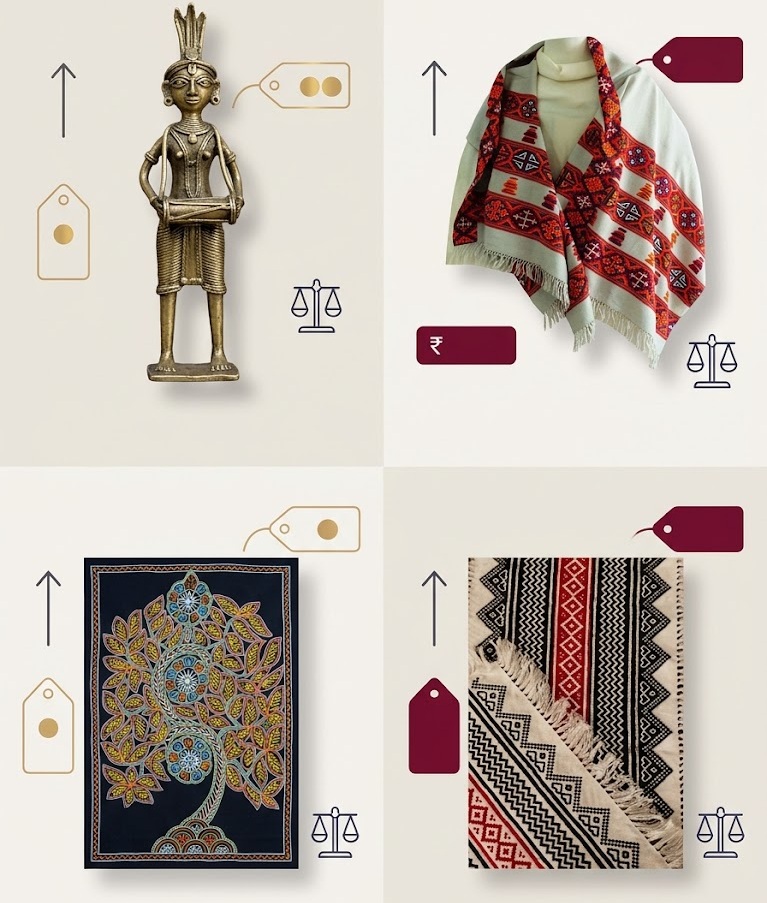
One of the most attractive aspects of emerging GI crafts is their current pricing window—often more accessible than established luxury categories.
| Craft Type | Typical Price Range (India) | Market Trend |
|---|---|---|
| Rogan Art Panels | ₹2,000 – ₹20,000+ | Rising collector interest |
| Dhokra Metal Art | ₹500 – ₹10,000 | Expanding global demand |
| Kinnauri Shawls | ₹3,000 – ₹15,000 | Premium niche growth |
| Toda Embroidery | ₹1,500 – ₹8,000 | Increasing recognition |
As awareness grows, these prices are expected to rise, especially for high-quality, artisan-made pieces with verified origin.
Risks Buyers Should Be Aware Of
With increased attention on GI crafts comes a parallel rise in imitation products. Buyers should remain cautious of:
- Items labeled as GI without certification
- Mass-produced versions mimicking traditional designs
- Sellers lacking transparency about origin
In many cases, visual similarity can make imitation products difficult to detect without deeper knowledge.
Where To Verify Authentic GI Products
For accurate verification, buyers should rely on official and institutional sources. The Geographical Indications Registry of India maintains a comprehensive database of registered products and their specifications.
This allows buyers to:
- Confirm GI registration status
- Understand production standards
- Identify authentic regions of origin
Using such resources ensures that purchases are aligned with verified craftsmanship rather than marketing claims.
Why GI Tags Are Shaping The Future Of Indian Crafts
The expansion of GI tagging is redefining how Indian crafts are positioned globally. Instead of being viewed as generic handicrafts, they are increasingly recognized as protected cultural assets with traceable value.
For buyers, this shift means:
- Greater confidence in authenticity
- Better alignment with ethical and sustainable purchasing
- Access to emerging crafts before they become mainstream
As new GI tags continue to be registered and promoted, informed buyers have the opportunity to discover lesser-known crafts that combine heritage, rarity, and long-term value.