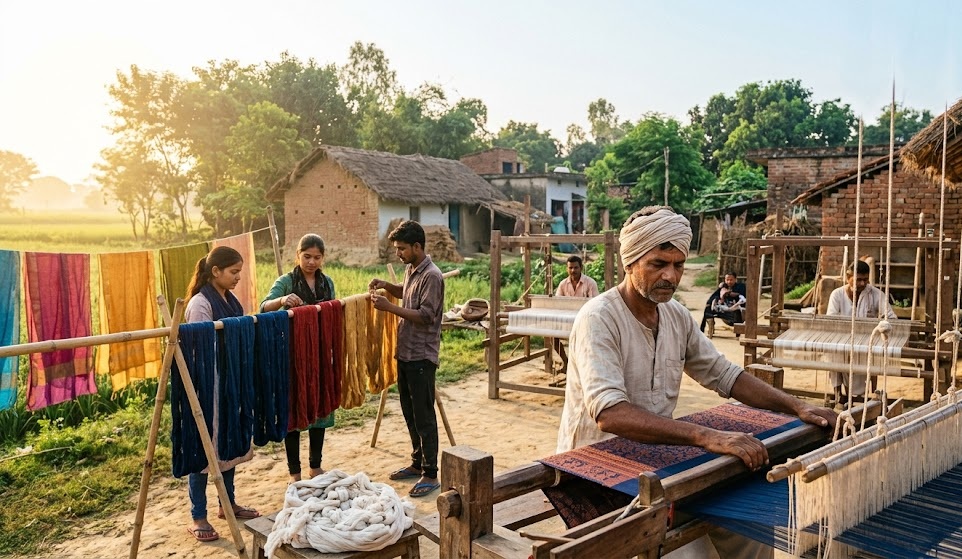
India’s textile heritage has always been deeply tied to regional weaving clusters—small, often family-run communities that preserve centuries-old techniques. In recent years, however, many of these clusters faced decline due to industrial competition, migration, and changing consumer habits.
Now, a revival is underway. Backed by government initiatives, export demand, and renewed interest in sustainable textiles, several traditional weaving clusters are regaining visibility in both domestic and global markets. For buyers, this shift presents a unique opportunity to discover authentic textiles that are culturally rich, increasingly scarce, and rising in value.
Why Traditional Weaving Clusters Are Being Revived
The revival of weaving clusters is not accidental. It is driven by a combination of policy support and changing buyer behavior.
Programs under the Ministry of Textiles, including cluster development schemes and handloom promotion campaigns, have helped artisans reconnect with markets. At the same time, global consumers are actively seeking handmade, traceable, and ethically produced textiles.
This convergence has created a new environment where traditional weaving is no longer seen as outdated—it is being repositioned as premium, heritage-driven craftsmanship.
Key Indian Textiles Making A Comeback
Several textile traditions are now gaining renewed attention due to their authenticity, process complexity, and regional identity.
| Textile | Region | Revival Driver | Buyer Appeal |
|---|---|---|---|
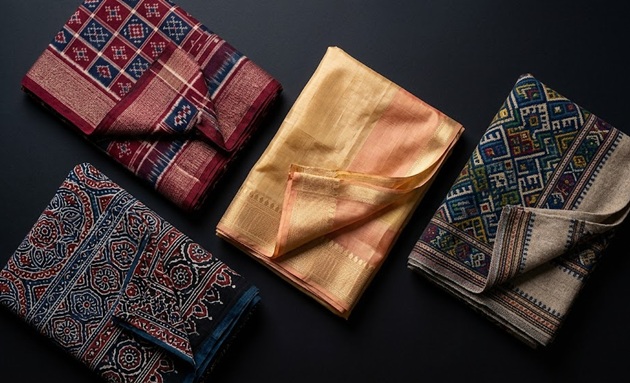
| Pochampally Ikat | Telangana | Export demand + GI awareness | Geometric precision, vibrant dyes |
| Kutch Ajrakh | Gujarat | Sustainability trends | Natural dyes, heritage patterns |
| Chanderi | Madhya Pradesh | Designer collaborations | Lightweight luxury |
| Kinnauri Shawls | Himachal Pradesh | Cold-climate global markets | Premium wool craftsmanship |
| Maheshwari Sarees | Madhya Pradesh | Government promotion | Versatile, modern appeal |
These textiles are not new—but their recent resurgence in visibility and demand is reshaping how buyers perceive them.
What Makes These Textiles Valuable Today
The renewed value of these textiles lies in three key factors:
- Manual weaving processes that cannot be replicated by machines
- Strong connection to specific regions and artisan communities
- Limited production capacity, which creates natural scarcity
For example, Ikat weaving involves pre-dyeing threads before weaving, requiring exceptional precision. Ajrakh textiles rely on multi-stage natural dyeing processes, making each piece time-intensive and unique.
Buyers who understand these processes are better equipped to appreciate why these textiles are positioned as premium products rather than everyday fabrics.
The Role Of Sustainability In The Revival
Sustainability has become a major factor in the comeback of traditional weaving clusters. Many of these textiles are inherently eco-friendly due to:
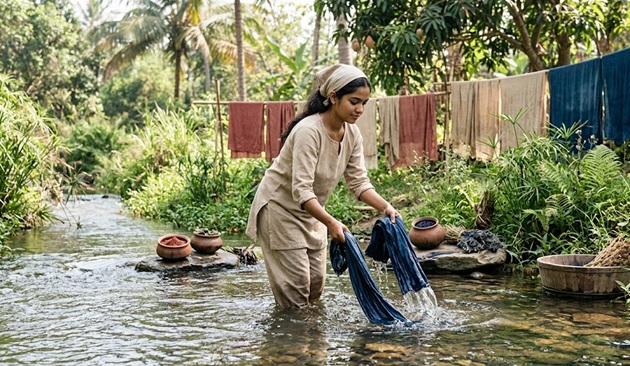
- Use of natural fibers such as cotton and silk
- Reliance on plant-based dyes
- Low-energy, hand-operated looms
This aligns directly with global demand for low-impact, ethically produced textiles.
For instance, crafts like Ajrakh are gaining traction not just for their visual appeal, but for their environmentally conscious production methods, making them highly relevant in modern markets.
How Designers And Export Markets Are Influencing Demand
Contemporary designers and international brands are playing a significant role in reviving traditional textiles. By integrating these fabrics into modern fashion and home decor, they are helping expand their appeal beyond traditional use.
Export markets, particularly in Europe, the United States, and Japan, are driving demand for:
- Lightweight handwoven fabrics
- Natural dye textiles
- Region-specific craft identities
This has transformed weaving clusters into globally connected production hubs, without losing their artisanal foundation.
How Buyers Can Identify Authentic Revival Textiles
As these textiles gain popularity, the risk of imitation increases. Buyers should focus on identifying authenticity through:
- Clear mention of weaving region
- Visible irregularities in weave (a sign of handloom production)
- Natural color variation rather than uniform tones
- Transparent seller information
For deeper context, understanding authentic Kalamkari fabric differences can also help buyers recognize how traditional processes differ from mass production across textile categories.
Pricing Trends And Investment Potential
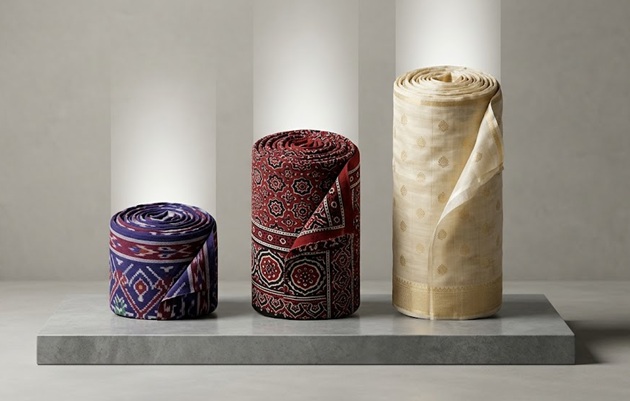
Reviving textile clusters often start with relatively accessible pricing, but costs tend to increase as demand grows and supply remains limited.
| Textile Type | Typical Price Range (India) | Market Trend |
|---|---|---|
| Ikat Fabrics | ₹500 – ₹2,500 per meter | Rising export demand |
| Ajrakh Textiles | ₹400 – ₹1,500 per meter | Strong global interest |
| Chanderi Sarees | ₹2,000 – ₹10,000+ | Premium positioning |
| Kinnauri Shawls | ₹3,000 – ₹15,000 | Niche luxury growth |
For buyers, this creates an opportunity to purchase textiles before they reach peak global pricing, particularly in emerging categories.
Why Regional Identity Is Driving Buyer Decisions
One of the most important shifts in the textile market is the growing importance of regional identity. Buyers are no longer just purchasing fabric—they are investing in:
- Cultural origin
- Artisan heritage
- Geographic authenticity
This is reinforced by GI tagging, which links textiles to specific regions and production methods.
For official verification, buyers can refer to the Geographical Indications Registry of India, which provides detailed information on recognized textile crafts and their origins.
What This Revival Means For Buyers
The revival of traditional weaving clusters represents a broader transformation in how Indian textiles are valued. What was once considered niche or regional is now becoming globally relevant and commercially significant.
For buyers, this means:
- Access to authentic, heritage-driven textiles
- Opportunities to invest early in emerging craft categories
- Greater need for knowledge and verification
As demand continues to grow, informed buyers will be best positioned to identify high-quality, authentic textiles that combine craftsmanship, sustainability, and long-term value.