
Finding time to get stronger doesn’t have to mean joining a gym or investing in expensive equipment. If you’re balancing work, family, and daily responsibilities, strength training at home can be one of the simplest and most sustainable ways to improve your health. With just your body weight and a small space, you can build muscle, boost metabolism, and increase energy levels—all on your own schedule.
The best part? You don’t need complicated routines to get started. A few consistent, beginner-friendly exercises can make a real difference.
Why Strength Training Matters—Even for Beginners
Strength training isn’t just for athletes. It supports everyday movement, improves posture, and helps protect your joints as you age. Building lean muscle also plays an important role in maintaining a healthy metabolism and stabilizing blood sugar levels.
If you’ve been focusing mainly on cardio, adding resistance exercises can complement your efforts. As we’ve discussed in our guide to quick workout routines for busy parents, short sessions done consistently can deliver meaningful results.
Even two or three strength-focused sessions per week can help you:
- Improve functional strength for daily tasks
- Support healthy weight management
- Reduce the risk of injury
- Enhance balance and coordination
The key is to start simple and focus on proper form.
How Bodyweight Strength Training Works
Bodyweight training uses your own mass as resistance. Movements like squats, push-ups, and lunges activate multiple muscle groups at once, making them efficient and practical for home workouts.
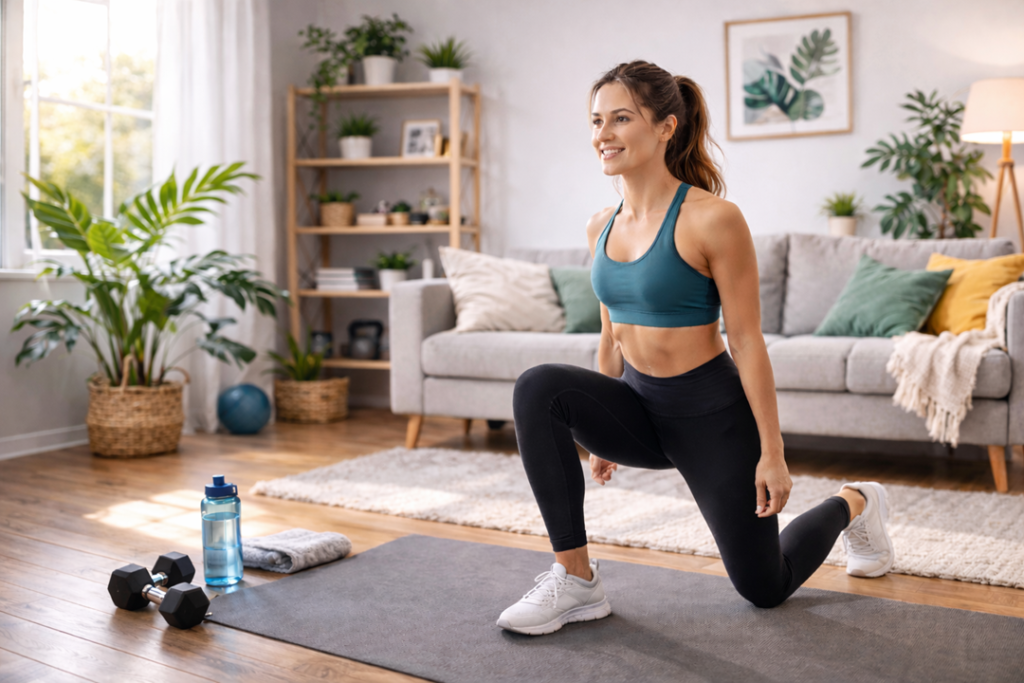
Unlike machines, bodyweight exercises also require core engagement and stability, which improves overall coordination. If you’re working with limited space, you may also benefit from our small space workouts guide, which shares strategies for staying active without a dedicated gym area.
For beginners, the goal isn’t intensity—it’s consistency. Controlled, steady repetitions build a strong foundation and reduce the likelihood of soreness or strain.
A Simple Beginner-Friendly Routine (No Equipment Needed)
This routine takes about 20 minutes and targets major muscle groups. Perform each exercise for 10–12 repetitions. Rest for 30–45 seconds between movements. Repeat the circuit 2–3 times.
1. Bodyweight Squats
Stand with feet shoulder-width apart. Lower your hips back and down as if sitting into a chair. Keep your chest lifted and knees aligned with your toes.
Why it works: Strengthens legs, glutes, and core while improving lower-body mobility.
2. Modified Push-Ups
Place hands slightly wider than shoulder-width apart. Perform push-ups on your knees if needed. Keep your body in a straight line from shoulders to knees or heels.
Why it works: Builds upper-body strength and supports shoulder stability.
3. Reverse Lunges
Step one foot back and lower into a lunge position. Alternate sides.
Why it works: Enhances balance and strengthens glutes and thighs.
4. Plank Hold
Hold a forearm plank for 20–30 seconds. Keep your core engaged and hips level.
Why it works: Develops core strength and improves posture.
5. Glute Bridges
Lie on your back with knees bent. Press through your heels to lift your hips upward.
Why it works: Activates glutes and supports lower back health.
This type of routine pairs well with the strategies outlined in maintaining fitness with a busy routine, especially if you’re trying to stay consistent despite a packed schedule.
How Often Should You Train?
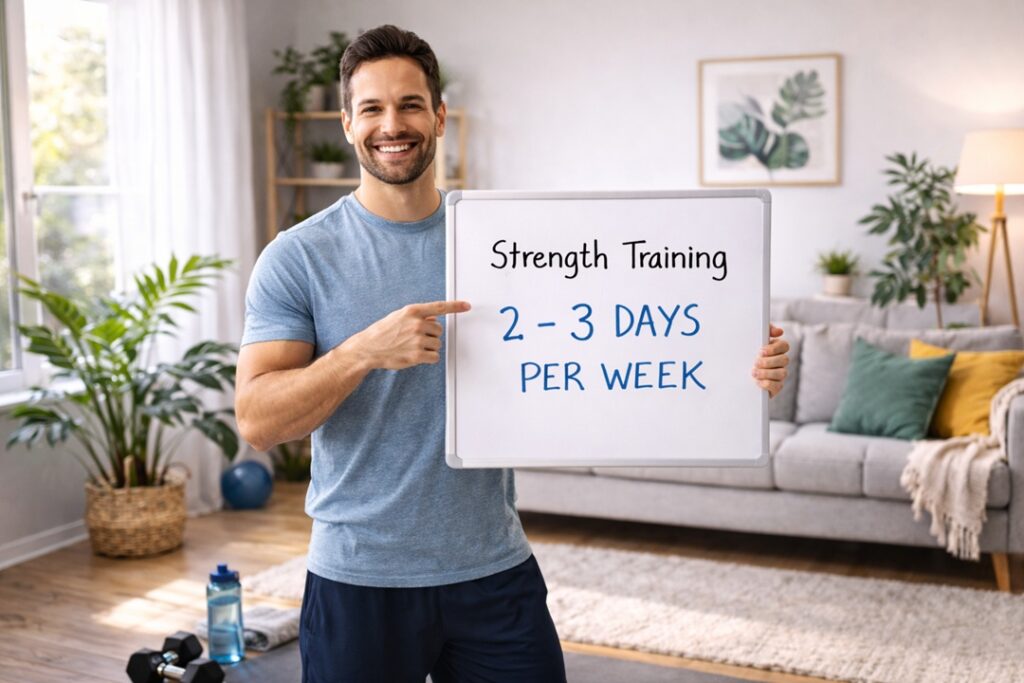
For beginners, 2–3 sessions per week is ideal. This allows your muscles time to recover while still encouraging steady progress. Recovery is when muscle repair and strengthening actually occur.
You don’t need long workouts. In fact, combining strength training with shorter sessions—like those described in our 15-minute family fitness routines—can help you stay consistent without feeling overwhelmed.
If you’re unsure about proper technique, organizations like the American Council on Exercise (ACE) provide helpful instructional resources on safe form and exercise fundamentals.
Tips to Stay Consistent at Home
Starting is often the hardest part. These simple strategies can help you build momentum:
- Schedule workouts like appointments
- Keep a small open space ready for exercise
- Track progress in a notebook or app
- Focus on improvement, not perfection
Over time, you can increase repetitions, add more sets, or slow down movements to increase intensity. The goal is gradual progression—not exhaustion.
Building Strength for the Long Term
Strength training at home doesn’t have to be complicated to be effective. When you focus on foundational movements and practice them consistently, your body adapts and grows stronger.
You don’t need fancy equipment or hours of free time. What matters most is showing up regularly and choosing exercises that fit your lifestyle. With a simple plan and a small commitment each week, you can build strength that supports your energy, mobility, and overall well-being.