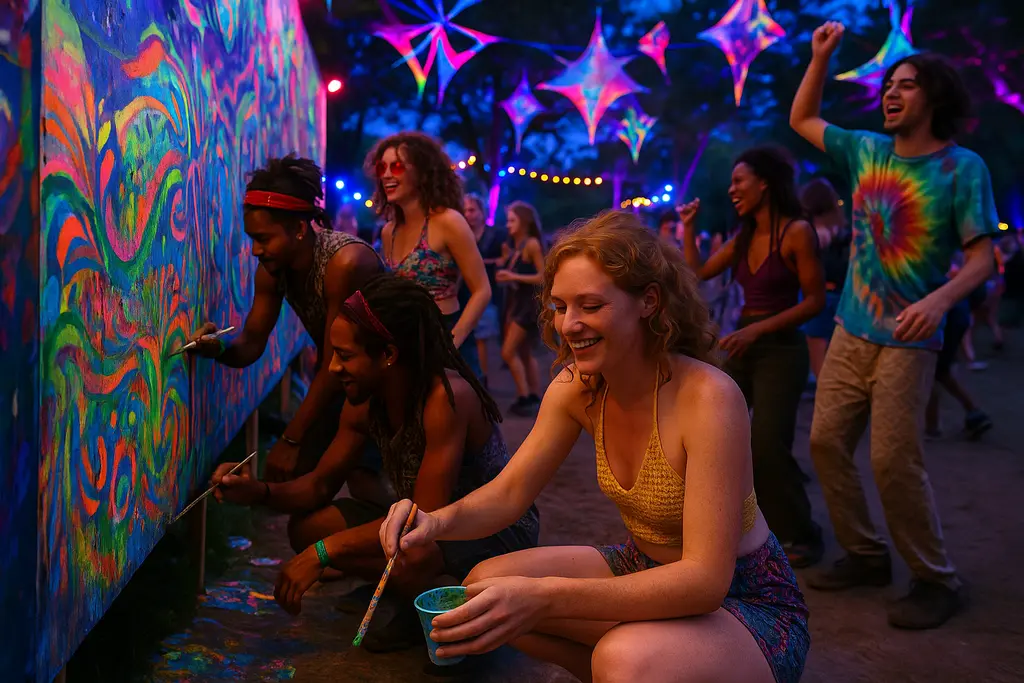
Rave Community Wellness is best understood as a cultural practice rather than a simple event trend. At live events, electronic music, lighting design, costume, movement, and shared ritual can create a temporary social space where people feel less isolated and more expressive. The evidence available should be read with care: not every rave is a wellness event, and not every participant experiences the dance floor in the same way. Still, recent wellness reporting and music journalism point to a noticeable shift in how some audiences and organizers frame collective dancing, sensory art, and live music as part of social wellbeing.
How Rave Community Wellness Shapes Event Art
Rave Community Wellness And The Move Toward Connection
The strongest claim supported by the supplied research is not that raves produce a guaranteed health outcome. It is that some wellness organizers are borrowing from rave culture to place human connection, emotional release, and collective movement at the center of the event experience. The Global Wellness Summit describes the “festivalization of wellness” as a shift in which wellness gatherings adopt elements associated with festivals and rave culture, especially shared music and embodied participation Global Wellness Summit.
That framing matters for artists and makers. A rave is rarely only a sound system. It is a designed environment built from light, fabric, projection, set pieces, clothing, handmade accessories, dance, and group codes of conduct. The art does not sit apart from the crowd; it is activated by the crowd. In this sense, live-event art has a social function. It helps people recognize where they are, how to behave, and how to belong without asking the setting to become formal or institutional.
Why Visual Culture Cannot Be Treated As Decoration
Visual culture at rave-adjacent events deserves more respect than the phrase “event decor” usually allows. A handmade mask, reflective garment, sculptural stage object, or light-reactive textile can shape how people move through a space. These objects also carry aesthetic references that may come from club culture, fantasy fashion, streetwear, folk adornment, or local craft practice. Responsible coverage should avoid flattening those references into mood-board language. Artists and makers need credit, cultural context, and clear boundaries around copying, especially where costume and character-inspired looks enter creator commerce.
For sellers, the same principle applies to product pages. If a handmade accessory is intended for live events, buyers need practical facts: material, weight, durability, visibility in low light, care, and whether the object is safe for crowded movement. Claims about wellness should remain modest unless backed by strong evidence. Rave Community Wellness depends on trust, and trust weakens when a seller promises emotional or health effects that a product cannot reliably deliver.
Solo Attendance And Community Trust
What The Guardian Report Suggests
The rise in people attending events alone is relevant to live-event culture because it changes how community is formed on site. A Guardian report on solo attendance cited a 2025 Ticketmaster survey finding that solo festival attendance rose from 8% in 2019 to 29% in 2025 The Guardian. That figure should not be stretched beyond its source. It does not prove that solo attendance is always driven by wellness, nor does it prove that every festival has become more inclusive. It does suggest that individual participation and collective experience are no longer opposites.
For Rave Community Wellness, this is a useful tension. A person may arrive alone yet still seek belonging through sound, movement, shared aesthetics, and small acts of care. The dance floor can make room for individual choice inside a group setting. That balance is part of why sober morning raves, wellness-oriented festivals, and movement-based gatherings have gained attention in wellness discussions, even where the evidence remains uneven.
Trust Signals For People Arriving Alone
Solo attendance places extra responsibility on organizers, venues, and creative teams. If the event promises connection, it needs visible structures that make connection safer and less forced. These may include clear entry information, calm arrival spaces, water access, posted conduct expectations, trained staff, and signage that helps people understand the environment. None of these elements is glamorous, but each supports the social conditions in which art and music can be received without unnecessary anxiety.
For independent makers selling ravewear, art objects, or event accessories, trust signals are also commercial signals. Buyers may want to know whether an item can be worn for hours, whether it restricts movement, and whether it respects the event’s safety rules. A costume piece that photographs well but breaks easily, blocks vision, or sheds material in a crowded venue does not serve the community well. Handmade integrity includes use, not only appearance.
Music, Movement, And Wellness Claims
What Can Be Said Carefully
Group dancing is often discussed in relation to bonding, mood, and release, but wellness writing should avoid turning those possibilities into universal medical claims. The research notes supplied for this piece mention communal dancing, sober morning raves, and intergenerational movement events, yet only some of those claims are linked here through the permitted sources. A cautious reading is more useful: collective movement may support social connection for some participants, especially when the event design reduces barriers to participation.
Rave Community Wellness should be framed as social and cultural wellbeing before it is framed as health intervention. Music can gather people. Art can shape attention. Costume can invite play. Movement can reduce social distance. These are meaningful cultural effects, but they should not be sold as treatment. Artists, sellers, and event producers protect community trust by keeping language specific and avoiding exaggerated health promises.
Why Joy Is Not A Weak Metric
Wellness culture often values measurement: tracking, optimization, routine, and performance. Rave-adjacent wellness settings offer a different vocabulary, one built around joy, release, and sensory participation. That does not make them less serious. A shared dance floor can create a rare kind of public permission: to move without technical mastery, to dress with imagination, and to be part of a group without needing to explain oneself.
Still, joy should not be used as a shield against critique. Event organizers need to consider accessibility, crowd density, sound levels, consent culture, and the risk of excluding people who do not fit the dominant visual style of a scene. Artists and makers can help by designing objects that welcome varied bodies and movement needs, rather than treating the most photogenic participant as the default wearer.
Creator Commerce Around Live Event Culture
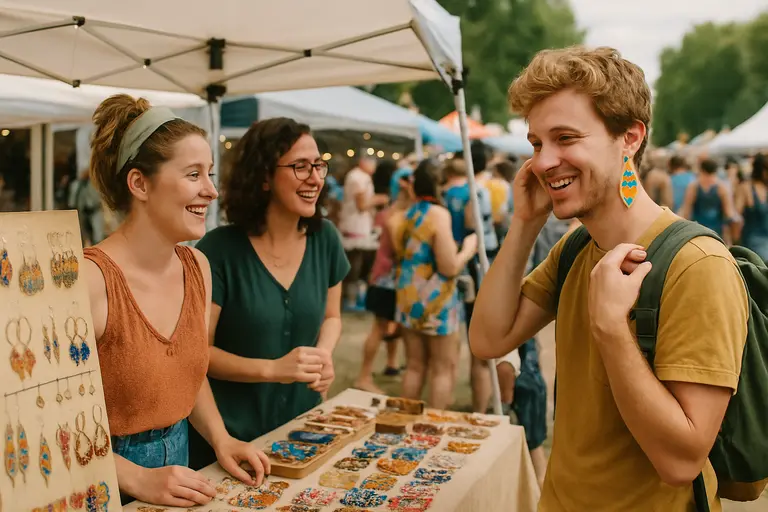
Handmade Objects As Social Infrastructure
In live-event culture, handmade goods often do social work. A beaded bracelet, hand-painted fan, soft headpiece, customized jacket, or small gift object can help people start conversations and mark shared experience. These items should not be dismissed as minor merchandise. They are part of how memory travels after the event ends. For artisans, that gives the product page a responsibility: it should explain who made the item, what materials were used, and how the object should be worn, cleaned, stored, or repaired.
Community-minded selling is especially relevant where rave aesthetics meet fantasy fashion and cosplay. Sellers should avoid implying rights they do not hold, avoid copying protected characters or living artists for commercial deception, and describe original inspiration with care. This is not legal advice. It is a trust principle. Buyers and event communities are more likely to support makers who respect authorship, credit, and cultural context.
A Practical Trust Checklist For Makers
A small maker does not need a large studio to build credibility. Clear information, honest photography, and respectful sourcing can do much of the work. The following points are useful for live-event goods without turning the product page into vague wellness marketing:
- State the material, closure, dimensions, weight, and care requirements.
- Explain whether the item is suitable for dancing, crowded venues, or outdoor festivals.
- Credit collaborators, photographers, performers, and models where appropriate.
- Avoid unsupported claims about health, emotional healing, or guaranteed confidence.
- Describe cultural references with restraint, especially for motifs from living traditions.
Coverage across related music and arts spaces, including Robsonic, frequently demonstrates that credibility is built with context rather than mere visibility. A maker who can explain process, use, and limits contributes more to community trust than a seller who relies merely on captivating visuals.
Rave Community Wellness As A Cultural Practice
The useful lesson from current reporting is not that rave culture has become wellness culture, or that wellness events have fully absorbed rave culture. The relationship is more careful than that. Some live events are borrowing from rave aesthetics and collective movement because they offer a language of shared feeling that standard wellness formats may lack. Some music audiences are attending alone while still seeking collective experience. Some artists and makers are building objects that support identity, movement, and memory on the dance floor.
Rave Community Wellness works best as a term for the social potential of sound, art, costume, and gathering. It should not erase the histories of rave scenes, the labor of visual artists, or the practical needs of people in crowded live environments. The most ethical version of this culture is not built on hype. It is built on care: clear information, respectful art references, honest product claims, safer event design, and room for people to participate without performing belonging for a camera.
For artisans and creator-commerce sellers, that means treating live-event goods as more than accessories. They are contact points between personal expression and group culture. When made and sold with accuracy, restraint, and respect, they can support the kind of trust that keeps a dance floor feeling human.