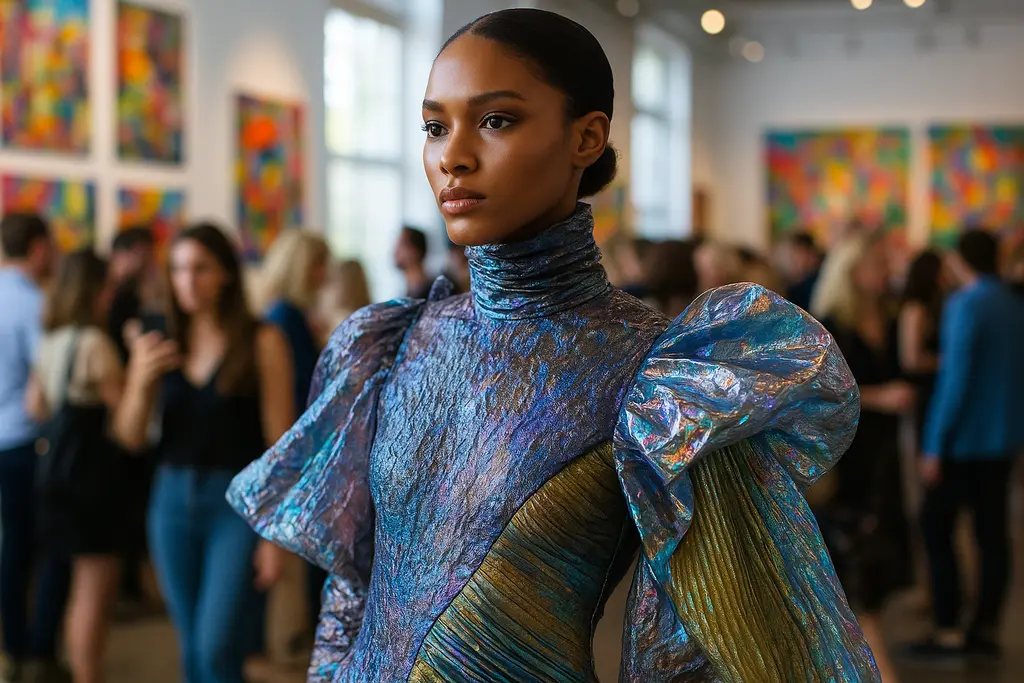
Exhibition Fashion Trends can be tempting to describe in sweeping language, especially when an art show has a strong emotional title and a visually suggestive setting. With Goodbye Sadness, Hello Sadness, the safer reading is more specific: the available source supports the exhibition’s dates, venue, artists, and selected works, but it does not prove a measurable market-wide shift in fashion. That distinction matters for buyers, stylists, and makers who want to respond to art with respect rather than turn an exhibition into vague fashion hype.
What The Exhibition Actually Shows
Dates, Place, And Artistic Frame
Goodbye Sadness, Hello Sadness was scheduled at Pace Gallery in Berlin from July 4 to August 23, 2026, and featured works by 27 international artists. The release also identifies nightclub-adjacent works including Elmgreen & Dragset’s But I’m on The Guest List and Esben Weile Kjær’s Flash, which gives the show a documented link to social space, light, performance, and after-dark culture Pace Gallery release.
The title itself invites a reading based on emotional contrast. Sadness and greeting, loss and return, withdrawal and social presence can all be read as aesthetic cues. For fashion, that does not automatically mean a confirmed runway trend. It means the exhibition offers a vocabulary that designers, costume thinkers, stylists, and independent sellers may use with care: subdued color, reflective surfaces, sheer layers, evening silhouettes, and garments that carry a personal mood rather than only a decorative effect.
Why Caution Matters For Fashion Claims
The research brief proposes influence across emotional dressing, nightlife styling, mixed media, upcycling, gender fluidity, and artist-designer collaboration. Those ideas are plausible as interpretive directions, but the supplied source does not document sales data, designer statements, collection credits, buyer behavior, or marketplace shifts. An evidence-based reading should separate what is documented from what is inferred.
That caution protects the exhibition’s artistic context. Visual art should not be reduced to a trend board. If a fashion buyer sees the show as inspiration, the more respectful question is not “What can be copied?” but “What mood, structure, or material problem does this artwork help me think about?” That small shift keeps the artist’s work intact while allowing fashion to respond with its own language.
Exhibition Fashion Trends As An Interpretive Lens
Exhibition Fashion Trends And Emotional Dress
Exhibition Fashion Trends, in this careful sense, are not proof of a mass movement. They are a way of reading how gallery experiences can sharpen fashion choices. A show framed around sadness and its reversal can encourage clothing that feels less polished in the commercial sense and more emotionally legible: garments with tension between exposure and cover, soft structure and hard detail, restraint and shine.
For buyers, that could mean looking for pieces that express a mood without relying on slogans. A sheer black blouse over a matte base, a silver detail against a quiet silhouette, or a hand-finished accessory with visible texture can all suggest an emotional register. None of these choices needs to imitate a specific artwork. In fact, the more ethical route is often indirect: respond to atmosphere, not to protected images, distinctive artist signatures, or recognizable compositions.
Nightlife Codes And Buyer Expectations
The named nightclub-related works make evening wear a reasonable area for discussion. Guest lists, flashes, club entrances, bodies in low light, and social visibility all belong to the cultural language of nightlife. In fashion terms, that can support interest in reflective fabrics, compact statement pieces, controlled transparency, sharp outerwear, and accessories that read well under artificial light.
Still, nightlife has community context. Club clothing is not only sparkle or spectacle. It can signal belonging, privacy, gender expression, subcultural memory, and safety within a scene. Buyers should be wary of product language that strips those signals from their setting. Sellers who reference club aesthetics should explain material, fit, wearability, and context instead of treating nightlife as a costume theme. Readers comparing art-led styling with costume and fantasy dress may also find this fantasy fashion context useful for understanding how visual references can be adapted without flattening their source culture.
Buying Signals For Authentic Art-Led Fashion
Craft, Surface, And Materials
The research brief points to craft, mixed media, light, shadow, and upcycling as possible fashion responses. The source does not prove that designers adopted those methods because of the exhibition, but these categories are still useful for buying with discernment. If a brand describes a garment as gallery-inspired, the product should show more than a mood word. Buyers can look for evidence in fabric choice, finishing, construction, layering, and the way the piece changes under movement or light.
Handwork matters here because emotional clothing often depends on surface. A raw edge, stitched panel, layered organza, repaired seam, appliqué, or unusual fastening can carry a narrative without spelling it out. Upcycling claims, if used, should be concrete. A seller should state what has been reused, what has been newly added, and how the garment should be cared for. Broad claims about renewal or sustainability are weaker than specific material facts.
Questions Buyers Can Ask Before Purchase
For Authenticity and Buying Guides, the practical issue is trust. A buyer does not need an art-history degree to shop responsibly, but they do need enough information to judge whether a piece is thoughtfully made or only wrapped in exhibition language.
- Does the seller explain the garment’s material, construction, and care needs?
- If an artist or exhibition is mentioned, is the reference contextual rather than a claim of official association?
- Are upcycled, handmade, or limited-run claims described with specific details?
- Does the piece suggest mood and form without copying a recognizable artwork?
- Is sizing, movement, transparency, or light response described honestly?
These questions are especially relevant for independent makers and creator-commerce sellers. Art-led fashion can be intimate and persuasive, but trust depends on clear product information. Exhibition Fashion Trends are useful only when they help buyers see the garment more clearly, not when they hide weak construction behind cultural language.
Creator-Commerce Lessons From The Show

Trust Before Inspiration
For small fashion sellers, the main lesson is not to claim a direct line from a Berlin exhibition to a product unless that relationship is real and can be described accurately. If a maker was personally moved by the show, it is acceptable to say the collection reflects ideas of mood, light, or social space. It is less reliable to imply collaboration, endorsement, licensing, or official connection without evidence.
This is not legal advice, but a practical trust standard: references to living artists, artworks, exhibitions, and gallery identities should be handled with care. A safer product story might say that a garment is “informed by contrasts between shadow and shine” rather than naming a specific artwork as if the piece were authorized. Where formal collaboration exists, the seller should state it plainly and avoid inflated language.
Community Reading Of Nightlife Style
The nightlife thread in the exhibition also offers a lesson in community respect. Party-inspired clothing often circulates through scenes built by queer communities, artists, DJs, performers, door staff, photographers, and regular attendees. When sellers translate that into fashion, authenticity depends on more than styling. It depends on whether the product understands the lived use of the clothing: movement, heat, visibility, pockets, comfort, entry lines, late travel, and the need to feel both expressive and safe.
That is where maker detail becomes meaningful. A dress with reflective trim should explain how it behaves under flash. A sheer top should disclose opacity. A jacket sold for evening wear should show closure, weight, and inner finish. A bag made for events should state capacity and fastening. These practical notes honor the people who wear the clothes, not just the visual mood.
How Goodbye Sadness Shapes Exhibition Fashion Trends
A Careful Reading For Designers And Buyers
How, then, does Goodbye Sadness, Hello Sadness shape fashion? Based on the supplied evidence, it shapes conversation more securely than it proves a trend. It gives buyers and makers a set of supported reference points: a Berlin gallery setting, 27 international artists, an emotional title, and documented works connected to guest-list and flash imagery. From those points, fashion readers can reasonably discuss emotion, nightlife, light, surface, and social performance.
Exhibition Fashion Trends are most useful when treated as prompts for better questions. What emotion does the garment carry? What material creates that feeling? Does the product page respect the art source? Is the nightlife reference grounded in wearability and community context? Are craft and upcycling claims specific enough to be trusted?
For contemporary fashion, the strongest influence may be less about a single silhouette and more about discipline: let art deepen the garment, not decorate the sales pitch. Buyers should reward sellers who name materials, clarify inspiration, avoid false association, and allow mood to come through construction. That is a more authentic way to connect gallery culture with clothing people can actually wear.