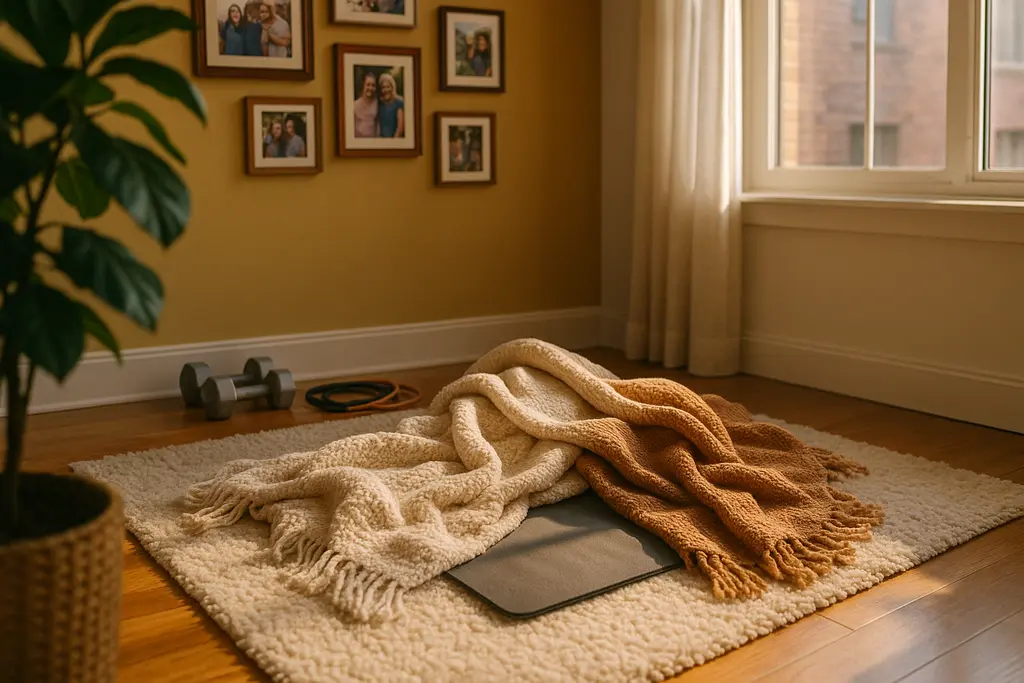
A cozy workout space can borrow from art without reducing an exhibition to a mood board. The useful starting point is the verified frame: Accent Builders was held at Dominique Porter Gallery in Los Angeles from June 13 to July 18, 2026, and the listed artists included Will Bruno, Preston Daniels, Greg Eberhardt, Rod Fahmian, Caleb Lyons, Kathryn Scanlan, Jeremy Shockley, and Pat Strand, according to ArtRabbit’s exhibition listing. For a home fitness setting, that context invites a careful approach: take inspiration from the idea of accents, placement, warmth, and constructed atmosphere, not from copying specific works or implying any artist endorsed the room.
As Priya Kapoor, I look at home workout design through two lenses: whether the space supports safe movement, and whether it feels inviting enough for repeated use. A room can be visually thoughtful and still fail if the mat slides, the weights are awkward to reach, or the lighting makes evening exercise feel harsh. The aim here is a restrained, art-aware setup that respects the exhibition context while serving daily movement for one person or a family.
Cozy Workout Space Principles From Accent Builders
Cozy Workout Space Color Choices
The most practical visual bridge is color. The research notes point to earthy tones such as terracotta, sienna, and mahogany, and Homes & Gardens discusses warm, cozy living room ideas in that general direction. In a workout room, these colors work best as accents rather than total coverage. A terracotta storage basket, a sienna-toned wall panel, or a mahogany wood shelf can warm the room without making it feel heavy.
A cozy workout space should still remain visually calm. Strong color on every surface may become distracting during balance work or family routines. A useful ratio is to keep the floor and main wall neutral, then bring warmth through movable objects: a bench cushion, framed artwork, a woven bin, or a small side table for water and towels. This keeps the room flexible if the exercise routine changes.
Using Accent Rather Than Imitation
The word “inspired” needs care. A home gym can respond to the spirit of an exhibition through proportion, layering, and atmosphere, but it should not reproduce artworks, borrow an artist’s visual language for commercial deception, or suggest direct collaboration unless that is true. This matters for visual culture as much as for fitness. Art in domestic space has social meaning, and treating it respectfully helps preserve trust between viewers, artists, and makers.
If you’re drawn to the intersection of visual culture across fashion and fantasy, consider Fairytale Fashion as a creative resource within the same network. It offers perspectives not for gym fashion, but for understanding how ambiance and personal style can coexist with functional design.
Translating Gallery Warmth Into Daily Movement
Natural Materials With Practical Limits
Wood, stone, fabric, and plants can make a workout corner feel less clinical. The key is to place them where they support comfort rather than interfere with training. A wooden rack can hold resistance bands. A stone-look tray can collect small items such as grip socks, a timer, or earbuds. Heavy drapery can soften sound if the room also functions as a living area, though it should not block airflow or create a tripping risk.
Families often need a room to change roles quickly. Morning mobility, after-school stretching, a parent’s strength session, and weekend yoga may all happen in the same space. In that setting, the warm materials should be durable and easy to clean. A soft throw looks appealing, but it should live away from dumbbells, steps, and jump space. Texture is helpful; clutter is not.
Lighting That Supports Consistency
Lighting can decide whether a home workout habit survives. Natural light is often pleasant, but many families train before sunrise or after dinner. Adjustable lighting is useful because a strength circuit, a stretching session, and a quiet cooldown do not need the same intensity. A warm lamp in the corner can make the room feel settled, while brighter overhead light can support form checks during squats, hinges, and balance work.
A mirror can also help, but placement matters. It should allow the user to check alignment without encouraging constant self-judgment. For children or teens, I prefer mirrors used as coaching tools rather than appearance tools: knees tracking, shoulders relaxed, spine neutral, feet grounded. That keeps the cozy workout space focused on capability.
Equipment, Flooring, And Family Use
Compact Tools Before Large Machines
Functional equipment should come before decorative decisions. A compact home setup can serve most basic routines with a mat, resistance bands, a pair of adjustable or fixed dumbbells, a stable step or low bench, and a storage solution. If budget is a constraint, Shimply’s article on budget-friendly home gym equipment fits this approach: start with tools that support multiple movements rather than buying bulky items first.
Multi-use furniture is especially helpful in apartments and shared family rooms. A bench with storage can hold bands and mobility tools. A low cabinet can keep weights off the floor. Wall hooks can lift jump ropes or straps away from children’s play space. These choices are not glamorous, but they are often what make a workout area usable five days later, not only attractive on the day it is arranged.
Flooring, Noise, And Safety
Flooring is one of the least decorative choices, yet it is central to comfort. The research notes mention rubber tiles as a way to provide cushioning and reduce noise. That is reasonable for many home routines, especially where weights may be set down or where neighbors share walls or floors. A thick yoga mat can work for stretching, but it may not be stable enough for loaded strength work or lateral movement.
A family-friendly cozy workout space needs clear zones. The weight area should be separate from the child play or stretching area. Larger pieces should sit against walls to keep the center open. If the room is narrow, define movement lanes: one lane for floor work, one wall for storage, and one clear area for standing movements. Good layout reduces friction and lowers the chance of tripping over equipment.
- Keep the heaviest equipment on the lowest shelf or floor rack.
- Leave a clear mat-width path for stretching and mobility work.
- Use closed bins for small accessories if children use the room.
- Place water, towels, and a timer within reach but outside the movement zone.
Art, Identity, And Respectful Display

Choosing Art For Motivation Without Overstatement
Artwork can personalize a room, but it does not need to shout motivation. A framed print, handmade object, or small sculptural piece can create a pause between work life and exercise time. If the influence is Accent Builders, the more respectful reading is to think in terms of accent placement: one strong object, one warm material, one carefully lit corner. That is more thoughtful than crowding the wall with unrelated visual references.
Avoid presenting the room as an interpretation of a specific artist unless that connection is documented. It is safer and more honest to say the space is inspired by the general idea of a gallery-like arrangement, warm accents, and constructed mood. This also helps families involve children in art-aware choices without teaching them that art is simply something to copy.
Plants, Textiles, And Sound Control
Plants and soft furnishings can make the room more inviting, but they should be chosen for the actual conditions. A plant that needs bright light may struggle in a basement. Heavy curtains can absorb some sound, but they may also trap dust or block needed light. Fabric wall panels can soften echoes in a hard room, yet they should be placed away from areas where they might be kicked, brushed by weights, or collect moisture.
The strongest design choice is often restraint. One plant, one framed piece, one warm lamp, and one tidy equipment zone can do more than a crowded arrangement. A cozy workout space is not defined by how many objects it contains. It is defined by whether the room lowers resistance to movement.
Accent Builders Inspired Home Workout Space
A Practical Room Plan
Start with the floor plan, not the wall color. Measure the mat area, then check whether arms and legs can extend without touching furniture. Place storage along the least-used wall. Put the mirror where it supports form rather than dominating the room. If using terracotta, sienna, or mahogany tones, apply them through accents first. This lets the space remain adaptable if the family later shifts from yoga to strength training, or from solo workouts to shared routines.
Then test the room for one week. Do a short mobility session, a strength circuit, and a quiet stretch. Notice what gets in the way. If the dumbbells are too hard to reach, move them. If the lamp causes glare in the mirror, shift it. If the room feels too warm visually, reduce the darker accents. A successful cozy workout space is edited through use.
Keeping The Space Honest And Useful
The best connection between an art exhibition and a home workout room is not visual imitation. It is attention: to placement, material, light, and the way a person feels moving through the space. The verified facts about Accent Builders give a cultural point of reference, while the home design choices should remain grounded in safety, comfort, and repeatable routines.
For families, this kind of room can support more than exercise. It can model care for the body, respect for art, and thoughtful use of the home. That combination is modest, but it is powerful in daily life: a warm corner, a clear floor, a few reliable tools, and enough beauty to make movement feel welcome.