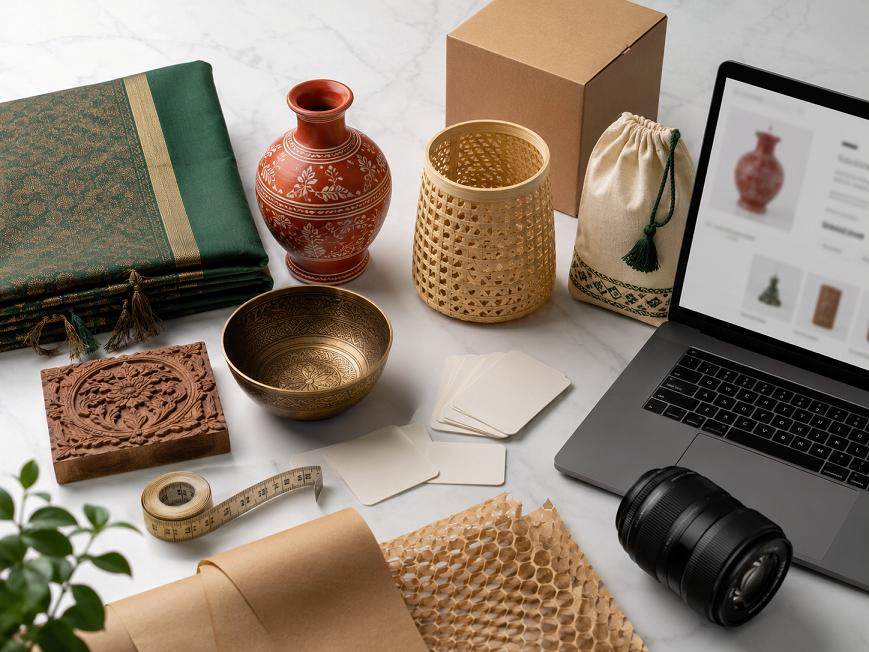
NABARD’s latest GI-backed product push is not only a heritage-protection story. It is a seller-strategy signal for India’s handmade economy. In July 2026, the National Bank for Agriculture and Rural Development facilitated Geographical Indication registration for 28 new traditional products across India, taking the number of NABARD-supported GI registrations to 176. Reported examples include Nalanda Bawanbuti Sarees, Himachal Wood Carving, Khajuraho Metal Craft, and other products across handloom textiles, handicrafts, bamboo work, pottery, paintings, metalwork, and musical instruments.
For Shimply readers, the news matters because verified origin is becoming a practical advantage in online handmade commerce. Buyers are no longer satisfied with vague words such as “traditional,” “heritage,” or “authentic.” They want to know where a product comes from, whether the craft name is being used correctly, and whether the seller can explain material, maker, process, and place.
Why NABARD’s 28 New GI-Backed Products Matter
NABARD’s GI work matters because it connects intellectual-property protection with rural enterprise. Fortune India reported that NABARD has supported 28 new products in securing GI tags, bringing its total supported registrations to 176. The same report said the effort has connected 13,000 artisans to markets and created more than 50,000 direct jobs. Its NABARD GI registration report frames GI recognition as a way to improve visibility, market access, and higher-value domestic and global opportunities for traditional products.
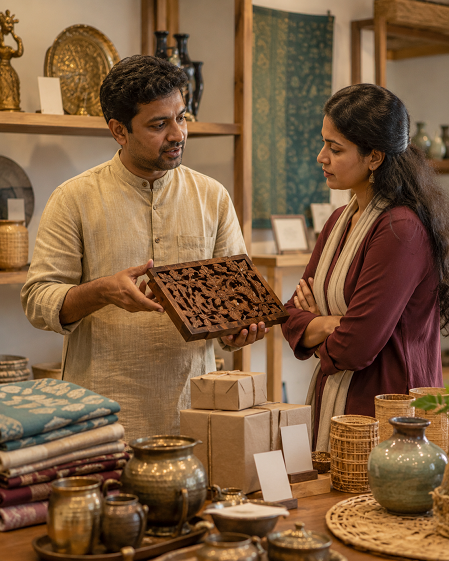
That is the key point for handmade sellers. A GI tag does not magically sell a product. It gives the product a stronger identity. The seller still has to build the product page, photograph the item well, explain the craft, use the name responsibly, pack the product safely, and answer buyer questions.
NABARD’s own GI page describes Geographical Indication recognition as a way to validate regional products, revive rare art forms, increase market value, and improve the negotiating power of artists or producers. That NABARD GI support language shows why GI recognition is not only legal paperwork. It can become a commercial tool when artisans and sellers use it well.
For online craft sellers, the advantage is simple. Verified origin gives buyers something concrete to search, compare, and trust. A buyer searching for a Bawanbuti saree, Himachali wood carving, or Khajuraho metal craft is not looking for a generic handmade object. They are looking for a product tied to place, method, and reputation.
What Verified Origin Means For Handmade Buyers
Verified origin helps buyers reduce uncertainty. Handmade shopping often involves risk because buyers cannot always see the artisan, inspect the material, or verify the product’s background. A GI tag can help buyers understand that a product name is connected to a recognized place and qualities associated with that region.
That does not mean every product using a famous craft name is automatically genuine. It means buyers have a stronger basis for asking questions. Where was it made? Who made it? Is the seller an authorized user? What material is used? Does the product match the recognized craft tradition? Are the photos real? Is the description specific?
DPIIT’s official GI guidance says authorized users are the people registered with the Geographical Indications Registry and authorized to use the registered GI name and GI logo on specified goods. That GI authorized user guidance matters for online marketplaces because sellers should not treat GI terms as decorative keywords.
For buyers, verified origin makes product comparison easier. Instead of choosing between ten listings that all say “handmade Indian textile,” a buyer can look for region, fiber, weave, seller identity, authorized user status where relevant, and product documentation. That creates a more careful buying process.
Shimply’s guide to GI-tagged Indian crafts by state follows the same buyer logic. State and region matter because handmade value often begins with place.
Why GI Language Is Becoming A Search Advantage
Online handmade selling is search-driven. Buyers search by material, use, occasion, region, craft name, price, and shipping need. GI language can strengthen search visibility because it gives products a precise identity. Yet that precision only helps when it is accurate.
A seller listing “Nalanda Bawanbuti Saree” should know what Bawanbuti means, where the craft belongs, what visual or weaving characteristics define the product, and whether the product is genuinely connected to that tradition. A seller listing Himachal Wood Carving should explain region, wood type where possible, carving method, finish, and intended use. A seller listing Khajuraho Metal Craft should explain material, form, care, and whether the item is decorative, collectible, or gift-ready.
A weak listing uses GI terms like tags. A strong listing uses them as proof points. The difference is buyer trust.
| GI Search Signal | What Buyers Expect | Seller Responsibility |
|---|---|---|
| Craft Name | Clear product identity | Use the correct name only when accurate |
| Region | Link between place and product | Explain origin and production context |
| Material | Value, care, and durability | List fiber, wood, metal, clay, bamboo, or finish |
| Process | Handmade credibility | Describe technique without exaggeration |
| Seller Status | Trust and legitimacy | Clarify maker, collective, reseller, or authorized user status |
| Use Case | Buyer decision support | Show gifting, decor, wearing, or collecting purpose |
This table shows why verified origin is becoming a seller advantage. It gives sellers better information architecture. A product page can move from broad charm to structured trust.
What Handmade Sellers Can Learn From NABARD’s GI Push
NABARD’s latest GI work shows that regional products need more than recognition. They need market translation. Sellers have to turn a registered craft identity into a buyer-friendly product experience.
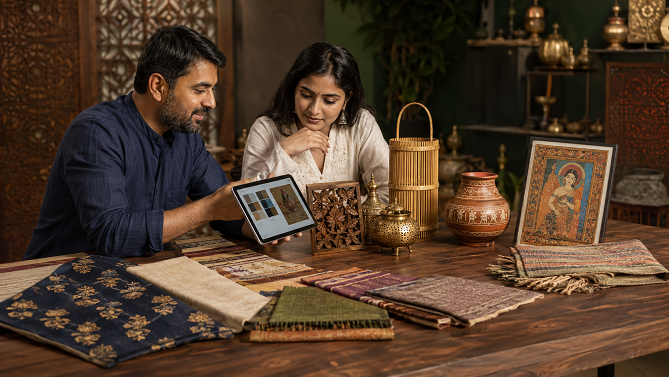
The first lesson is naming. Use the exact craft name only when the product genuinely qualifies. Do not add famous GI names to unrelated products for search traffic. That may attract clicks, but it can damage trust and expose sellers to compliance risk.
The second lesson is documentation. Each product page should explain what the item is, where it comes from, who made it or supplied it, what material it uses, how it is made, how it should be cared for, and how it will be packed. These details matter even more when a seller uses a verified-origin claim.
The third lesson is photography. GI-linked products should not be photographed like anonymous catalog items. Buyers need close-ups of weave, carving, metal finish, embroidery, brushwork, bamboo structure, or pottery texture. They need scale photos and packaging proof. A product tied to origin should visually show why the origin matters.
The fourth lesson is pricing. Verified craft products often carry more labor, documentation, and scarcity than generic products. Sellers should explain value through process, material, and maker context instead of using empty luxury language.
The fifth lesson is market access. NABARD’s GI support has been reported as connecting artisans to markets, but sellers still need digital follow-through. A recognized craft must be easy to find online, easy to understand, and easy to buy.
Why GI Tags Help Protect Against Generic Handmade Claims
India’s handmade market is large and diverse, which makes clarity important. PIB has stated that the handicraft sector includes 318 GI-tagged handicraft products and around 455 formally classified craft categories. Its Indian handicraft sector data also describes the sector as a source of livelihoods across rural and semi-urban regions and a contributor to exports and cultural preservation.
That scale is valuable, but it also creates confusion. A buyer may see hundreds of “traditional Indian handmade” listings without knowing which ones are truly tied to a region, artisan group, or recognized craft. GI-backed products help create separation from generic claims.
This separation is important for serious sellers. If a seller has access to authentic GI-linked craft, the listing should make that clear through responsible wording. If a seller is selling inspired work, the listing should say inspired. If a seller is reselling products, the page should not pretend the seller made them. Buyer trust depends on these distinctions.
A GI tag also helps prevent craft names from being diluted. When every carved item is called “Himachali,” every metal object is labeled “Khajuraho,” or every woven textile is described with famous regional names, buyers lose confidence. Verified origin gives sellers a reason to be more careful.
For handmade commerce, that care is not a limitation. It is an advantage. Buyers who value craft are often willing to pay for clarity.
How Sellers Should Build Product Pages Around Verified Origin
A verified-origin product page should be structured like a buyer’s proof file, but written in natural language. It should not feel legalistic. It should feel clear.
Start with a title that includes product type, craft name, material, and use case. For example, a strong title might include “Bawanbuti Silk Saree For Ceremonial Wear” or “Hand-Carved Himachali Wood Decor Panel” if the product truly matches the craft. The title should help buyers understand the item quickly.
The opening description should explain the product’s origin and purpose. The middle section should explain material, technique, dimensions, and care. The final part should explain packaging, shipping, and gifting suitability.
For handmade gifts, use case matters. A GI-linked product may be a wedding gift, housewarming gift, cultural keepsake, corporate gift, festive decor item, textile collectible, or premium souvenir. Sellers should not assume buyers know how to use the product.
Images should support the same trust story. A textile listing needs full-length, fold, drape, and close-up weave photos. A wood carving needs front, side, back, surface detail, and scale. Metal craft needs finish, weight impression, reflection, and cleaning notes. Pottery needs glaze detail, inside view, base, and packaging. Bamboo craft needs structure, joining, capacity, and durability cues.
Care cards can also increase trust. A buyer who receives a product with clear care instructions is more likely to see the seller as professional and return for future purchases.
Why Verified Origin Helps International Buyers
International buyers often struggle to judge Indian handmade products online because many craft names are unfamiliar. A GI-backed identity can help them understand that a product is not just decorative. It belongs to a region and a tradition.
That matters for gift buyers in the United States, Canada, the United Kingdom, Singapore, the Gulf, Australia, and Europe. These buyers may be shopping for meaningful Indian gifts, heritage objects, wedding items, cultural decor, or handmade home products. They need sellers to explain craft identity without assuming local knowledge.
A listing for a verified-origin product should define the craft briefly. It should avoid long, romanticized claims and focus on practical meaning: where it comes from, what material it uses, why the process matters, and how the buyer can use or gift it.
International buyers also need shipping confidence. If a product is heavy, fragile, expensive, or one-of-a-kind, the seller should explain packaging layers, dispatch time, and care. A GI-linked product loses buyer appeal if shipping feels risky.
This is where verified origin and modern seller systems meet. A product can carry old craft knowledge while still being packed, photographed, and described for global buyers.
How Market Access Should Follow GI Recognition
GI registration is a beginning, not the final step. After recognition, artisans and sellers need authorized-user enrollment, branding, packaging, exhibitions, digital catalogues, buyer education, and repeat-order systems. Without those steps, the GI tag may exist on paper while buyers continue to purchase generic alternatives.
NABARD’s broader GI page describes GI recognition as a tool that can enhance market value and negotiating power. That idea should shape seller strategy. A stronger origin claim should lead to stronger market presentation, not just a badge on a product.
Seller collectives can benefit by creating shared product descriptions, care guides, photography standards, and packaging templates. This is especially useful for clusters where many artisans make related products. Shared standards can help buyers recognize authenticity without making every product look identical.
Marketplaces can also help by creating filters for GI-linked products, seller verification, authorized-user status, region, material, and craft category. Indiahandmade’s digital marketplace already highlights handmade, GI-tagged, and ODOP products as part of India’s broader digital craft push. Its Indiahandmade marketplace update shows how verified-origin products can be positioned for online buyers.
The seller advantage will come from connecting these dots: GI recognition, product clarity, seller identity, marketplace visibility, and buyer confidence.
What Buyers Should Check Before Buying GI-Linked Crafts
Buyers should treat GI language as a starting point, not the whole proof. Before purchasing, check whether the seller explains the craft accurately. Look for region, material, technique, care, photos, seller identity, and packaging details. Ask whether the product is made by an authorized user if the listing uses GI names or logos.

Be careful with listings that use many famous craft names at once. A product page that includes unrelated GI keywords may be trying to capture search traffic rather than describe the product honestly. Also be cautious with unusually low prices for products that claim complex handwork, rare materials, or verified origin.
A trustworthy product page should make the buyer feel informed. It should not force the buyer to guess whether a product is handmade, hand-finished, machine-assisted, inspired, certified, or reseller-sourced.
For gift buyers, the best GI-linked products are those that combine meaning with usability. A verified-origin textile, carving, metal object, painting, pottery piece, or bamboo product becomes more giftable when the seller explains why it suits the occasion and how the recipient should care for it.
Why Verified Origin Is Becoming A Handmade Seller Advantage
NABARD’s 28 new GI-backed products show where handmade commerce is heading. The future belongs less to vague heritage claims and more to verified origin, accurate product naming, strong documentation, and buyer-friendly presentation.
For artisans, GI recognition can strengthen bargaining power and visibility. For sellers, it can improve search, storytelling, and price justification. For buyers, it can reduce confusion and make handmade purchases feel safer. For marketplaces, it can create cleaner product discovery.
The biggest opportunity is not simply saying a product has a GI tag. The opportunity is building a complete trust system around the product. That means accurate craft names, authorized-user clarity, real photos, material details, care instructions, packaging proof, seller identity, and honest use-case guidance.
NABARD’s latest GI-backed products give India’s handmade sellers a stronger foundation. The sellers who turn verified origin into clear product pages, better photography, and transparent buyer communication will gain the real advantage. In a crowded handmade market, proof is becoming more valuable than poetry.