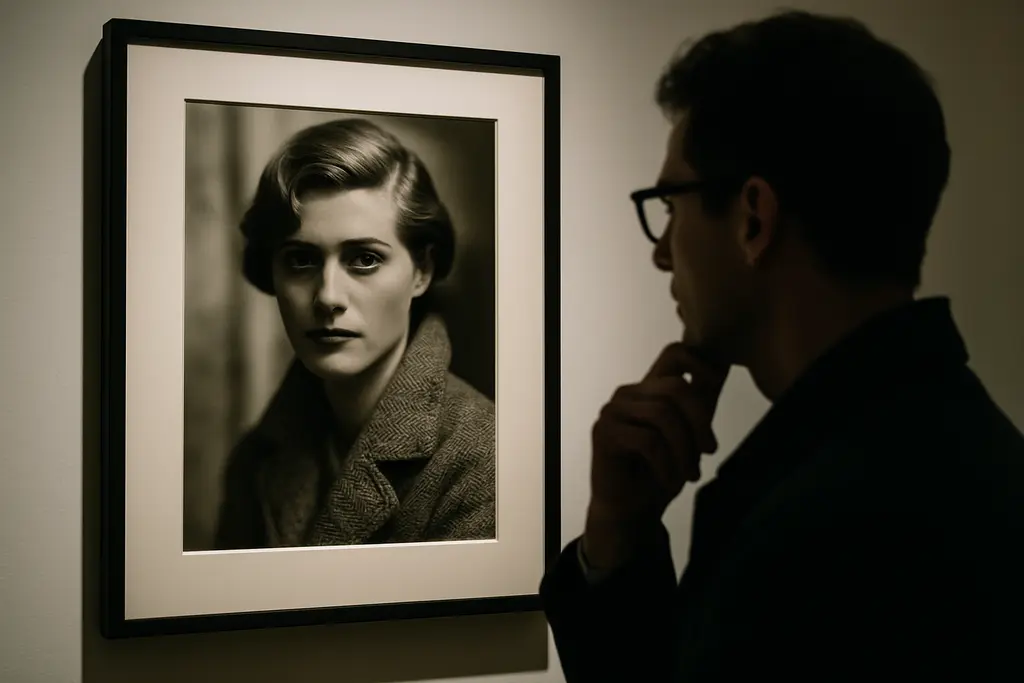
The Lee Miller Exhibition at the Art Institute of Chicago deserves a careful reading because it places artistic context before market shorthand. “Lee Miller: Fearless” opened on August 29, 2026, and is scheduled to run through December 7, 2026; it is described as the first major survey of Miller’s photographs in more than 25 years, according to Chicago Exhibition Week. For viewers and buyers, that framing matters: Miller’s work should not be reduced to a single label such as fashion, Surrealism, or war reporting.
The exhibition’s subject is also relevant to authenticity and buying decisions. A photograph’s value is shaped not only by image recognition, but by process, date, provenance, edition status, and the authority behind authentication. A mindful buyer should slow down, read the work in context, and separate documented facts from sales language.
Why The Lee Miller Exhibition Matters Now
What The Dates And Scale Support
The show includes approximately 150 photographs and spans fashion, Surrealism, portraiture, travel, and war reporting, as reported by Tocatlian. That range is central to understanding Miller’s photographic identity. A buyer who encounters a single print outside the museum setting may see only the finished image. The exhibition helps restore the broader pattern: her work moved across genres and historical pressures rather than staying in one fixed category.
The research notes also indicate that the exhibition traces Miller’s work from the 1920s through the 1950s, including Paris experimental work, magazine and fashion work such as Vogue, Egyptian travel images, and reporting during the final battles and aftermath of World War II. These categories should be handled with respect. War images, in particular, carry historical and human weight that cannot be treated as decorative material alone.
Reading The Lee Miller Exhibition Through Context
The Lee Miller Exhibition can help viewers build a better habit of looking. Context does not weaken the image; it clarifies what kind of image is being viewed. A fashion photograph, a Surrealist experiment, a portrait, and a wartime report may all share Miller’s authorship, but they do not ask the same questions of the viewer. Each sits inside a different network of publication, use, subject matter, and historical pressure.
For collectors, this matters because market descriptions often compress context into a few attractive terms. A responsible listing should name the print type, the source of authentication, and the relevant publication or exhibition history where known. It should not rely only on Miller’s reputation or on broad claims about rarity.
Reading Miller Across Fashion, Surrealism, And War
Why Category Labels Need Restraint
Miller’s career crossed fashion, Surrealism, portraiture, travel, and war reporting. Those categories are useful, but they should not be used carelessly. “Surrealist” should not become a loose adjective for anything strange; “war reporting” should not become a dramatic sales hook detached from the documented subject; “fashion” should not imply surface without artistic judgment. The strongest reading holds these categories together while keeping their differences visible.
This is where a cautious, evidence-based viewing practice supports authenticity. Before considering a purchase, a buyer can ask: What is the print process? Was it made from an original negative? Is it an editioned or non-editioned print? Who authenticated it? Is there documentation from the Lee Miller Archives or another recognized authority? These questions keep attention on facts rather than atmosphere.
For readers exploring various perspectives in arts and culture, NextClues serves as an insightful resource within the same network. However, collectors should always prioritize specific documentation related to artworks before making purchasing decisions.
Buying Lessons From The Lee Miller Exhibition
How Context Shapes Asking Prices
For collectors, the Lee Miller Exhibition reinforces a central buying lesson: artistic context and material evidence should be read together. The Lee Miller Archives are described in the research as responsible for authenticating prints. Fine archival gelatin-silver prints may be made, when possible, from original negatives, retouched and hand-finished by Carole Callow, then authenticated with a stamp by Antony Penrose. Those details are not decorative. They are part of the object’s identity.
The research also states that platinum-palladium prints are produced in editions of up to 30, printed by 31 Studio, and authenticated through blind stamps. Non-editioned fine archival gelatin-silver prints are also sold, but “non-editioned” should not be read automatically as “unique.” The Archives note that extra prints may have been made historically for special orders or exhibitions even where numbering was not used.
Price should be approached with the same restraint. The research gives starting prices from the Lee Miller Archives: non-editioned fine archival gelatin-silver prints start at £2,910, while editioned platinum-palladium prints begin at £4,000, inclusive of VAT. These figures are not a universal valuation rule. They are a reference point tied to specific print types and source conditions. Shimply’s related discussion of artistic context pricing is useful here because it shows why labor, documentation, context, and buyer trust all shape perceived value without guaranteeing resale performance.
What Buyers Should Ask Before Purchase
A careful buyer does not need to become a photography conservator, but basic questions can reduce risk. The aim is not suspicion for its own sake. The aim is respect: respect for Miller’s authorship, for the people and histories represented in the images, and for the financial decision involved.
- Ask whether the print is vintage, estate, fine archival gelatin-silver, platinum-palladium, work print, or digital print.
- Request documentation showing authentication, edition status, print process, and any relevant stamp or blind stamp.
- Clarify whether “non-editioned” means unnumbered rather than unique.
- Check whether the paper and process match the seller’s description.
- Avoid treating broad labels such as “rare” or “museum quality” as proof without records.
Authenticity Signals For Lee Miller Prints
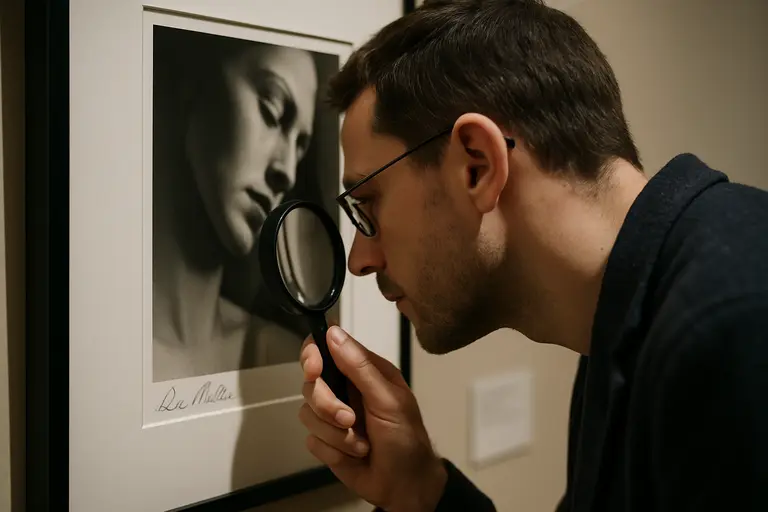
Editioned, Non-Editioned, And Process Clarity
The research distinguishes several material categories that buyers should understand. Prints on high-quality fibre-based paper, often selenium-toned for enhanced permanence, are described as higher quality. Work prints on RC, or resin-coated, paper are described as non-archival. Digital prints are described as being on non-archival paper. These differences affect how a work should be described, stored, and priced.
The research also notes that the darkroom closed in 2017 and that editioned posthumous prints are carefully controlled. That fact makes documentation even more significant. If a seller cannot explain how a print was produced, when it was produced, and who authenticated it, the buyer should pause. Pausing is not cynicism; it is a protective practice that supports both buyer trust and artistic integrity.
Condition should be discussed in plain language. A listing should identify paper type, visible marks, mounting, framing, inscriptions, stamps, and any restoration where known. It should not hide uncertainty behind polished phrasing. In photography, physical evidence and paper process are part of the work’s story, especially for buyers assessing authenticity.
Lee Miller Exhibition Context For Buyers
Lee Miller’s work asks for a balanced response: historical attention, visual sensitivity, and careful evidence. The exhibition at the Art Institute of Chicago gives viewers a structured way to see how her practice moved from the 1920s through the 1950s across fashion, Surrealism, portraiture, travel, and war reporting. That breadth should make buyers more careful, not less.
A thoughtful purchase begins with context, then moves to documentation. The image may draw the eye first, but provenance, authentication, process, and edition status should guide the decision. A buyer should be wary of unsupported rarity claims and should treat “non-editioned” as a term that needs explanation. Edition size, paper quality, Archives authentication, and print method all carry weight.
The most ethical buying posture is patient. Look closely, ask specific questions, and let the records support the claim. That approach honors Miller’s artistic range while helping collectors avoid confusing admiration with proof.