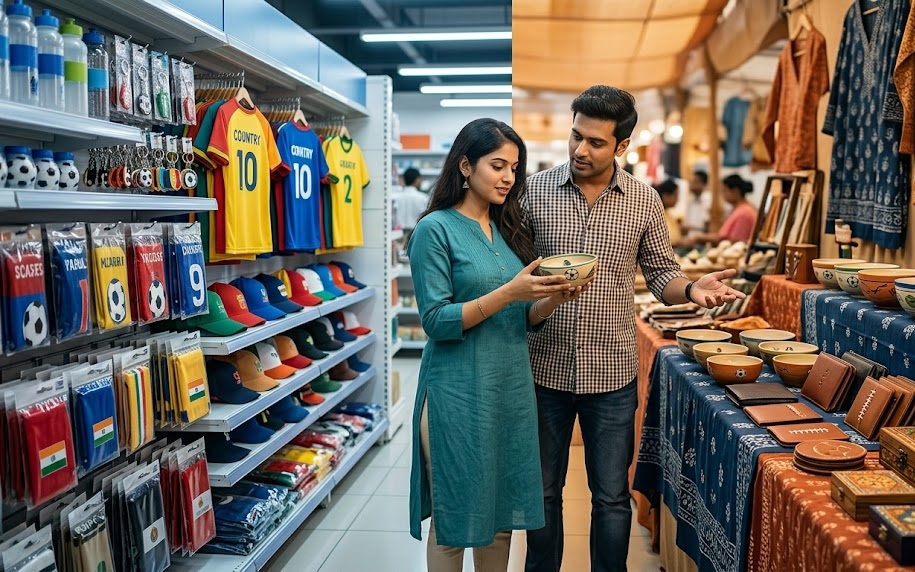
Indian brands are treating the 2026 FIFA World Cup as more than a football tournament. It has become a national attention window, even with India outside the 48-team field. Retailers, lifestyle labels, digital campaigns, sports shops, and fan-commerce sellers are trying to borrow energy from a global event that runs from June 11 to July 19, 2026, across the United States, Canada, and Mexico. The harder question is whether artisan-made merchandise can compete with mass-produced products without copying official marks, misusing tournament branding, or losing the handmade qualities that make it valuable. The answer depends less on scale and more on design intelligence, cultural timing, rights awareness, and whether Indian sellers can translate football excitement into original, locally meaningful objects.
Why Indian Brands See Football As A Cultural Attention Market
The 2026 World Cup is attractive to Indian brands for one central reason: it gathers attention at the same time across screens, cities, languages, and age groups. Football does not need India on the pitch to become a commercial moment in India. Indian audiences follow Brazil, Argentina, Portugal, England, France, Spain, Germany, and other teams through club football, social media clips, player fandom, family watch nights, and school or college sports culture.
That is why marketing outlets have been tracking how Indian brands are looking beyond the match itself. Exchange4media reported that Indian brands are investing in World Cup-related attention partly because football is the second-most followed sport in the country, giving marketers access to passionate audiences without the national-team pressure that cricket often creates. That dynamic makes the tournament a broad cultural stage rather than a narrow sports property, especially for fashion, food, beverages, consumer tech, youth lifestyle, and creator-commerce sellers using Indian World Cup brand marketing as a seasonal hook.
Mass brands have an obvious advantage in this environment. They can move quickly, buy media, manage inventory, run discounts, and flood marketplaces with team-colored apparel, accessories, posters, caps, phone cases, drinkware, and watch-party products. A large manufacturer can turn a trend into stock-keeping units within weeks.
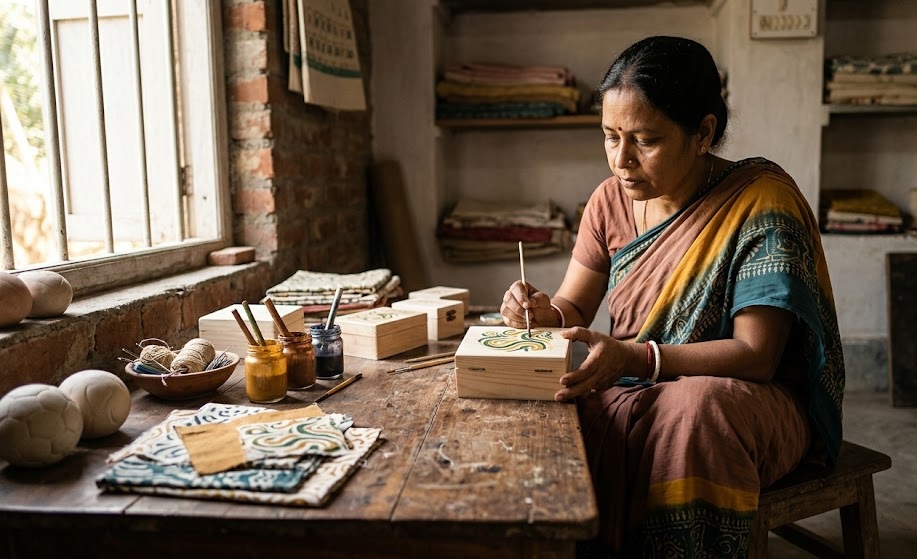
Artisan-made merchandise works differently. It cannot win by pretending to be cheaper, faster, or more official than licensed retail. Its opportunity is cultural specificity. A handmade football-themed product can connect local craft traditions, gifting habits, home decor, watch-party rituals, and regional identities in a way a mass-produced shirt rarely can.
Why Official Merchandise Sets The Commercial Baseline
The strongest competition for Indian artisan sellers is not only generic low-cost merchandise. It is officially licensed product. FIFA’s commercial ecosystem is designed around licensing, sponsorship, and protected brand assets. FIFA states that it protects logos, words, titles, symbols, and other identifiers connected with its tournaments, allowing use under licence through official channels. For any seller, that FIFA brand protection framework matters.
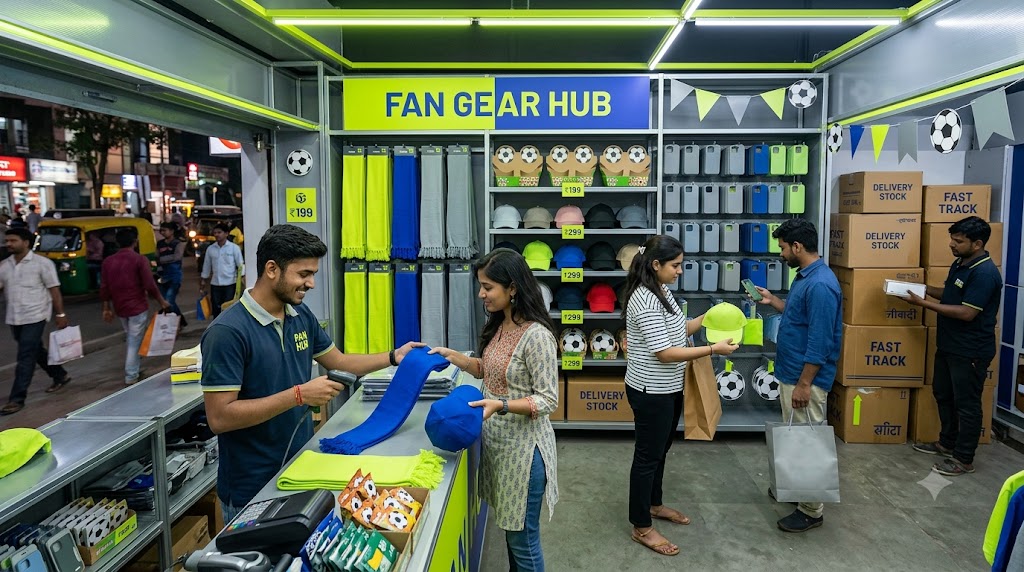
The 2026 tournament has also brought major retail infrastructure. Fanatics announced on December 4, 2025, that FIFA selected it as the official on-site retail licensee for the 2026 World Cup, covering stadium and FIFA Fan Festival retail experiences across 104 matches in 16 cities. That official World Cup retail partnership shows how large the licensed-merchandise machine has become.
For Indian brands and small makers, that creates a clear boundary. Products that use FIFA logos, tournament emblems, mascots, protected slogans, official team crests, or confusing commercial claims can move from fan creativity into infringement risk. A handmade seller may think a small-batch product is too modest to matter, but protected branding does not become safe simply because the production run is small.
This is where artisan-made merchandise needs sharper positioning. It should not pose as official tournament gear. It should not imply affiliation with FIFA, national federations, players, or host cities. It can still respond to the season through generic football imagery, color stories, match-night rituals, craft traditions, and original design language. The stronger handmade route is not “World Cup logo on a product.” It is “football-season object with a local craft identity.”
How Artisan-Made Merchandise Can Create A Different Kind Of Value
A mass product often sells through recognition. A handmade product sells through relationship. That distinction matters during a global event. Most fans already know where to find a replica jersey, scarf, cap, or mass-market watch-party kit. They may choose artisan-made products when they want something more personal: a gift, a keepsake, a decor object, a locally made accessory, or a conversation piece.
India’s craft economy gives sellers a real foundation for that approach. The Press Information Bureau noted in December 2025 that India is an important supplier of handicrafts and that global demand for authentic, sustainable handmade products gives the country a strong position to scale its handicraft economy. The same release pointed to artisans across Indian states as the backbone of the sector. That India handicrafts sector context is relevant to World Cup commerce because it separates handmade value from generic fan-product value.
A hand-block printed football-themed table runner for match night is not competing with a replica jersey. A hand-painted wooden keepsake box inspired by football colors is not competing with a licensed scarf. A stitched wall hanging using abstract ball movement, pitch geometry, or country-color palettes can live closer to home decor than sportswear. A ceramic snack bowl made for watch parties can speak to the event without touching official IP.
The handmade advantage is narrative. Buyers can understand who made the product, what material was used, what region or craft process influenced it, and how it fits into a personal viewing ritual. That storytelling does not need fake urgency. It needs honest craft language and clear design boundaries.
Where Mass Products Still Have The Upper Hand
Artisan-made merchandise cannot ignore the practical advantages of mass products. Large brands can offer lower prices, faster delivery, size consistency, easy returns, team-recognition, and broader availability. During a tournament, speed matters. Fans often buy close to match day, sometimes after a team advances, a player goes viral, or a color trend appears on social media.
That gives mass merchandise a strong edge in reactive commerce. If a team reaches a knockout round, factories and large retailers can push inventory tied to national colors, generic phrases, or licensed designs quickly. Artisan sellers face slower production cycles, material limits, and hand-finishing constraints. A maker cannot easily produce 2,000 custom objects overnight without changing the nature of the work.
The quality-control challenge is also real. Handmade buyers may accept small variations, but they still expect clean finishing, accurate sizing, safe materials, durable packaging, and timely shipping. World Cup attention can bring new customers, but it can also expose weak operations. A seller who takes too many orders may damage trust before the tournament ends.
| Product Path | Main Advantage | Main Risk | Best Use Case |
|---|---|---|---|
| Licensed Mass Merchandise | Official recognition and scale | Higher price or limited availability | Jerseys, official accessories, collectibles |
| Generic Mass Products | Low cost and fast inventory | Low originality and quality variation | Watch-party basics, casual apparel |
| Artisan-Made Products | Story, craft, originality, gifting value | Slower production and IP mistakes | Decor, keepsakes, handmade accessories |
| Custom Fan Goods | Personalization | Rights confusion if using protected marks | Names, dates, generic football memories |
The table shows why artisan products should not fight mass retail on the same terms. The better strategy is category separation. Handmade sellers win when they create objects that mass retailers are not built to produce.
Why Rights-Safe Design Is The Real Test For Small Sellers
The World Cup gives small sellers a tempting visual vocabulary: national flags, famous players, team colors, trophy shapes, tournament slogans, host-city references, and official imagery. Some of those references are safer than others. National colors and general football imagery can often be used in original ways, but official tournament marks, national federation badges, team crests, player likenesses, mascot designs, and protected slogans carry risk.
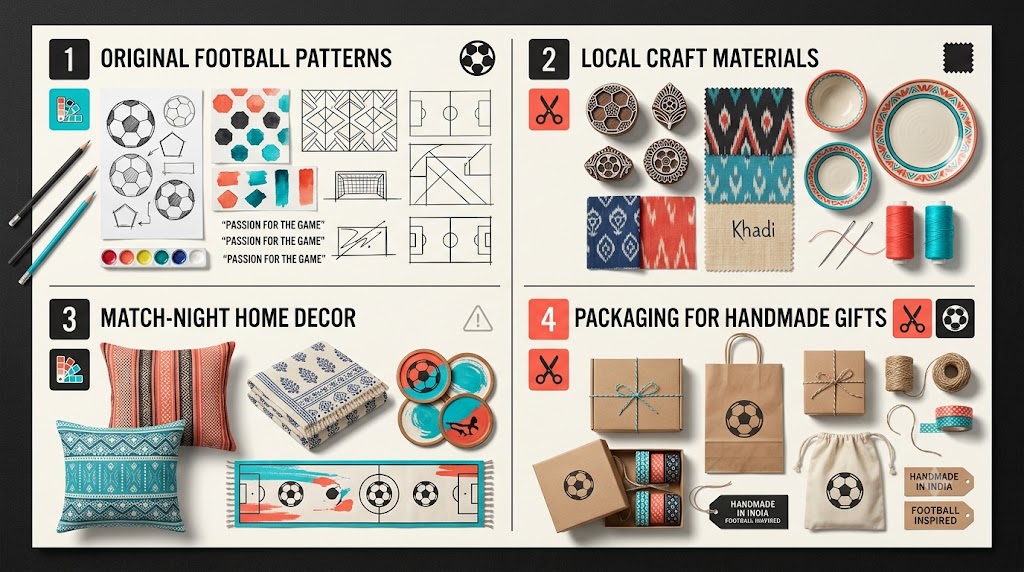
FIFA’s own IP guidance says FIFA holds rights related to the FIFA World Cup 26, including intellectual property, media, marketing, licensing, ticketing, and other commercial rights. A small seller does not need to become a lawyer to understand the practical takeaway: avoid designs that make buyers think the product is official, licensed, endorsed, or connected to FIFA. The safest creative lane is original football-season design rather than tournament-branded merchandise.
This matters for Indian sellers using platforms such as Instagram, Etsy-style marketplaces, local craft fairs, WhatsApp catalogs, or independent Shopify stores. Search demand may reward terms connected to the World Cup, but product titles and images should avoid misleading commercial association. A seller can describe a product as football-inspired, match-night decor, soccer fan gift, or country-color handmade accessory without presenting it as official World Cup merchandise.
KayGranger’s earlier coverage of young performers going viral makes a useful cultural comparison. Viral attention can help creators reach new audiences, but the lasting value comes from skill, discipline, and a distinct creative voice. The same applies to handmade football merchandise. Trend timing may bring the first click, yet the craft identity decides whether the buyer remembers the seller.
What Indian Artisan Brands Can Learn From Collectible Culture
The recent Bhubaneswar interest in football memorabilia shows that Indian fans already understand objects as cultural memory. A fan does not keep a ticket stub, stamp, jersey, postcard, or newspaper clipping only for utility. The object becomes proof of connection. Artisan-made merchandise can work in a similar way if it creates keepsakes rather than disposable trend items.
That does not mean every handmade product must look nostalgic. Modern artisan merchandise can be contemporary, minimal, playful, or home-design focused. A football-season lamp, embroidered cushion, ceramic tray, match-night coaster set, illustrated wall card, handwoven scarf in original color blocking, or small desk object can fit a modern Indian home without becoming fake official merchandise.
The key is to design around rituals. What do fans do during the tournament? They stay up late, host friends, decorate rooms, wear colors, make snacks, record reactions, gift objects, and preserve memories. Handmade sellers should study those behaviors instead of only copying what mass retailers sell.
A product linked to a ritual has a longer life. A handmade tray used during match nights can remain useful after the final. A stitched wall piece can become room decor. A hand-painted box can store clippings or collectible cards. A personalized but rights-safe football journal can become a memory archive for fans tracking matches, favorite goals, and family viewing moments.
Can Artisan-Made Merchandise Compete With Mass Products?
Artisan-made merchandise can compete, but not by acting like mass merchandise. It can compete through originality, material quality, cultural intimacy, and trust. It can serve buyers who want gifts with a human story, home objects with tournament-season meaning, or football-inspired designs that feel local rather than factory-standard.
Mass products will dominate volume. Official retail will dominate authenticity. Counterfeit markets will chase low prices and risky shortcuts. Artisan brands need a different promise: made with care, rooted in craft, clear about unofficial status, and designed around the fan’s lived experience.
For Indian brands, the opportunity is larger than one tournament. The 2026 World Cup is a test of how sport, craft, social commerce, and youth culture can meet without flattening handmade work into generic merchandise. Sellers who treat the event as a design prompt rather than a branding shortcut have the better chance of building something durable.
The most competitive artisan-made products will not scream for attention with borrowed logos. They will quietly turn match nights into memory: a handmade object on the table, a crafted piece on the wall, a gift that marks a favorite tournament, and a design that feels Indian without pretending to be official. That is where artisan merchandise has room to win — not as a substitute for licensed gear, but as a more personal layer of football culture.