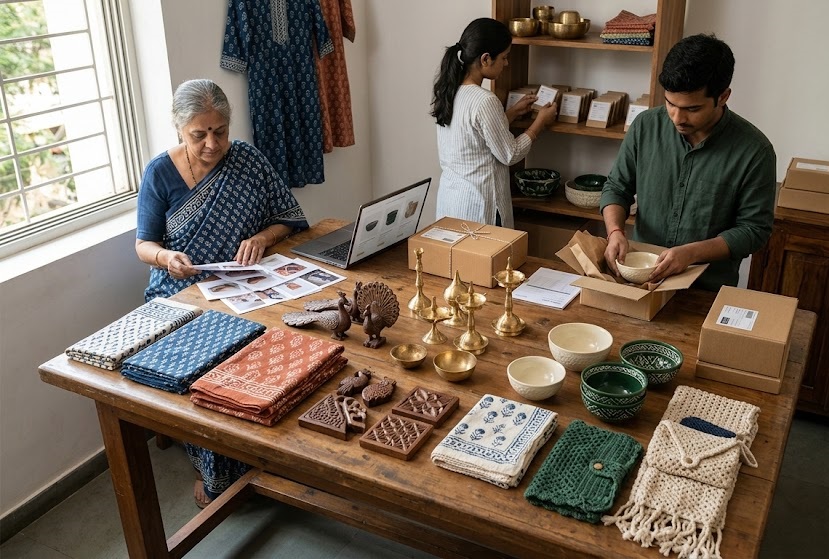
Indiahandmade’s latest digital push is not only a government marketplace story. It is a signal about how handmade commerce is changing in India: buyers want direct access, sellers need stronger visibility, and trust is becoming the difference between a product that gets ignored and a product that earns attention. The July 7, 2026 update from IBEF, citing PIB, says Indiahandmade was developed by Digital India Corporation under the Ministry of Textiles, launched in 2023, and is expanding market access for India’s handloom and handicraft sector by connecting artisans and weavers directly with buyers. It also says India has an estimated 64.66 lakh handloom and handicraft artisans, with women accounting for 71% of handloom weavers and 64% of the total artisan workforce as of August 2025.
For Shimply readers, the story matters because Indiahandmade is not only about one platform. It shows what online craft sellers everywhere need to understand: buyers are no longer satisfied with pretty product photos alone. They want authentic sellers, origin clarity, safe payments, reliable delivery, easy returns, and enough product detail to feel confident before purchasing handmade goods online.
Why Indiahandmade Matters For Online Craft Sellers
Indiahandmade is built around a direct-to-buyer promise. The official marketplace describes itself as an initiative of the Ministry of Textiles, Government of India, offering Indian handloom and handicraft items directly from Indian weavers and artisans. Its homepage also highlights “Authentic Sellers,” “Free Shipping,” “Easy Returns,” and “Safe & Secure Payment,” which is important because those are not decorative features. They answer the buyer’s core anxieties about handmade shopping online.
A buyer looking at a handloom saree, bamboo basket, brass decor object, hand-painted textile, or embroidered accessory needs confidence that the seller is real, the product is represented honestly, and the transaction is protected. Indiahandmade’s official handmade marketplace puts those trust signals in front of the buyer early.
That is the first lesson for smaller sellers: trust has to be visible before the buyer scrolls too far. A handmade seller may have years of skill, but if the listing has dark photos, vague descriptions, unclear delivery terms, and no seller identity, the buyer has to take too much risk. Good marketplace trust turns craft skill into buyer confidence.
Digital India’s own initiative page says IndiaHandmade.com was developed by Digital India Corporation under the Ministry of Textiles and is meant to let artisans and weavers sell directly while eliminating intermediaries and supporting fair compensation. That India Handmade digital initiative frame gives sellers a practical reminder: digital selling is not only about uploading inventory. It is about reducing confusion between maker and buyer.
What 64.66 Lakh Artisans Reveal About Competition
The number 64.66 lakh is powerful because it shows the scale of India’s handmade sector. PIB’s December 2025 handicraft-sector update said India had an estimated 64.66 lakh handloom and handicraft artisans as of August 2025, with significant shares in states such as Uttar Pradesh, Rajasthan, Assam, Odisha, West Bengal, and Tamil Nadu. It also said women accounted for 71% of handloom weavers and 64% of total artisans.
For sellers, that scale cuts both ways. It proves that India’s handmade economy has depth, but it also means online competition is intense. Thousands of sellers may offer textiles, decor, jewellery, baskets, pottery, paintings, wooden products, or accessories. The seller who wins is not always the one with the oldest craft tradition. It is often the one who explains the product most clearly.
A buyer may search “handmade cushion cover,” “GI-tagged saree,” “wooden decor gift,” “bamboo home storage,” or “Indian craft gift set.” In each search, the seller has to prove why their item deserves trust. That proof comes through product naming, region, material, measurements, care instructions, packaging, shipping expectations, and real photos.
This is where handmade sellers can learn from Indiahandmade’s public-facing structure. Its marketplace categories include home decor, cushion covers, bedsheets, floor coverings, ethnic footwear, furniture, musical instruments, toys and games, women’s accessories, and bags. That range shows how handmade products are being organized around buyer use cases, not only craft categories.
A seller should ask: does my product page tell buyers how this item fits into their life? A table runner is not only handprinted fabric. It can be a dining-table styling piece, housewarming gift, festive hosting product, or international craft parcel. A bamboo basket is not only bamboo craft. It can be storage decor, kitchen organization, bathroom styling, or gift packaging.
Why Marketplace Trust Starts With Seller Identity
Indiahandmade’s homepage highlights sellers such as Santarms, Dastkar Craft, and Villages Craft. Santarms is described as offering handcrafted wooden decor, scented candles, terracotta diyas, marble deity idols, and handloom-printed sarees. Dastkar Craft is described as working with cane and bamboo products while empowering 500+ artisans. Villages Craft is presented through handloom products such as cotton towels, gamchas, and bed sheets.
The seller names matter because they give the buyer a point of trust. A nameless product listing feels interchangeable. A seller profile gives the buyer context: who is making or curating the product, what materials they work with, which category they specialize in, and whether the shop has a recognizable product direction.
For smaller sellers, the lesson is simple. A good seller profile should not be a generic biography. It should answer practical buyer questions. What does the seller make? Where are the products made? Which materials are used most often? Are the products handmade, handwoven, hand-finished, or artisan-curated? What makes the seller reliable?
A seller profile also helps with repeat buying. Buyers who trust one product may return for matching items if the shop identity is clear. This matters for handmade gift sellers because buyers often shop in cycles: Diwali, weddings, housewarmings, birthdays, corporate gifting, festive hosting, and international family parcels.
Shimply’s guide to Indian craft gift sets already shows why trust and practicality matter together. Buyers do not only want cultural value. They want products that can be packed, shipped, gifted, and understood by the recipient.
What GI And ODOP Visibility Teach Sellers
The July 2026 Indiahandmade update says the platform showcases handmade products including Geographical Indication-tagged and One District One Product items. That is important because GI and ODOP language can help buyers search by origin and craft identity, but only when sellers use those terms accurately.
A GI-tagged product is not just a product with a traditional look. It is connected to a recognized geographical origin and qualities or reputation tied to that place. ODOP, by contrast, helps promote district-level product identity and local economic specialization. Both signals can help buyers discover regional crafts, but careless use can damage trust.
A seller should never use GI language simply because it sounds premium. If a product is genuinely connected to a GI craft, the listing should explain the region, material, process, and maker context. If a product is inspired by a regional style but not made under that GI tradition, the wording should be honest.
This distinction matters in online search. A buyer searching “Banarasi silk,” “Chanderi silk,” “Pashmina shawl,” “Dokra product,” “Ikat,” or “Aipan art” is often looking for a specific craft identity. Indiahandmade’s July 2026 update identifies regional crafts on the platform including Banarasi silk, Chanderi silk, Tussar silk, Ikat, Tangail sarees, Aipan art, Pashmina shawls, and Dokra products.
Those names carry buyer expectations. Sellers should match those expectations with better product pages: close-up photos, material notes, region details, dimensions, care instructions, and realistic pricing. A broad phrase like “traditional Indian handmade item” is weaker than a precise product description that tells the buyer what the item is and why the origin matters.
How Sellers Can Build Trust Into Product Pages
Marketplace trust is built in layers. A buyer first sees the image. Then they scan the title. Then they check price, delivery, seller identity, and product detail. If any of those pieces feel weak, the buyer may leave.
| Trust Signal | What Buyers Need | Seller Action |
|---|---|---|
| Clear Product Title | What the item is and where it fits | Use product type, material, craft name, and use case |
| Real Photos | Proof of texture, scale, and finish | Add close-ups, scale images, and packaging photos |
| Seller Identity | Confidence that the maker or shop is real | Explain craft focus, region, and production method |
| Material Details | Safety, care, durability, and value | List fiber, metal, wood, ceramic, bamboo, or finish |
| Shipping Clarity | Delivery confidence | Show packaging method and realistic timelines |
| Authenticity Notes | Origin and craft accuracy | Use GI, ODOP, or regional terms only when accurate |
This table matters because sellers often treat trust as one feature, such as reviews. In handmade commerce, trust is the full experience. A buyer should feel that the seller understands the product, respects the craft, and can deliver what is promised.
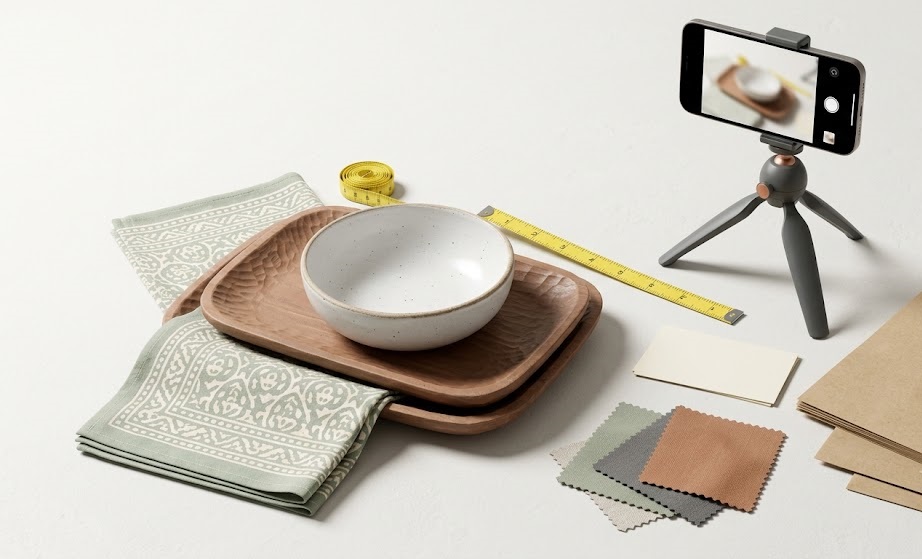
Product photography is especially important. A handwoven textile should show weave detail, full size, fold, drape, and care. A ceramic item should show inside, outside, base, scale, and packaging. A bamboo product should show structure, finishing, weight, and use. A jewellery product should show fastening, back view, dimensions, and skin-safe material notes where relevant.
Good photos do not need to look artificial. They need to be clear, honest, and useful. Handmade variation should be shown, not hidden. A buyer who understands natural variation is less likely to feel disappointed when the item arrives.
Why Direct Market Access Changes Seller Responsibility
Indiahandmade’s digital push emphasizes direct access between artisans and buyers. That can improve income opportunities by reducing dependence on intermediaries, but it also means sellers carry more responsibility for communication. When the seller is closer to the buyer, the seller has to explain the product better.
A wholesaler or retailer may once have handled product naming, cataloging, photography, shipping, and customer service. Online sellers now need to learn those skills or collaborate with people who can provide them. The craft is still central, but the presentation layer has become part of the product.
Digital India Corporation’s IndiaHandmade page says the platform’s motive is to provide a place for weavers and artisans to sell handloom and handicraft items online, support financial and social empowerment, promote their skills, and eliminate intermediaries. That Digital India Corporation IndiaHandmade page also says the portal aims to bring 60+ lakh handloom weavers and handicraft artisans onto the platform in the future.
That scale requires seller readiness. A buyer may never meet the artisan in person. The listing must do the explaining. The packaging must protect the product. The customer service must answer doubts. The shop page must make the seller feel credible.
For small sellers, this does not mean copying large e-commerce brands. It means building a handmade version of professionalism: warm product stories, accurate measurements, clear photos, careful packing, honest timelines, and respectful craft language.
What Women Artisans’ Participation Means For Marketplace Trust
The women-artisan data deserves more than a passing mention. PIB’s sector update says women made up 71% of handloom weavers and 64% of total artisans as of August 2025. That makes handmade commerce a major women’s livelihood story, especially in rural and semi-urban communities.
For online sellers, this creates an opportunity to tell livelihood stories carefully. Buyer trust can grow when sellers explain who benefits from the purchase, but these stories should never be sentimental filler. A product page should not reduce women artisans to vague “empowerment” language without details. It should be specific: women-led cooperative, home-based weaving group, regional artisan collective, family workshop, self-help group, or trained producer organization, only when those descriptions are accurate.
Buyers are increasingly sensitive to unsupported impact claims. A seller who says “supports women artisans” should explain how. Does the seller buy directly? Does the artisan group produce the item? Is the seller a cooperative? Are women involved in weaving, embroidery, finishing, packing, or business ownership? Specificity builds trust.
For handmade gift buyers, this can add meaning without turning the product into charity. A well-made handloom towel, cushion cover, shawl, basket, or table runner should stand on quality first. Livelihood context adds depth when it is factual and respectful.
How Online Sellers Should Respond To Indiahandmade’s Push
Indiahandmade’s growth should push independent sellers to audit their own online presence. The question is not whether every seller should join one platform. The question is whether every seller is building the trust signals that modern buyers now expect.
Start with product titles. Remove vague titles such as “Beautiful Handmade Traditional Item.” Replace them with specific titles: “Handwoven Cotton Gamcha,” “Cane And Bamboo Storage Basket,” “Handprinted Cotton Cushion Cover,” or “Dokra-Inspired Brass Decor Object” if the product is only inspired and not a certified Dokra item.
Then review descriptions. Add dimensions, material, care, origin, use case, handmade variation, packaging, and delivery notes. Buyers should not need to message for basic facts.
Review images next. Add one clean hero image, one scale image, one material close-up, one packaging photo, and one lifestyle use photo. For giftable products, show how the item arrives.
Review shop identity. Add a seller story that explains craft focus, region, production method, and values without unsupported claims. Do not promise official authenticity unless it can be verified. Do not use GI, ODOP, award, government, or cooperative wording unless it is accurate.
Review policies. Easy returns, secure payments, free shipping, purchase protection, and assured quality are prominent on Indiahandmade because buyers care about risk. Independent sellers should make their own return, exchange, damage, customization, and shipping policies easy to find.
Why Marketplace Trust Is The New Craft Advantage
Indiahandmade’s digital push shows that the next stage of handmade commerce is not only about access. It is about trust at scale. Bringing millions of artisans into digital commerce can widen opportunity, but sellers still have to earn buyer confidence one listing at a time.
For handmade sellers, the message is practical. Craft skill gets the product made. Marketplace trust gets the product bought. The two now have to work together.
India’s 64.66 lakh handloom and handicraft artisans represent a huge creative economy. That scale can strengthen handmade commerce if sellers become more precise, more transparent, and more buyer-focused. The strongest shops will not be the ones shouting “authentic” the loudest. They will be the ones showing authenticity clearly through origin, product detail, photography, packaging, policies, and seller identity.
Indiahandmade is a reminder that digital craft selling is no longer a side experiment. It is becoming a serious bridge between artisans and buyers. Sellers who understand that bridge can use it well: not by making handmade products look mass-produced, but by making them easier to trust, easier to compare, and easier to buy.