
India’s Union Budget 2026 has placed renewed emphasis on the textile and handicrafts sector, signaling a strategic shift toward cluster-based growth, export readiness, and artisan-led production ecosystems. With increased allocation toward infrastructure, skill development, and sustainability, the government is actively repositioning traditional craft clusters as globally competitive production hubs.
For buyers, this is more than policy news—it directly influences product availability, pricing trends, and authenticity assurance. As investment flows into textile regions across India, understanding which clusters are evolving—and how—can help buyers make more informed purchasing decisions.
What Budget 2026 Means For Textile And Craft Clusters
The 2026 budget builds on earlier initiatives like PM MITRA (Mega Integrated Textile Region and Apparel Parks), ODOP, and GI expansion programs. The focus now is on scaling production while preserving traditional techniques.
Key policy directions include:
- Expansion of textile parks under the PM MITRA scheme
- Increased funding for handloom and handicraft clusters
- Skill development programs targeting artisan communities
- Support for sustainable production and natural dye usage
According to policy updates from the Ministry of Textiles, these initiatives aim to boost exports while strengthening domestic craft ecosystems, ensuring that traditional artisans remain competitive in global markets.
How Textile Parks Are Changing Regional Production
One of the most impactful developments is the rollout of Mega Textile Parks, designed to integrate production, processing, and logistics within a single ecosystem.
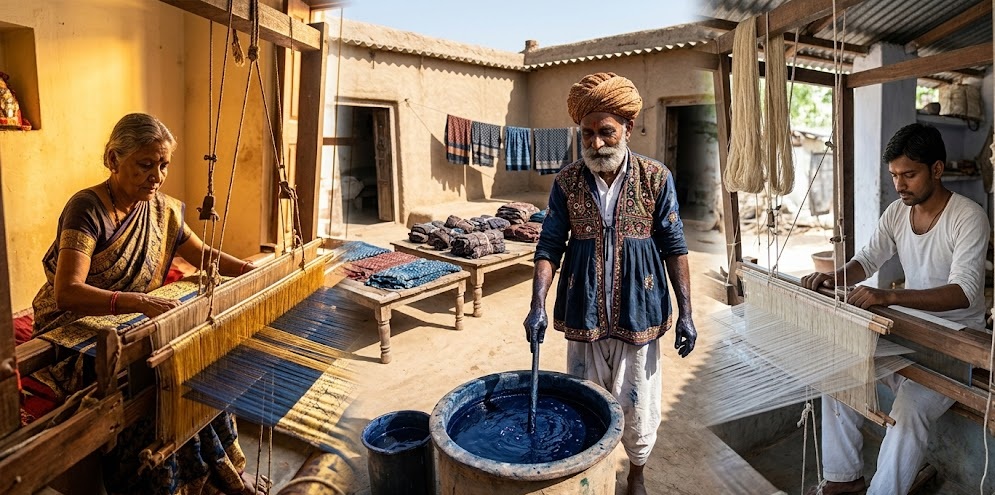
States like Tamil Nadu, Gujarat, Uttar Pradesh, and Maharashtra are among the primary beneficiaries of these investments. These parks are expected to:
- Reduce production costs through shared infrastructure
- Improve quality control and standardization
- Enable faster export processing
For buyers, this translates into more consistent product quality and improved supply reliability, particularly for high-demand categories like handloom textiles and fabric-based decor.
Which Craft Clusters Are Seeing The Biggest Impact
While industrial textiles benefit from scale, traditional craft clusters are also receiving targeted support to modernize without losing authenticity.
| Cluster | State | Key Craft | Budget Impact |
|---|---|---|---|
| Varanasi | Uttar Pradesh | Banarasi Silk | Export promotion + infrastructure |
| Kutch | Gujarat | Ajrakh, Bandhani | Sustainability and dye support |
| Chanderi | Madhya Pradesh | Chanderi Silk | Design and branding initiatives |
| Pochampally | Telangana | Ikat | GI promotion and global visibility |
| Bhuj | Gujarat | Hand embroidery | Artisan training and digital access |
These clusters are not only being preserved—they are being repositioned as high-value production centers capable of meeting international demand.
Why Buyers Are Seeing More Consistency In Quality
Historically, one of the challenges with handcrafted textiles was variation in quality across sellers and regions. Budget 2026 investments aim to address this by improving:
- Access to better raw materials
- Standardized dyeing and finishing processes
- Training in modern quality expectations
This does not eliminate the uniqueness of handmade products—but it ensures a baseline level of consistency that international buyers increasingly expect.
For example, textiles like Ajrakh are now being produced with improved process control while still retaining their traditional identity, making them more reliable for global markets.
Sustainability Is Now A Core Investment Area
A notable aspect of Budget 2026 is its focus on eco-friendly textile production. Government programs are actively encouraging:
- Natural dye usage
- Water-efficient processing
- Reduced chemical dependency
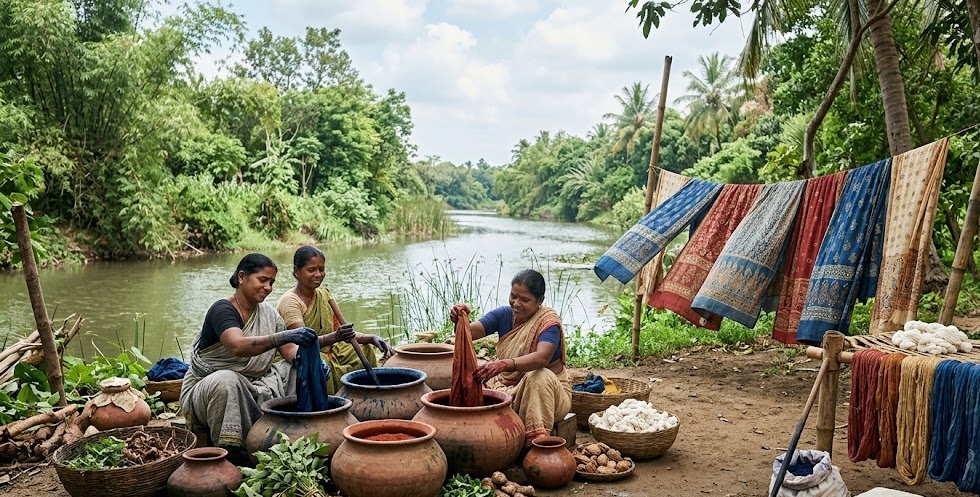
This aligns with global demand for sustainable products and strengthens India’s position in the ethical textile market.
For buyers, this means increased availability of products that are both authentic and environmentally responsible, particularly in categories like handloom fabrics and naturally dyed textiles.
Pricing Trends As Clusters Scale Up
Government investment typically leads to a two-phase pricing shift:
| Phase | Market Effect | Buyer Impact |
|---|---|---|
| Early Investment | Increased supply | Stable or slightly lower prices |
| Global Demand Growth | Export expansion | Gradual price increase |
In the short term, buyers may benefit from better pricing due to improved supply chains. Over time, as global demand rises, prices are expected to increase—especially for GI-tagged and export-ready products.
This creates a window for buyers to access high-quality crafts before they reach premium pricing tiers.
How Digital Integration Is Strengthening Craft Clusters
Budget 2026 also emphasizes digital infrastructure, enabling artisans to connect directly with marketplaces and buyers.

This includes:
- E-commerce onboarding programs
- Digital cataloging of craft products
- Online promotion of GI-tagged items
As a result, buyers can now access cluster-based products with greater transparency. Understanding authentic Indian crafts online becomes easier when digital listings are supported by verified cluster information.
Challenges That Still Remain
Despite the progress, several challenges persist:
- Risk of over-commercialization diluting authenticity
- Continued presence of imitation products
- Uneven adoption of new technologies across clusters
These factors highlight the importance of buyer awareness, even as infrastructure improves.
Why Institutional Support Matters For Buyers
Institutional backing adds a layer of trust to the evolving craft ecosystem. Organizations like the
Ministry of Textiles India provide policy direction, cluster data, and program updates that help buyers understand where investments are being made.
This allows buyers to align their purchases with emerging craft hubs that are likely to grow in value and availability.
What This Shift Means For Craft Buyers
The textile push in Budget 2026 is reshaping the craft landscape in a way that directly benefits informed buyers.
Instead of navigating fragmented markets, buyers now have access to:
- Better-documented craft clusters
- Improved quality consistency
- Stronger links between region and product
At the same time, authenticity remains central. Government investment does not replace the need for careful evaluation—it enhances it.
Making Smarter Buying Decisions In A Changing Market
As India’s textile ecosystem evolves, buyers should focus on:
- Products tied to recognized clusters
- Crafts benefiting from GI and government support
- Sellers who provide transparent sourcing information
This approach ensures that purchases reflect not just current trends, but also long-term value rooted in heritage, authenticity, and evolving market demand.