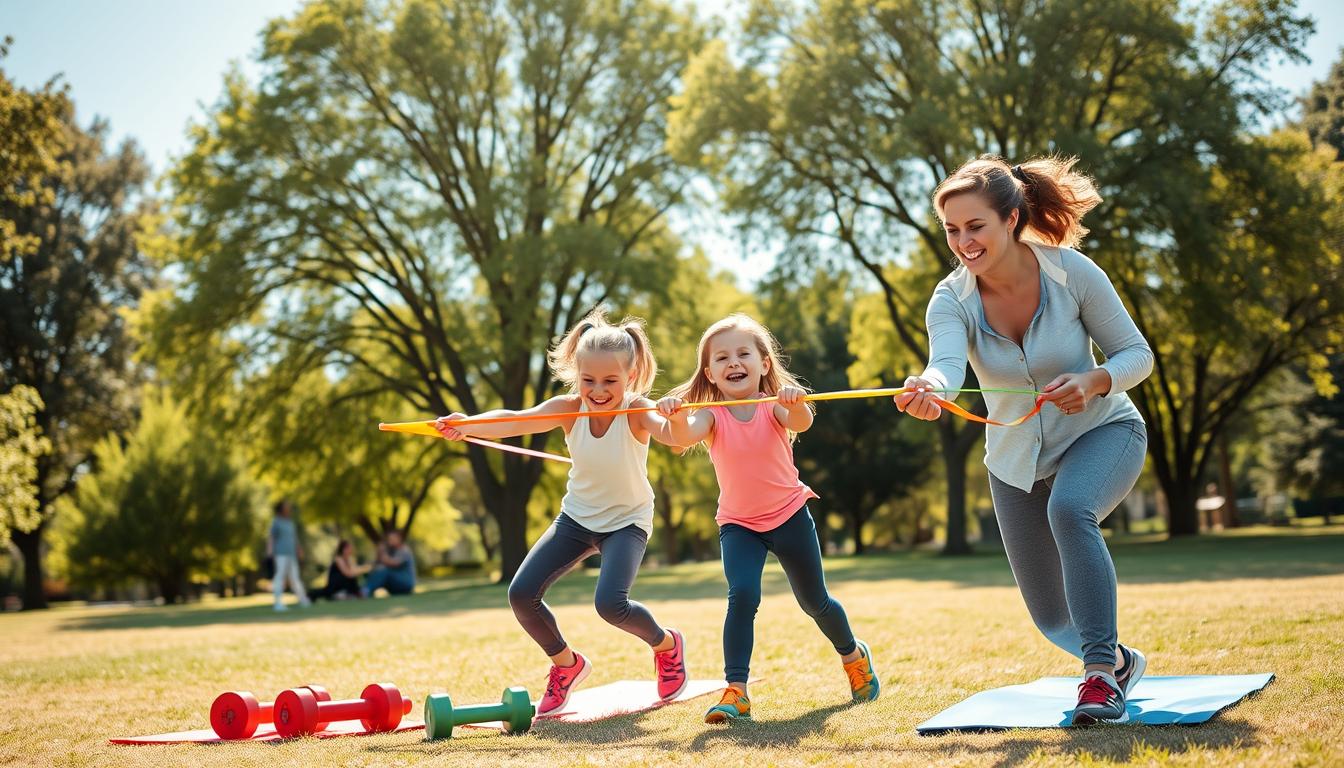
The modern family schedule is like an extreme sport. The medals are rare, but the carpool lanes are always full. Our well-being often gets left behind in the chaos of screens and commitments.
What if moving more was the main event, not just another task? The American Heart Association tells us kids need 60 minutes of activity daily, and adults need 30. It’s not hard to reach these goals together.
This 30-day challenge is different. It’s about building shared sweat equity, not just following orders. It’s a month-long journey where the real prize is more than just a healthier heart rate.
The real reward is the laughter and memories made during activities. It’s the shift from “I have to exercise” to “we get to do this together.” We’re not just talking about push-ups. We’re talking about changing your family’s culture.
Benefits of Family Fitness Goals
Think of family fitness goals as a way to improve your family’s health. It’s not just about doing exercises. It’s about creating a stronger bond through shared efforts.
Starting a fitness challenge with your kids changes how you interact. It turns you from a strict parent to a team player. You work together, making the experience more enjoyable.
This approach makes you accountable in a good way. It feels like you’re part of a team, not alone. This feeling is very positive.
One of the best things is teaching your kids to love exercise. By making it fun, you help them see it as a positive activity. This way, they won’t dread going to the gym later.
Studies show that kids enjoy exercise more when it’s fun. If they remember having fun while exercising, they’ll keep it up. You’re teaching them that staying active is enjoyable, not a chore.
| Aspect | Solo Fitness | Family Fitness Challenge | The Core Advantage |
|---|---|---|---|
| Motivation Engine | Self-discipline & willpower | Mutual encouragement & team spirit | Creates positive, sustainable peer pressure that’s harder to ignore. |
| Mindset Forged | Individual achievement & personal bests | Shared experience & collective wins | Builds connection that transcends mere competition. |
| Sustainability Factor | Often fades when motivation dips | Built-in social accountability | It’s psychologically harder to skip when others are counting on you. |
| Long-term Impact | Personal habit formation | Family culture creation | Shapes children’s lifelong relationship with movement from a place of joy. |
Regular family exercise routines do something amazing. They turn your family into active creators, not just passive consumers. You build health and create lasting memories.
You bond through shared challenges, even the fun ones. It’s not about making athletes. It’s about strengthening your family’s bond through wellness. The real benefit is a stronger, more united family.
Setting Realistic Family Challenges
Ambition might fuel Silicon Valley unicorns, but it’s the surest way to torpedo your family’s wellness goals before they even leave port. We’ve all seen the crash-and-burn spectacle: January’s Spartan regimen collapsing into February’s couch-bound surrender. The analytical truth? Overreach is the enemy of execution, whether you’re managing a corporate merger or herding your household toward healthier fitness activities families can actually sustain.
Start small. This isn’t a revolutionary concept, yet we ignore it like bad parenting advice from a stranger. Focus on one healthy habit—just one. Trying to overhaul sleep, nutrition, and exercise simultaneously is like attempting to fix the economy, healthcare, and education in a single bill. It won’t pass committee, and the backlash will be spectacular.
Take the agile methodology approach: develop a minimum viable product. Is the goal more movement? A 15-minute “family recess” with a silly YouTube dance video counts. Healthier eating? One new recipe cooked together each week becomes an event, not a chore. The data doesn’t lie: success begets success. A week of consistent after-dinner walks builds more momentum than a draconian month-long regimen that collapses under its own weight by Day 10.
These challenges should be fun, not overwhelming. Stress is the silent killer of good intentions. If the activity feels like a punishment, you’ve already lost. Let the kids veto the burpees. Let them choose the hiking trail. This is about co-creation, not imposition. The most engaging fitness activities families enjoy are those they have a hand in designing.
Think of it as building a sustainable family fitness routine instead of a temporary fitness coup. What works for a single, motivated adult often fails spectacularly when applied to a group with varying ages, interests, and tolerance for discomfort. The strategic move? Identify the lowest common denominator of enjoyment and build from there.
Remember: a challenge that feels like play will be repeated. One that feels like work will be abandoned. Your mission isn’t to create Olympians overnight. It’s to weave movement into the fabric of your family’s life so subtly they barely notice it’s happening. That’s how lasting change is built—one realistic, enjoyable step at a time.
Week 1: Building Healthy Habits
The first week isn’t about being tough. It’s about starting a new way of life. Think of it as a software update you needed.
Your goal is to find a rhythm. Make a new routine that feels like a gentle change, not a hard workout. Aim for consistency, not perfection.
Fun fitness challenges are your best tool. They should be fun, not a chore. The 10-Minute Recess Workout series is great for this.
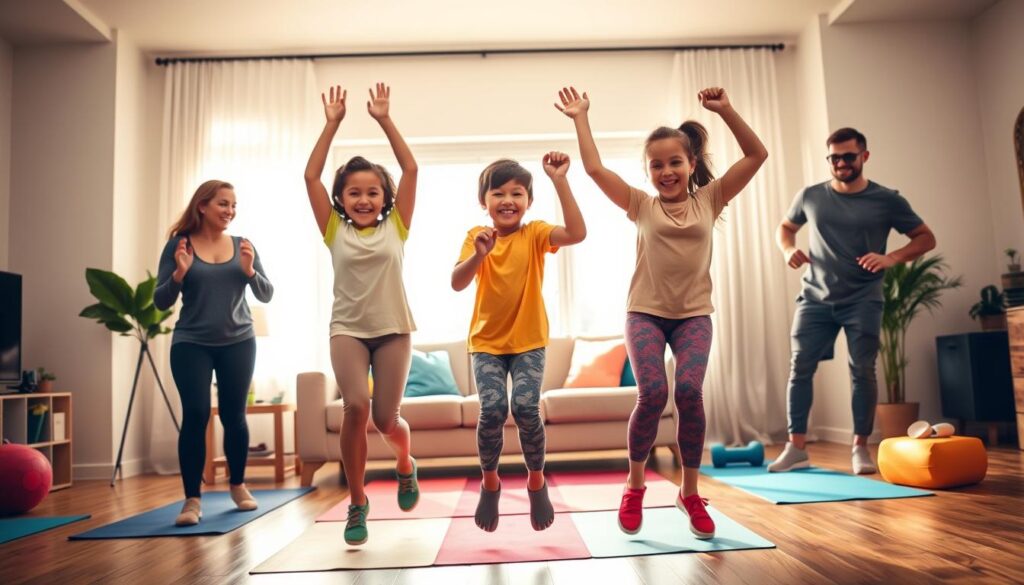
These workouts are short and don’t need any equipment. They’re good for kids and adults alike. They use bodyweight exercises that feel like playground games.
Your first family workout challenge could be simple. Try to do a 10-minute routine together, without complaining, for five days. It’s not about the sweat. It’s about showing up.
At the same time, start a non-physical challenge. We did a “Hydration Challenge” where we tracked water intake with stickers. It was fun to see who could drink the most water.
Try the “Kitchen Takeover” too. Let the kids plan and prepare a healthy meal one night. It makes mealtime easier and healthier.
I remember when my child chose cucumber slices over chips. It was because they helped make the yogurt-dill dip. This small win showed a big change. They started to like the food they made.
Success in week one is easy to measure. Did you exercise together most days? Did you drink more water? Did you cook a meal together? Yes? Then you’ve already won. You’ve set the stage for more changes.
This phase shows that family workout challenges aren’t about big changes. They’re about small, lasting changes that change your family’s story. The first chapter is key.
Week 2: Increasing Activity Intensity
Now that your family’s fitness habit is established, it’s time to add a bit of challenge. Think of it like moving from a tutorial to a real mission. You’ve mastered the basics; now it’s time to see what you can do.
But remember, “intensity” for families doesn’t mean extreme workouts. That could lead to burnout. Instead, we focus on three key areas: duration, slight resistance, or friendly competition. The goal is to make the routine more engaging, not overwhelming.
Here, you create family exercise routines that grow gradually. The idea is to ask for small improvements. For example, the Plank Challenge can evolve from “hold as long as you can” to “hold five seconds longer today than yesterday.” These tiny increases add up to big achievements.
Use technology to set team goals. Try a Step Challenge: “Can we walk 50,000 steps this week?” Use a phone app to track it. Suddenly, a walk after dinner becomes a mission to reach your goal. It’s not just walking; it’s contributing to a shared goal.
For those who dislike tracking, add more fun to the challenge. Try a new hiking trail or have a dance-off until someone laughs so hard they can’t move. Play a sport together, like soccer or basketball. The goal is to have fun while staying active.
Use data from Week 1 to guide Week 2’s routines. If your family loves walks, add hills or longer routes. If they enjoy yoga, try a 30-Day Ab Challenge or a push-up contest during commercials.
The key is to make it more engaging, not harder. You’re turning exercise into a fun quest. A dance-off is a competition, not just a workout. Exploring new trails is an adventure, not just a longer walk. This mindset turns resistance into curiosity.
By Week 2, your family’s habit has shown its strength. It proves that your fitness routine can grow with you. The challenge is not a threat but an invitation to discover more together. And often, you’ll find you can do a lot more than you think.
Week 3: Adding Variety and Fun
Week Two was about getting started. Week Three is about keeping things interesting. This is the tricky part. The excitement of starting something new has faded, but the habit is not yet solid.
Our solution? Mix things up. This week, we focus on “Novelty.” The challenge is to try three new fitness activities families might not usually do. It’s not just about exercising. It’s about changing how your brain rewards you.
Think of it as a battle against boredom. When you expect routine, surprise your brain with something new. The goal is to make healthy choices seem exciting.
Using screens can be a big part of this. Our research shows that less screen time means more active play. Instead of watching more TV, try baking while doing leg lifts. Or, walk around the neighborhood instead of scrolling through your phone.
The biggest challenge? A “Screen-Free Saturday.” Replace every hour of screen time with something active. It’s not about cutting out fun. It’s about finding new ways to enjoy life.
Here are three ideas to start your week of novelty:
- The Backyard Obstacle Course: Use cones, jump ropes, hula hoops, and garden chairs. Time each other. Add silly penalties. It’s like a mini-Olympics.
- Yoga vs. Pilates Night: Follow two different 20-minute videos. Vote on which one you liked better. It’s like a family focus group.
- The “Skill Swap” Challenge: Each person teaches the others a new skill. It’s a fun way to learn and laugh together.
This approach turns exercise into fun experiments. It makes fun fitness challenges more enjoyable. They feel like play, not work.
To pick your activities, here’s a comparison. Look for things that are fun and don’t need much equipment.
| Activity | Equipment Needed | Time Commitment | Fun Factor (1-5) | Best For Ages |
|---|---|---|---|---|
| Backyard Obstacle Course | Household items (cones, ropes) | 30-45 mins | 5 | 5+ |
| Family Dance-Off | Music speaker | 20-30 mins | 5 | All ages |
| Nature Scavenger Hunt Walk | List of items to find | 45-60 mins | 4 | 4+ |
| Kitchen Workout (while cooking) | None | Integrated into meal prep | 3 | 8+ |
| Parkour Basics in the Park | Comfortable shoes | 30 mins | 5 | 10+ |
The key is to keep things new. When you try something new, your brain stays interested. You’re not just waiting for it to end. You’re exploring together. This week, success is about laughter and new skills.
By mixing things up, you’re building a collection of fitness activities families enjoy. You’re finding out what works. And when you find those activities, you’re ready for the long term. Week Four is coming, and you’ll need these strategies.
Week 4: Creating Long-term Routines
Week 4 is not about reaching a finish line. It’s about making temporary enthusiasm last forever. You’ve moved from a sprint to a marathon pace. The goal is to make these habits a part of your life.
Think of it as making a lasting change. You’ve tried new things for three weeks. Now, it’s time to make them a regular part of your life. Did your kids love the Saturday hikes? Make them a regular event, like tax day. Did quick workouts before school help mornings? Make them a daily habit.
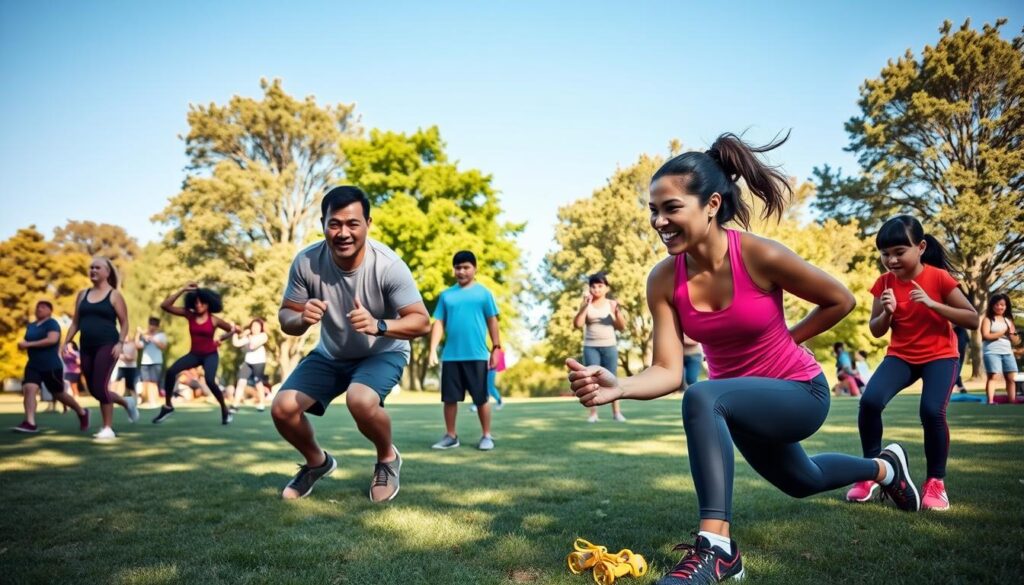
Family workout challenges succeed when they become a part of daily life. The final week’s mission is simple yet deep. Your family needs to plan your “ideal active week” for the next month.
Get together at the kitchen table. Ask important questions. What physical activity will you do each day? Will it be a walk, dance-off, or shooting hoops? What wellness practice, like cooking night, will you keep doing?
This week’s challenge is about more than just workouts. You’re building a lifestyle. You’re turning “we should” into “we do.” Find activities that bring joy and results, and make them a regular part of your life.
Keep the excitement going by setting new health or fitness goals each month. Or, keep pushing yourself to do better. Maybe last month was about being consistent. Next month, you can focus on learning a new sport.
You’re not ending your family workout challenge. You’re making it a permanent part of your lives. You’ve moved from trying hard to doing it naturally. This is how family workout challenges become a way of life.
This is how you make family workout challenges a part of who you are. The equipment isn’t just in the garage anymore. It’s in your family’s DNA. You’ve graduated. Welcome to active duty.
Age-Adapted Challenge Modifications
Trying to make the same fitness challenges work for a 6-year-old and a teenager is tough. It’s like trying to teach quantum physics and finger painting together. Each age group needs its own approach because they develop differently.
Your family exercise routines need to be flexible, not strict. Fitness should grow with each person’s development. It’s about finding the right way to motivate each age.
For toddlers, every challenge is a story waiting to happen. A plank becomes “holding the bridge for toy cars.” It’s not about perfect form, but about keeping them engaged.
Teens, on the other hand, value their freedom. A good family workout for them involves choices and relevance. Let them lead and choose activities that matter to them.
A 12-year-old wanting to create an obstacle course is not a distraction. It’s learning. A 15-year-old suggesting family yoga from YouTube is taking charge. You become a facilitator, not a boss.
| Age Group | Developmental Characteristics | Modification Strategy | Example Family Exercise Routine |
|---|---|---|---|
| Toddlers (2-5) | Short attention span, imaginative play, need for immediate feedback | Game-ify everything, use storytelling, keep sessions under 15 minutes | “Animal Moves” challenge: bear crawls, frog jumps, crab walks for 10 minutes daily |
| School Age (6-11) | Developing competence, social comparison, following rules | Introduce simple tracking, create team challenges, emphasize skill mastery | Weekly “Skill of the Week” (jump rope, hula hoop) with family showcase on Sunday |
| Tweens (12-14) | Seeking independence, body awareness, peer influence | Offer choice menus, connect to pop culture/sports, allow leadership roles | Teen designs a 20-minute TikTok-inspired dance workout for the family |
| Teens (15+) | Abstract thinking, long-term planning, identity formation | Co-create programs, link to personal goals, incorporate technology | Family fitness app challenge with personalized goals and shared progress dashboard |
The table is a guide, not a rulebook. It shows how daily movement looks different for each age. School-age kids like charts, while teens want digital and personal challenges.
Letting the youngest lead can create the best workouts. A 7-year-old’s scooter race day is cardio in disguise. A 10-year-old’s tree pose challenge is balance and mindfulness.
The goal is not to do everything the same way. It’s to make movement meaningful for everyone. When your teen learns about stretching, they’re not just doing it. They’re investing in their health.
This approach takes creativity but pays off in keeping everyone engaged. You’re not just building fitness. You’re helping each family member find a lasting love for movement.
Tracking Progress as a Family
Forget about spreadsheets and apps. The best way to track progress is simple and old-school. In our world, we often want to measure everything. But family fitness is about seeing your progress, not just numbers.
First, decide together how you’ll track your progress. This is key. For little kids, a big poster with gold stars is magic. Stickers are more powerful than any app.
School-age kids can use a journal. They draw or write about their activities. This makes them feel like they’re part of a bigger story.
Teens and adults might like a shared digital note. It’s a way to see everyone’s efforts. It’s like having a witness to your healthy habits.
The best tool is the dinner table. Talking about your day turns it into a shared story. It makes fitness a part of your family’s identity.
| Age Group | Tracking Tool | Why It Works |
|---|---|---|
| Young Children (3-7) | Physical sticker chart or poster board | Provides immediate, tactile reward. The visual of filling up with stars is incredibly motivating. |
| School-Age Kids (8-12) | Personal journal or logbook | Fosters independence and reflection. Writing it down makes their achievement feel real and documented. |
| Teens & Adults | Shared digital document or simple app | Offers convenience and social proof. Seeing others participate creates positive peer pressure and camaraderie. |
| The Whole Family | The daily dinner table check-in | Creates ritual and verbal acknowledgment. This conversation reinforces that All family fitness activities are valued equally. |
Don’t make it too complicated. The right method is the one you use. A simple calendar mark beats a forgotten fitness tracker. It’s about celebrating your efforts, not judging them.
Reward Systems and Motivation
Tracking your progress is the first step to success. What do you get for finishing your family workout challenges? The answer is simple.
A pizza party for every workout is a bad idea. It can make your efforts seem pointless. Instead, focus on the journey, not just the end.
Emphasize the effort, not just the results. This keeps everyone’s spirits high. Celebrate every small victory. Did your toddler master a yoga pose? Did your teen show up without complaining? That’s a win.
For a week of workouts, maybe a trip to Brooklyn Boulders or a new board game. A month’s worth? How about that big hike and a picnic?
The best reward isn’t something you can hold. It’s the bond you strengthen. It’s the laughter and pride you share. It’s knowing you can do more together.
The greatest reward is subtle. It’s becoming an active family. This identity is priceless. Your workouts build more than strength. They create a lasting legacy.