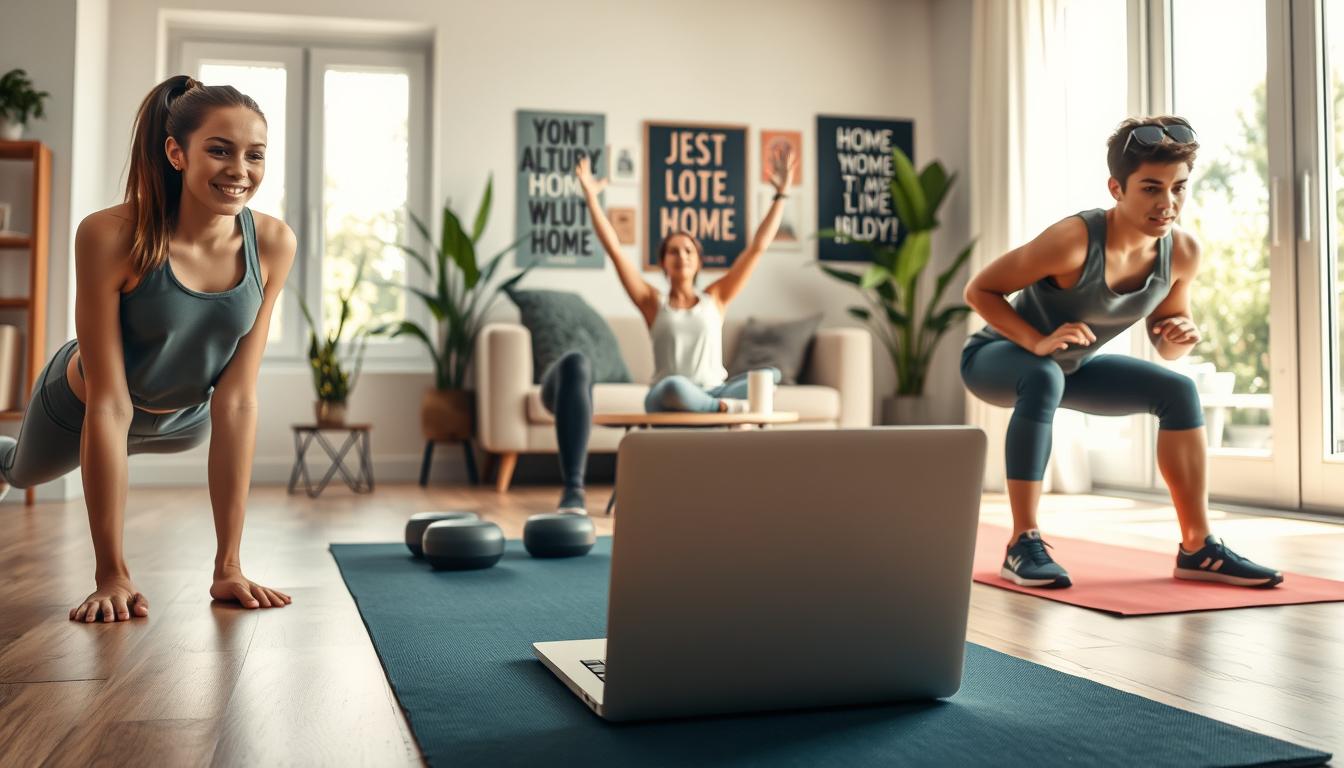
The modern teen’s life is packed with school, clubs, and screens. It’s hard to find time for physical activity. It feels like trying to solve a puzzle with missing pieces.
But, the science is clear. The NHS says teens need 60 minutes of exercise daily. It’s not just for athletes. It’s key for growing up right.
Think of it as upgrading your body and mind. Exercise helps you sleep better, think clearer, and handle stress. It also builds a strong body for later life.
The goal isn’t to spend all day at the gym. It’s to add smart, easy movement to your life. It’s about making exercise feel like a boost, not a burden.
Teen-Specific Fitness Considerations
Teen exercise routines are like software updates for a growing body. Timing and compatibility are key. You wouldn’t install a demanding video game on an old smartphone.
The teenage years are a time of growth and change. Growth plates are open, and hormones are changing daily. This is a normal part of development.
For teens under 16, the weight room can be risky. Places like PureGym don’t let teens go alone until 16. Heavy weights can damage growing bones.
Start with real-world activities like sports and biking. These help with coordination and agility. They teach the basics of movement.
For teens 16 and up, the gym is open. But focus on form, not just lifting heavy. It’s about learning good movement patterns for the future.
The table below shows a fitness plan for different ages. It’s like a roadmap for growing up.
| Age Group | Primary Focus | Recommended Activities | Key Risk to Avoid | Long-Term Goal |
|---|---|---|---|---|
| Under 16 | Movement Literacy & Foundation | School sports, cycling, swimming, bodyweight exercises, recreational games | Heavy external loading on developing joints and growth plates | Develop coordination, agility, and a love for physical activity |
| 16 & Older | Skill Acquisition & Controlled Strength | Light resistance training with perfect form, continued sports, introductory weight machines (with supervision) | Ego-lifting: prioritizing weight over proper technique | Build sustainable strength habits and exercise discipline |
| All Teens | Consistency & Enjoyment | Activities that feel like play, not punishment; varied routines to prevent boredom | Burnout from overly rigid or intense programs | Establish lifelong fitness as a normal, enjoyable part of life |
The plan is to grow gradually. Younger years are for exploration. Older years add structure. Always focus on safety and sustainability.
A balanced approach is essential. Don’t just focus on muscles. Work on heart health and flexibility too. This ensures your body gets balanced updates.
The best teen exercise routines follow this timeline. They work with your body’s growth, not against it. They build a strong athlete, not just a strong body.
Bodyweight Exercises for Beginners
Bodyweight training is the original way humans move. It doesn’t need downloads or subscriptions. It’s just pure movement code. For teens starting fitness, learning this code is key. It builds strength that helps in daily life, like carrying heavy bags or running for the bus.
This isn’t about getting big. It’s about building a body that works well and stays healthy. Let’s learn the basics.
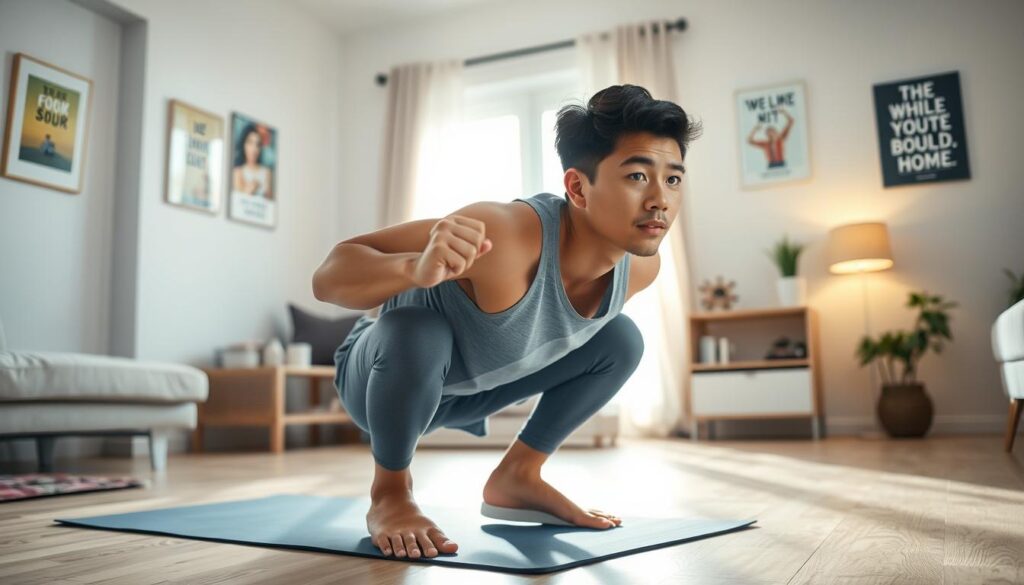
These exercises are like your basic programming language. Each one teaches a key movement. The goal is to do them well, not to try too hard.
Start with just 10 reps of each. This is a smarter way to begin than trying too much too soon.
The Foundational Five: Your Movement Toolkit
Here’s your starter pack for safe workouts for teenagers. These moves need no equipment and little space. They’re great for doing in a bedroom or living room.
The Squat: Master of Lower Body Mechanics
Forget “sitting down without a chair.” A proper squat is a mix of ankle, knee, and hip work. It’s the base of lower body strength.
- Chair Squat (Beginner Variation): Stand in front of a sturdy chair. Push your hips back as if you’re about to sit, tap the seat lightly with your glutes, then drive through your heels to stand back up. Keep your chest proud and knees tracking over toes.
- Pro Tip: The depth will come. Focus on the “hip hinge” motion first. This builds the muscle memory for safe loading.
The Push-Up: The Ultimate Upper-Body Metric
This is your benchmark for upper-body strength. But starting from the floor can be tough. That’s why we have regressions—they’re smart ways to start.
- Wall Push-Up: Place hands on a wall at shoulder height. Step feet back until you feel a lean. Bend elbows to bring your chest to the wall, then push back.
- Knee Push-Up: On the floor, assume a plank position but with knees down. Maintain a straight line from your head to your knees as you lower and push up.
- Full Push-Up: The classic. Hands under shoulders, body rigid as a plank. Lower until your chest is a few inches from the floor, then power up.
The Plank: Core Integrity Test
This simple hold shows who’s serious. It’s not about how long you can hold; it’s about keeping perfect tension.
Start on forearms and toes, body in a straight line. Squeeze your glutes, brace your abs as if expecting a gentle punch, and hold. Even 20 seconds with perfect form is a victory. The Butterfly Breath technique from yoga can help here: breathe deeply into your ribs, keeping your core engaged but not frozen.
To structure your first week, this table outlines a simple, balanced approach. Frequency is key—aim for consistency over intensity.
| Exercise | Beginner Target | Key Focus | Weekly Frequency |
|---|---|---|---|
| Chair Squats | 2 sets of 10 reps | Hip hinge, knee alignment | 3 days |
| Knee Push-Ups | 2 sets of 8-10 reps | Full range of motion | 3 days |
| Plank Hold | 3 holds of 20-30 seconds | Full-body tension | 3 days |
| Glute Bridges | 2 sets of 12 reps | Posterior chain activation | 3 days |
| Bodyweight Lunges | 2 sets of 8 per leg | Balance & stability | 2-3 days |
Building the Habit, Not the Ego
The real workout isn’t the set of squats; it’s showing up. Your goal should be to build a routine as consistent as your favorite TV show. Safe workouts for teenagers are ones you can keep up with. Listen to your body. Soreness is okay; sharp pain means stop.
Celebrate small wins—the first full push-up, a solid plank, a strong squat. This is how you write healthy code into your daily life, one bodyweight rep at a time.
Strength Training Safety for Teens
The idea that lifting weights stunts a teen’s growth is a myth. It has no scientific backing. Properly done strength training is safe, like reading a book.
Starting with home fitness for teens is like learning to drive. You begin in an empty parking lot, not on the busy freeway. For strength training, that empty lot is often a weight machine.
Machines are great for beginners. They control the movement, making it easier to focus on feeling the muscle work. It’s about building neural pathways, not just moving weight.
Ego is a big problem in home fitness routines for teens. You’re not competing with others. Your only opponent is your own form. Make sure your back is flat, shoulders down, and core engaged.
These questions are more important than the weight you’re lifting.
The Golden Rule: Progressive Overload
Progressive overload is simple. It means gradually increasing the demand on your muscles. Remember, it’s about small, steady increases, not huge jumps.
The safe path looks like this:
- Week 1: 3 sets of 10 reps with 10-pound dumbbells feels challenging
- Week 3: 3 sets of 10 reps with 10-pound dumbbells feels manageable
- Week 4: 3 sets of 10 reps with 12.5-pound dumbbells feels challenging
Notice the pattern? You’re climbing a staircase, not trying to jump over a pole. This methodical approach is key to safe home fitness for teens.
The Non-Negotiable Safety Checklist
Your environment is important. Your living room or garage gym needs to be safe:
- Hydration Station: Keep a water bottle nearby. Dehydration makes your muscles slow.
- The Warm-Up Ritual: Start with five to ten minutes of dynamic movement. This gets your nervous system ready.
- Form Over Everything: If you have to twist your body to lift, the weight is too heavy. Always prioritize proper form.
- The Cool-Down: Finish with static stretches. It tells your muscles the workout is over and helps prevent stiffness.
Injury in teen home fitness isn’t a badge of honor. It means you skipped the basics. Aim for consistency, showing up every day.
Your body adapts to what you ask of it, but only if you ask politely and progressively. Start with machines, then move to free weights when you’re ready.
This isn’t about getting a perfect body for social media. It’s about building strength, awareness, and discipline. That’s the real benefit of safe strength training in your home fitness journey as a teen.
Cardiovascular Workouts at Home
Turning your living room into a dance floor is a great way to get your heart rate up. It’s not about being bored. It’s about making exercise feel like fun. This is the heart of teen exercise routines.
The HIIT Revolution
High-Intensity Interval Training (HIIT) is like the TikTok of fitness. It involves short bursts of intense effort followed by rest. A 20-minute session can burn calories and improve endurance better than long, slow workouts.
It’s perfect for busy schedules. Here’s a simple plan:
- Jumping Jacks (40 seconds on, 20 seconds rest)
- Mountain Climbers (40 seconds on, 20 seconds rest)
- Burpees (30 seconds on, 30 seconds rest)
Do this circuit 3-4 times. You’ll be done in under 20 minutes. The key is to go hard during the work periods. Your heart and lungs will thank you later.
The Fun Cardio Hack
If structured intervals seem too much, try Fun Cardio. It tricks your brain into exercising. Ever get lost in a Just Dance challenge or a Zumba video? That’s cardio. Dancing to your favorite album is also cardio.
Cardio drumming with wooden spoons on cushions is fun too. The idea is simple: if you’re smiling, breathing hard, and losing track of time, you’ve won. You’re getting fit without the usual grind.
| Workout Style | Examples | Ideal Duration | Key Perks |
|---|---|---|---|
| HIIT (High-Intensity) | Burpees, Jumping Jacks, Mountain Climber circuits | 15-25 minutes | Maximizes calorie burn, improves stamina fast, time-efficient |
| Dance & Rhythm | Just Dance, Zumba, TikTok dance challenges | 20-40 minutes | Boosts coordination, feels like play, highly engaging |
| Creative Cardio | Cardio drumming, shadow boxing, active gaming | 15-30 minutes | Builds creativity, reduces workout monotony, uses household items |
| Steady-State Play | Jump rope sessions, brisk stair climbing, fast-paced cleaning | 20-30 minutes | Builds aerobic base, easy to start, integrates into daily life |
Mixing these styles keeps workouts interesting. One day, do a HIIT circuit. The next, have a dance-off with your reflection. This variety makes home-based teen exercise routines stick. You’re not just getting a healthier heart. You’re building a routine you enjoy.
Flexibility and Mobility Routines
Flexibility is like keeping your body’s software up to date. Without it, you might face serious problems. For teens, this means tight muscles and poor posture. It’s like your body is always texting, and injuries are more likely.
Yoga isn’t just for hippies. It’s a way to stretch your body fully. Each pose is like fixing your muscles. Downward Dog stretches more than just your hamstrings; it improves your whole back.
Yoga teaches you to be aware of your body. This awareness helps in all activities. It’s a key part of safe workouts for teenagers.
Here’s what you need for better mobility:
- Dynamic Stretching: Leg swings, arm circles, torso twists. These warm up your body before working out.
- Static Stretching: Holding stretches for 20-30 seconds after working out. This is when you really see improvements.
- Yoga Sequences: Sun Salutations are great for linking breath with movement. They make your movements smooth.
- Foam Rolling: This is like a deep-tissue massage for your muscles. It helps get rid of kinks.
Mindfulness is key to good routines. “Mindfulness & Movement” from Source 2 explains this well. Meditation after stretching helps your body relax. Tai Chi and walking meditation also help reduce stress.
Teens need flexibility because their bodies are changing fast. Bones grow faster than muscles can keep up. Tightness is a sign that your body needs help.
After working out, spend time on flexibility exercises. Start with foam rolling, then stretch the main muscle groups. End with some breathing exercises or meditation. This helps your body recover and manage stress.
Flexibility training is easy and doesn’t need any special equipment. You can do it anywhere, even on your living room floor. It’s a simple way to improve your health without needing a gym.
Being consistent is more important than how hard you work. A little bit every day is better than one big session a week. It keeps your body flexible and healthy for the future.
Equipment Recommendations for Teens
The fitness world often pushes for lots of gear, but home fitness teens can keep it simple. You don’t need a bunch of fancy equipment to get fit. A few smart choices can help you stay on track without breaking the bank.
Start with your sneakers. Those old shoes you wear to school are key. They support your feet, helping you move right and avoid injuries. Getting good sneakers is a smart first step.
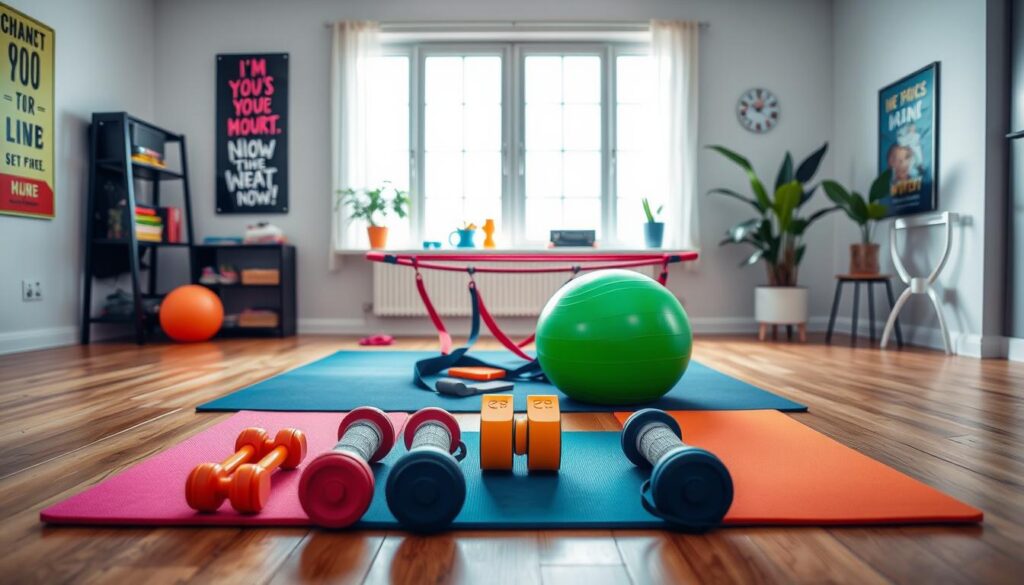
Next, consider a resistance band. It’s like a fitness all-in-one. It helps you build strength without hurting your joints. Plus, it’s cheap and takes up little space.
Light dumbbells are the next step. We’re talking about 5 to 8 pounds. They help you learn how to lift properly. They’re not for showing off, but for learning.
Don’t forget an exercise mat. It’s not just for comfort. It makes your workout area clear. It also protects your joints from hard floors.
The Minimalist Toolkit Comparison
Let’s look at what’s worth your money. What gives you the most for your buck?
| Equipment | Best For | Investment Level | Space Required |
|---|---|---|---|
| Resistance Bands | Full-body strength, mobility work | Low ($15-$30) | Fits in a drawer |
| Light Dumbbells (5-8 lbs) | Learning lifting form, accessory work | Medium ($20-$50 pair) | Small shelf space |
| Exercise Mat | Defining workout space, comfort | Low ($20-$40) | Rolls up for storage |
| Good Sneakers | Foundation for all movements | Medium ($50-$80) | Your feet (already owned) |
What’s missing? Expensive machines and fancy memberships. The best gear is what you use regularly. A simple setup you enjoy is better than lots of unused equipment.
Remember, Consistency × Proper Form > Equipment Cost. Your effort is more important than the brand of your gear. Start with what you have, then add tools as you grow.
The goal isn’t to make your room into a gym. It’s to build a lasting fitness habit. These tools help you grow without limiting you.
Creating Consistent Workout Schedules
The secret to keeping fit as a teen isn’t about gym memberships. It’s about a well-planned calendar. Think of your workout plan like a Netflix queue. If it’s not organized, you’ll skip it.
Most teen exercise routines fail because of high expectations, not lack of effort. The NHS suggests 60 minutes of daily activity for teens. This can be broken down into smaller, manageable parts.
For example, a 20-minute bodyweight circuit after school, a 15-minute dance session, and a 25-minute walk with your dog. You’ve met your goal without using a treadmill.
Fitness experts say a good weekly plan mixes different activities. Here’s a sample week:
- Monday & Thursday: Strength training (bodyweight exercises, resistance bands)
- Tuesday & Friday: Cardiovascular workouts (dance, jump rope, brisk walking)
- Wednesday & Saturday: Sports or active recreation (basketball, hiking, swimming)
- Daily: General activity (walking to school, taking stairs, stretching breaks)
This plan gives structure without being too strict. If you miss a strength day, just do cardio the next day. It’s flexible and works with your busy life.
Setting achievable goals is key. Instead of “get ripped in a month,” aim for “complete three workouts this week.” Celebrate your consistency, not just your results.
Variety keeps you engaged. Boredom kills more fitness plans than sore muscles. Try new activities with the seasons to keep things interesting.
Schedule workouts like you would any other important activity. Use your energy dips for quick workouts. Use your downtime for calming activities. Match your workout to your mood, not just your goals.
Building consistent teen exercise routines is about smart planning, not strict rules. Create a system that works on bad days and grows with you. That’s how exercise becomes a habit, and maybe even something you enjoy.
Injury Prevention and Form Tips
Let’s get real. For sustainable safe workouts teenagers can stick with, injury prevention isn’t just a boring intro. It’s the main event. Skipping it is like revving a cold engine to redline—something will break.
Your warm-up is non-negotiable. Five to ten minutes of dynamic movement—think arm circles and leg swings—prepares your tissues for work. It increases blood flow and mobility. This isn’t optional prep work; it’s the foundation of every successful session.
Form is everything. A squat with knees caving inward is a knee injury waiting for its invitation. A rounded-back movement is a direct ticket to pain. If you’re unsure, film yourself. Use a mirror. Be your own toughest coach. Proper technique is the core of truly safe workouts teenagers should master.
Listen to your body like it’s sending you encrypted messages. Distinguish the deep burn of a working muscle from the sharp sting of something wrong. Pushing through the former builds strength. Pushing through the latter builds a medical bill.
Hydrate. Rest. Avoid comparing your chapter one to someone else’s chapter twenty. Your rest days are not failures. They’re when the real repair work happens. Train smart now, and you build a body that can play for decades, not just for next week.