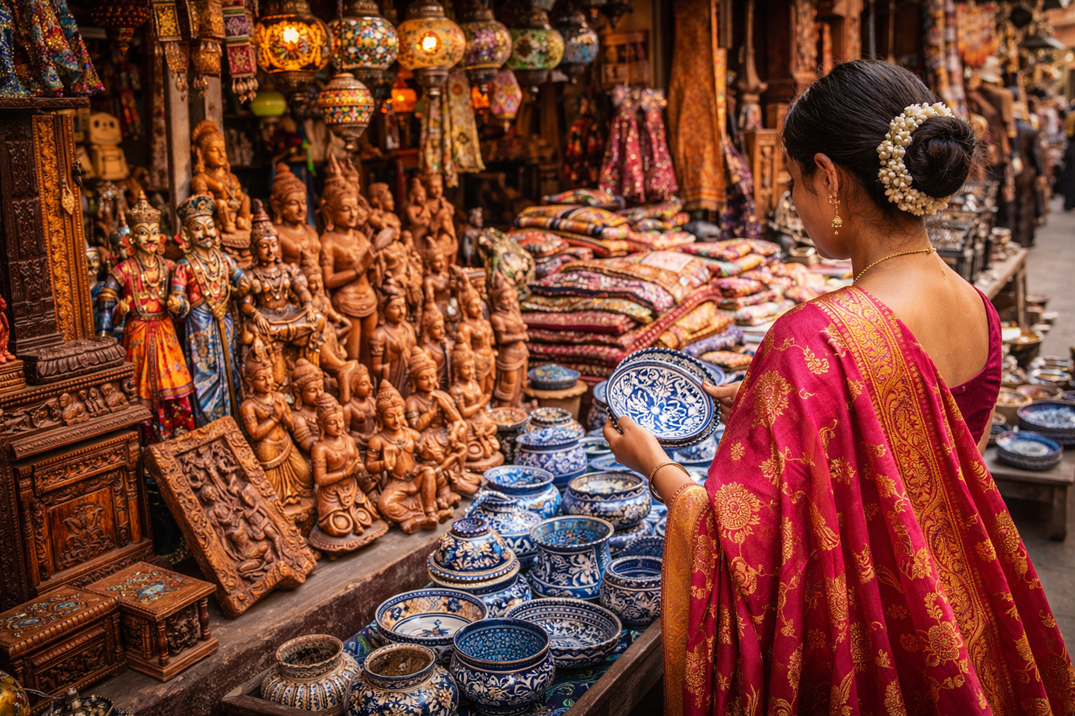
Rajasthan stands as one of India’s most vibrant craft hubs, where centuries-old techniques continue to shape some of the country’s most recognizable handicrafts. For buyers, the challenge isn’t finding beautiful items—it’s knowing what to buy, where to buy it, and how to identify authentic regional specialties.
From blue pottery in Jaipur to textiles in Barmer, each region offers distinct crafts tied to local materials, traditions, and artisan communities. This guide breaks down the most valuable handicrafts across Rajasthan and how to shop them intelligently.
Why Rajasthan Is A Handicraft Powerhouse
Rajasthan’s craft ecosystem is deeply rooted in its royal history, desert geography, and trade networks. Many techniques were developed under royal patronage, which explains the high level of detail, durability, and artistic refinement still seen today.
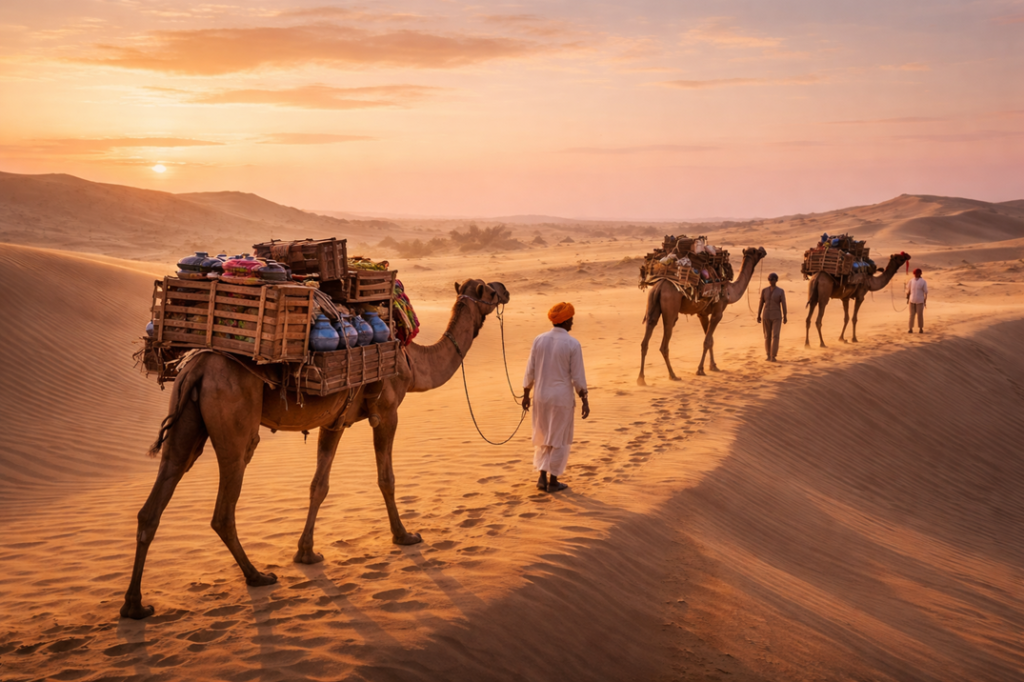
Equally important is the regional specialization. Unlike mass-produced goods, authentic Rajasthani crafts are often tied to specific towns or villages, where techniques are passed down through generations.
For buyers, this means that understanding where a product comes from is just as important as the product itself.
Key Handicrafts By Region
Each region in Rajasthan is known for specific craft traditions. Knowing these associations helps buyers avoid generic or mislabeled products.
| Region | Famous Craft | What To Look For |
|---|---|---|
| Jaipur | Blue Pottery | Smooth glaze, Persian-inspired motifs |
| Sanganer | Block Printing | Fine floral patterns, light fabric |
| Bagru | Natural Dye Textiles | Earthy tones, hand-dyed textures |
| Jodhpur | Wooden Furniture | Carved details, solid wood |
| Barmer | Embroidery & Ajrakh | Bold prints, natural dyes |
| Udaipur | Miniature Paintings | Fine brushwork, mythological themes |
| Molela | Terracotta Plaques | Storytelling relief sculptures |
Understanding these regional strengths allows buyers to shop with more confidence, especially when browsing online listings that may not clearly disclose origin details.
Jaipur Blue Pottery: A Decorative Classic
Jaipur’s blue pottery is one of Rajasthan’s most recognizable crafts, known for its distinctive turquoise and cobalt color palette. Unlike traditional ceramics, it uses a quartz-based technique rather than clay, which gives it a smoother finish.
Authentic pieces typically feature hand-painted floral or geometric designs, and the glaze should appear slightly translucent rather than overly glossy.
This craft is particularly popular among international buyers due to its decorative appeal and relatively accessible price point.
Sanganeri And Bagru Textiles: Subtle Differences That Matter
While both Sanganeri and Bagru textiles are forms of block printing, they differ significantly in style and technique.
Sanganeri prints are characterized by fine, detailed floral patterns on lighter fabrics, often with a more delicate aesthetic.
Bagru textiles, by contrast, use natural dyes and produce bold, earthy designs with visible hand-dyeing variations.
Buyers comparing these styles often benefit from understanding these nuances—similar to how textile enthusiasts evaluate regional differences in silk weaving across India.
Jodhpur Furniture And Woodcraft
Jodhpur is a major center for handcrafted wooden furniture, especially pieces made from sheesham (Indian rosewood). These items are known for their durability and intricate carvings.

When buying, look for:
- Solid wood construction (not veneer)
- Hand-carved detailing
- Natural polish rather than synthetic coatings
Furniture pieces often command higher prices due to shipping and craftsmanship, but they also offer long-term value.
Molela Terracotta: Storytelling In Clay
Molela, a small town near Udaipur, produces unique terracotta plaques that depict religious and folk narratives. These handcrafted pieces are traditionally used in village shrines.
What makes Molela craft special is its narrative quality—each piece tells a story through sculpted figures and scenes.
Collectors often seek these items not just for decoration but for their cultural and historical significance.
Price Expectations Across Categories
Pricing varies widely depending on craftsmanship, materials, and authenticity.
| Craft Type | Entry Price Range | Premium Range |
|---|---|---|
| Blue Pottery | Low to moderate | Moderate |
| Block Printed Textiles | Low | Moderate |
| Embroidery | Moderate | High |
| Wooden Furniture | High | Very high |
| Miniature Paintings | Moderate | Very high |
Buyers should be cautious of prices that seem too low, especially for labor-intensive crafts like miniature paintings or handwoven textiles.
How To Shop Smart In Rajasthan
Whether buying in person or online, a few strategies can significantly improve your chances of getting authentic products.
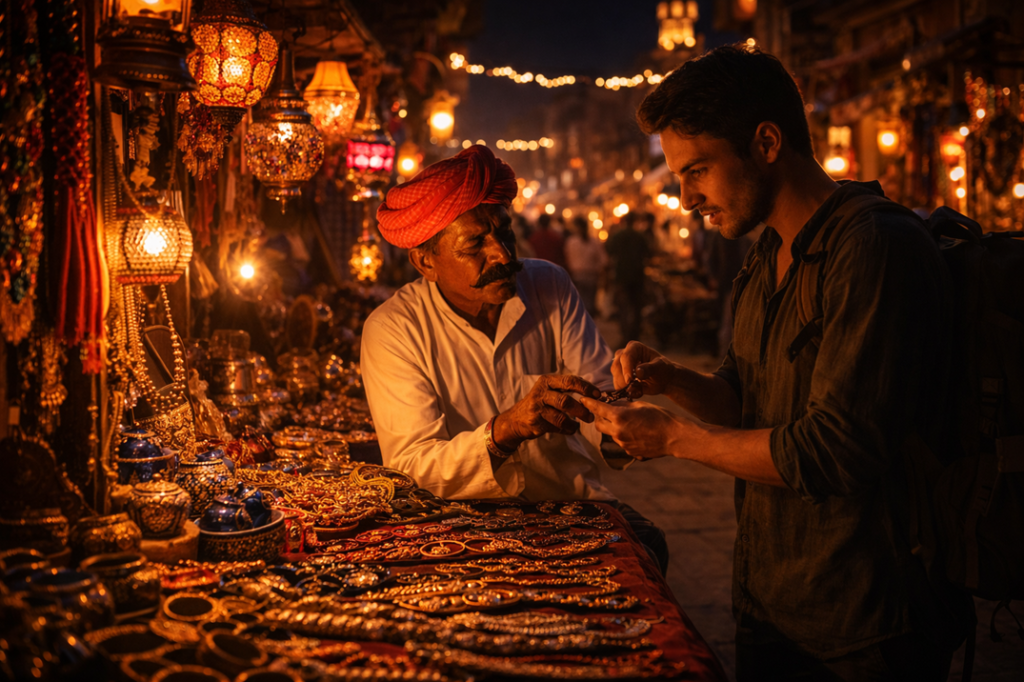
Pay attention to:
- Seller transparency about origin
- Details on materials and techniques
- Evidence of handmade variations
- Artisan or cooperative sourcing
For those exploring certified crafts, understanding GI-tagged handicrafts from Rajasthan can help identify products that meet official authenticity standards.
Additionally, resources like the Development Commissioner (Handicrafts), India provide valuable insights into recognized craft clusters and artisan communities.
A Region Where Every Purchase Tells A Story
Rajasthan’s handicrafts are more than souvenirs—they are expressions of identity, tradition, and regional pride. Each item reflects not just the skill of the artisan but also the cultural landscape it comes from.
For buyers, approaching these crafts with knowledge transforms the shopping experience from transactional to meaningful. Whether you’re collecting, gifting, or decorating, understanding the regional context ensures that every purchase carries both beauty and authenticity.