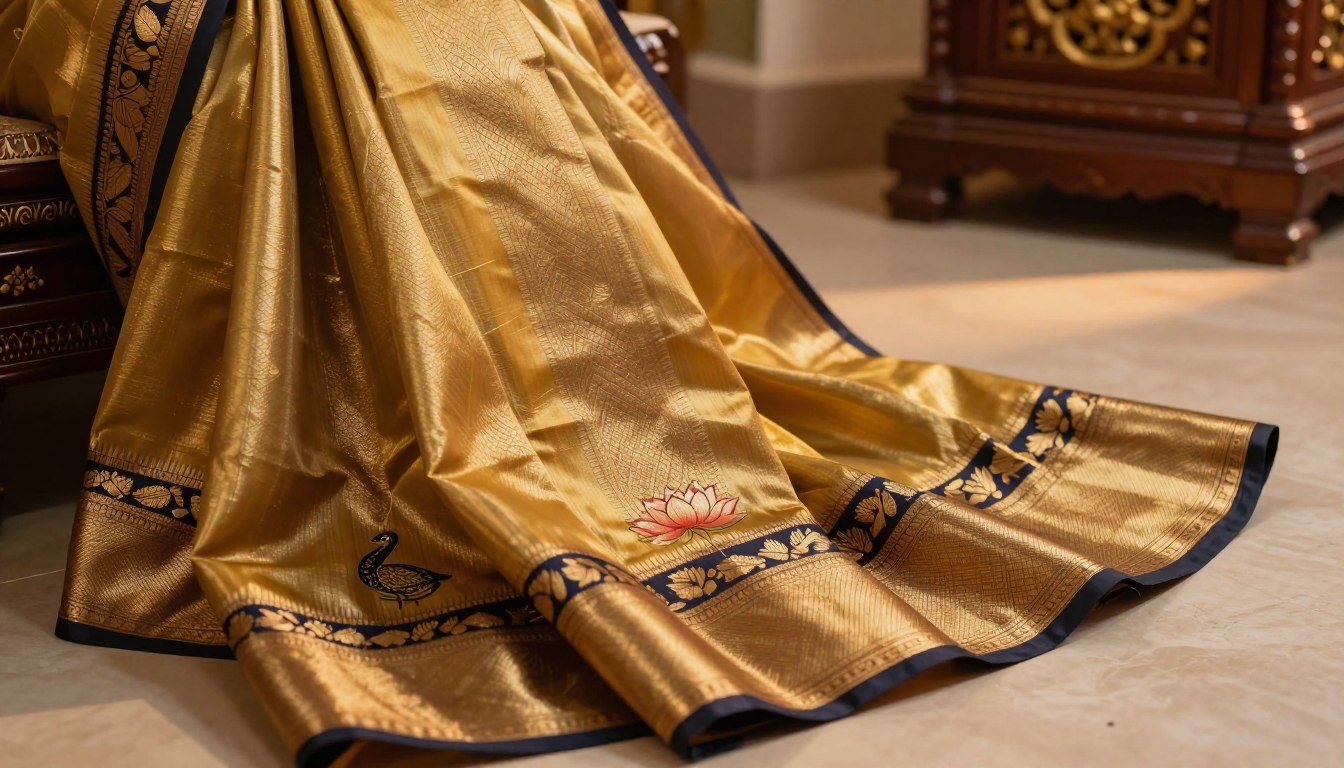
In a market full of fake items, a big question is on everyone’s mind. How do you know your silk is real? The cost is high, both in money and cultural value.
A real Kanjivaram saree is made in Kanchipuram, India. It takes hundreds of hours to make. It starts with pure mulberry silk, known for its bright shine and durability. This silk is mixed with zari, threads of real silver or gold.
Buying an authentic kanjivaram is more than just a purchase. It’s an investment in a rich heritage. These pieces are made to last for many years, carrying stories and artistry in their threads. They also grow in value over time, making them a smart choice for collectors.
The signs of a real Kanjivaram are in its making. The korvai method connects the saree’s body to its border. The designs, often inspired by temples and nature, are woven with great care. Knowing these signs helps you make a confident and meaningful buy.
Intro: Why korvai and zari matter
When you hold a genuine Kanjivaram saree, its weight and drape tell a story. This story is woven with two ancient secrets: korvai and zari. These are not mere details. They are the foundational pillars that separate a masterpiece from an imitation. Understanding them is your first step toward becoming a confident connoisseur.
Let’s start with korvai. This is the technique that joins the saree’s body, border, and pallu. Think of it as the structural skeleton. A true korvai is a single, continuous process on the loom. The weaver interlaces threads from three different shuttles to create a seamless, reinforced junction.
Why does this matter so much? The korvai technique is a treasure of tradition. It guarantees the saree’s iconic crisp fall and legendary durability. You can often feel this craftsmanship by running your fingers along the korvai border join. It should feel solid and uniform, not flimsy or glued.
This method also enables the saree’s dramatic color contrasts. A bold, contrasting border isn’t just sewn on. It is born from the loom, integrated into the fabric’s very soul. This visual drama is a direct result of the korvai process.
Now, consider zari. If korvai is the skeleton, zari is the dazzling soul. This is the metallic thread, traditionally made from silver wire coated with real gold. Today, various types exist, but the quality of zari remains a key marker of value and authenticity.
Pure zari contributes to the saree’s weight, sheen, and longevity. It doesn’t merely sit on the surface. It is woven into the pattern, becoming one with the silk. Over time, high-quality zari develops a soft, rich patina. Poor quality thread tarnishes or breaks easily.
Together, korvai and zari define the saree’s character. A well-executed korvai ensures the garment holds its shape for decades. Superior zari ensures its patterns continue to glow. This combination is what authentic Kanchipuram silk sarees manufacturers consider non-negotiable. It’s the heart of their craft.
When these elements are compromised, the entire saree suffers. The drape becomes limp. The borders may pull away. The gold loses its luster. Your investment loses its value.
In the following sections, we’ll break down how to inspect the loom anatomy, decode zari types, and evaluate motifs. But first, internalize this core idea. Korvai and zari are your primary lenses for appraisal. They are the reason a Kanjivaram is more than just a piece of clothing. It is a wearable heirloom.
Loom anatomy and body/border/pallu joins
A loom is more than a frame; it’s where the magic of korvai weaving creates seamless connections. To truly understand a Kanjivaram’s value, you must look at its construction. The saree’s three main parts—the body, the border, and the pallu—are often woven with separately dyed threads. The korvai technique is what binds them into one cohesive masterpiece.
This ancient method involves weaving each section independently on the same loom. A skilled artisan then manually interlaces the threads where they meet. This process creates a join that is integral to the fabric itself. It is not sewn together later. The result is a connection that is incredibly strong and durable.
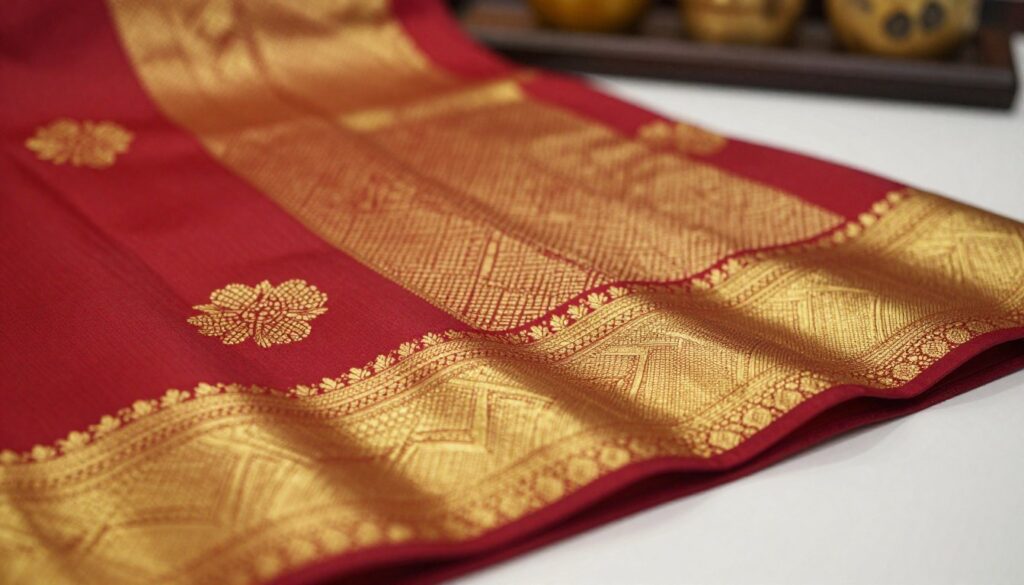
A superior korvai border join has distinct characteristics you can learn to spot. Run your fingers along the line where the border meets the body. You should feel a slight, consistent ridge. This is a hallmark of genuine hand-weaving. The transition should look seamless, with the patterns aligning perfectly. There should be no bunching, gaps, or loose threads.
In contrast, poorly made joins reveal shortcuts. Look for these warning signs:
- Bulges or stiffness: This can indicate glue or starch used to hide a weak connection.
- Misaligned patterns: The motifs on the border and body won’t line up cleanly.
- Visible loose threads or fraying: Suggests mechanical stitching instead of interlocked weaving.
This structural integrity is non-negotiable. A true korvai border means the saree can handle decades of wear. The join moves and drapes as one with the rest of the silk. It will not pull apart or weaken over time. Assessing these junctions gives you direct insight into the weaver’s skill and the saree’s longevity. It turns a beautiful garment into a resilient heirloom.
Zari decoding: pure vs tested; safe checks without damaging fabric; BIS/Silk Mark context
Before you marvel at a Kanjivaram’s gold-like glow, you need to ask: what is that brilliance actually made of? The answer defines the saree’s value, longevity, and authenticity. This guide decodes the often-confusing world of pure zari vs tested zari, giving you the knowledge to verify claims safely.
Historically, authentic “pure zari” was a work of metallurgical art. A fine silver wire forms the core. This wire is then electroplated with a layer of real gold. It’s wound around a silk or cotton yarn. This process creates a thread with exceptional sheen, weight, and durability. Over decades, it develops a soft, antique patina but never corrodes badly.
Modern “tested zari” or “alternative zari” is different. “Tested zari” often uses a copper core coated with silver, then gilded. It looks similar initially but is lighter and can tarnish over time. Other alternatives include metallic polyester or cotton threads dyed in gold and silver colors. These are budget options but lack the depth and character of real metal threads.
The choice between pure and tested zari has major implications. A saree with pure zari commands a significantly higher price due to material costs. It also carries more heft and a richer, more subtle luminosity. Tested zari makes traditional designs more accessible but may not hold its visual appeal as long.
You don’t need to damage the fabric to check. Use these safe, non-destructive methods:
- Visual Luster: Pure zari has a deep, warm glow. Fake zari can look harsh, brassy, or overly shiny like plastic.
- Texture and Weight: Gently feel the zari-heavy pallu. Pure zari feels substantial and slightly cool. Imitation threads feel lighter and flatter.
- The Rub Test (Caution): Find an inconspicuous loose thread end. Rub it firmly on a white ceramic plate. Real silver-based zari will leave a faint gray or black streak (oxidized silver). A bright yellow streak indicates a brass or copper alloy. No mark suggests a non-metallic fiber.
- Uniformity: Examine the zari lines. Pure zari is remarkably even in color and thickness. Lower-quality threads may show color variations or breaks.
Official certifications are useful tools, but understand their scope. The BIS Hallmark certifies the purity of the silver and gold used in the zari itself. The Silk Mark is a quality assurance tag for the silk fabric, not the zari. The Geographical Indication (GI) Tag certifies the saree was made in the Kanchipuram region using traditional methods, which often implies pure zari use.
Use these labels as a starting point for inquiry, not a final guarantee. A genuine artisan weaver’s receipt often holds more weight than a generic tag. By combining visual checks, tactile feedback, and an understanding of certifications, you transform from a confused buyer into an informed collector. This knowledge is your best defense against misrepresentation and your key to investing in a heirloom-quality piece.
Motifs & constructions: temple, checks, buttas, brocade density
The true beauty of a Kanjivaram lies in its motifs and construction. These patterns are not random. They are a woven language of culture and skill.
Each symbol has its own story. These themes have been passed down for many generations.
- Temple-inspired: Borders like temple architecture (gopurams), the ‘thilakam’ (vertical mark), and detailed pillars show spiritual commitment.
- Natural: ‘Mayil’ (peacock), ‘hamsa’ (swan), and elephants stand for beauty, grace, and wisdom from nature.
- Mythological: ‘Yaali’ creatures (part lion, elephant, horse) and other mythical beasts symbolize protection and power.
- Geometric: Checks, stripes, and small ‘buttas’ (dispersed motifs) add balance and rhythm to the design.
The way it’s made is key. Authentic motifs are integrally woven into the fabric using a jacquard loom. This means the design is made during weaving.
The yarns for the pattern are mixed with the base silk and zari threads. This creates a raised, sharp texture you can feel. This construction affects the saree’s value and silk purity.
| Feature | Genuine Woven Motif | Printed/Embroidered Imitation |
|---|---|---|
| Construction | Created on the loom (jacquard). Part of the fabric. | Applied on top of finished fabric. An added layer. |
| Texture | Raised, distinct, and crisp. You can trace it. | Flat or slightly puckered. Smooth to the touch. |
| Appearance | Sharp, clean lines from the front and back. | May look blurry or faded on the reverse side. |
| Longevity | Will last the lifetime of the saree. Does not peel. | Prints fade; embroidery can snag or come loose. |
This brings up the idea of brocade density. It’s how much of the saree’s surface is covered by these woven motifs, mainly in the border and pallu.
A high brocade density means more detailed work, more zari, and a heavier, more luxurious fabric. It shows the complexity of craftsmanship. A high brocade density often means better silk purity in the base fabric, as it must be strong enough for the dense weave.
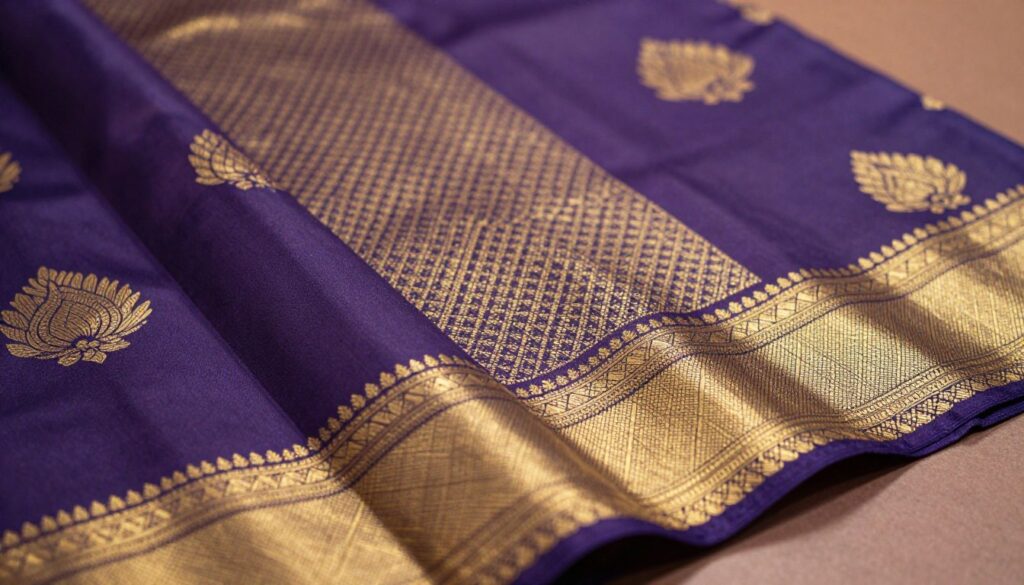
When you look at a Kanjivaram, examine its motifs closely. Are they part of the fabric’s soul, or just a decoration? The answer shows the true artistry and authenticity of the piece.
Photo Checklist for Online Purchases (Reverse Joins, Selvedge)
Before buying that Kanjivaram, ask for certain photos. Sellers who show these images are confident in their product’s quality.
Online shopping means you can’t touch the item. Your eyes are your only guide. A detailed photo checklist helps you inspect the saree online.
The back of the saree reveals its truth. In real pieces, the zari work is clear on both sides. The threads are neat, without loose ends or knots.
Loose threads or messy knots on the back show low-quality work. Always ask for a clear photo of the underside.
Your Essential Photo Request List
Send these requests to any seller. A good seller will agree.
- High-Resolution Reverse Shots: Ask for clear photos of the back of the border and pallu. The patterns should be sharp, not blurry.
- Selvedge Close-Up: The edge should be tight and even. Any fraying means poor work.
- Motif Reverse Detail: Get a close-up of a motif from the back. The design should be clear, and the weaving tight.
- Full Saree Layout: A photo of the saree spread out shows its symmetry. The borders should match, and the pallu should be right.
- Zari Thread Close-Up: A macro shot can show the zari thread’s sheen and twist, indicating its quality.
This checklist turns knowledge into a practical tool. It helps you spot problems before buying.
Use this checklist to judge a seller’s honesty. If they’re hesitant or provide poor images, it’s a warning sign. Protecting your investment in kanchipuram saree authenticity begins with these simple requests.
With this checklist, you can shop online with confidence, no matter where you are.
Price drivers: silk grade, zari cost, complexity
Why does one Kanjivaram saree cost a few hundred dollars, while another costs thousands? It’s because of three main things: the silk, the zari, and how complex the weave is. Real Kanjivaram sarees can cost from $120 (₹10,000) to thousands, showing the real cost of materials and the skill of the weavers.
The silk is the base of every saree. High-quality mulberry silk is dense, heavy, and shines brightly. The weight of the silk affects the price. A heavier saree uses more silk, making it more expensive.
The zari is another big factor. The choice between pure zari vs tested zari greatly affects the price. Pure zari is made from silver with real gold coating. It’s expensive and adds a lot to the cost. Tested zari, made from metallic polyester, looks similar but costs less, making detailed designs more affordable.
Design complexity also plays a role. Simple borders are easy to make. But the korvai technique, where the body and border are woven separately, takes more time. Detailed patterns and designs add hundreds of hours of work.
The table below shows how these factors combine to create different price levels:
| Price Driver | Description | Impact on Cost | Typical Tier |
|---|---|---|---|
| Silk Grade & Weight | Quality and quantity of mulberry silk used. Heavier sarees (600+ grams) cost more. | Sets the base price. Can vary by 30-50%. | Foundation cost for all sarees. |
| Zari Type (Pure vs Tested) | Pure: silver-gold thread. Tested: metallic alternative. | Pure zari can double or triple the cost compared to tested. | Defines luxury (Pure) vs accessible (Tested) segments. |
| Weave Complexity | Includes korvai joins, motif density, and brocade coverage. | High complexity increases labor cost exponentially. | Simple patterns vs. heirloom-quality masterpieces. |
| Overall Craftsmanship | Combination of all factors executed with skill. | Superior execution commands a premium, justifying high price points. | Distinguishes mass-produced from artisan-woven. |
Knowing these factors helps you understand the value, not just the price. A saree with pure zari and korvai is a valuable investment. One with tested zari and simpler patterns is more affordable but beautiful. Your choice tells the story of your silk.
Care & appraisal: storage, damp‑proofing, resale value
Keeping your Kanjivaram in top shape is as important as the skill that went into making it. It’s not just about keeping it looking good; it’s about making sure it lasts for years to come. How you store and handle it greatly affects its lifespan.
Never store your Kanjivaram in plastic bags or vinyl covers. These can trap moisture and prevent the fabric from breathing. This can lead to mildew and weaken the silk fibers.
Instead, use natural fabrics for wrapping and storage. Here are some tips:
- Wrap the saree in a soft, clean, white muslin or cotton cloth.
- For long-term storage, place acid-free tissue paper between the folds to prevent crease marks from becoming permanent.
- Store it in a wooden cupboard or a cloth bag, ensuring the space is dark and cool.
- Refold the saree along different lines every few months to avoid stress on the same silk threads.
Damp-proofing is key, but it depends on your climate. In humid areas, silica gel packets can help. But make sure they don’t touch the silk. In dry climates, use a damp muslin cloth to keep the air moist.
Always handle your Kanjivaram with clean, dry hands. Oils and lotions can stain the silk purity. When airing it out, avoid direct sunlight to prevent fading.
Good care and authenticity boost the value of your Kanjivaram. A well-kept saree with high-quality silk and zari can sell for more. It’s seen as a valuable asset.
| Care Practice | Protects This Value Factor | Risk of Neglect |
|---|---|---|
| Muslin Wrapping & Proper Folding | The integrity of the silk threads and zari. | Permanent creases, fiber breakage, tarnished zari. |
| Climate-Controlled Storage | The fabric’s strength and color vibrancy. | Mildew, brittleness, or color bleeding. |
| Gentle, Infrequent Handling | The structural perfection of motifs and borders. | Pulling of threads, distortion of weave patterns. |
When it’s time for an appraisal or resale, these factors are closely looked at. An expert can provide valuable insights. The value of your saree is not just emotional; it’s also about its material and artistic worth.
By taking good care of your Kanjivaram, you protect your investment. It’s not just a garment; it’s a legacy of silk purity and craftsmanship.
Diaspora returns/alterations: blouse pieces, fall/pico advice
When your Kanjivaram saree travels far, making sure it’s altered right is key. You can’t visit the weaver or tailor in person if you buy online. This guide helps you manage changes from a distance.
Every change must keep the handloom’s quality intact. The dense silk and zari threads need careful handling. Quick or careless changes can ruin the saree’s beauty and value.
One big question is about the extra blouse piece. Do you need one? For true kanchipuram saree authenticity, the blouse should match the saree’s material. Always check if the seller includes or sells an extra piece.
If not included, order it with the saree. This ensures the color and texture match perfectly. Tell the seller the exact length you want, usually between 0.8 to 1.2 meters for a standard blouse.
Adding a fall or pico is also common. A fall is a strong fabric strip for the hem, and a pico is a decorative edge. Talk about these options before buying to see if the seller can do them.
To talk well with the seller, follow these tips:
- Be Precise: Give exact measurements in inches or centimeters for the blouse and fall.
- Ask About Fabric: Make sure the fall material is the same quality as the saree’s silk to keep kanchipuram saree authenticity.
- Request Photos: Ask for pictures of the extra fabric before it’s attached.
- Clarify Costs: Ask for a detailed price list for alterations to avoid unexpected charges.
These steps help protect your investment. A well-altered saree fits perfectly and keeps its value. Taking care during changes is important for kanchipuram saree authenticity.
Also, check the seller’s return policy for alterations. Some may redo the work if it’s not right. Keep all your talks for later reference.
With careful planning, your online purchase can become a beautiful piece that honors the handloom tradition and fits you perfectly.
Final checklist + links
You now know how to check any Kanjivaram saree. Each one is a piece of history. Use this quick checklist for your next purchase, online or in person.
First, check the zari. Look for a subtle sheen and feel its texture. Pure zari feels heavy and warm. Real silver or gold threads are used in authentic kanjivarams.
Next, feel the korvai joins. Run your fingers along the border and body connection. A true korvai feels seamless and strong. There should be no loose threads or gaps where the patterns meet.
Then, inspect the motifs. Look for precise, dense weaving. Traditional designs should be symmetrical. The pallu should have detailed brocade work.
Verify the labels. Look for the Silk Mark label of purity or the Geographical Indication (GI) tag. These are strong indicators of an authentic kanjivaram from Tamil Nadu.
Assess weight and price logically. A heavy silk saree with pure zari and complex work commands a higher price. If a deal seems too good, it likely is.
This checklist empowers your purchase decision. It helps you support skilled weavers and preserve a timeless craft. For your next step, explore trusted weaver collectives or reputable online platforms like Sundari Silks or Nalli for verified pieces.