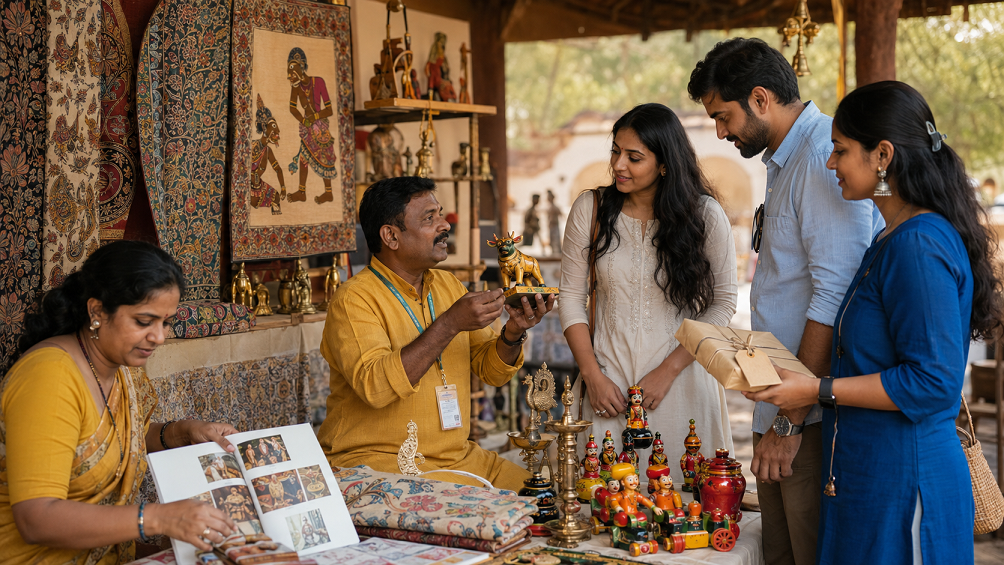
Andhra Pradesh’s new handicrafts tourism push could become a turning point for craft villages, artisan clusters, and handmade sellers if the visitor experience does not stop at the stall. In July 2026, Deputy Chief Minister Pawan Kalyan announced that Andhra Pradesh would promote “Handicrafts Tourism” on the lines of temple and eco-tourism while inaugurating Andhra Pradesh Handicrafts Mahotsavam-2026 at Dr. B.R. Ambedkar Kalavedika in Vijayawada. Reports said the plan includes QR codes carrying artisan profiles and craft stories, promotional documentaries, cluster-level welfare measures, common facility centres, and special visibility for Tholu Bommalata during the upcoming Godavari Pushkaralu.
For Shimply’s handmade-commerce audience, the real opportunity is not only tourism. It is conversion. A tourist may visit a craft village, watch an artisan paint, carve, weave, dye, polish, or perform, and buy one item in person. But the bigger question is what happens later. Can that buyer reorder? Can they gift the product? Can they understand the craft after returning home? Can they find the same artisan online? Can the product travel safely outside Andhra Pradesh?
That is why craft villages need gift-ready catalogues. Tourism creates attention. Catalogues turn attention into repeat orders, gift purchases, and long-term buyer trust.
Why Andhra Pradesh’s Handicrafts Tourism Push Matters
Andhra Pradesh has a strong craft identity, but craft tourism changes how buyers encounter handmade products. Instead of seeing an object on a shelf, visitors can see the place, process, people, and cultural setting behind it. That makes craft villages powerful discovery spaces.
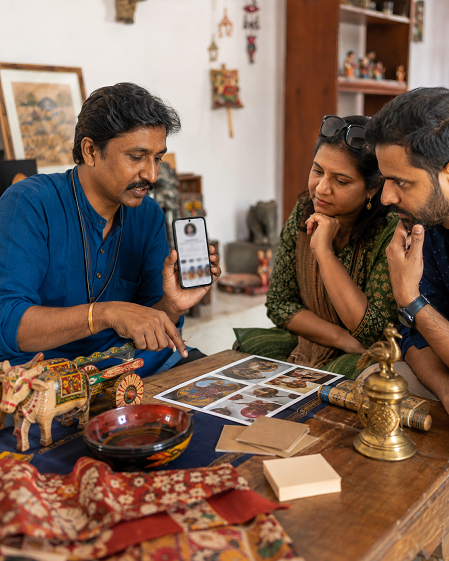
The July 2026 announcement matters because it frames handicrafts as a tourism and livelihood initiative, not just a retail category. Reports said Pawan Kalyan called for handicrafts tourism on the lines of temple and eco-tourism and directed officials to use QR codes to carry artisan profiles and craft stories. That is a major signal for sellers because it links physical discovery with digital trust.
Lepakshi Handicrafts, the Andhra Pradesh Handicrafts Development Corporation platform, says it has partnerships with more than 5,000 artisans across Andhra Pradesh and highlights craft forms such as Kalamkari paintings, Kondapalli toys, Etikoppaka lacquerware, Bidri metal craft, brass and bronze ware, wooden handicrafts, handloom textiles, and Pochampally Ikat. A tourism strategy built around such craft diversity needs more than attractive displays. It needs organized product information.
A buyer can admire a Kondapalli toy at a village workshop. But to buy it later as a gift, they need product names, sizes, material details, packaging options, price ranges, shipping terms, and care guidance. Without those details, tourism becomes a memory instead of a sales channel.
Why Craft Villages Need Catalogues, Not Just Stalls
A craft village is a high-trust environment. Buyers can see the artisan, tools, raw material, and production process. That creates confidence. But once the visitor leaves, much of that trust disappears unless the seller has a catalogue that preserves the story.
A gift-ready catalogue can be physical, digital, or both. It can be a printed booklet, QR-linked product page, WhatsApp catalogue, marketplace collection, PDF lookbook, or website shop. The format is less important than the clarity.
The catalogue should answer the questions tourists ask after they go home: What did I see? Who made it? What is it called? Can I order another one? Is it safe to ship? Is it appropriate for gifting? How should the recipient use or care for it?
That is especially important for Andhra Pradesh craft villages because many products have specific material, cultural, and regional identities. Kalamkari is not just “painted fabric.” Kondapalli toys are not generic wooden toys. Etikoppaka lacquerware is not ordinary decor. Tholu Bommalata is not only a performance tradition; it is also linked to leather puppetry, storytelling, and cultural preservation.
A catalogue protects that specificity.
What A Gift-Ready Catalogue Should Include
A strong craft village catalogue should be built around buyer confidence. It should not feel like a tourist brochure alone. It should function like a practical buying guide.
| Catalogue Detail | Why It Matters | Buyer Trust Signal |
|---|---|---|
| Craft Name And Region | Connects product to place and tradition | Helps buyers remember the origin |
| Artisan Or Cluster Profile | Shows who made or supplied the product | Builds accountability |
| Material Details | Explains wood, leather, textile, metal, dye, lacquer, or paint | Reduces uncertainty |
| Product Size And Use | Helps buyers choose gifts, decor, or functional items | Prevents wrong expectations |
| Price Range | Supports post-visit purchase decisions | Makes ordering easier |
| Packaging Proof | Shows whether the item can travel safely | Supports gifting and shipping |
| Care Instructions | Tells buyers how to clean, store, or protect the item | Lowers return risk |
This structure matters because craft tourism often creates emotional buying. A visitor sees the craft, hears the story, and wants to support the artisan. But online or post-trip buying requires practical confidence. The catalogue bridges those two moments.
Shimply’s guide to Indian craft gift sets makes the same point for handmade gifting: buyers need clear packaging, shipping, product pairing, and care details before they can confidently send handmade products to someone else.
How QR Codes Can Help If They Lead To Real Product Pages
The reported plan to tag handicrafts with QR codes carrying artisan profiles and craft stories is useful, but only if the codes lead to buyer-ready information. A QR code that opens a vague page with a name and photo is not enough. A QR code should help the visitor buy, understand, and preserve the product.
A strong QR-linked page should include the artisan or cluster profile, craft history, product catalogue, ordering details, care notes, packaging options, and contact method. If the craft has a GI connection, regional identity, or cultural use, that should be explained carefully. If the product is made by a cooperative, reseller, family workshop, or individual artisan, that relationship should be clear.
QR codes can also help tourists avoid confusion. A visitor may take photos of multiple stalls and forget which artisan made which product. A QR-linked catalogue gives each product a digital memory.
For craft villages, this is essential. Tourism brings visitors into the village once. Digital catalogues help them return as buyers.
Why Tholu Bommalata Needs Gift-Ready Storytelling
Reports on Andhra Pradesh’s handicrafts tourism push said Tholu Bommalata would be showcased during the upcoming Godavari Pushkaralu. That detail matters because Tholu Bommalata is not a simple souvenir category. It is a traditional shadow-puppet performance form with storytelling, leather craft, painting, music, and cultural context.
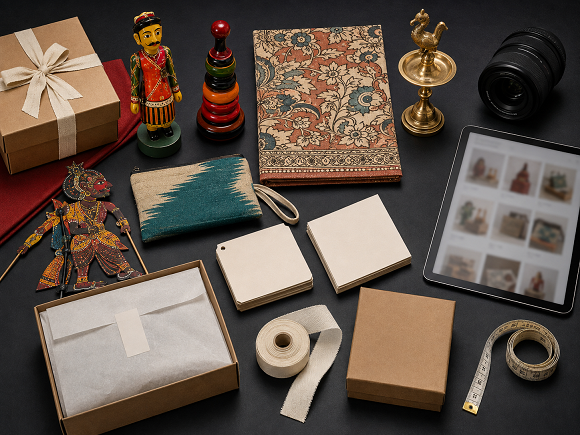
If craft tourism introduces visitors to Tholu Bommalata, sellers need to be careful with product framing. A puppet, wall panel, miniature, lampshade, bookmark, or decorative adaptation should be explained accurately. Is it made by a traditional puppet artisan? Is it meant for performance, decor, education, or gifting? What material is used? How should it be stored? Is it hand-painted? Is it based on a traditional character, motif, or contemporary design?
This kind of craft needs context because buyers may not understand the difference between a performance object and a decorative adaptation. A catalogue should make that clear without flattening the tradition into a generic “folk art gift.”
That is where gift-ready storytelling becomes important. The product should travel with an origin note, care card, and respectful explanation. The buyer should know what they are gifting, not just what it looks like.
How Kondapalli, Etikoppaka, Kalamkari, And Metal Crafts Need Different Catalogue Rules
A single catalogue template should not treat every Andhra craft the same way. Different crafts need different buyer information.
Kondapalli toys need material, size, paint, age-appropriateness, display use, and care details. If a toy is decorative rather than child-safe play material, the catalogue should say so. Gift buyers should not have to guess.
Etikoppaka lacquerware needs information about wood, lacquer, finish, food contact if relevant, cleaning, moisture exposure, and intended use. A bright lacquer object may look simple, but buyers need care guidance.
Kalamkari products need details on fabric, natural or synthetic dye use, printing or painting method, washing guidance, color variation, and use case. A buyer choosing a stole, wall textile, notebook cover, or fabric panel needs to know whether it is washable, framed, wearable, or decorative.
Brass, bronze, and Bidri-style metal crafts need material disclosure, polishing instructions, tarnish guidance, weight, packaging proof, and whether the piece is decorative, functional, or ceremonial. A fragile or heavy object requires more shipping clarity than a textile.
Gift-ready catalogues should respect these differences instead of listing everything under “handmade crafts.”
Why Craft Tourism Should Capture Buyer Questions
Craft villages can become excellent research spaces for artisans. Visitors ask questions that online sellers often forget to answer.
If tourists ask whether a lacquer object is washable, that belongs in the catalogue. If they ask whether Kalamkari colors fade, that belongs on the care card. If they ask whether a Kondapalli toy can be shipped overseas, that belongs in the packaging section. If they ask whether a puppet is for performance or display, that belongs in the product description.
The best catalogue is built from real visitor questions. That makes the language more useful because it reflects buyer doubt, not only seller pride.
Tourism also reveals gift occasions. Visitors may ask for return gifts, festival gifts, housewarming gifts, corporate gifts, souvenirs, wedding favors, or gifts for overseas relatives. Each of those use cases can become a catalogue section.
A craft village should leave the buyer with three things: memory, product understanding, and a route to reorder.
Why Product Photography Matters For Craft Villages
A catalogue is only as strong as its photos. Craft tourism often produces beautiful atmosphere images, but product pages need practical visuals too.
For every product, sellers should photograph the full item, close-up detail, scale, back or underside, packaging, and use context. A craft village catalogue can also include process photos: carving, painting, polishing, weaving, dyeing, drying, cutting, stitching, or assembling. These photos show handmade value without relying on exaggerated claims.
For gift-ready catalogues, packaging photos are especially important. Buyers want to know how the product will arrive. A terracotta, wooden, metal, lacquer, or leather craft item needs safe packaging. A textile gift needs folding, care card, and protective wrapping. A puppet or painted craft may need flat packing or cushioning.
Product photography should also avoid misleading staging. Do not use fake certification props, fake tourist reviews, unreadable plaques, or decorative cultural symbols that are not part of the product. The product, artisan, and process should carry the trust.
How Craft Villages Can Build Repeat Orders
The real business value of handicrafts tourism is not only same-day sales. It is repeat purchasing.
A tourist may buy one item at a village, then later want ten pieces for a family event, corporate gift, festival hamper, wedding return gift, or international shipment. That second order is easier if the seller already has a catalogue with product codes, dimensions, price tiers, packaging options, and minimum order rules.
Craft villages should create catalogue sections for:
- Small gifts under a clear price range, such as bookmarks, miniatures, coasters, small toys, jewellery, or small decor.
- Premium gifts such as larger wall pieces, special textile items, detailed puppets, metal craft, carved decor, or curated gift sets.
This is one of the places where tourism and ecommerce meet. The in-person visit creates trust. The catalogue creates repeatability.
Sellers should also clarify production timelines. Handmade products are not always ready in bulk. A catalogue should say whether an item is in stock, made to order, available in limited batches, or customizable. Buyers are more patient when expectations are set early.
Why Artisan Profiles Should Be Professional, Not Sentimental
The reported QR-code plan around artisan profiles is promising, but seller profiles must avoid reducing artisans to hardship stories. Buyers should understand the maker’s skill, cluster, materials, process, product range, and ordering method.
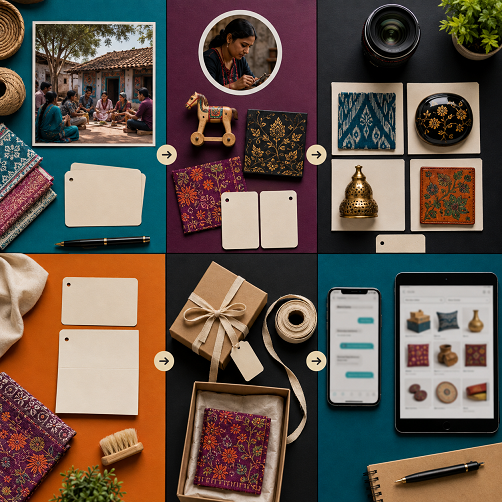
A professional artisan profile can include name or collective name, craft location, years of practice if the artisan wishes to share it, craft category, product types, process photos, training lineage, care guidance, and contact or ordering method. It should not overpromise, invent awards, or use emotional language without product detail.
For Shimply’s audience, this matters because buyer trust is built through clarity. A strong artisan profile should answer: Who made this? What do they make? Where is it from? What materials are used? How can I buy responsibly? How should I care for the product?
That kind of profile helps tourists become repeat buyers without turning craft identity into a charity pitch.
What Andhra Pradesh’s Craft Tourism Push Can Teach Online Sellers
Andhra Pradesh’s handicrafts tourism push is a state-level example of a broader handmade-commerce lesson. Craft buyers want more than objects. They want provenance, process, purpose, and confidence. But that does not mean sellers can rely only on storytelling. They also need catalogues, care cards, photography, packaging, and fulfillment clarity.
Craft villages are powerful because they give buyers direct exposure to making. But online product pages are where the relationship continues. If a village visit leads to a QR-linked catalogue, origin note, gift-packaging page, and ordering option, the tourism experience can keep producing value long after the visitor leaves.
For artisans, this can support better pricing and better recognition. For buyers, it makes handmade products easier to understand, gift, and reorder. For craft villages, it turns tourism into a more stable discovery system rather than a one-time sales event.
Andhra Pradesh’s handicrafts tourism push will be strongest when every craft village has a clear answer to the buyer’s next question: “How do I buy this again, and how do I gift it well?”