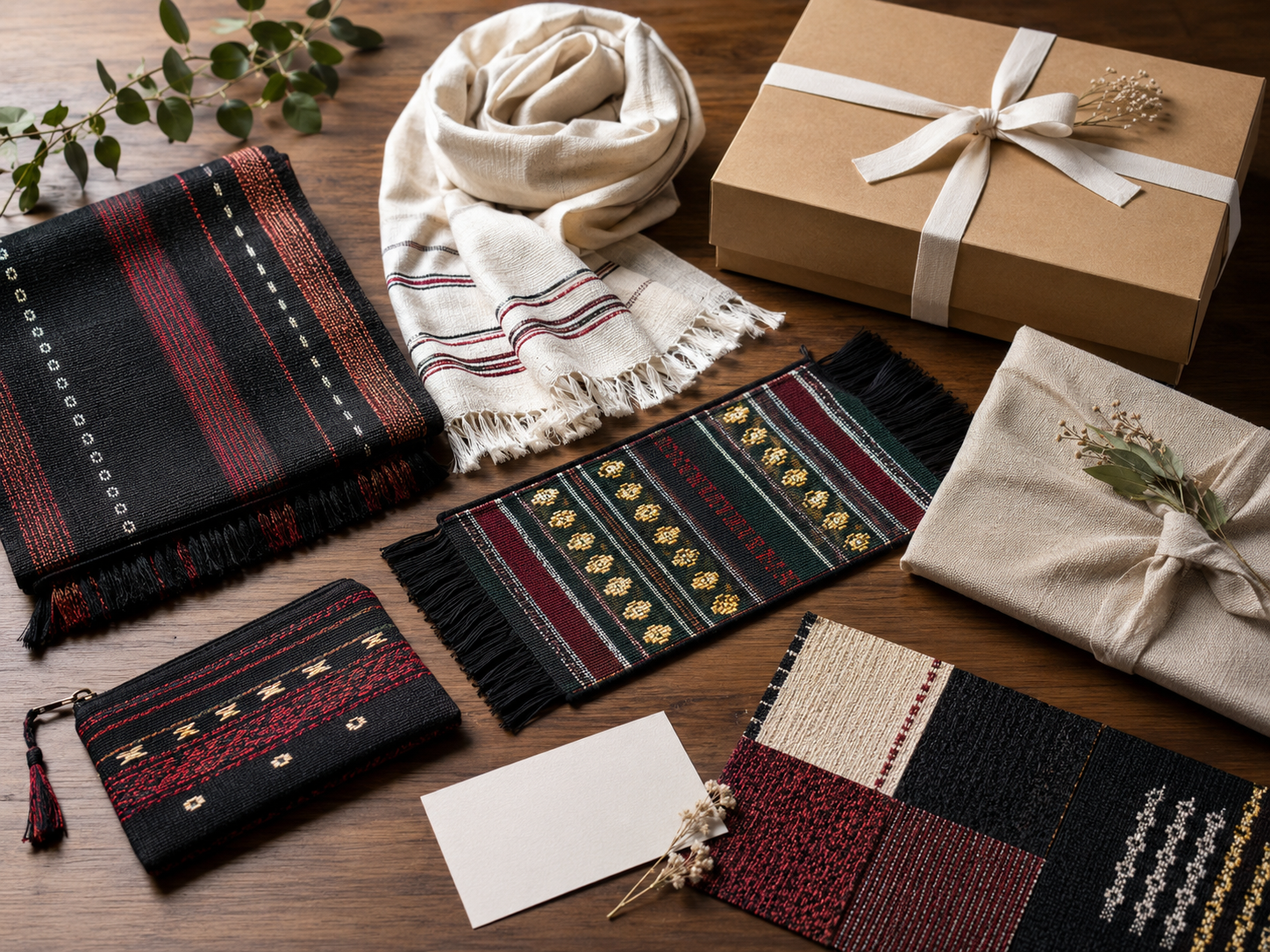
The Tana-Bana District Handloom Expo in Pfutsero is more than a local textile fair. It is a reminder that regional handloom expos can help traditional products become easier to find, understand, gift, and reorder online. In Phek district, Nagaland, the expo was inaugurated on July 13, 2026, at the Baptist Theological College ground, Mission Compound, Pfutsero, by Rev. Dr. Chekrovei Cho-O, Executive Secretary of the Chakhesang Baptist Church Council. Organized by the Nagaland Handloom & Handicrafts Development Corporation Ltd. and sponsored by the Development Commissioner (Handlooms), Ministry of Textiles, the expo runs from July 13 to 18.
For Shimply readers, the story matters because Naga textiles carry powerful regional identity but often need better product translation for digital buyers. A shawl, stole, wrap, runner, or handwoven accessory may be visually striking at an expo stall. Online, the same product needs searchable naming, clear photography, cultural accuracy, care instructions, and gift-ready packaging to reach buyers beyond the event.
Why The Pfutsero Expo Matters For Naga Textile Sellers
Pfutsero is not a random location for a regional handloom conversation. It sits in Phek district, a region strongly associated with Chakhesang cultural identity and textile traditions. Hosting the Tana-Bana District Handloom Expo there gives local weavers, sellers, and visitors a physical place to connect textile skill with market visibility.
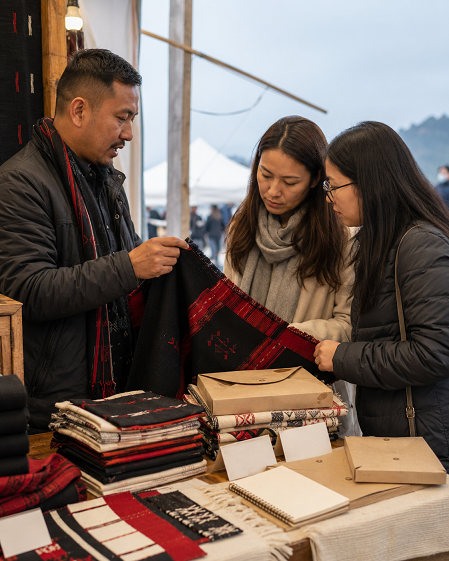
The Morung Express reported that the Tana-Bana District Handloom Expo was inaugurated at the Baptist Theological College ground, Mission Compound, Pfutsero, by Rev. Dr. Chekrovei Cho-O. Nagaland Post separately reported that the Nagaland Handloom & Handicrafts Development Corporation Ltd. is organizing the District Handloom Expo at Pfutsero Town from July 13 to 18, with sponsorship from the Development Commissioner (Handlooms), Ministry of Textiles. That Pfutsero handloom expo gives Naga textiles a focused local showcase instead of leaving them to compete only in broader craft fairs.
For sellers, a district-level expo has practical value. It brings buyers closer to the makers and helps visitors understand regional design, texture, weaving labor, and product use. A buyer can compare shawls, ask about motifs, feel fabric weight, and see how products are finished. Those are trust-building moments that online sellers should later convert into product-page details.
This is especially important for Naga textiles because the products are not generic “tribal print” goods. Different communities, motifs, colors, and textile forms carry identity. Sellers need to describe them with care, not flatten them into vague fashion language.
What Regional Expos Do Better Than Online Listings
Online listings are powerful, but they cannot replace the first-hand learning that happens at a textile expo. A buyer standing in front of a handwoven product can notice texture, thickness, drape, edge finishing, color contrast, and scale. They can ask whether the textile is ceremonial, decorative, wearable, giftable, or everyday use.
That interaction gives sellers valuable market research. If buyers keep asking whether a shawl is warm enough for winter, the online listing needs a weight and use section. If visitors ask whether a stole can be gifted internationally, the seller should add packaging and shipping notes. If buyers want to understand a motif, the product page should explain origin carefully without overclaiming.
This is where regional expos become digital-commerce tools. The stall is not only a selling space. It is a listening space. The questions buyers ask in Pfutsero can become better product titles, better descriptions, better care cards, and better photos.
Nagaland’s Industries & Commerce Department describes its textile division as an initiative to preserve traditional weaving, empower artisans, and boost the local economy through tribal craftsmanship. It also notes alignment with Ministry of Textiles programs, including the National Handloom Development Programme and India Handloom Brand, along with market access support for artisan clusters. The Nagaland textile focus reinforces why expos matter: they connect preservation with sales readiness.
For online sellers, the lesson is direct. Every buyer question at an expo should become a content asset. That means product-page copy, a care guide, a gift guide, a short video, a packaging note, or a social post explaining the textile’s use.
How Naga Textiles Can Become Searchable Gift Products
A handwoven textile becomes searchable when the seller describes it the way a thoughtful buyer searches. “Beautiful Naga item” is too broad. “Handwoven Naga shawl from Phek district,” “Chakhesang-inspired handloom stole,” or “Naga textile gift wrap for home styling” is clearer, provided the wording is accurate.
Searchable gift products need four layers. The first is product type: shawl, stole, runner, wrap, scarf, cushion cover, wall textile, bag, or accessory. The second is region or community context, used carefully and only when accurate. The third is material and technique. The fourth is gift use: wedding gift, housewarming textile, winter accessory, cultural keepsake, festive gift, or international parcel.
This matters because many buyers do not know what to search at first. They may begin with “Indian handloom gift,” “Northeast India textile,” “Naga shawl,” or “handwoven gift for home.” A seller can meet that buyer by writing product titles and descriptions that include both craft identity and buyer use.
Shimply’s guide to GI-tagged Indian crafts by state makes a similar point for authenticity-conscious buyers: state and region help buyers understand what they are purchasing and avoid vague craft claims. Naga textiles need the same kind of clarity, even when the product is not being sold through GI language.
For gift buyers, usability matters as much as identity. A Naga textile can be positioned as a shawl, travel wrap, wall accent, table textile, keepsake, or premium gift. Sellers should show those uses visually rather than expecting buyers to imagine them.
Why Cultural Accuracy Is A Seller Advantage
Naga textile language requires care. Many buyers may be drawn to bold patterns, red-black-white palettes, geometric layouts, and handwoven texture, but sellers should not describe everything as “warrior,” “tribal,” or “ethnic” without context. Those words can be imprecise, and in some cases disrespectful.
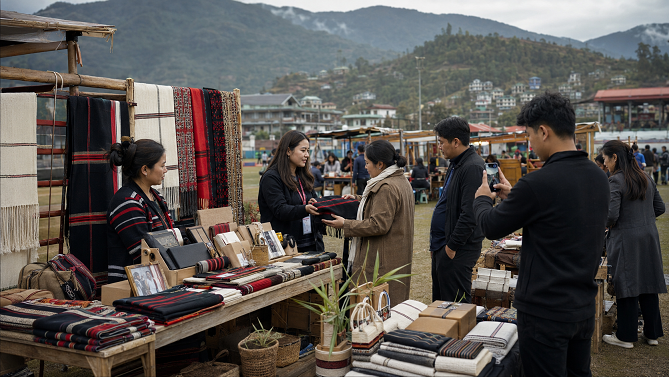
Cultural accuracy is not only an ethics issue. It is also a trust advantage. A seller who explains a textile’s origin, use, and design carefully feels more credible than a seller who uses generic heritage terms. Buyers interested in handmade products often want to support real craft communities, but they need sellers to help them buy responsibly.
The Heirloom Naga Centre describes Naga shawls as identity markers and living cultural narratives rooted in backstrap or loin-loom weaving traditions, with textile designs tied to community, ritual, and artistry. That Naga shawl context is useful for sellers because it shows why textile descriptions should avoid shallow styling language.
A seller can be accurate without making product pages too academic. A short description can explain region, weaving method, color meaning when verified, intended use, and care. If the seller does not know the meaning of a motif, it is better to say less than invent a story.
For buyers, cultural accuracy creates confidence. A product page that says “handwoven by a Naga artisan group in Phek district, suitable as a shawl or display textile, with handmade variation in edge finishing” is more helpful than “ancient tribal luxury shawl.” Specificity beats exaggeration.
What Product Pages Should Learn From The Expo Stall
A strong expo stall can teach online sellers how to structure a product page. The best stalls show the product clearly, group similar items, explain price differences, and let buyers compare. A good online listing should do the same.
| Expo Buyer Question | Online Listing Feature Needed | Why It Helps |
|---|---|---|
| What is this textile used for? | Use-case photos and product title | Helps buyers imagine wearing, gifting, or styling it |
| Where is it from? | Region and maker context | Builds origin trust |
| Is it handwoven? | Process description and close-up photos | Shows craft labor and texture |
| How big is it? | Dimensions and scale image | Reduces returns and confusion |
| Can I gift it? | Packaging photo and care card | Makes the product occasion-ready |
| How do I care for it? | Washing, storage, and handling notes | Protects the product after purchase |
This kind of product-page structure is especially important for textile sellers because fabric is hard to judge online. Buyers need to see full length, folded thickness, weave detail, edge finishing, and styling scale. A shawl photographed only flat on a table may not communicate drape. A textile shown only on a model may not show weave. Sellers need both.
Expo sellers should photograph their products before, during, and after the event. A stall display can become a collection photo. A close-up can become a texture image. Packaging at the counter can become proof that the product is gift-ready. Buyer questions can become FAQ copy.
How Pfutsero Sellers Can Turn Local Interest Into Repeat Orders
The six-day expo creates a short window of attention. Sellers who want long-term value need a follow-up plan. That does not require complex technology. It requires product records, contact options, and clear order pathways.
Each product should have a simple code, name, price, size, material note, and stock count. Sellers should keep photos of each product category and have a way to send them to buyers after the event. A WhatsApp catalogue, Instagram page, website listing, or marketplace page can help buyers reorder.
This is especially useful for gift products. A buyer may purchase one shawl at the expo, then later want five pieces for family gifts, a textile set for a wedding, or a smaller accessory for international shipping. If the seller has no catalogue or follow-up process, that demand disappears.
Packaging also matters. A Naga textile gift should be easy to carry, easy to store, and easy to present. Sellers can use cloth wraps, kraft sleeves, care cards, and simple maker notes. The packaging should feel respectful and practical, not overly commercial.
Repeat-order strategy should also recognize handmade limits. Sellers should be clear about which products are one-of-a-kind, which can be repeated, and which require lead time. Handmade buyers usually understand waiting when sellers explain timelines honestly.
Why District-Level Expos Can Build Stronger Craft Search
National fairs bring big visibility, but district-level expos can create sharper identity. A Pfutsero expo can make Phek district textiles more legible to buyers. That matters because online search often rewards specificity.
A buyer may search “Nagaland handloom,” then refine to “Naga shawl,” then to a community, district, color, product type, or use case. Sellers who document their products at the district level can meet that search journey with better content.
Nagaland’s broader textile sector is already positioned around heritage and market development. The state’s official Ease of Doing Business page describes the textile, handicraft, and handloom sector as a vital part of Nagaland’s economy, known for intricate weaves and vibrant designs, with products such as shawls, scarves, and tribal garments valued locally and internationally. That Nagaland handloom sector context supports the idea that regional identity can be turned into buyer-facing value.
For sellers, district-level search terms should be used responsibly. Do not add “Pfutsero,” “Phek,” “Chakhesang,” or other identity terms unless they accurately describe the product, maker, or event context. When accurate, they can help serious buyers find the product and understand its origin.
What Buyers Should Ask Before Purchasing Naga Textiles
Buyers at the Tana-Bana expo, or online afterward, should shop with attention. Naga textiles carry cultural meaning, and not every product should be treated as ordinary decorative fabric.
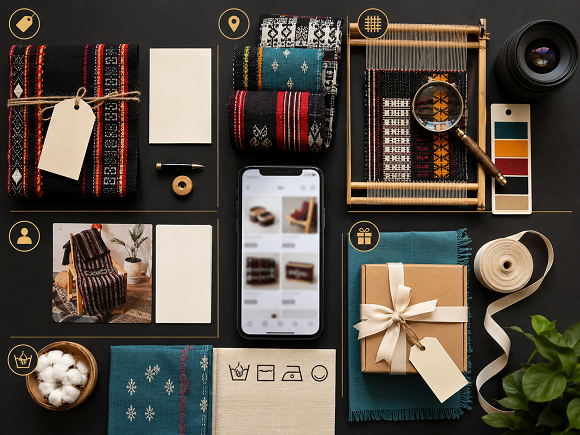
A buyer should ask what the product is, where it was woven, what material was used, whether it is meant for wearing or display, how it should be stored, and whether the seller can explain the textile’s origin without exaggeration. For gift buyers, it is also useful to ask whether the textile comes with a care note or packaging.
Buyers should be cautious of vague listings that use Naga design language without maker context. A cheap printed imitation may look similar from a distance, but it does not carry the same textile labor or community identity as handwoven work. Product photos should show weave texture, not only pattern.
For international buyers, weight and care matter. A lightweight stole, scarf, cushion cover, or small wall textile may travel more easily than a heavy shawl. Sellers should explain shipping and care so the product arrives ready to gift.
How Naga Textiles Can Move From Expo Tables To Year-Round Gift Commerce
The Tana-Bana District Handloom Expo shows how regional textile events can become gateways to year-round handmade commerce. The expo gives buyers a reason to encounter Naga textiles in person. Online selling gives them a way to return later.
The strongest sellers will treat the expo as a starting point, not the end of the sale. They will document products, collect buyer questions, improve photos, write clearer descriptions, prepare gift packaging, and create digital catalogues. They will explain textile identity accurately and avoid generic labels that weaken trust.
For Naga textile sellers, the opportunity is not to make every product look like mass-market fashion. The opportunity is to make each product easier to understand and easier to buy without losing its regional character. A handwoven shawl, stole, runner, or accessory can become a searchable gift product when the seller connects origin, material, use, care, and packaging.
For buyers, Pfutsero’s expo is a reminder that handmade textiles are not only patterns. They are local knowledge, labor, identity, and living craft. When regional expos help buyers see that value, online sellers can carry it forward with better product pages and more responsible storytelling.