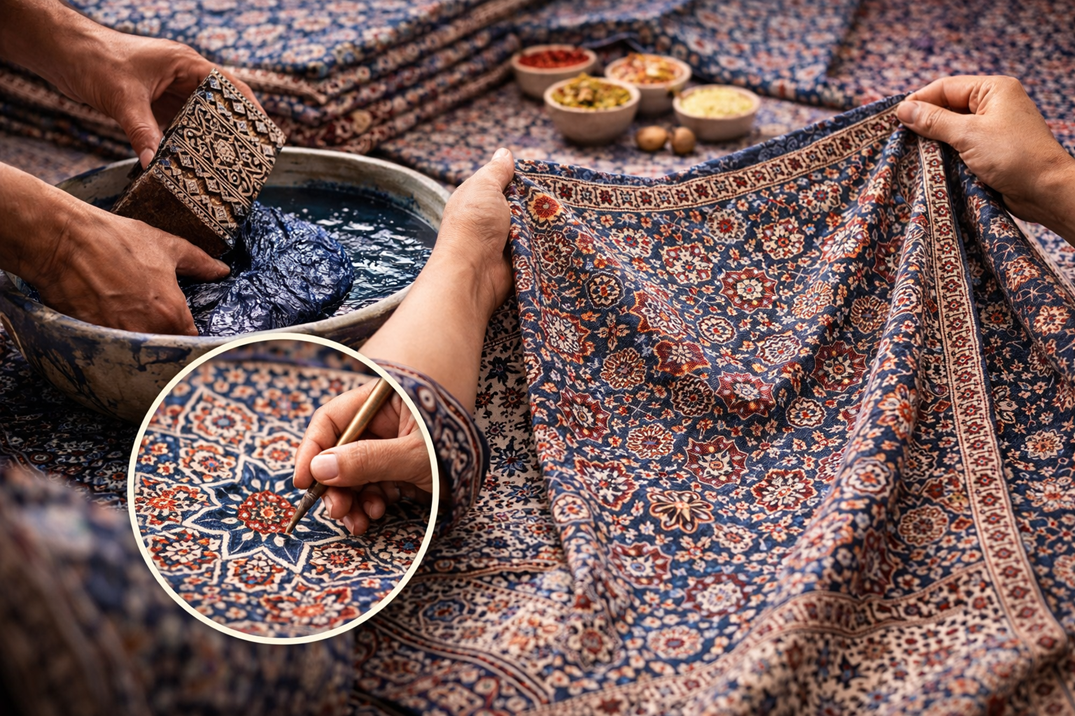
Ajrakh fabric is one of India’s most technically complex and culturally layered textile traditions. Known for its deep indigo tones, symmetrical geometric patterns, and labor-intensive natural dyeing process, Ajrakh is not just a fabric—it is a craft defined by precision, patience, and regional identity.
However, as Ajrakh gains global popularity, buyers are increasingly faced with a familiar challenge: distinguishing authentic, naturally dyed Ajrakh from synthetic or mass-produced imitations. This guide breaks down everything you need to know—from materials and patterns to practical authenticity tests.
What Ajrakh Fabric Is And Where It Comes From
Ajrakh is traditionally produced in regions of Kutch (Gujarat) and Barmer (Rajasthan), where artisan communities have preserved the craft for generations. The process involves block printing with hand-carved wooden blocks, followed by multiple stages of dyeing using natural substances.
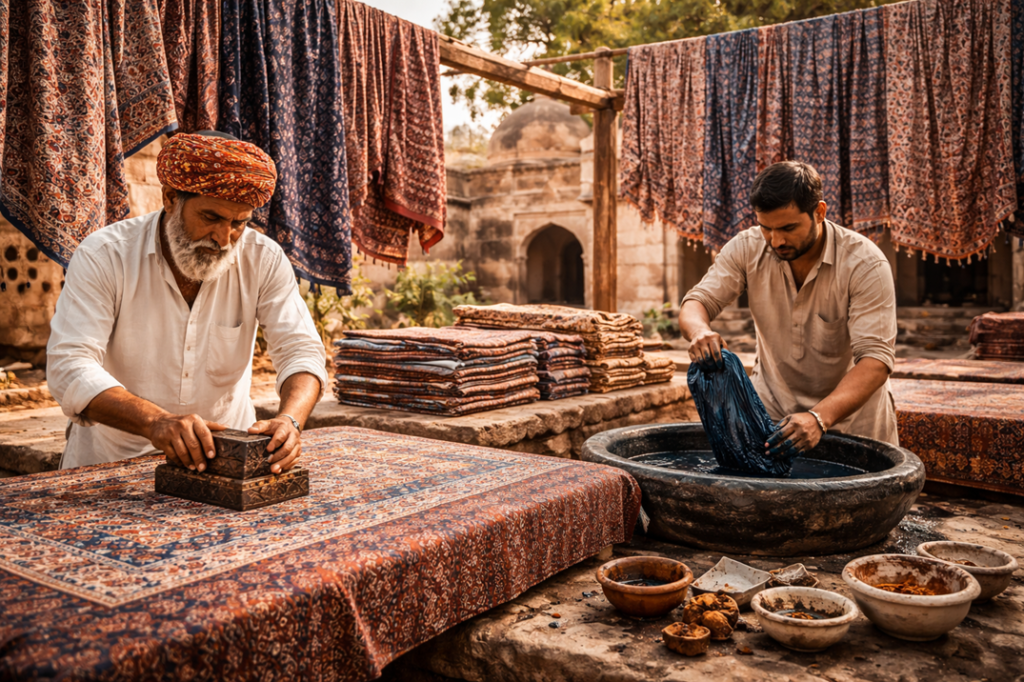
The word “Ajrakh” is believed to derive from “azrak,” meaning blue in Arabic, reflecting the fabric’s iconic indigo base.
What makes Ajrakh unique is its multi-stage resist dyeing technique, where each layer of color is applied with precision. The final fabric often features mirror-like symmetry, achieved through careful alignment during printing.
The Role Of Natural Dyes In Ajrakh
Authentic Ajrakh is defined by its use of natural dyes sourced from plants, minerals, and organic materials. These dyes not only influence the fabric’s appearance but also determine its authenticity and value.
Common natural dye sources include:
- Indigo for deep blue tones
- Madder root for red shades
- Iron and jaggery mixtures for black
- Pomegranate rind for yellow undertones
Unlike synthetic dyes, natural dyes produce subtle tonal variations and earthy color depth, which are difficult to replicate artificially.
This emphasis on natural processes aligns Ajrakh with other heritage textiles where dyeing plays a central role, such as authentic Kalamkari fabric techniques, where natural dyes also define quality and authenticity.
Understanding Ajrakh Patterns And Design Logic
Ajrakh patterns are not random decorative elements—they are structured, mathematical, and symbolic. Most designs follow strict geometric repetition, often arranged in grids or radial layouts.
Common motifs include:
- Stars and rosettes
- Interlocking geometric shapes
- Floral abstractions
- Symmetrical borders
What sets Ajrakh apart is its double-sided printing technique, where both sides of the fabric are equally detailed. This is a strong indicator of authenticity, as it requires precise alignment and multiple dyeing stages.
| Pattern Feature | Authentic Ajrakh | Imitation Ajrakh |
|---|---|---|
| Symmetry | Highly precise | Slight misalignment |
| Design Depth | Multi-layered | Flat appearance |
| Reverse Side | Fully detailed | Faded or blank |
| Motif Clarity | Sharp yet organic | Overly perfect or printed |
For buyers, pattern analysis is one of the most reliable ways to assess authenticity without needing technical expertise.
Step-By-Step Process Behind Authentic Ajrakh
Ajrakh production is one of the most time-intensive textile processes in India, often taking 2 to 3 weeks to complete a single batch.
The process typically includes:
- Fabric washing and preparation
- Application of resist paste
- Block printing of initial designs
- Dyeing in natural pigments
- Repeated washing, drying, and reprinting
Each stage builds upon the previous one, resulting in a fabric that carries depth, texture, and layered color complexity.
This multi-step process is why authentic Ajrakh cannot be mass-produced quickly—and why pricing reflects both time and craftsmanship.
Practical Authenticity Tests For Buyers
For buyers evaluating Ajrakh—especially online—there are several practical tests that can help distinguish genuine fabric from imitations.
First, examine the color behavior. Natural dyes tend to have a slightly muted, earthy tone rather than bright, synthetic intensity.
Second, check the reverse side of the fabric. Authentic Ajrakh will show nearly identical patterns on both sides due to its double-printing technique.
Third, look for minor irregularities in pattern alignment. These are not flaws—they are indicators of manual block printing.
Finally, consider the feel of the fabric. Naturally dyed cotton typically feels softer and more breathable compared to chemically treated alternatives.
Pricing And Market Expectations
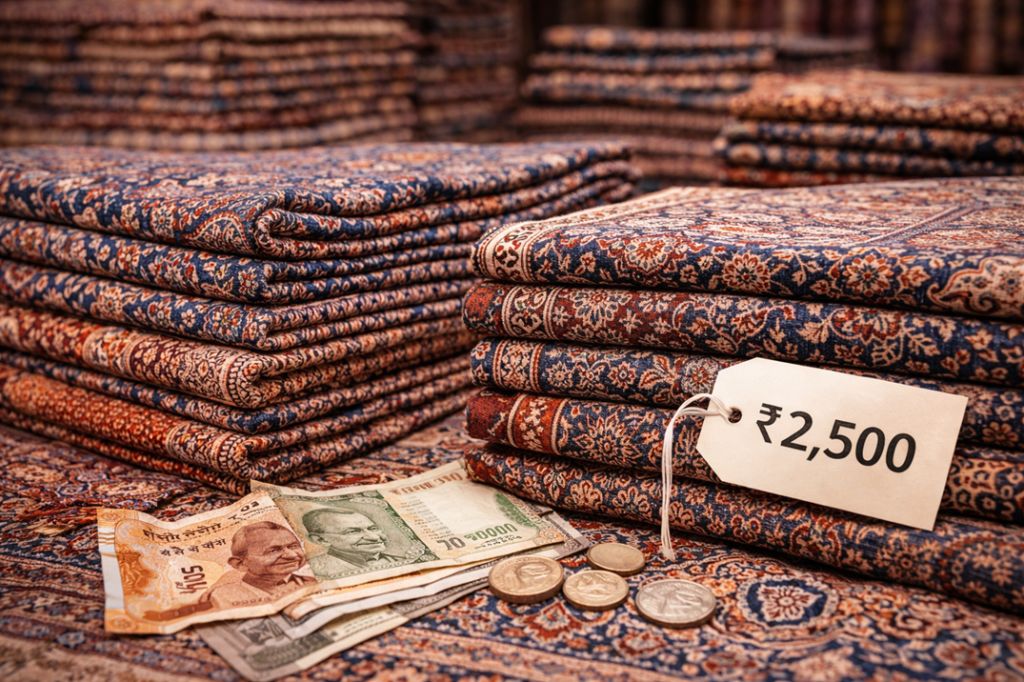
Ajrakh pricing varies based on complexity, dye quality, and artisan reputation, but it generally falls into a mid-to-premium category.
| Product Type | Typical Price Range (India) |
|---|---|
| Ajrakh Cotton Fabric (per meter) | ₹400 – ₹1,500 |
| Ajrakh Dupattas | ₹800 – ₹3,000 |
| Premium / Natural Dye Ajrakh | ₹2,000+ |
Extremely low prices are often associated with:
- Synthetic dyes
- Screen printing instead of block printing
- Single-sided designs
For buyers, pricing should be evaluated alongside process transparency and origin details, not in isolation.
Why GI Tagging And Regional Identity Matter
Ajrakh is recognized as a GI-tagged craft, which links its authenticity to specific regions and traditional production methods. This makes origin a critical factor in evaluating genuine products.
Buyers can verify GI-related information through resources like the Geographical Indications Registry of India, which documents officially recognized crafts and their origins.
As global demand for Indian textiles increases, GI tagging plays a crucial role in:
- Protecting artisan communities
- Preserving traditional techniques
- Helping buyers make informed decisions
Choosing The Right Ajrakh For Your Needs
Not all Ajrakh fabrics serve the same purpose. Buyers should align their purchase with their intended use.
For collectors or heritage-focused buyers, natural dye Ajrakh with detailed block printing offers the highest value. For casual or budget-conscious buyers, simpler designs or partial natural dye fabrics may be more practical.
The key is clarity—knowing what you are buying and why it is priced the way it is.
As Ajrakh continues to gain recognition globally, informed buyers are increasingly prioritizing authenticity, process transparency, and regional identity over surface-level aesthetics.