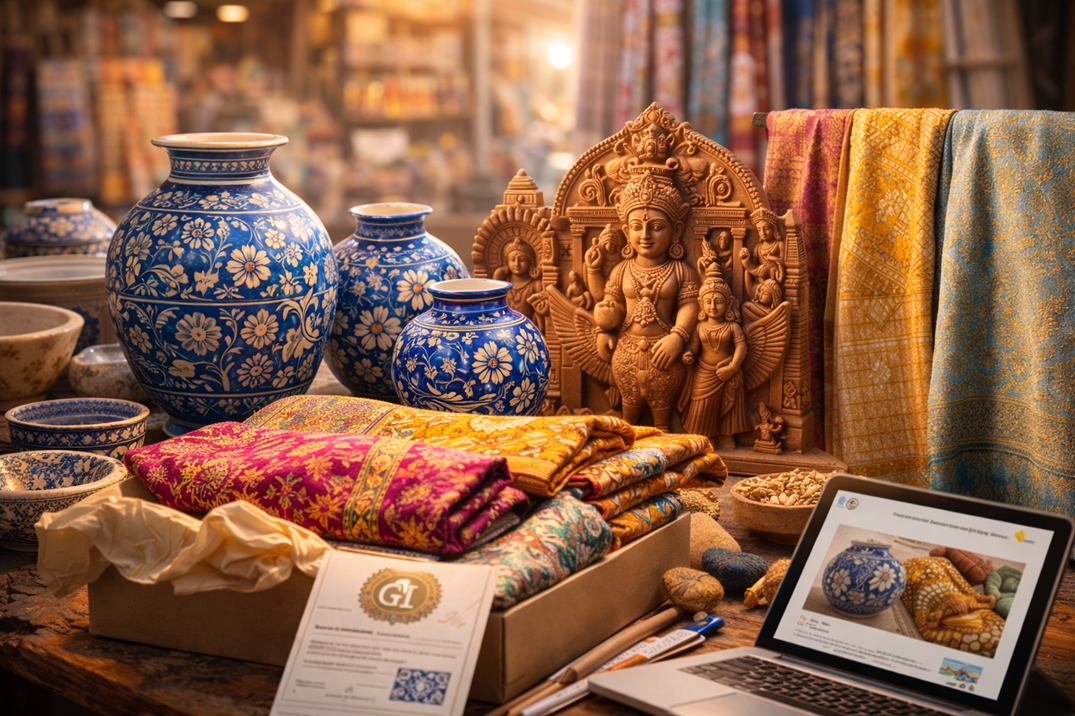
Rajasthan has long been one of India’s most influential centers of traditional craftsmanship. From intricate textiles to distinctive ceramics, the state’s artisans have developed techniques passed down through generations. Many of these crafts are now protected under India’s Geographical Indication (GI) system, which certifies that a product originates from a specific region and follows traditional production methods.
For collectors and serious buyers of Indian handicrafts, Rajasthan offers some of the most recognizable GI-tagged products in the country. Understanding these crafts—and the regions that produce them—can help buyers identify authentic pieces while appreciating the cultural heritage behind each item.
This guide highlights several GI-tagged handicrafts from Rajasthan that collectors and enthusiasts should know.
Why Rajasthan Holds A Unique Place In Indian Craft Heritage
Rajasthan’s craft traditions developed through centuries of royal patronage, trade routes, and cultural exchange. Cities such as Jaipur, Jodhpur, and Udaipur historically served as hubs where artisans produced textiles, ceramics, jewelry, and decorative objects for royal courts and international merchants.
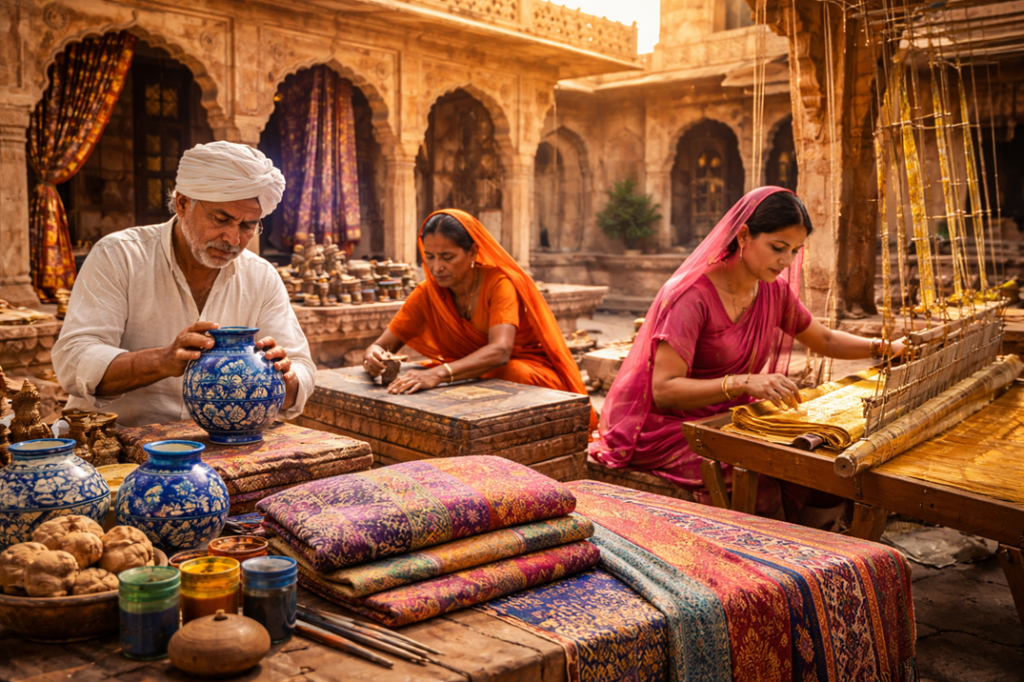
Today, many of these traditions remain active in artisan communities across the state. GI recognition helps protect these crafts from imitation while ensuring that the knowledge and skills of local artisans continue to be preserved.
For collectors, Rajasthan’s GI-tagged crafts represent not only decorative objects but also living cultural traditions tied to specific towns and artisan clusters.
Major GI-Tagged Crafts From Rajasthan
Several handicrafts from Rajasthan have received official GI recognition due to their distinct techniques and regional identity. The following table highlights some of the most notable examples.
| Craft | Origin | Known For |
|---|---|---|
| Jaipur Blue Pottery | Jaipur | Quartz-based glazed ceramics with Persian motifs |
| Sanganeri Block Prints | Sanganer (Jaipur) | Delicate floral hand block printing on cotton |
| Bagru Block Prints | Bagru (Jaipur) | Natural dyes and bold geometric patterns |
| Kota Doria Sarees | Kota | Lightweight cotton-silk weave with square patterns |
| Molela Clay Craft | Molela (Rajasthan) | Terracotta plaques depicting folk deities |
Each of these crafts reflects unique regional techniques that have evolved over centuries.
Jaipur Blue Pottery: Rajasthan’s Signature Ceramic Craft
Jaipur Blue Pottery is one of Rajasthan’s most recognizable crafts. Unlike traditional ceramics made from clay, this craft uses a unique mixture of quartz powder, glass powder, and natural gums.
The pottery is known for its distinctive turquoise glaze and intricate floral designs inspired by Persian and Mughal art. Plates, vases, tiles, and decorative objects are among the most common forms produced by artisans in Jaipur.
Collectors often value Jaipur Blue Pottery not only for its visual beauty but also for its unusual production technique, which distinguishes it from most ceramic traditions around the world.
The Textile Traditions Of Sanganer And Bagru
Rajasthan’s textile crafts are equally renowned, particularly the hand block printing traditions of Sanganer and Bagru.
Sanganeri printing is famous for its delicate floral motifs and light-colored backgrounds. Artisans carve wooden blocks by hand and use natural or mineral dyes to create repeating patterns on cotton fabrics.
Bagru printing, in contrast, often uses darker tones such as indigo and rust. The designs tend to be bolder and more geometric, reflecting the distinctive dyeing and resist-printing techniques used in the Bagru region.
Collectors interested in these traditions often benefit from understanding the key differences between Sanganeri and Bagru block prints, which helps identify authentic textiles when purchasing handcrafted fabrics.
Kota Doria: The Art Of Lightweight Weaving
Kota Doria sarees represent one of Rajasthan’s most elegant textile traditions. These sarees are known for their lightweight structure and distinctive checkered weave known as khat.
The weaving technique combines cotton and silk threads to produce a fabric that is both breathable and durable. Historically worn in royal courts, Kota Doria sarees remain highly valued for their craftsmanship and subtle elegance.
Because of their delicate weave structure, authentic Kota Doria sarees often display slight irregularities—one of the indicators of genuine handwoven production.
Molela Clay Craft: Rajasthan’s Terracotta Storytelling
Originating in the village of Molela near Nathdwara, Molela clay craft is a unique terracotta art form used to create plaques depicting Hindu deities and folk narratives.

These plaques are traditionally installed in village shrines and homes. Artisans shape the figures by hand before firing the clay and applying natural pigments.
Collectors appreciate Molela plaques for their storytelling elements, which often reflect regional folklore and religious traditions.
Why Collectors Value GI-Tagged Crafts
For collectors, GI-tagged crafts represent authenticity, heritage, and craftsmanship. Because these products are tied to specific regions and techniques, they often carry stronger cultural significance than mass-produced decorative goods.
Authentic GI crafts also support artisan communities who continue to practice traditional methods. As global interest in handmade products grows, many collectors see these crafts as both cultural artifacts and meaningful design pieces.
Organizations such as the official Geographical Indications Registry of India maintain records of registered GI crafts and help protect them from unauthorized commercial use.
Building A Rajasthan Craft Collection
Collectors interested in Rajasthan’s handicrafts often begin by exploring the region’s most recognized traditions. Ceramics, textiles, and terracotta art provide a diverse starting point for building a meaningful collection.
Learning about the origins, materials, and techniques behind these crafts can help buyers distinguish authentic handmade objects from factory-made replicas.
For those passionate about traditional craftsmanship, Rajasthan offers one of the richest craft landscapes in India—where each piece reflects centuries of artistic heritage and regional identity.