You’re eyeing a beautiful textile, ready to buy. But a doubt stops you: is it real craftsmanship or a fake? Knowing the difference between old and new printing ways is key.
This guide gives you the power to know. Inside, you’ll find a 12-point inspection toolkit. It turns a confusing guess into a sure choice. This knowledge protects your money and makes sure you get what you paid for.
Why is this skill important? It’s not just about looks. Knowing the right method shows a product’s quality, how long it lasts, and its story. It supports fair trade and values real art.
We’ll show you the signs, from texture and color to design detail. You’ll learn what to check before buying. Let’s clear up the mystery of textile printing together.
Block vs Screen/Digital
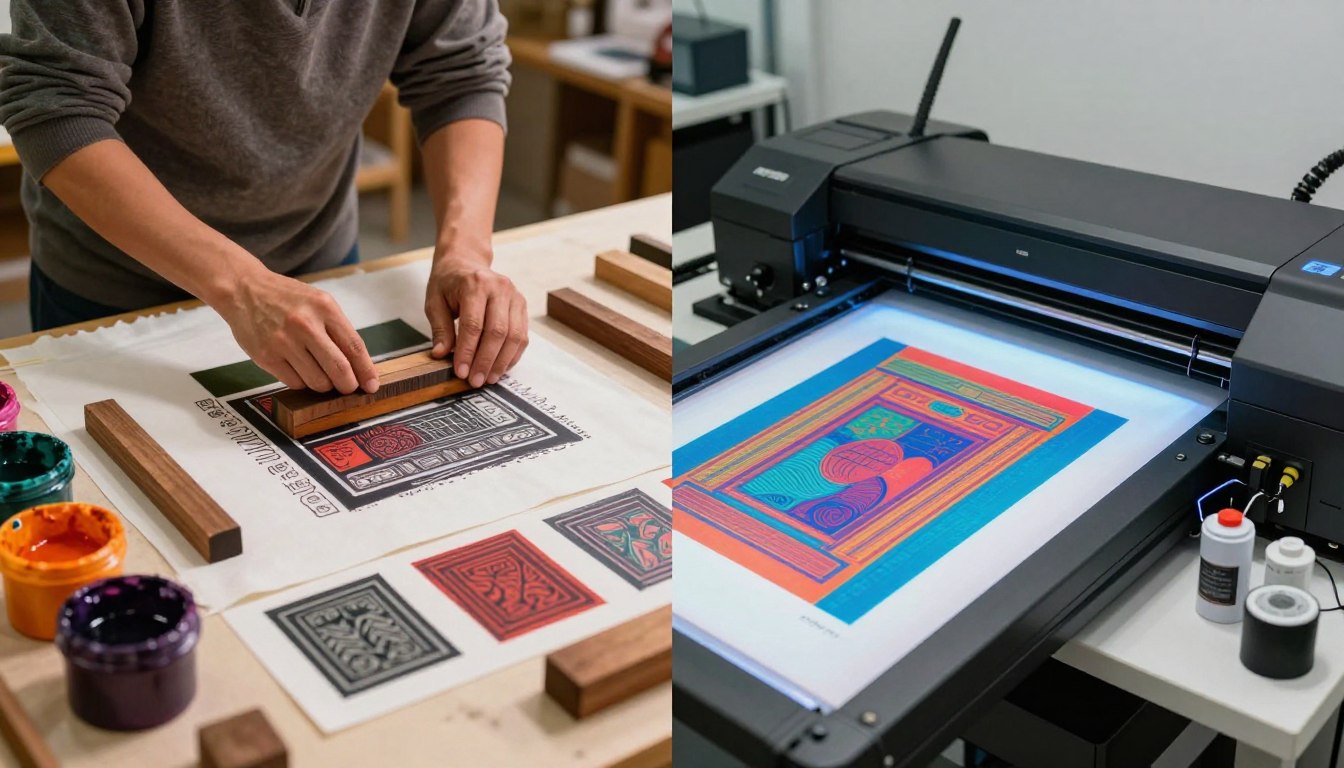
Each printing method—block, screen, and digital—puts its own mark on fabric. Understanding the hand block vs screen print and digital differences helps you see quality and value. Let’s explore these three main methods.
Hand block printing is an old craft. Artisans use wooden blocks to dye and stamp fabric by hand. This makes each print unique with slight variations and charming flaws. The colors soak deep into the fabric, giving it a rich feel.
Screen printing uses a mesh screen to apply ink. Flatbed screen printing presses the screen onto fabric, while rotary screen printing does continuous patterns. Both methods create bold colors and allow for layering. But, the alignment of layers can be different from hand block work.
Digital printing is a newer method. It uses a printer to apply ink directly from a digital file. This method has no stencils or blocks. It allows for unlimited repeat sizes and detailed prints with high precision. It’s a distinct method from the physical ones.
| Method | Process | Key Characteristics | Visual/Tactile Clue |
|---|---|---|---|
| Hand Block | Hand-stamped wooden blocks | Unique imperfections, deep dye penetration | Soft, uneven texture; visible block edges |
| Screen Print | Ink forced through mesh stencil | Vibrant, opaque colors; layered designs | Crisp, flat layers; possible slight ridge of ink |
| Digital Print | Computer-controlled inkjet application | Photorealistic detail, unlimited repeat | Perfect registration; ink sits on fabric surface |
The main difference is the tool used: a block, a mesh screen, or a digital file. This affects the price, texture, and durability. Next, we’ll show how to spot these differences quickly.
Intro: Why method matters for price and impact
Why does a hand-block printed scarf cost more than a digitally printed one? It’s because of big differences in how they’re made. The printing method greatly affects cost, time, and the scarf’s look.
Think of it as the engine of your textile project. For businesses, it changes MOQs and inventory risks. For buyers, it affects price, value, and the item’s story.
The main differences are clear. Digital printing needs just a digital file. It starts with short runs, often 350-400 yards. This cuts down on screen costs.
Rotary screen printing needs expensive screens and big orders, over 1,200 yards. The big investment is in screens, not printers.
- Cost & Lead Time: Short runs are cheaper and faster with digital printing.
- Fabric Hand & Choice: The printer picks the base fabric. This changes the material’s weight, drape, and feel.
- Aesthetic & Authenticity: Each method gives unique looks and feels. These affect how customers see and value the item.
Smart buyers and sellers check printer claims. Verifying these is key to justify prices or ensure quality. A set of authenticity test prints is a great tool for this.
By comparing sample prints, you can see the real effects of different methods. This turns a choice into a solid business decision. It protects your investment and makes sure your product is what you envisioned.
Learn more about the different printing methods available at this link.
Process basics: hand block, screen, rotary, digital
To understand the difference between block and digital prints, you need to know how each method applies color to fabric. Each technique has its own way of doing this, leaving unique marks on the fabric. Knowing these basics helps you spot clues like registration marks.
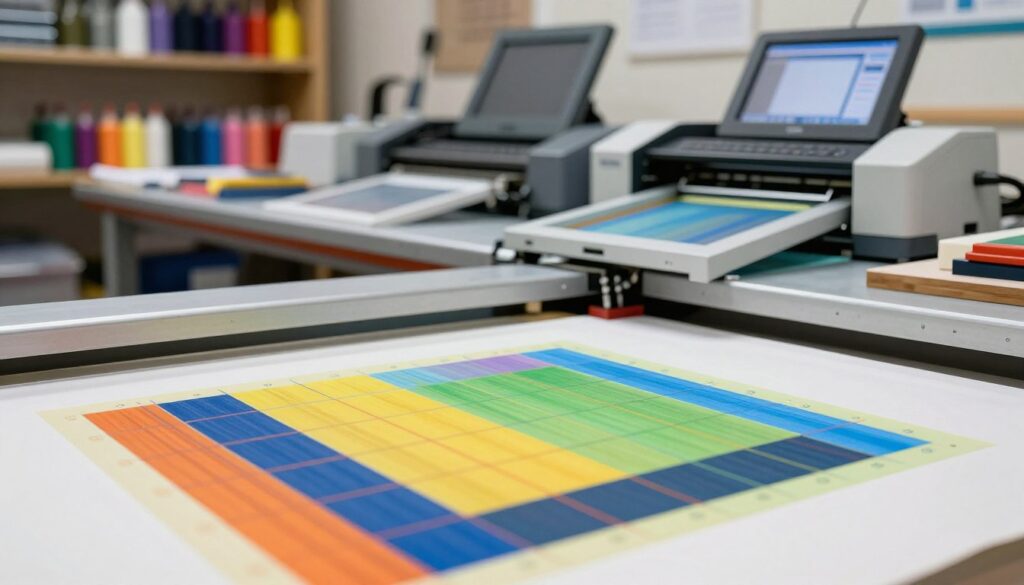
Each method has its own way of applying color. This difference affects design flexibility and production speed. Below is a table comparing the four main fabric printing processes.
| Printing Method | Process Type | Repeat Size Limitation | Key Identifiers | Best For |
|---|---|---|---|---|
| Hand Block | Manual, Artisanal | Block size (often small) | Slight misalignment, uneven ink pressure | Small batches, heritage designs |
| Flatbed Screen | Manual/Automated Stencil | Screen size (large possible) | Sharp edges, thick ink deposit | Bold graphics, medium runs |
| Rotary Screen | Automated Cylindrical Stencil | Cylinder circumference | Registration marks on selvedge, continuous patterns | High-volume, continuous patterns |
| Digital Inkjet | Computer-Controlled Inkjet | Virtually unlimited | Photographic detail, no screen mesh pattern | Complex designs, prototyping |
The Manual Artisan: Hand Block Printing
Hand block printing is an ancient craft. Artisans carve designs into wooden blocks. They then stamp these blocks onto fabric with dye or pigment paste.
This method requires careful manual alignment, or registration. Each block must be perfectly aligned for multi-color designs. This process often results in slight, charming misalignments.
There are no mechanical guides or automated marks. The human eye and hand are the only tools for alignment. This creates a unique, organic feel that machines cannot replicate.
The Stencil Workhorse: Screen Printing (Flatbed & Rotary)
Screen printing uses a mesh stencil to transfer ink. The two main types are flatbed and rotary. Both rely on the same basic stencil principle but execute it differently.
Flatbed screen printing is often semi-automated. The fabric is placed on a long table. A separate screen for each color is lowered onto the fabric. A squeegee then drags ink paste across the screen, forcing it through the mesh onto the cloth beneath. The fabric then moves to the next station for the next color.
Rotary screen printing is a continuous, high-speed process. Here, the screen is a seamless, perforated metal cylinder. The fabric moves under these rotating cylinders. Ink is fed inside the cylinder and forced out through the pattern holes.
A key identifier for rotary printing is the tell-tale registration marks printed along the fabric’s selvedge. These small marks are critical for aligning the cylindrical screens with perfect precision during the high-speed run. Flatbed printing may also use alignment marks, but they are often trimmed away.
The Digital Revolution: Inkjet Fabric Printing
Digital fabric printing is like your desktop printer. It skips physical stencils and blocks. Instead, specialized inkjet heads deposit microscopic droplets of ink directly onto the fabric based on a digital file.
This is a single-pass or multi-pass process with no screens involved. It produces no traditional registration marks. The design is limited only by the printer’s resolution and the fabric width.
Printers use various ink types for different fabrics. Reactive and acid dyes bond chemically with natural fibers like cotton and silk. Sublimation inks transfer designs to polyester via heat. Pigment inks sit on the fabric surface and are common for many materials.
The result is incredible detail and color variation. It allows for photorealistic images and unlimited color gradients. This method offers maximum flexibility with minimal setup time.
Photo inspections: backside ink look, misregistration, border joins, repeat anomalies, block edges
Your smartphone is a powerful tool for checking a fabric’s origin. A photo audit lets you see details that are hard to spot by eye. It turns you into a detective, finding signs of different printing methods.
We’ll show you how to inspect five key areas. These areas reveal the production method’s mark.
The Backside Check: Your First Clue
Flip the fabric over. This simple act reveals a lot. Look at how the ink or dye interacts with the material.
Hand block prints and dye-based screen prints show color deep in the material. The design is visible on the back, though softer. This is because traditional dyes soak into the fiber.
Pigment-based digital prints mostly stay on the surface. The backside might show a faint ghost image or nothing. This hints at modern digital printing.
Remember, sublimation printing on polyester is different. It bonds dye to the fiber, showing some penetration. For natural fibers like cotton or linen, the backside check is very telling.
Spotting Alignment: Misregistration and Border Joins
Look at where colors meet in the pattern. Perfect alignment is a machine’s mark. Human hands add charming imperfections.
Misregistration means colors are slightly off. In block printing, this is common. It shows the work of an artisan. Digital and automated prints have perfect registration marks.
Next, check border joins. In hand-blocked pieces, these might not match perfectly. A small gap or overlap is normal. Perfect joins suggest digital or rotary screen printing.
For more on printing terms like registration marks, check industry glossaries.
The Pattern Tells: Repeat Anomalies and Block Edges
Study the pattern repeat across a large section of fabric. Consistency tells a story.
Digital prints are perfect. Each repeat is the same. But, errors can create strange pattern anomalies—a clear sign of trouble.
Block printing welcomes variation. You might see:
- Minor color intensity shifts from one impression to the next.
- Slight positional drifting of the block.
- A gentle, organic feel that mass production can’t match.
Zoom in on the printed motif’s edges. Use your camera’s macro function. The edge quality is a giveaway.
Hand-blocked edges are softer. The dye bleeds slightly into the fabric, creating a gradient. The block’s pressure might also leave a subtle impression.
Screen and digital prints have sharp, crisp edges. The color stops abruptly with a hard line. This lacks the warmth of artisan work.
Learning this visual audit empowers your purchases. You go from guessing to knowing, valuing true craftsmanship.
Dye Talk: Natural vs Pigment—Absorption and Handfeel Cues (With Safety Notes)
Choosing between natural dyes and pigment inks changes how color interacts with fabric. This choice affects both the look and feel of the fabric. Dyes soak into the fabric, while inks sit on the surface.
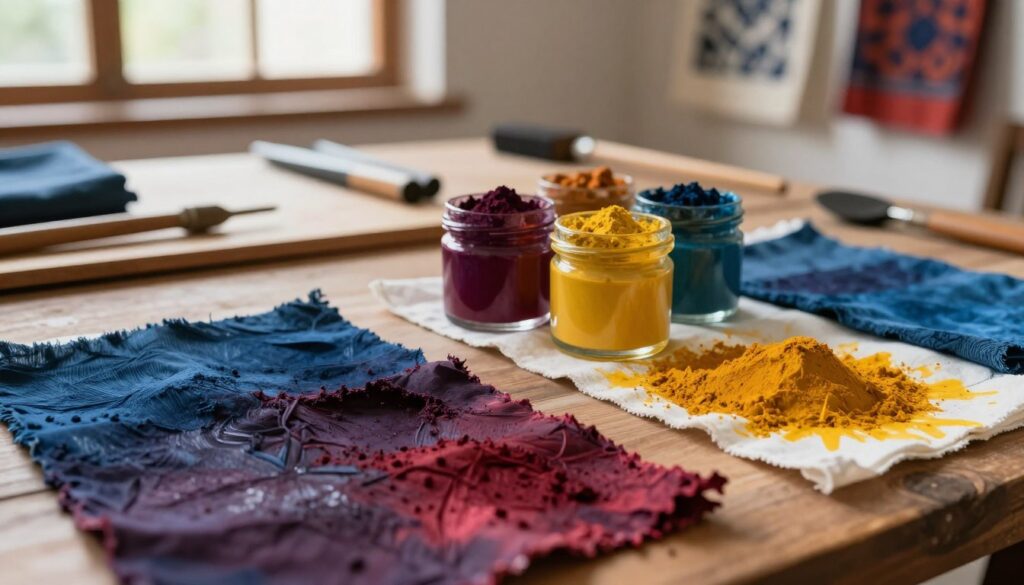
By feeling and looking at the fabric, you can tell how it was colored. This makes your fingertips a detective tool.
Natural Dyes: Deep Absorption and Organic Handfeel
Hand block printing often uses natural dyes from plants and minerals. These dyes soak deep into the fabric. This makes the colors richer and more complex.
Look for subtle, uneven shading. This is a sign of true craftsmanship, not a mistake.
The fabric’s feel is also important. Natural dyes make fabrics soft and organic from the start. They feel lived-in and supple.
Natural dyes are also safer and better for the environment. They are non-toxic and can break down easily. This is great for items like baby clothes or bedding.
Pigment Inks: Surface Color and a Different Touch
Pigment inks, used in digital and screen printing, sit on the fabric’s surface. This makes the colors look crisper and brighter.
But, the texture changes. The fabric might feel stiffer or have a film. It doesn’t have the softness of natural dyes.
Surface application isn’t always bad. It allows for sharp, vibrant designs. But, it’s important to check for safety.
Look for safety certifications like Oeko-Tex Standard 100 for skin contact items. This ensures the absence of harmful substances.
Now, you can use your senses to check if fabric is naturally dyed or not. A soft feel and deep colors mean natural dyes. A crisp graphic with a stiff feel means pigment inks. Use both sight and touch to confirm.
Price & time comparisons; when screen/digital is okay
Let’s look at the numbers: cost and time. The choice between hand block vs screen print and digital depends on budget, time, and how much you need.
| Printing Method | Typical Setup | Production Speed | Ideal Order Volume | Best For |
|---|---|---|---|---|
| Hand Block | Low tool cost, high labor cost | Very Slow (meters per day) | Very Low (1-50 meters) | Artisan collections, heirloom pieces, exclusive designs |
| Rotary Screen | Very High (screen engraving) | Very Fast (yards per minute) | Very High (1200-4500+ yards) | Bulk home textiles, simple-pattern apparel, vibrant solid colors |
| Digital | Very Low (digital file) | Fast Setup, Moderate Print Speed | Low to Medium (1-1000 yards) | Short-run fashion, photorealistic designs, test marketing, customization |
Hand block printing is a pricey, artisan choice. It’s expensive because of the labor and time. It’s best for unique items, not big orders.
Rotary screen printing needs a big investment for screens. But, it’s cheap for huge orders. It’s not good for small businesses because of the high minimums.
Digital printing changes the game. It’s cheap because it doesn’t need screens or much space. It’s great for small orders and quick prints.
So, when is it okay to choose screen or digital over hand block?
Digital printing is better for certain things:
- Short-run fashion and testing new designs.
- Items with infinite detail, gradients, or real images.
- Customized or personalized items where each piece is unique.
- Projects needing a fast turnaround from start to finish.
Screen printing is best for other needs:
- Long-run production of home decor or apparel with simple patterns.
- When intense, opaque color vibrancy on dark fabrics is key.
- Orders big enough to cover the initial screen cost and get a low price per unit.
The goal is to pick the right tool for the job. Hand block for art, screen for big orders, and digital for flexibility and low costs.
Care & fade expectations by technique
Fade resistance and how fabrics feel change based on dye type. Your care routine greatly affects the textile’s life and beauty. Knowing this makes you more than just an owner; you become a curator.
Natural dyes bond with fibers through absorption and vatting. This creates a deep, organic connection. Over time, these dyes fade beautifully, leaving a soft, prized patina that many cherish.
But, there’s a catch. If the dye wasn’t fixed right, the first few washes can cause more color loss. After that, fading is gradual and even.
Pigment-based inks, found in digital and screen prints, sit on the fabric surface. A polymer binder keeps them in place. This makes them excellent at staying color-fast in the wash. Colors look vibrant and sharp right away.
But, the long-term story for pigments depends on the binder quality. Low-quality binders can break down with repeated washing. This may cause cracking in the print or make the fabric feel stiff. High-quality prints use better binders to avoid this.
It’s key to remember that all quality prints, old or new, get special treatments to set the ink or dye. This step is vital for keeping colors bright and following care guidelines.
Here are the main tips to keep any printed textile looking great:
- Always wash in cold water using a gentle cycle.
- Use a mild, color-safe detergent.
- Turn the garment or fabric inside out before washing.
- Avoid bleach and harsh stain removers.
- Air dry flat or line dry away from direct sunlight when possible.
| Criteria | Hand Block Printing (Natural Dyes) | Digital/Screen Printing (Pigment Inks) |
|---|---|---|
| Fade Character | Develops a soft, even patina; fading is often considered part of its charm. | Fades more uniformly initially; may show sharp decline if binder fails. |
| Initial Wash Fastness | Can experience higher initial color loss if not vatted properly. | Excellent; colors remain vibrant with minimal runoff after first wash. |
| Long-Term Durability Concern | Fiber degradation over decades; dye becomes part of the fabric. | Binder breakdown leading to possible cracking or fabric stiffness. |
| Recommended Care | Gentle, cold hand wash or machine cycle. Air dry. | Follow manufacturer label; usually machine wash cool, tumble dry low. |
| Ideal Use Case | Heirloom pieces, decorative textiles, garments where aging is valued. | High-use apparel, items requiring crisp detail and consistent color. |
Understanding natural dye vs pigment differences helps set the right expectations. You become an expert who can guide on the product’s whole life. This knowledge is invaluable, whether for personal use or business needs.
Seller questionnaire + diaspora shipping/returns tips
Think of this section as your guide for checking authenticity test prints before buying fabric. It’s time to go from just looking to really investigating. Talking directly to the seller is your best tool.
Why is this important? Knowing about the ground cloth and printing company matters a lot. For example, a “Scandi bird” print looked different on various fabrics. Your questions help uncover these differences.
Get ready with this essential questionnaire. These are your due-diligence checks.
What is the exact printing method? Ask for specifics: hand block, rotary screen, or digital. Any vague answer is a warning sign.
What is the fiber content of the ground cloth? Is it 100% cotton, linen, or a mix? This affects care, feel, and how dyes absorb.
Who is the printer or manufacturer? A good seller knows their source. This ensures consistent quality.
Can you provide a swatch or detail photo of the backside and a full pattern repeat? This visual proof shows the printing technique and quality.
| Key Question | Why It’s an Authenticity Test | What a Good Answer Looks Like |
|---|---|---|
| Printing Method | Confirms the craft level and sets price/durability expectations. Hand block will have slight variations. | “Hand-block printed using wooden blocks on 100% cotton.” |
| Ground Cloth Fiber | Determines fabric handfeel, weight, and how dyes bond. Natural fibers absorb dyes differently than synthetics. | “100% premium, lightweight cotton voile.” |
| Printer/Manufacturer | Establishes provenance and consistency. Known studios maintain quality control. | “Printed by [Artisan Studio Name] in Jaipur.” |
| Swatch or Detail Photos | Provides physical proof of ink penetration, registration, and pattern alignment. | High-resolution images of the fabric front, back, and a full repeat are provided. |
Diaspora Shipping and Returns: A Practical Guide
Buying textiles from abroad can be tricky. Protect your investment with these steps.
- Always Get Swatches First. The small cost prevents major disappointment. Check color and handfeel against your project needs.
- Clarify the Return Policy for Color Discrepancies. Screen and monitor calibration vary. Ask if color variance is a valid return reason.
- Use Tracked and Insured Shipping. The extra fee is worth it for peace of mind and recourse if a package is lost.
- Budget for Possible Customs Duties. Research your country’s import taxes on textiles to avoid surprise fees upon delivery.
This proactive approach turns risk into confidence. Your authenticity test prints and shipping savvy ensure you receive exactly what you pay for, no matter the distance.
Summary matrix + CTA
Your journey to distinguish authentic prints is complete. Use this summary matrix as your quick-reference guide.
Process: Hand block printing is manual and artisanal. Screen printing uses mechanized screens. Digital printing is computer-controlled. Understanding this hand block vs screen print difference is fundamental.
Backside Look: Perform a simple backside check. Hand block prints show faint dye outlines. Screen prints often have a thicker, plastisol feel without deep penetration.
Registration: Look for slight registration marks or misalignments. These are common in hand block prints and signal human artistry, not flaws.
Handfeel: The choice between natural dye vs pigment defines texture. Natural dyes absorb deeply for a soft handfeel. Pigments sit on the fabric surface, feeling crisper.
Cost & Time: Hand block printing is slower and commands a higher price. Screen and digital methods are faster and cost-effective for large, consistent runs.
Best For: Choose hand block for unique, heirloom pieces with soul. Opt for screen or digital for high-volume, repeatable projects.
Now, apply this knowledge. Use these authenticity test prints on your next sourcing trip to make confident decisions. Share this guide with your network to elevate collective discernment.
Subscribe for more expert insights that turn knowledge into a competitive advantage. Mastering the block print vs screen print distinction empowers your business decisions and personal style.