The world of heritage textiles is truly captivating. For experts and enthusiasts, buying authentic handloom fabric is more than just a purchase. It’s a way to support artistry and preserve cultural heritage. Each piece is a testament to skill and tradition.
But, shopping online for these treasures comes with its own set of challenges. You can’t touch the fabric or see the thread up close. This makes buying online feel uncertain.
This guide aims to bridge that gap. It’s for those who seek true craftsmanship and want to make informed choices. We’re here to help you navigate the digital world of textiles.
We want to give you a clear, expert-backed guide. This framework helps you digitally evaluate a textile’s quality. It lets you make smart, confident choices when buying these pieces of history.
Intro: Shop confidently without touching the fabric
Buying handloom online starts with a change in how you look at things. You become an active, informed shopper. The screen is your window, not a wall.
The digital world opens up a world of textiles from around the globe. It’s exciting. But, you can’t feel the fabric like you would in a store. That’s where a reliable brand’s detailed info comes in.
First, you need to know the difference between handloom vs powerloom. This is key. Handloom fabric is made on a manual loom, with each thread placed by hand.
Powerloom fabric, on the other hand, is made fast on machines. The handloom vs powerloom difference shows in the fabric’s feel. Handloom has a unique, human touch.
Why is this important? It’s about quality, durability, and supporting local communities. Handloom is often more breathable and durable. Powerloom might look similar but lacks the soul.
This knowledge lets you read product descriptions better. It helps you ask the right questions before buying.
Next, we’ll show you how to use this knowledge. You’ll learn to understand technical specs, spot real photos, and ask sellers the right questions. This way, you’ll feel confident and smart when shopping online.
Construction metrics: EPI/PPI, GSM/gsm, fiber content—how to read specs
The numbers and terms in a fabric’s description—EPI, PPI, GSM—are not just jargon. They are your quality checklist. Learning to read these specifications turns abstract data into a reliable proxy for the textile’s feel, performance, and longevity.
Think of these metrics as the fabric’s blueprint. They tell you exactly how it was built.
Understanding Ends Per Inch and Picks Per Inch
Ends per inch (EPI) and picks per inch (PPI) measure fabric density. EPI counts the vertical threads (warp) in one inch. PPI counts the horizontal threads (weft).
A higher EPI and PPI means more threads are packed tightly together. This creates a denser, stronger, and often smoother fabric. A lower count results in a more open, breathable, and lighter textile.
For example, a sturdy, formal sari meant for daily wear might have an EPI of 80-100. A delicate, lightweight scarf could have an EPI of 40-60. The thread count directly dictates durability.
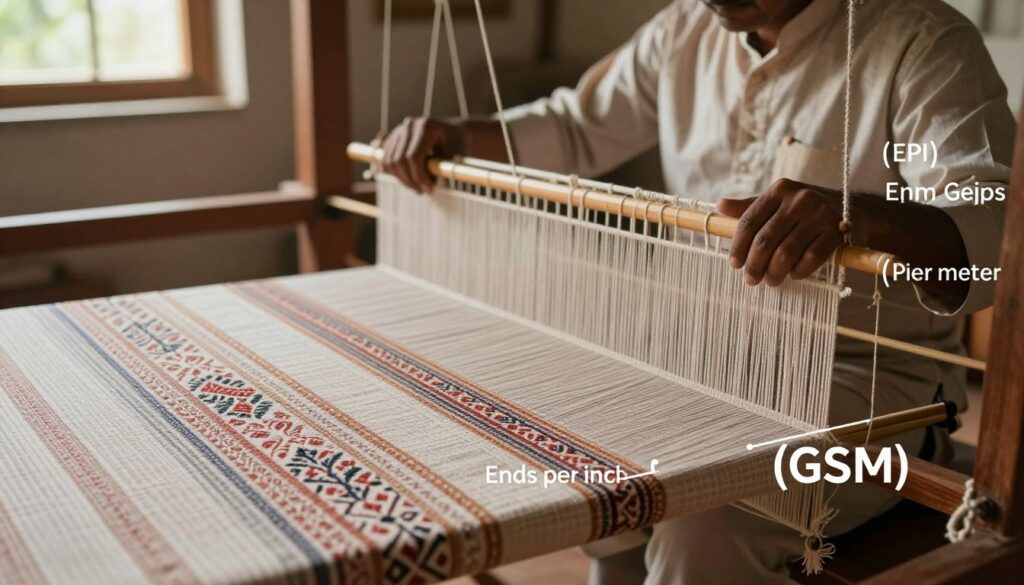
Grams per square meter (GSM or gsm) measures fabric weight. It’s calculated by weighing one square meter of the material. This number is a direct indicator of drape and substance.
Lightweight fabrics like voile or chiffon have a low GSM, often between 30-80. They flow beautifully and are perfect for summer garments. Heavyweight fabrics like upholstery material or winter shawls have a high GSM, typically 200-400.
GSM gives you a tactile clue you can’t get from a photo. A 150 GSM cotton is ideal for a year-round kurta. It has enough body to hold its shape but isn’t stiff or overly warm.
Decoding Fiber Content Listings
The fiber listing is the ingredient label for your textile. It reveals the material’s core character and care needs.
100% Mulberry Silk is the gold standard. It comes from silkworms fed exclusively on mulberry leaves. This produces long, uniform, and incredibly strong filaments. The fabric is luxuriously smooth and has a subtle, pearlescent sheen.
A generic “silk” or “silk blend” may use shorter, less uniform fibers. It can be beautiful but often has a different texture and durability.
For cotton, look for specific varieties. Indigenous cottons like Suvin or Kala Cotton are renowned. They have longer staple fibers, which spin into stronger, finer, and more lustrous yarns. This translates to superior softness and longevity compared to standard cotton.
Here is a quick-reference table to connect these specs to real-world use:
| Fabric Type | Typical EPI Range | Typical GSM Range | Common Fiber Content | Best Use |
|---|---|---|---|---|
| Lightweight Scarf/Chiffon | 40 – 60 | 30 – 70 | Silk, Chiffon Cotton | Summer wear, layering |
| Everyday Sari/Kurta | 70 – 90 | 120 – 180 | Mulberry Silk, Suvin Cotton | Daily apparel, formal wear |
| Sturdy Upholstery/Shawl | 90 – 110+ | 200 – 350+ | Blended Silk, Kala Cotton, Wool | Home decor, winter garments |
Mastering these three metrics—ends per inch, grams per meter, and fiber content—empowers you. You can glance at a product page and instantly gauge if a fabric is delicate or durable, suited for summer or winter, and made from commonplace or exceptional materials. This knowledge is your foundation for confident online handloom shopping.
Visual cues from photos: slubs, minor misalignments, selvedge integrity, color variation
The true character of a handloom fabric is in its small, often celebrated, imperfections. Your skill in analyzing product photos is key for confident online shopping. This turns you from a passive browser to an informed inspector.
Don’t just look at the main pattern. Zoom in on the texture. Here, you’ll find the first signs of authenticity: slubs and minor weave misalignments.
Slubs are small, irregular thickenings in the yarn. In mass-produced cloth, they’re seen as defects. But in handloom, they’re cherished as signs of human handwork and natural fiber. They add unique texture and depth.
Also, tiny weave alignment inconsistencies are not flaws. They show a human weaver, not a perfect machine, made the textile. These irregularities give the fabric its soul and living quality.
Next, look at the fabric’s edge, known as the selvedge. This self-finished border is a critical tell. A handloom selvedge is dense, tightly woven, and may have a slightly hand-rolled appearance. It’s an integral part of the fabric’s structure.
In contrast, a powerloom fabric’s selvedge looks perfectly heat-sealed or serged—unnaturally uniform. A clean, close-up photo of the edge can reveal this difference. A robust, well-finished selvedge also shows the fabric’s durability and quality construction.
Lastly, evaluate the color. Natural dyes have subtle variation, unlike synthetic ones. Uniform, flat, and overly bright color often points to chemical dyes. Natural dyes’ beauty lies in their subtle variation.
Look for tonal depth, slight shading, and gentle irregularities in hue across the fabric. This “living” color is a hallmark of artisan dyeing techniques. It means the color will age gracefully, developing a richer patina over time.
To put this into practice, here is a quick checklist for your visual inspection:
- Zoom In: Examine high-resolution images for texture (slubs) and weave consistency.
- Find the Edge: Locate the selvedge in the photo. Is it dense and self-finished, or does it look mechanically cut?
- Study the Color: Does the color have depth and subtle variation, or is it perfectly uniform?
- Embrace Irregularity: Remember, minor misalignments are authenticity certificates, not defects.
Mastering this visual language empowers you to shop with confidence. You learn to see the good flaws that signal genuine craftsmanship. Every product photo becomes a window onto the weaver’s skill.
Questions to ask: loom type, artisan ID, dye method, wash test results
Your most powerful tool for assessing handloom quality online isn’t a zoom feature—it’s your ability to interrogate the product listing. Moving from a passive viewer to an active investigator requires a script of powerful questions. These inquiries separate charming storytellers from transparent custodians of craft.
Asking the right questions does two things. It reveals hard facts about construction and origin. It also tests the seller’s knowledge and ethical commitment. Be prepared to ask these questions before you commit to a purchase.
1. “What type of loom was this woven on?”
The loom is the foundation of the fabric. The answer tells you about the intended structure, density, and even the tradition behind the piece. A pit loom, for example, often produces denser, heavier textiles like traditional Banarasi saris. A frame loom might be used for lighter cottons or experimental weaves.
Knowing the loom type helps you gauge durability and authenticity. It connects the cloth to a specific making process. Sellers who can answer this precisely usually have direct ties to the weaving unit.
This is the ultimate credibility test. Requesting specific artisan identification—a weaver’s name, their village, or the cooperative’s title—moves beyond vague “artisan-made” claims. It establishes accountability and traces the human hands behind your purchase.
Ethical sellers proud of their supply chain will provide this. This question also ties into official certifications. Look for mentions of Geographical Indication (GI) tags, which protect region-specific crafts, or the Silk Mark for pure silk verification. These are tangible proofs of origin.
3. “Are the dyes natural or synthetic? Can you provide test results?”
The dye method impacts the fabric’s soul, color longevity, and environmental footprint. Natural dyes, derived from plants and minerals, offer unique, living hues but require specific natural dye care. Synthetic dyes provide bold, consistent colors.
Don’t just take “natural dyes” at face value. Ask for evidence of dye integrity. Reputable sellers should be able to describe or provide results from simple tests:
- Rub Test: A damp white cloth rubbed on the fabric should not pick up significant color if the dye is fast.
- Sunlight Test: The fabric should have been tested for lightfastness, ensuring colors won’t fade quickly with sun exposure.
This information is key for understanding how the piece will age and how to care for it.
4. “What are the wash test results?”
A direct question about wash testing shifts the conversation to practical longevity. It shows you’re thinking about using and loving the item for years. Ask if the piece has been pre-washed or tested for shrinkage and color bleed.
Answers might include that the fabric is “pre-shrunk” or that colors are “vat-dyed” for fastness. This gives you confidence for future cleaning and prevents disappointing first washes.
| Question For Seller | What a Good Answer Reveals | Red Flag or Vague Answer |
|---|---|---|
| “Loom type?” | Specifics like “pit loom,” “frame loom,” or “jacquard.” Explains how it affects the fabric. | “I don’t know” or “traditional loom.” Shows a disconnect from production. |
| “Artisan or village ID?” | Weaver’s name, cooperative name, or specific village. May include GI tag info. | “Made by skilled artisans in India.” This is generic and untraceable. |
| “Dye method & tests?” | Specifies natural/synthetic, mentions mordants, references rub or lightfastness tests. | “Beautiful colors.” Avoids the technicals of dye longevity and care. |
| “Wash test results?” | Details on pre-washing, shrinkage percentage, color fastness guarantees. | “Dry clean only” for a piece meant for regular use (like a daily wear scarf). |
Arming yourself with these questions transforms your shopping experience. You are no longer just buying a product. You are engaging in a dialogue about craft, quality, and care. The answers you receive will clearly show which sellers are true experts and stewards of the handloom tradition.
Remember, proper natural dye care often involves gentle, pH-neutral detergents and avoiding prolonged direct sunlight to preserve those beautiful, organic hues. When a seller provides clear dye and wash information, they empower you to maintain your investment for a lifetime.
Policy shields: authenticity guarantee, repairs, return terms
When you shop online for handloom, you’re protected by three main policies. These are about authenticity, repairs, and return terms. Think of these rules as a sign of a seller’s trust in their products. A good store backs its textiles with clear, strong policies.
Consider this: a vague policy might mean quality issues. But a detailed, friendly one shows pride in craftsmanship and care for your happiness. This is your key to avoiding risks.
Decoding the Authenticity Guarantee
An authenticity guarantee should be clear, not just a marketing trick. Look for things like the Silk Mark for real silk or other textile marks. Even better is a detailed story about where and how it was made.
This story might talk about the weaving place, the loom type, or the artisan group. It turns a beautiful item into a documented piece of heritage. It keeps you safe from fake handloom items.
The Value of Repair Services
Repair services show a brand’s quality commitment. Natural fabrics like cotton, silk, and wool last long but can wear out over time.
A seller who fixes items for small issues shows they see their textiles as lasting treasures. This is a big sign of trust.
This is your best defense. A good return policy is key for online shopping. You should have time to check the fabric in person, under natural light, and feel its texture.
Look for at least 14-30 days for returns. Know who pays for return shipping and if the item must be unused. Some sellers offer exchanges but not returns on custom orders. Read this carefully before you buy.
| Policy Type | What to Look For | Potential Red Flag | Why It Matters |
|---|---|---|---|
| Authenticity Guarantee | Specific certification (e.g., Silk Mark) or detailed provenance of weave/region. | Vague statement like “100% authentic” with no backing details. | Protects your investment; ensures you receive genuine handloom craftsmanship. |
| Repair & Care Services | Explicit mention of repair options for tears, loose threads, or fabric wear. | No mention of post-purchase support or care instructions. | Indicates seller confidence in longevity and commitment to product lifespan. |
| Return & Exchange | Clear 14+ day window, reasonable return shipping terms, fair condition requirements. | “Final sale only” or an extremely short (3-7 day) inspection period. | Allows for physical verification of quality, color, and fit, reducing buyer’s risk. |
| Customer Support | Multiple contact methods (email, phone) and prompt response promise. | Only a generic contact form with no stated response time. | Essential for resolving pre- and post-purchase questions about the product or policies. |
These seller policies are your shield. They make buying handloom online safe and professional. Choose sellers who respect both the artisan’s work and your rights as a buyer.
Price fairness: hours of weaving, yarn prep, wastage
Understanding the cost of a handloom changes how we view price. It’s not just a number. It’s a measure of the skill and care that goes into making it.
Three main things affect the price of handloom textiles. These are the time spent weaving, the effort in preparing the yarn, and the waste from making it. Knowing this helps you see the difference between cheap factory-made items and valuable, handmade pieces.
The Three Pillars of Handloom Cost
1. Hours of Skilled Labor
Creating a Jamdani or Banarasi silk sari takes months. Each thread is carefully placed. This shows the weaver’s skill, not just their time at the loom.
2. Yarn Preparation
Before weaving, yarns are combed, spun, and dyed. Natural dyes take a lot of time and resources. This step ensures the fabric’s color and feel are top-notch, adding to the cost.
3. Material Wastage & Precision
Handmade items can’t be made as efficiently as machine-made ones. Small mistakes or natural fiber flaws mean some parts can’t be used. This waste is part of what makes handmade items unique and beautiful.
Powerloom production is different. Machines weave fast and cheaply. The yarn is often synthetic, and patterns are copied digitally. This makes the fabric affordable but lacks the uniqueness and human touch of handmade items.
| Cost Factor | Handloom Production | Powerloom Production |
|---|---|---|
| Labor Investment | Weeks to months per piece | Minutes to hours per piece |
| Yarn Quality | Hand-combed, natural dyes, premium fibers | Often bulk synthetic, chemical dyes |
| Material Efficiency | Higher wastage due to artisanal precision | Optimized for minimal waste |
| Output Character | Unique, slight variations tell a story | Uniform, identical repeats |
When looking at price fairness, think about what the price means. A high price for a machine-made item might be unfair. But a high price for a handmade piece shows the value of the time, effort, and materials used.
This way of thinking helps you make better choices. It shows that the cost is worth it for the quality and uniqueness of handmade items.
Diaspora must‑knows: size charts, duties, shipping insurance
Buying handlooms from India and shipping them to the U.S. comes with its own set of challenges. It’s about fit, cost, and making sure your purchase arrives safely. For those in the Indian diaspora and international buyers, knowing these details makes the process smooth and predictable.
Start by carefully checking size charts. Indian and Western sizes are not the same. A “Medium” kurta from India won’t fit like a U.S. medium. Look for measurements in both inches and centimeters. Compare your own clothes’ measurements to the seller’s to avoid expensive tailoring.
Next, plan for import duties and taxes. When your package arrives in the U.S., you might face customs fees. These costs aren’t included in the price or shipping fees. Use duty calculators or check with U.S. Customs to estimate these fees. Adding this to your total cost helps avoid unexpected bills.
Lastly, consider shipping insurance. The journey from India to the U.S. is long and risky. While some services offer limited liability, it’s not enough for valuable items. Full insured shipping is a must for your peace of mind. Make sure the insurer is reputable and knows how to handle claims.
By measuring carefully, planning for fees, and choosing insured shipping, you’re set. This knowledge lets you shop confidently. You’ll get the artisan’s work delivered right to your door, without surprises.
Quick printable checklist + internal links
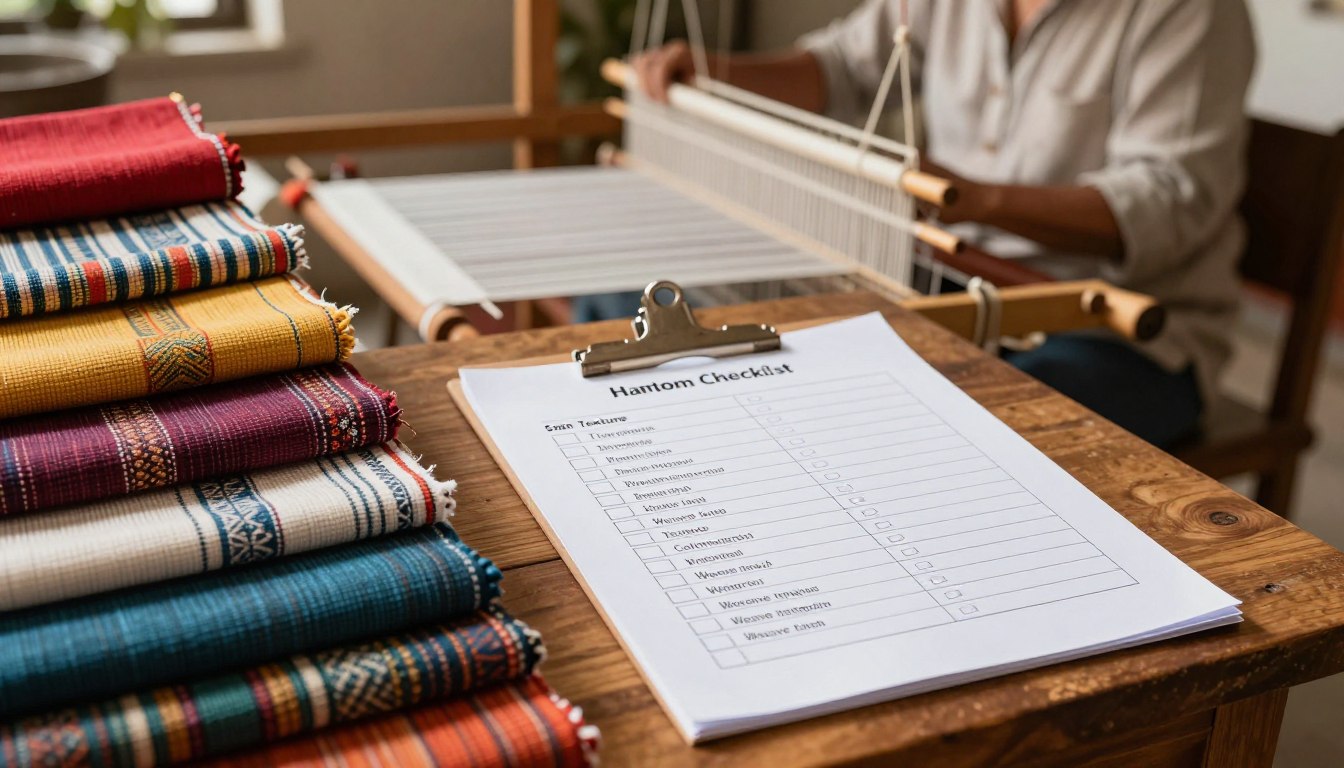
Use this handloom quality checklist when you shop online. It makes the guide’s lessons easy to follow. Print it or save it for your next online shopping trip.
Your handloom quality checklist should cover these key actions.
- Check product photos for visual cues like natural slubs, a clean selvedge, and consistent color.
- Verify the listed construction specs: EPI, PPI, GSM, and fiber content.
- Prepare questions for the seller about loom type, artisan details, and dye methods.
- Review the store’s policies for authenticity guarantees, repairs, and returns.
- Assess price fairness by considering the hours of weaving and material wastage.
This checklist helps you shop with confidence, even without touching the fabric first.
For deeper learning, explore our related guides. Read our detailed profile on Banarasi Silks or our guide to handloom fabric care. These resources support our mission to educate and connect you with authentic craftsmanship.
Keep this handloom quality checklist handy. It transforms online shopping from a guess into an informed, rewarding experience.