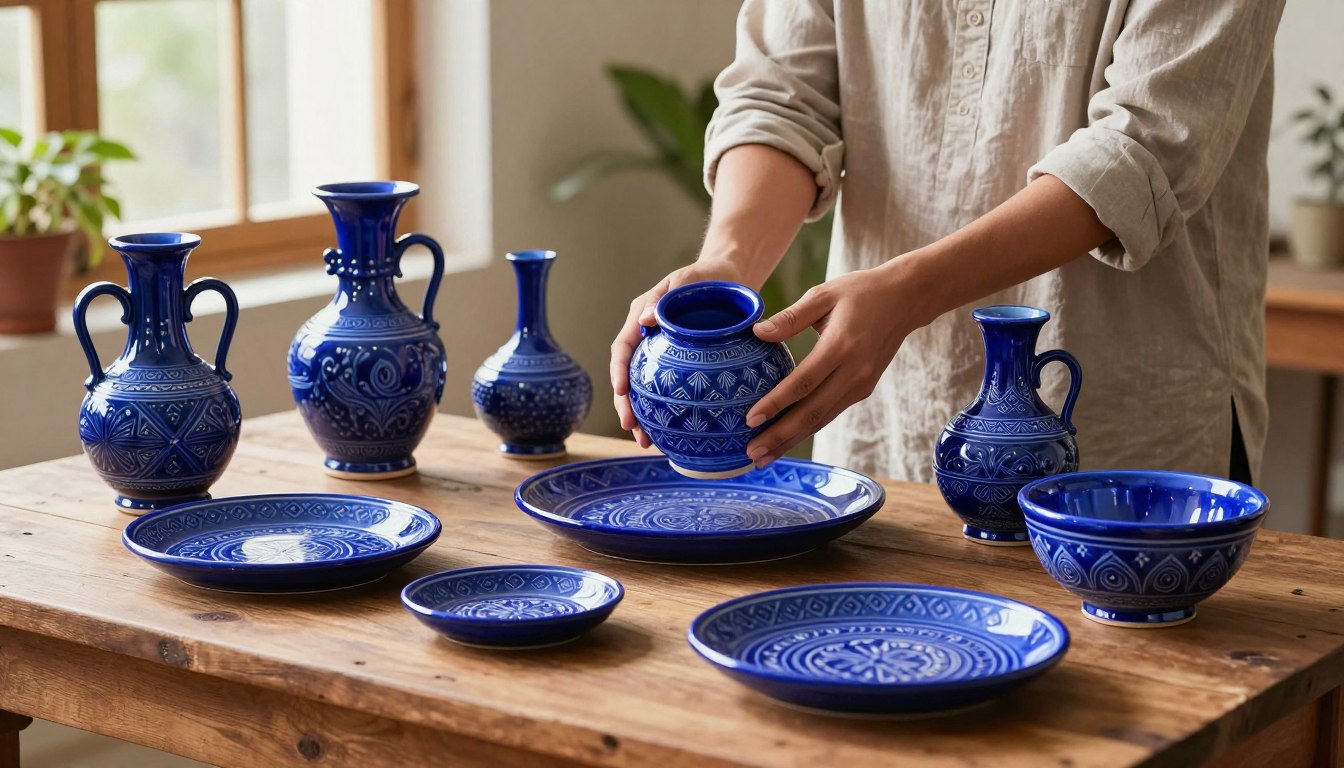
Having a piece of Jaipur Blue Pottery is like holding a piece of history. This art form, known for its bright cobalt colors and detailed patterns, is a cultural treasure. Each piece shows the skill of the craftspeople.
This artwork is special because of its materials. It’s made from quartz, glass, and a bit of clay. Fired at a low temperature, it gets a beautiful, delicate finish. This finish needs special maintenance practices unlike regular ceramics.
Without the right care, these beautiful pieces can lose their shine. But with the right care, their colors and designs can stay vibrant for years. This turns your pottery into a treasured family heirloom and a valuable piece of art.
This guide will teach you how to keep your artwork looking great for years. We’ll give you clear steps to preserve its beauty. Let’s start with the basics of keeping it in top condition.
Intro: Keep heirloom pieces beautiful at home or abroad
Proper care turns your blue pottery into a lasting treasure. It can stay on a shelf or travel the world. This guide is more than cleaning. It’s about taking care of a piece of history.
Real pieces often have a Geographical Indication (GI) tag. This tag shows they were made in Jaipur, using old methods. It’s not just about where it was made. It’s about the tradition and skill passed down through generations.
Your part in blue pottery maintenance keeps this tradition alive. Each piece is painted by a master. The material is special, made from quartz, glass, and fuller’s earth. This gives it its unique look and feel.
This material is fragile, so care is essential. Without it, your piece could crack, chip, or fade. Think of it as preserving a piece of heritage. You’re not just dusting. You’re protecting a work of art and honoring the artisan’s skill.
How you care for your pottery depends on your lifestyle. A piece in a quiet room faces different challenges than one traveling. This guide helps you keep your collection safe, whether it’s at home or on the move.
Looking ahead is important. Blue pottery maintenance is about small, consistent steps. These steps add up to keep your pottery looking great. We’ll show you how to clean it daily, remove stains, and display it right.
We’ll also talk about what to do if accidents happen or if you need to move your pottery. With this knowledge, you can enjoy your pottery without worry. You’ll know how to protect it, so you can use and display it with confidence. Let’s start the journey of caring for this beautiful art form.
First-use checklist and safety notes
Getting a Jaipur blue pottery is thrilling. It’s important to check it carefully and follow safety steps first. This helps keep your piece safe and prevents damage from the start.
- Inspect Thoroughly: Look at the piece in good light. Check for small cracks, chips, or glaze issues. These can get worse with use.
- Check for Artisan Marks: Many pieces have a potter’s signature or stamp. This mark is a badge of heritage, not just decoration. Make a note of where it is.
- Identify Intended Use: Decide if your piece is for decoration or use. This is key for safety. Don’t assume a pretty item is safe for food.
- Verify Food-Safe Status: If it’s for food or drink, make sure it’s labeled “food-safe.” The type of glaze matters here.
Knowing how to use your pottery is key to blue pottery care. The table below shows the main differences and safety tips.
| Use Type | Primary Purpose | Key Safety Notes |
|---|---|---|
| Decorative | Display, art, ornamentation | Not for food or liquid. Avoid dusting with abrasive cloths. Keep away from direct heat sources. |
| Functional | Eating, drinking, serving (if labeled food-safe) | Hand-wash only with mild soap. Dry immediately. Never use for hot food straight from the oven/stove. |
| Universal Rules | Applies to all blue pottery | Not microwave, oven, or dishwasher safe. Extremely sensitive to thermal shock. |
The table’s safety tips are essential. Jaipur blue pottery is delicate. Its glaze and body can’t handle sudden temperature changes.
Thermal shock happens when a hot piece meets cold, or vice versa. This can cause it to crack instantly. Always let pieces cool down before washing or filling.
High heat and harsh detergents in the dishwasher can damage the glaze. The microwave’s intense energy can cause hidden cracks. Treating your pottery with care from the start keeps it beautiful for years.
This checklist is the first step in caring for your blue pottery. By following these guidelines, you respect the art and ensure its beauty lasts.
Daily cleaning: Mild soaps, soft cloths, what not to use
Keeping your Jaipur blue pottery looking great is all about the right cleaning habits. It’s simple but essential for keeping the colors bright.
The glaze is like a thin glass shield. Harsh cleaners and rough cloths can scratch it. These scratches dull the glaze over time.
For everyday clean blue pottery, use gentle and quick methods. Here’s how to do it right every time.
Start by filling a basin with lukewarm water. Avoid hot or cold water, as it can damage the pottery. Add a bit of pH-neutral dish soap. Stay away from soaps with bleach, citrus, or abrasive particles.
Soak the item and clean it with a soft sponge or microfiber cloth. For detailed designs, a soft-bristled toothbrush helps remove dust. Rinse well under lukewarm water to get rid of soap.
After rinsing, dry the pottery with a soft cloth. Let it air-dry in a place with good air flow. Never let it dry with water on it, as it can leave spots.
| Recommended Tools & Materials | Common Household Items to Avoid |
|---|---|
| pH-neutral liquid dish soap (e.g., Dawn Free & Clear) | Harsh detergents, powders, or cleaners with bleach |
| Microfiber cloths or soft cellulose sponges | Steel wool, scouring pads, or abrasive scrub brushes |
| Lukewarm water | Very hot or very cold water |
| Soft, lint-free towels for drying | Air-drying (can leave spots) or rough terrycloth towels |
Why are abrasive tools so bad? The glaze is like a thin glass on the pottery. Tools like steel wool scratch this glass. Once scratched, it can’t be polished back.
Stick to the gentle basics. Using soft cloths and mild soap is worth it. Your pottery will stay bright and beautiful for years.
Good daily care is key to keeping your pottery in top shape. When you clean blue pottery right, you protect its beauty and value.
Stain solutions: Tea/coffee/oil strategies and do/don’ts
Stains from daily use, like tea or oil, don’t have to ruin your glazed pottery. The non-porous surface of authentic Jaipur Blue Pottery is great at resisting stains. With the right steps, you can keep it looking new.
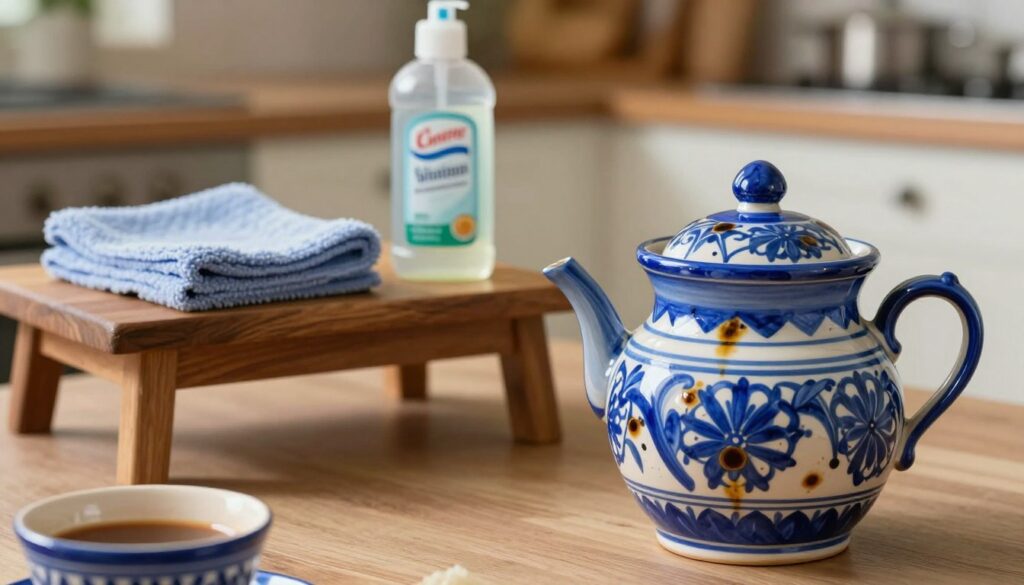
Acting fast is key. For fresh spills, gently blot—don’t rub—the liquid with a soft cloth. This stops the stain from setting on the glaze.
For tough marks, a baking soda paste is a safe, gentle scrubber. Mix baking soda with water to make a thick paste. Apply it to the stain with a soft cloth, using light circular motions. Rinse well with lukewarm water and dry right away.
Not all pieces are meant for direct food use. Always check with your seller. For decorative items, the best stain removal strategy is prevention.
Follow this simple list of do’s and don’ts to protect your pottery’s finish.
- DO blot spills immediately with a soft, dry cloth.
- DO use a mild, non-abrasive soap for general cleaning.
- DO employ a baking soda paste for gentle scrubbing on tough spots.
- DON’T use bleach, vinegar, or any acidic cleaner. These can permanently etch and dull the brilliant glaze.
- DON’T let acidic liquids (lemon, wine) or oily foods sit on the surface. They can damage the finish over time.
- DON’T use harsh scouring pads or powders. They will create fine scratches.
The main idea is gentle intervention. Repeated, careful washing with a soft cloth is often better than one harsh scrub. By following these tips, you can enjoy your pottery without worry of everyday accidents.
Handling & display: Shelving, risers, felt pads, humidity tips
Keeping your blue pottery safe means careful handling and smart display choices. It’s like creating a protective space for them. You want to show off these beautiful pieces while keeping them safe from common dangers.
Start with the right surface. You should store safely on stable, padded shelves or in secure cabinets. Glass-front cabinets are great for keeping dust and bumps away. But, open shelving needs more care.
| Display Surface Type | Protection Level | Best For | Key Considerations |
|---|---|---|---|
| Padded Wooden Shelf | High | Frequent use pieces, heirlooms | Use non-slip shelf liner; add felt pads under each item |
| Glass Cabinet | Very High | Collections, delicate items | Ensure shelves are level; avoid overcrowding |
| Open Display Stand | Medium | Single statement pieces | Place on stable surface away from walkways |
| Stacked Storage | Variable | Limited space situations | Always use soft fabric liners between pieces |
Use risers or small stands to elevate your pieces. They add visual interest and improve air flow. This helps prevent moisture buildup.
For heavy items, use self-adhesive felt pads on the bottom. They protect against scratches and damage.
When stacking, use soft cloth or felt as liners. This prevents direct contact between pieces.
Managing Humidity and Environment
Jaipur Blue Pottery needs consistent conditions. It can absorb moisture, weakening the structure or causing cracks.
Keep it in a cool, dry place, away from humidity. Aim for humidity levels between 40-50%. In humid areas, use a dehumidifier.
Use silica gel packets in cabinets to control humidity. Make sure every piece is dry before storing.
Good air flow is key. Avoid tight spaces without ventilation.
The Sunlight Threat to Cobalt Blue
Direct sunlight fades the colors of your pottery. Ultraviolet rays can make cobalt blues dull.
Keep displays away from windows and glass doors. Use UV-filtering window film if necessary. Rotate pieces to avoid uneven fading.
Choose cool lighting, like LED, to prevent thermal stress. This keeps your pottery safe for years to come.
With a little planning, you can create a safe space for your pottery. Enjoy their beauty now and know they’ll be safe for the future.
Repair basics: Hairline stabilization, when to seek kintsugi/pro repair
Fixing blue pottery is all about finding the right balance. You might need to do some DIY fixes for small problems. But for bigger issues, it’s best to get help from a pro.
First, stabilize hairline cracks. These are small lines that haven’t split your piece yet. Start by gently brushing off any dust from the crack.
For a quick fix, use a bit of museum wax along the crack. It’s safe and won’t harm your piece. This method is great for keeping your item looking good while you figure out more.
Decide if you can fix small chips yourself. If the chip is small and not on a food item, you might be able to fix it. Clean the area with a soft cloth first. Then, use a clear epoxy to fill it up.
Use a toothpick to apply the epoxy carefully. Follow the instructions to avoid any mess. Remember, this fix won’t make the glaze shine like new. Each piece is unique, making color matching hard.
Don’t try DIY fixes on big damage, food items, or pieces with many cracks. The wrong glue can make things worse and lower your pottery’s value.
Know when to call a professional. If your piece has more than a tiny chip, get expert help. Professional conservators have the right tools and materials for lasting repairs. They can even match the glaze around the fix.
The Japanese art of kintsugi is a beautiful way to repair your pottery. It uses lacquer and gold to highlight the damage. This way, the damage becomes a part of the piece’s story.
| Type of Damage | Recommended Action | Key Considerations |
|---|---|---|
| Hairline Crack | Temporary stabilization with museum wax. | Prevents spreading. Reversible. Best for display items. |
| Small, Single Chip | Possible DIY fill with clear resin. | For non-food surfaces only. Cosmetic fix. May not color match. |
| Multiple Cracks or Large Chip | Consult a professional conservator. | DIY attempts risk further damage. Professional assessment ensures longevity. |
| Significant Breakage | Professional restoration or kintsugi. | An investment that preserves the piece’s story and monetary value. |
Choosing the right repair option is key to keeping your blue pottery in top shape. While getting a pro might cost more upfront, it often saves more of your piece’s value. Treating your pottery with care ensures it will be cherished for years to come.
Travel & relocation: Bubble-wrap, box-in-box for overseas moves
When moving Jaipur Blue pottery, a careful plan is key, even more so for packing for international shipping. The bright glaze and detailed designs need a safe trip.
Jaipur Blue Pottery is slightly more brittle than other ceramics. It handles shocks differently because it’s made at a lower fire. Using regular boxes and careless wrapping can be risky.
A detailed, multi-layer packing method is essential. It protects each piece from shocks, impacts, and changes in pressure.
- First Layer (Acid-Free Tissue): Wrap each item in acid-free tissue paper. This keeps the glaze safe and protects the details.
- Second Layer (Bubble Wrap): Use a thick layer of bubble wrap. Choose the smaller bubbles for better fit. Secure it with tape, but not on the pottery itself.
- Secure Inner Box: Put the wrapped item in a tight, cardboard box. Use packing peanuts or paper to fill any empty spots.
The last step is the box-in-box system. Put the inner box in a bigger, strong outer box. Use lots of padding to fill the space between them. This double protection helps avoid damage.
For moves abroad, think about the climate changes during global transit. Moisture can be a problem. Use silica gel packets to keep things dry. Mark the outer box clearly with “FRAGILE – HANDLE WITH CARE” and “THIS SIDE UP” in the local language.
Long trips mean more handling. The box-in-box method and clear labels help your items arrive safely. Follow this guide to move your collection confidently, no matter where you’re going.
Seasonal care: Festive use, candle/diya soot cleanup
Festive seasons highlight your beautiful blue pottery. They are perfect for serving platters or diyas. A good blue pottery care routine helps you enjoy them without worry.
Safely Using Blue Pottery for Festive Serving
For serving, a simple trick prevents most problems. Always use protective liners. Place doilies, parchment paper, or banana leaves under moist, oily, or acidic foods.
This barrier stops direct contact that could slowly degrade the glaze over time. For dry snacks like nuts or cookies, you can serve directly. Just ensure the pottery is completely dry before filling.
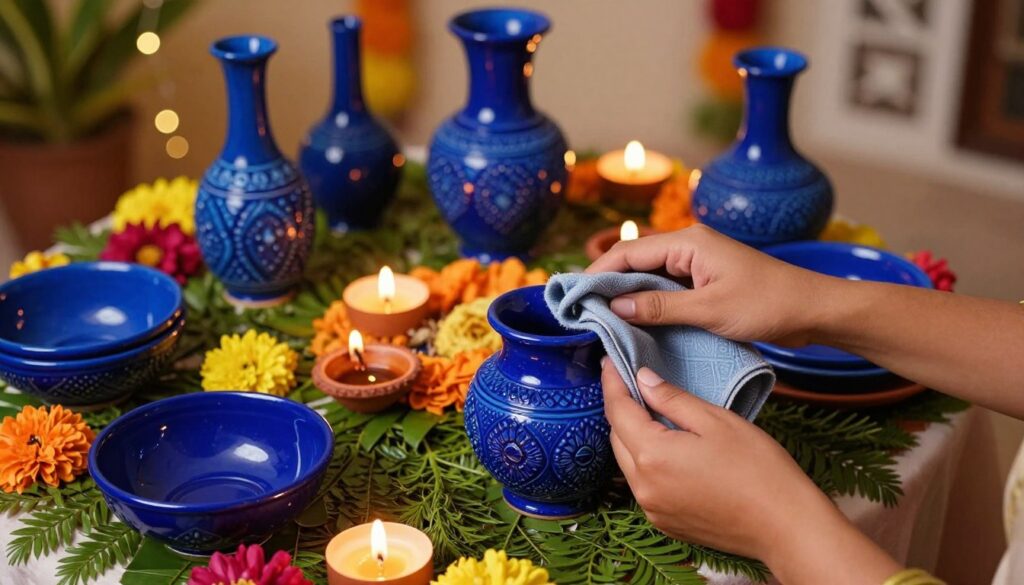
Candle holders and diyas can leave stubborn soot and wax. This black carbon buildup can scratch the glaze if cleaned improperly. Never use abrasive scrubbers or harsh chemicals. Instead, follow this gentle method:
- Let the piece cool completely after use. Never clean hot pottery.
- Gently scrape off large wax drips with a soft plastic tool, like a credit card edge.
- Dampen a soft, lint-free microfiber cloth with a small amount of isopropyl alcohol (rubbing alcohol).
- Lightly dab at the remaining soot or wax stain. Do not rub hard.
- For persistent spots, let the alcohol sit on the area for 30 seconds to dissolve the residue before dabbing again.
Finish by wiping the entire area with a cloth dampened with plain water. Dry it immediately with another soft cloth. This process effectively removes residue without harming the vibrant glaze.
Integrating these steps into your seasonal routine ensures your pottery remains a joyful part of every celebration. You can light the diyas and serve the feast with confidence, knowing your heirloom pieces are protected.
Warranty/returns expectations from ethical sellers
When you buy blue pottery, the seller should tell you what their warranty covers. They should also say how long it lasts. This shows they trust their work and helps you take good care of it.
Good sellers, like certified cooperatives, are open about their products. They give you papers on where it’s from, what it’s made of, and its special tag. This means you get a real, handmade piece. Buying from them helps the artists and keeps the craft alive.
What should a good warranty include? It should cover manufacturing flaws when you first get it. This means things like cracks, weak spots, or color problems. But, it won’t cover damage from accidents or if you handle it wrong after buying.
Here’s what you should expect from a seller’s policy:
- Clear Duration: A set time, like 6 months to a year, for warranty on flaws.
- Conditional Coverage: The warranty only works if you take care of the pottery right.
- Return Process: A specific time, like 7-30 days, to return it if it’s badly damaged.
- Authentication: You might need to show your receipt and the GI tag for any claims.
Knowing these details helps you buy wisely. It builds trust with the seller. You join a circle that values art and culture. Taking good care of your pottery keeps the warranty valid and respects the art.
Always check the seller’s policy before you buy. Ask them about what’s covered and what’s not. A fair seller will explain it all to you. This way, you can protect your investment. Your Jaipur Blue Pottery will be a treasured item for years to come.
Quick reference: Care dos and don’ts
Proper care of your blue pottery keeps it looking great. Use this quick guide as your essential checklist.
| Dos | Don’ts |
|---|---|
| Hand wash with mild soap and lukewarm water. | Never use a dishwasher or abrasive scrubbers. |
| Dry pieces immediately with a soft, lint-free cloth. | Do not air dry or leave in direct sunlight. |
| Display on stable shelves with felt pads or risers. | Avoid placing near stoves, heaters, or in high humidity. |
| Handle with two hands, supporting the base. | Do not expose to sudden temperature changes. |
| Clean soot or stains promptly with a damp cloth. | Avoid harsh chemicals, acids, or ultrasonic cleaners. |
Following these simple practices is the best way to preserve your blue pottery. Keep this guide handy for a lifetime of beauty.